
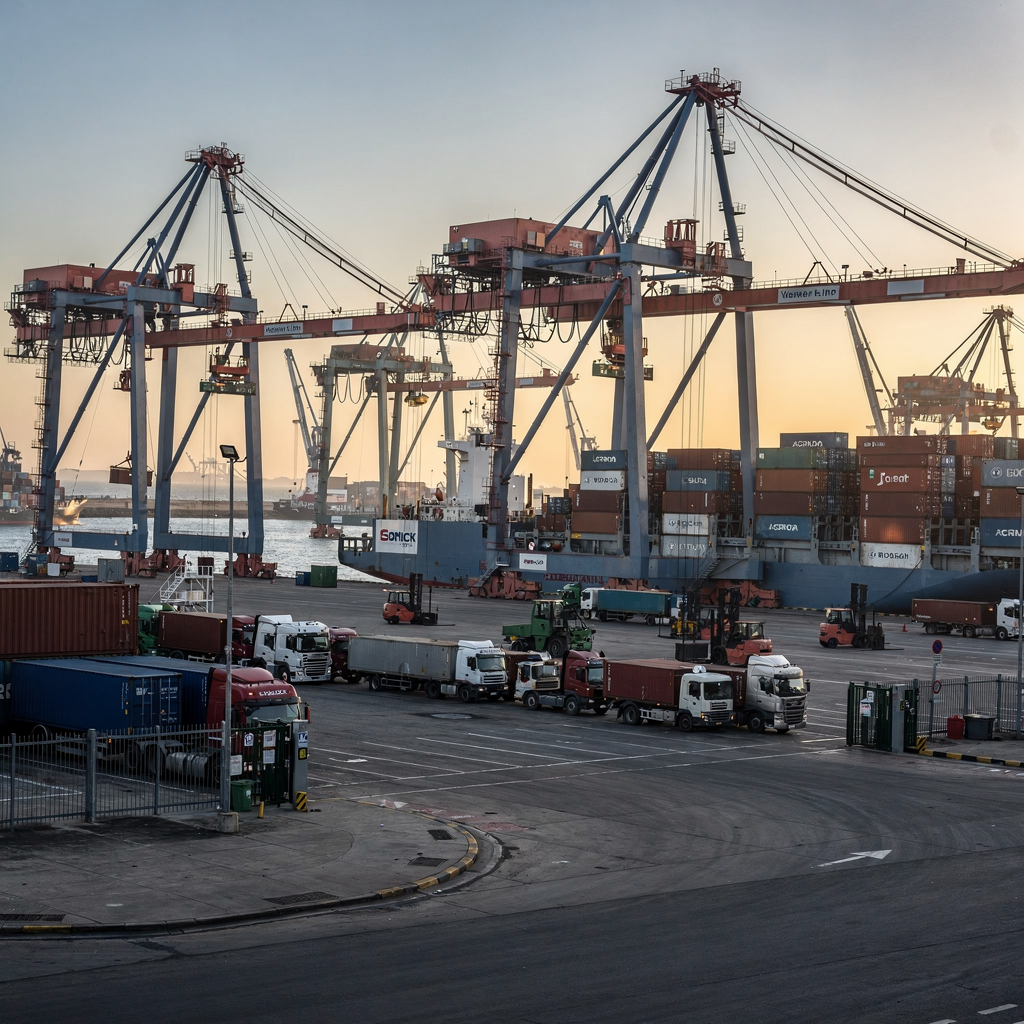
Understanding port operations and vessel schedules
Understanding port productivity starts with the vessel cut-off times that gates and depots enforce. Cut-off times define the last moment cargo can arrive and still make a planned vessel call. Missing that cutoff date creates cascading delays across terminals and higher costs for shippers. For example, global port congestion has produced waiting time spikes where some ports recorded vessel waiting times exceeding seven days during peak periods, which then damaged throughput and service reliability reported figures. Therefore, clear policies for cut-off times protect planned vessel operations and the downstream flow of containers through the yard and onto trucks.
Vessel schedules vary, and that variability strains crane allocation and yard planning. When a planned vessel is early or late, quay planners must reshuffle berth assignments and crane sequences. This creates a classic scheduling problem: how to match limited resources to tight time windows for many vessel calls. Research shows scheduling inefficiencies contribute roughly 15–25% of container dwell time at terminals, which reduces overall turnaround time and raises port costs literature review. Terminal teams face an increasingly complex mix of incoming ETA changes, customs holds, and shifting labor capacity, and they must act fast to keep a planned vessel on schedule.
Ports operate under heavy constraints. Equipment like cranes and straddles needs precise sequencing. Storage locations can fill up, and transfers may require extra moves that lengthen loading operations. The scheduling problem grows when weather systems or upstream delays change sailing plans, and then teams must reallocate berth slots and replan vessel deployment. To help, terminals adopt tools that simulate container yard behaviour and berth workflows, and those tools clarify where risks lie and how to restore schedule reliability. For readers seeking methods to model these dynamics, our simulation resources explain container yard modelling and berth scheduling approaches how to model container yard operations and berth-level planning simulation tools for berth scheduling.
Finally, vessel schedules must link to hinterland bookings and freight bookings so that cargo arrives in time for cut-off times. Ports, marine terminal planners, and shipping companies must coordinate ETD and estimated time of arrival data with gate operators and freight forwarder partners. Accurate sharing of the estimated time of arrival strengthens service reliability and helps avoid demurrage fees that terminals and shipping lines try to limit industry whitepaper. And so, a clear grasp of cut-off and the forces that reshape vessel calls becomes the foundation of operational efficiency at any hub port.
Terminal operators: optimize port call processes and schedule changes
Terminal operators must optimize quay time and respond to last-minute schedule changes as they occur. They allocate cranes, assign labor shifts, and manage berth windows to deliver a planned vessel on time. When a ship arrives early, operators reassign crews and crane sequences. When a ship is delayed, they conserve labor and reposition equipment. This dynamic decision-making combines human experience with structured rules and increasingly with AI-based optimization. For terminals aiming to improve gross crane rate and reduce rehandles, targeted process changes and simulation-backed strategies can show measurable benefits; practical guides explain crane rate improvements and operational levers for terminal operations gross crane rate improvement strategies.
Advanced planning uses predictive algorithms to adjust sequences on the fly. A heuristic algorithm can give planners a fast near-optimal solution for crane assignments, while mixed integer or integer programming methods support deeper computational experiments for strategic changes. Yet heuristic solutions often run faster for real-time rerouting and sequencing during peaks. For example, some operations reported up to a 20% reduction in turnaround time after adopting sophisticated scheduling tools, which in turn cut demurrage exposure and improved service reliability industry findings. Terminal operators therefore combine quick heuristics for dispatching problems with deeper models when time allows.
Loadmaster.ai builds closed-loop agents to assist terminal teams. Our StowAI and JobAI modules help sequence moves to minimize rehandles, and our StackAI balances the yard so that quay operations stay productive. These agents learn via a digital twin of the terminal, and they execute with operational guardrails. This approach reduces firefighting, which planners report as a constant pain point, and it supports more stable performance across shifts. For terminals evaluating simulation platforms before deployment, case studies and modelling libraries provide a practical path to test new policies without disrupting live operations simulation case studies.
To manage schedule changes, terminal operators should formalize a port call process that links berth release times, crew rostering, and yard allocation. They should also keep a clear escalation path so that when a planned vessel changes its ETD, the right stakeholders update the plan. Next, terminal teams should validate changes in a management system that tracks earliest return date and time of departure windows. Lastly, training staff on alternative workflows helps avoid cascading delays across the terminal when disruptions occur.
Drowning in a full terminal with replans, exceptions and last-minute changes?
Discover what AI-driven planning can do for your terminal
Minimising disruption in container shipping and freight handling
Disruption in container shipping comes from many sources. Weather, customs inspections, paperwork errors, and labor shortages all break schedules. For example, fatigue and understaffing link to a 10–15% rise in operational errors, which then prolongs cargo handling and increases risk of missed departures study on fatigue risks. These human-driven errors multiply when terminals operate near capacity and when tight schedules compress the time for checks and transfers. Therefore, addressing workforce patterns matters for operational continuity.
Paperwork and inspections often create chokepoints at the gate and in the container yard. Automated gate systems and digital documentation remove mundane delays, and they reduce gate dwell time. UNCTAD highlights automation and digitalisation as levers to speed clearance and to support green port initiatives while complying with regulatory requirements UNCTAD monograph. Implementing port community systems that share paperwork electronically speeds customs clearance and helps a shipper or freight forwarder confirm container readiness before the cutoff date.
Labor management also needs attention. Optimizing shift patterns reduces fatigue and lowers error rates. In this area our reinforcement-learning approach offers practical benefits: the AI tests shift and workload mixes in simulation to find robust patterns that balance quay productivity and yard flow. That reduces rehandles and shortens travel distances inside the yard, which then lowers energy use and risk. Furthermore, digital checks and electronic documentation shorten administrative steps and reduce manual mistakes at the gate and in the terminal office.
To anticipate disruptions, terminals should integrate weather systems and live customs feeds into their planning tools. This approach lets them identify potential risks and route around trouble with alternative ports or revised loading sequences. They should also keep a clear contingency for storage locations so that unexpected overstow can be mitigated quickly. A combined focus on process, digital tools, and workforce design will reduce disruption and keep more shipments moving to their intended vessels and onward across the supply chain.
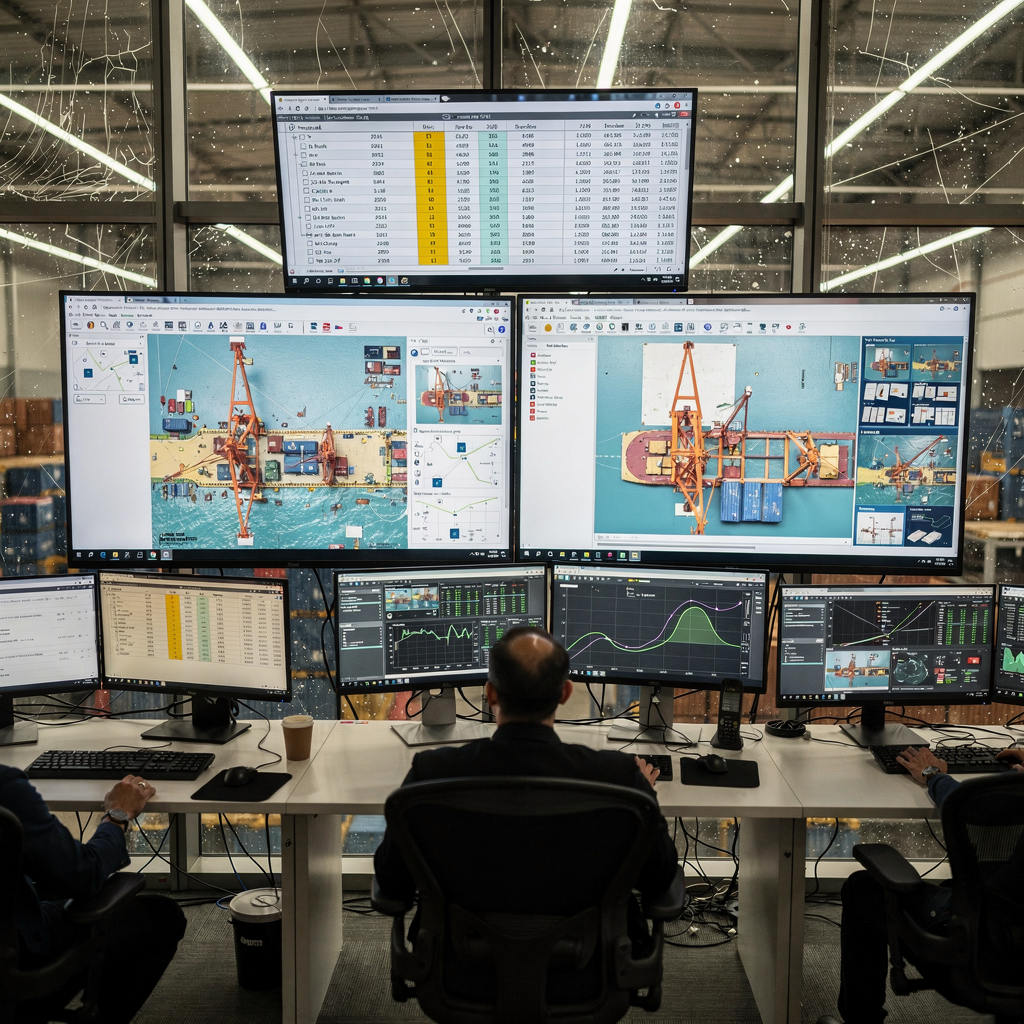
Real-time logistics optimization across the supply chain
Real-time data sharing across terminals, shipping lines, and hinterland carriers unlocks smarter routing and scheduling decisions. When all parties broadcast ETA updates and berth status, decision-makers can reroute trucks, rebalance yard stacks, and reprioritize moves. Such integrated scheduling reduces friction and helps align a planned vessel with the correct cargo mix. As an example of system-level gains, improving scheduling efficiency can reduce vessel turnaround time by around 20%, boosting throughput and service reliability industry analysis. Thus, data sharing pays dividends quickly.
AI-driven tools now solve routing and scheduling problems dynamically. They use estimated time of arrival inputs, terminal resource status, and gate queues to assign tasks. Loadmaster.ai trains RL agents on a digital twin to explore many policies and then deploys robust controls in the live terminal. This approach supports quicker decisions and higher operational efficiency without overburdening planners. For teams seeking to test dynamic transport replanning during disruptions, simulation examples can demonstrate how rerouting and resource adjustments work in practice dynamic internal transport replanning.
Practical deployments combine fast heuristics with policy-driven AI. Heuristics solve immediate assignment problems and keep equipment busy, while RL policies look ahead and trade off quay productivity versus yard congestion. This blend yields lower waiting times at the gate and fewer unnecessary shifters in the yard. Across the supply chain, synchronised operations reduce cascading delays across connecting transport legs, and they increase throughput at hub ports. For teams managing terminal software ecosystems, exploring terminal operating systems and interoperability matters; integration with a TOS keeps sequencing decisions executable on the ground terminal operating system integration.
Finally, by combining data from shipping companies, freight forwarders, and port community systems, terminals gain a clearer picture of shipment readiness. That view supports better vessel deployment and helps terminals avoid missed cut-off times. With live feeds and coordinated actions, ports can respond to tight schedules with confidence and keep global logistics flowing more predictably.
Drowning in a full terminal with replans, exceptions and last-minute changes?
Discover what AI-driven planning can do for your terminal
Alignment of sailing schedules: Coordination between freight forwarder, shipper and port authorities
Alignment of sailing schedules requires clear communication protocols among freight forwarder, shipper, and port authorities. Stakeholders must confirm container readiness well before the cutoff date, and they must provide status updates that the terminal can act upon. For example, a shipper should submit complete manifest data early so customs can clear cargo in time for the port call. When a freight forwarder notifies the terminal of late arrivals, the terminal can adapt loading plans and reassign the berth as needed. Such active coordination raises schedule reliability and reduces the chance of demurrage penalties for cargo owners.
Shared ETAs and live tracking enable proactive decisions. Ports benefit when the shipping network and inland carriers exchange real-time updates about truck ETD and container pickup. Port authorities also need a clear feed from shipping companies about planned vessel arrival and time of departure changes so that berth and crane plans reflect reality. Many international maritime data standards encourage this exchange to increase transparency in international shipping and to support smoother handoffs at hub ports and feeder hubs alike.
Operational protocols should include verification steps and automated alerts. A common practice is to require a container to be “confirmed ready” in the port community systems a set time before cut-off times. That confirmation triggers the terminal to reserve space in the container yard and to schedule the gate slot. In technical terms, this aligns vessel calls with downstream flows and reduces gate queues. For ports that want to elevate their control, combining policy-driven AI with existing TOS workflows can create an integrated scheduling framework that adapts to last-minute changes without manual triage.
Regulatory requirements and industry guidance help, and so do common data formats for documents and manifests. Clear rules on the earliest return date, customs holds, and inspection windows reduce uncertainty. Finally, a continuous feedback loop between shipper, freight forwarder, and terminal creates shared accountability so that tight schedules do not collapse into a costly juggling act. This alignment sustains better service reliability and supports global trade.
Improving terminal performance for shipment and global shipping resilience
Terminals that invest in automation and digital twins gain resilience and better throughput. Automated gantries and robotics reduce manual handling and lower error rates for container handling. Digital twins let operators run computational experiments and discrete time simulations to evaluate new policies before live rollout. For teams exploring RL and simulation, our reinforcement-learning resources detail how policy search can surpass conventional historical models and create consistent outcomes across shifts reinforcement learning for deepsea operations. This method avoids the trap of teaching an AI only the average of past decisions.
Workforce design also matters. Optimised shift patterns reduce fatigue and lower operational errors. Terminal operators should balance crane productivity and yard workload so that no group becomes a bottleneck. When planners shift from firefighting to proactive control, they prevent rehandles and shorten driving distances. That yields faster turnaround time and more reliable service for shipping companies and shippers alike.
Investments must also support environmental and resilience goals. Green port initiatives complement automation and better routing to reduce idle time and cut emissions from equipment. Likewise, improved storage location logic and smarter container yard layouts help reorganise cargo quickly when unplanned vessel calls occur. For planners interested in modelling specific hardware and scheduling interactions, terminal performance modelling tools provide a robust next step terminal performance modelling software.
Finally, the combined effect of better tools, trained staff, and open data sharing strengthens the global logistics network. Ports that adopt integrated, tested solutions reduce congestion, lower demurrage fees, and support smoother flows across the supply chain. Loadmaster.ai helps terminals test policies safely in a sandbox, and then deploy agents that maintain operational guardrails so that gains are repeatable and audits remain transparent. By aligning people, process, and technology, terminals raise throughput and contribute to a more resilient global shipping system.
FAQ
What is vessel cut-off time and why does it matter?
Vessel cut-off time is the deadline for cargo to arrive at the terminal to be loaded onto a specific vessel. It matters because missing that time can trigger demurrage fees, create cascading delays across the supply chain, and increase port congestion.
How do terminals reduce the risk of missed cut-off times?
Terminals reduce risk by improving communications with shippers and freight forwarders, automating gate processes, and adopting scheduling tools that react to ETA changes. Additionally, simulation and AI can test policies to minimise rehandles and improve turnaround time.
Can AI help with real-time scheduling at ports?
Yes. AI models, including reinforcement learning agents, can learn policies that balance quay productivity and yard flow. These agents run in a digital twin, so planners can validate strategies before applying them in live terminal operations.
What role do freight forwarders play in meeting cut-off times?
Freight forwarders coordinate inland transport and documentation so cargo arrives before the cutoff date. Their timely communication with the terminal and with shippers helps avoid last-minute changes that could disrupt vessel calls.
How much can better scheduling reduce turnaround time?
Studies indicate that improved scheduling can reduce vessel turnaround time by up to 20%, which helps increase terminal throughput and reduce waiting time for vessels in congested periods.
What immediate steps can a terminal take to improve scheduling?
Begin by digitising gate processes, enforcing early confirmation windows for container readiness, and running simulations to test shift patterns. Then pilot AI-assisted sequencing in a sandbox before full deployment.
How do customs inspections affect cut-off management?
Customs holds can delay cargo clearance and push containers past cut-off times. Digital documentation and integrated port community systems speed checks and lower the chance of inspections blocking on-time loading.
What metrics should terminals monitor to track improvement?
Key metrics include turnaround time, quay crane moves per hour, container dwell time, gate throughput, and demurrage incidence. Monitoring these helps quantify gains from any operational changes.
Are small and medium terminals able to adopt these solutions?
Yes. Many tools scale to different terminal sizes, and simulation allows teams to test solutions before investment. Using modular AI agents and TOS integration, terminals of varying size can achieve measurable improvements.
How does Loadmaster.ai support terminals during implementation?
Loadmaster.ai builds digital twins and trains RL agents to explore policies without relying on historical data. This cold-start ready approach reduces dependency on past records and helps terminals deploy with operational guardrails and measurable KPIs.
our products
 stowAI
 stackAI
 jobAI
jobAI
Innovates vessel planning. Faster rotation time of ships, increased flexibility towards shipping lines and customers.
Build the stack in the most efficient way. Increase moves per hour by reducing shifters and increase crane efficiency.
Get the most out of your equipment. Increase moves per hour by minimising waste and delays.
stowAI
Innovates vessel planning. Faster rotation time of ships, increased flexibility towards shipping lines and customers.
stackAI
Build the stack in the most efficient way. Increase moves per hour by reducing shifters and increase crane efficiency.
jobAI
Get the most out of your equipment. Increase moves per hour by minimising waste and delays.