
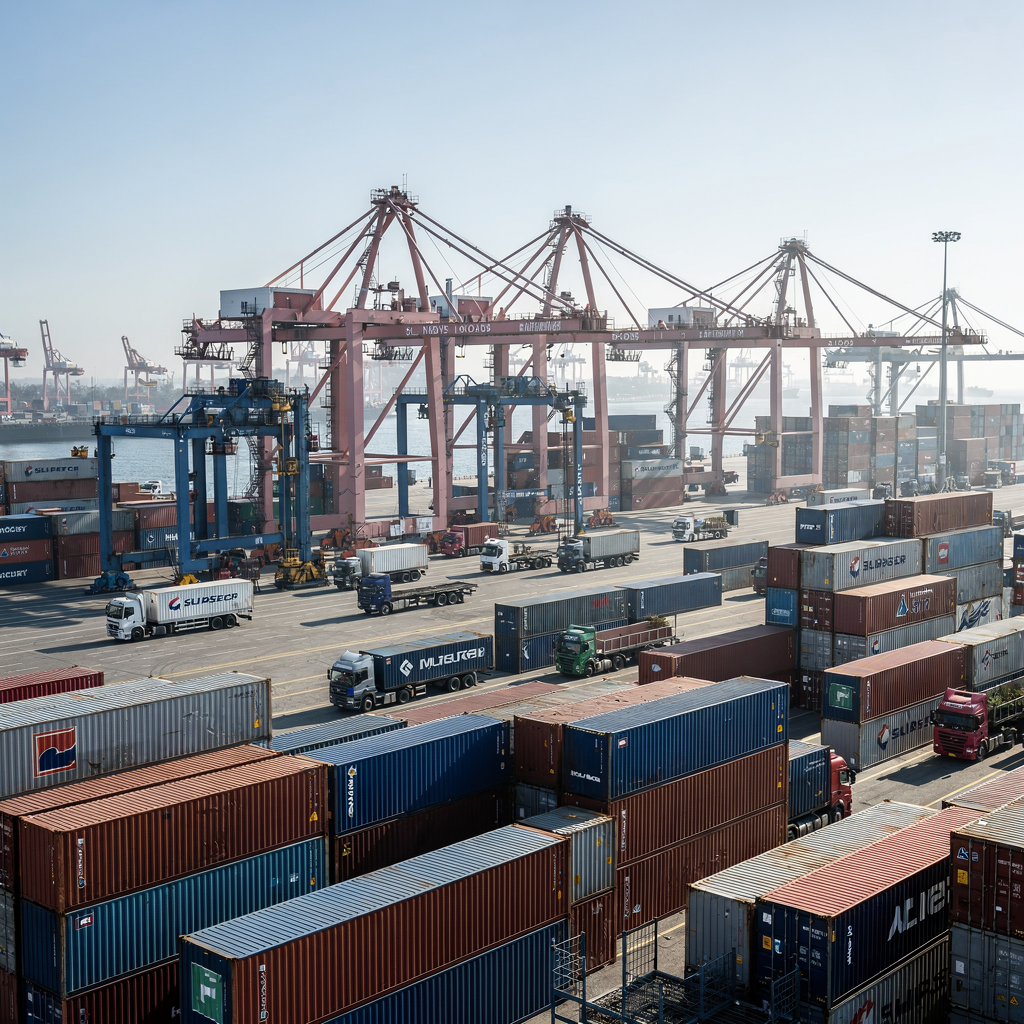
The role of algorithm in container terminal efficiency
Smart algorithm design drives measurable gains in a container terminal. Ports must manage limited storage space and high arrival variability. A well-tuned algorithm reduces vessel waiting times and improves planner decisions. Research shows that better yard planning can cut vessel waiting times by up to 20% through improved stacking and sequencing (multi-agent study). That statistic matters. Faster turn-around unlocks berth capacity. It also lowers demurrage for shipping lines and supports international trade by speeding container departure.
Key performance indicators in a container terminal include the number of rehandling operations, energy use, and turn-around speed. An algorithm that lowers the average number of container relocations helps yard crews and reduces fuel use. For example, network-based models reduced container relocation moves by 10–18% in inland terminals (MDPI). Those gains translate to lower emissions and fewer wasted truck cycles. If a terminal can minimize the number of relocations, then it will save labor and cut operating costs.
Planners track many metrics. They count the number of container moves per quay crane shift. They watch crane operation throughput and idle time. A strong programming model supports trade-offs. It lets operators decide whether to protect quay productivity or to rebalance yard workload. Today, existing algorithms often copy past choices. They rely on historical patterns and static rules. That approach breaks down when vessel mixes change. Loadmaster.ai uses reinforcement learning agents to explore new policies and to improve stability across shifts, while keeping human-set constraints for safe deployment. The result is fewer firefighting cycles, steadier throughput, and a path to optimal container storage planning.
Multi-agent algorithm for dynamic yard assignment
Hierarchical decision making is central to multi-agent systems in container terminals. A hierarchical reinforcement learning approach splits tasks across cooperating agents. One agent handles quay stow sequencing. Another manages short-term container placement. A third coordinates execution with trucks and cranes. Together they solve the location assignment problem and they adapt in real time. This multi-agent design helped researchers report about a 15% reduction in container handling time when applied to outbound container operations (Springer). That improvement increases effective quay time and reduces congestion at the gate.
Agents exchange compact signals and negotiate priorities. They treat the yard like a set of resources and they route moves to balance load across equipment. In practice, this cuts manual re-routing and lowers the average number of container relocations. The approach also reduces asymmetry between stacks. That lowers peak RTG or straddle workloads and improves shift-to-shift consistency. For terminals that need deeper context, a model based digital twin simulates millions of trajectories. That lets the algorithm to learn without requiring long historical records. Loadmaster.ai trains three closed-loop agents—StowAI, StackAI and JobAI—to coordinate quay, yard and gate in a single policy. The agents simulate decisions and then deploy with guardrails so operators retain control.
When managers face a sudden vessel delay, the multi-agent system shifts priorities. It can protect quay crane productivity first, and then rebalance yard flows. This dynamic approach addresses the problem for outbound containers and the restricted container relocation problem by coordinating moves early. If you want to read about multi-agent deployments in practice, see our detailed write-up on multi-agent AI in port operations here. The design supports rapid replanning in the face of disruptions and it reduces the friction of manual container allocation.
Drowning in a full terminal with replans, exceptions and last-minute changes?
Discover what AI-driven planning can do for your terminal
container storage constraints and environmental impact
Storage decisions follow physical constraints. Terminals balance stacking limits, lane widths, crane reach, and the amount of storage space. Each constraint shapes how an algorithm places containers. The container stacking problem is a common sub-problem. Stacks have a height limit and the topmost container blocks those beneath. Therefore, a storage strategy must consider topography of demand and the number of container moves required to reach a required box. The container relocation problem appears when operators must reshuffle to access a required container. That problem raises costs and creates extra fuel burn.
Yard layout determines travel distances. Shorter intra-yard routes cut CO₂ emissions. A sustainable strategy model reported a 15% decrease in container transport distances within the yard (sustainability study). That result comes from smarter placement and from reduced deadheading. Better storage allocation reduces empty trips and it trims the energy footprint of yard operations. For ports that aim to reduce scope 1 emissions, storage optimization in yards yields quick wins.
Operational rules matter. Some terminals group outbound containers by destination to reduce truck search time. Others cluster by carrier to speed loading. Each approach trades off relocate moves against faster retrieval. A heuristic algorithm can help managers explore those trade-offs in real time. For terminals facing limited storage space, a programming model that encodes stacking rules and lane constraints helps determine the optimal storage plan. Storage yard management then becomes an exercise in multi-objective optimization: throughput, CO₂, and equipment wear. Those trade-offs are central to modern port strategy.
Predictive algorithm for optimising container retrieval
Machine learning improves forecasts for container dwell times and slot availability. Predictive algorithms analyze booking data, gate flows, and ship manifests to estimate when a box will be needed. Accurate dwell-time forecasts let the terminal reduce unnecessary reshuffles. Pilot trials of predictive systems showed about a 12% decrease in container retrieval delays and smoother crane sequencing (AI advances summary). That reduction speeds container loading and cuts idle crane minutes.
Integration with crane scheduling synchronises quay moves with yard moves. A combined approach aligns container retrieval with quay crane slots and truck arrivals. That reduces the problem of container blocking and it lowers the number of rehandling operations on each shift. When a predictive model flags a required container deep in a stack, the yard agent can pre-position that container early. This pre-positioning lowers the probability that a crane will wait for an intervening yard move during a critical vessel window.
Software vendors now offer real-time replanning features. These systems ingest live telemetry from cranes and trucks. They then run an optimization model that balances desired crane throughput against short-term yard constraints. For terminals migrating TOS or deploying new automation, planning that coordinates predictive retrieval and quay sequence is essential. Learn more about real-time replanning capabilities and how they pair with crane scheduling in this guide.
Drowning in a full terminal with replans, exceptions and last-minute changes?
Discover what AI-driven planning can do for your terminal
AI-driven algorithm for smart container storage planning
Real-time data analytics powers AI-driven storage slot selection. An algorithm to solve complex placement tasks evaluates current telemetry and near-term forecasts. It suggests where to place each box to protect future plans. Multi-objective optimisation balances throughput, cost, and carbon footprint. In trials, AI solutions achieved a 25% rise in yard utilisation while cutting retrieval delays (case evidence). The result: more moves per hour without adding staff.
AI models range from supervised predictors to reinforcement learning agents. A model based digital twin generates synthetic experience so the AI can learn even with limited historical data. That method avoids the classic pitfall where supervised models simply imitate average past choices. Instead, the AI tests novel strategies in simulation and then refines them against realistic KPI weights. This approach suits automated container terminal deployments where safe, auditable control is required. If your terminal plans an automation rollout, consider simulation-driven training resources on simulation. They explain how to spin up a sandbox and to tune KPIs safely.
Practical AI deployments also use explainable constraints. Operators set hard rules and the AI proposes policies within those bounds. That ensures compliance with safety, customs, and hazardous cargo segregation rules. For instance, AI can protect dangerous cargo lanes and still optimize general storage. Loadmaster.ai’s agents train in a terminal-specific twin and then run online with human oversight. The approach yields measurable gains in fewer rehandles, balanced workloads, and consistent performance across shifts.
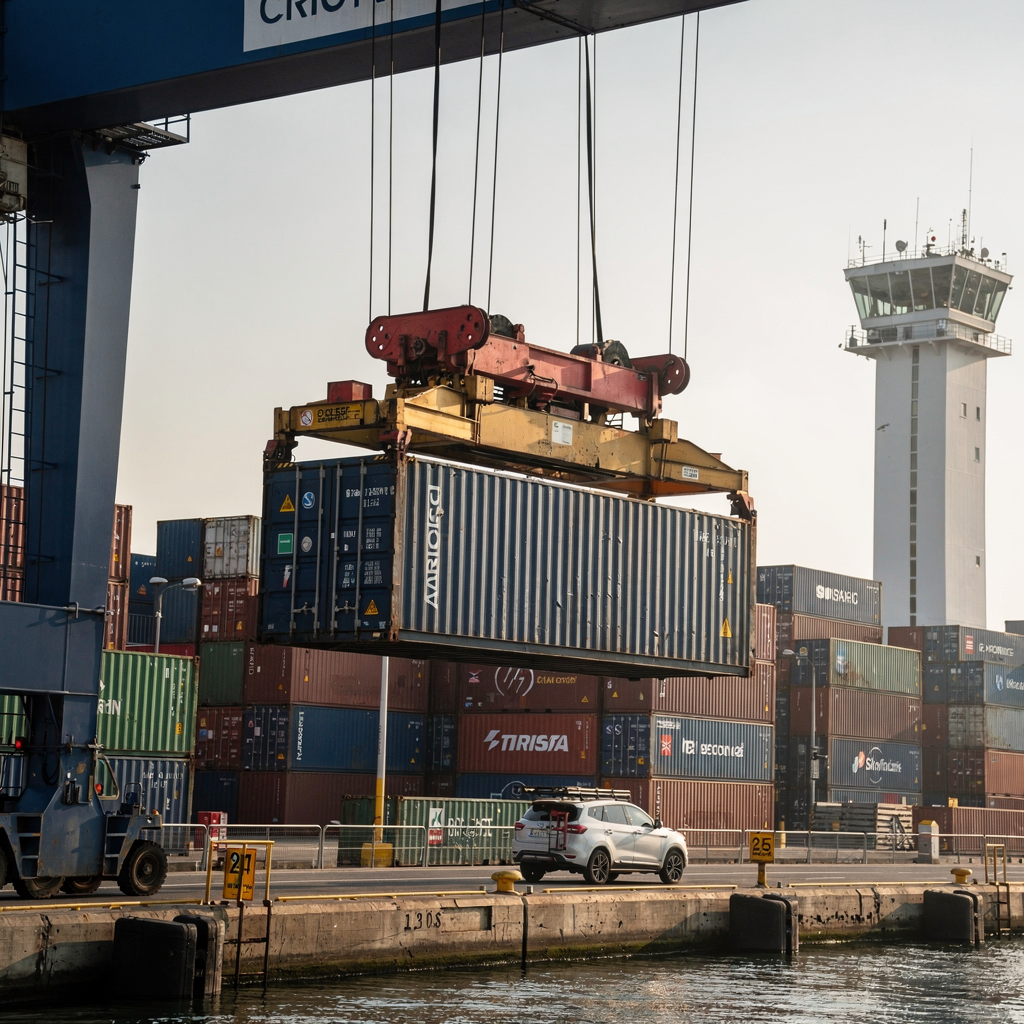
Future directions of algorithm in port logistics
Digital twin technology will become central to how terminals test strategies. Digital replicas let planners stress-test storage allocation scenarios under peak demand. They also support what-if studies before a new berth or stack layout is built. Combining twins with AI lets operators evaluate resilience and to study the impact of equipment failures. A recent study outlines how digital twins improve resilience and sustainability in port facilities (digital twin research). Those tools help teams plan for rare events without risking live operations.
Open-data initiatives will enrich model training sets. With better data on truck arrivals and hinterland flows, algorithms can predict inbound containers more accurately. This leads to smarter storage allocation and it reduces empty repositioning. Yet challenges remain. Scalability, real-time data integration, and governance persist as hurdles. Operators must choose models that remain robust when patterns change. That is why Loadmaster.ai emphasizes cold-start readiness and sim-trained policies that do not require large historical datasets.
Future research will explore hybrid systems that pair heuristic algorithm steps with learned policies. A hyper-heuristic algorithm with a q-learning layer could select which heuristic to apply under specific yard states. That hybrid design preserves human-understandable rules while adding adaptive behavior. Researchers will also focus on minimizing the number of relocations under dynamic demand. In the next wave, terminals will adopt models and algorithms that jointly schedule quay cranes and yard operations to maximize container throughput and to minimize environmental impact.
FAQ
What is a smart algorithm for container terminal storage location?
A smart algorithm makes data-driven decisions about where to place containers in the yard. It considers demand forecasts, equipment workloads, and safety rules to improve throughput and cut unnecessary moves.
How much can algorithms improve container terminal performance?
Results vary by terminal, but studies report up to 20% reduction in vessel waiting time and up to 25% gains in yard utilisation in pilot deployments. These improvements stem from better sequencing, fewer reshuffles, and tighter coordination between quay and yard.
What role does reinforcement learning play in yard assignment?
Reinforcement learning trains agents to make sequential placement decisions. It is useful when rules are complex and when historical patterns are insufficient. RL agents can test millions of scenarios in a digital twin before live deployment.
Can predictive models reduce retrieval delays?
Yes. Machine learning forecasts for container dwell time and slot availability help pre-position containers. Pilot trials reported reductions in retrieval delays by around 12%.
How do storage constraints affect environmental impact?
Stacking limits and lane layout affect travel distances. Better storage choices cut intra-yard movement and CO₂ emissions. Sustainable storage strategies have shown transport distance reductions near 15% in studies.
Is historical data required to deploy these algorithms?
Not always. Simulation-based training can generate experience for agents. That means an automated container terminal can start with sim-trained policies and then refine them online, reducing reliance on historical data.
How do multi-agent systems coordinate quay and yard operations?
Multi-agent systems split tasks among specialized agents and have them share state information. One agent can sequence quay crane stows while another balances yard stacks and a third orchestrates execution with trucks.
What are the main challenges for adoption?
Key challenges include real-time data integration, scalability across large yards, and aligning multi-objective KPIs. Governance and operator trust are also essential to successful rollouts.
How do AI solutions handle hazardous or restricted cargo?
AI respects hard constraints that operators set for segregation and safety. It optimizes placement within those rules and can be audited to ensure compliance with regulatory requirements.
Where can I learn more about integrating these systems into my terminal?
Technical resources and case studies are available that cover simulation, multi-agent design, and real-time replanning. For example, see articles about using simulation for capacity planning and about real-time replanning capabilities on our site here and here.
our products
 stowAI
 stackAI
 jobAI
jobAI
Innovates vessel planning. Faster rotation time of ships, increased flexibility towards shipping lines and customers.
Build the stack in the most efficient way. Increase moves per hour by reducing shifters and increase crane efficiency.
Get the most out of your equipment. Increase moves per hour by minimising waste and delays.
stowAI
Innovates vessel planning. Faster rotation time of ships, increased flexibility towards shipping lines and customers.
stackAI
Build the stack in the most efficient way. Increase moves per hour by reducing shifters and increase crane efficiency.
jobAI
Get the most out of your equipment. Increase moves per hour by minimising waste and delays.