
Terminal operations and Fuel Use in Ports
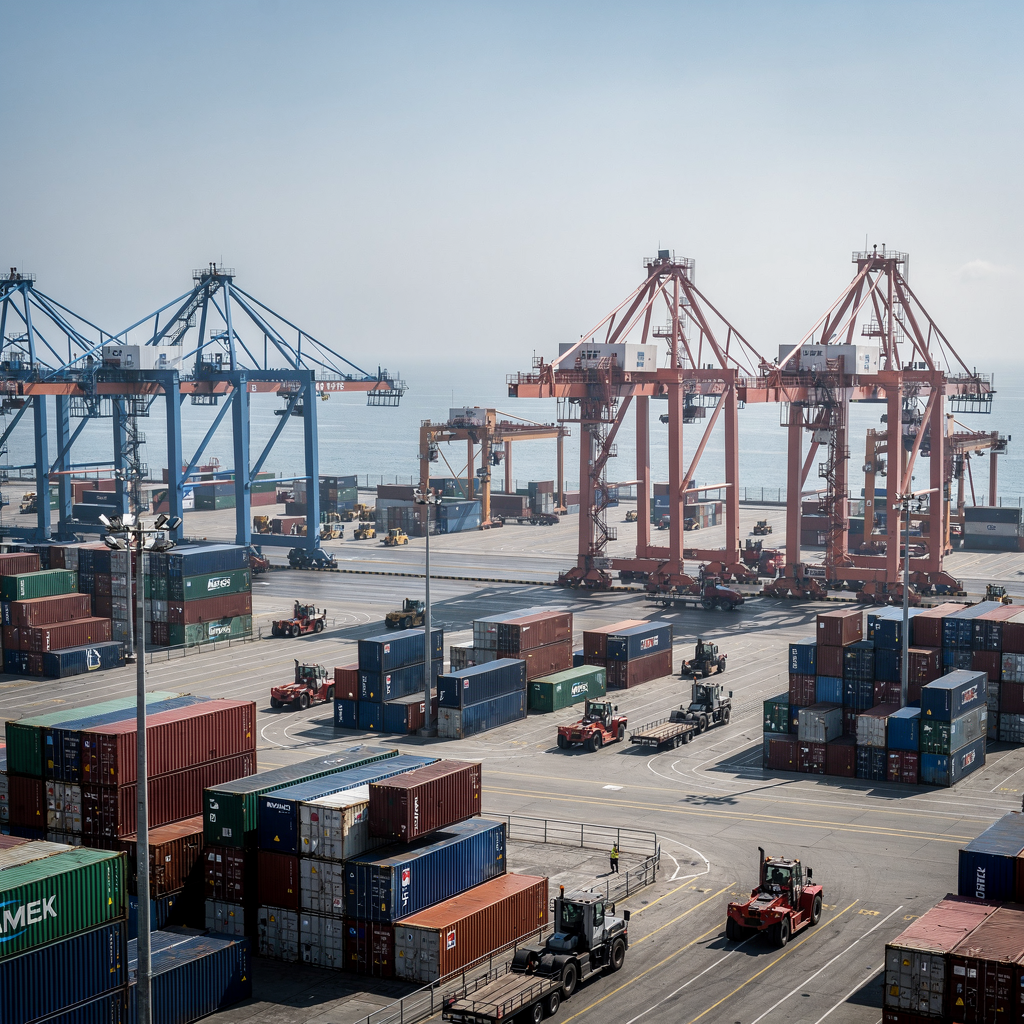
Terminal activity drives a large share of energy use at a port. Terminals serve as critical nodes in maritime logistics and they move cargo between ship, road and rail. As a result, the equipment that runs inside a terminal — cranes, yard tractors, trucks and specialized equipment — determines much of the site’s energy profile. In many marine terminals, cranes and yard tractors operate near-continuously, and small inefficiencies add up into high fuel bills. For example, research on port-area energy efficiency links auxiliary engines and equipment to material fuel use and emissions around berths and within terminal areas (IMO study). That study helps explain why terminals need focused action.
In typical terminal operations, cranes use diesel or electric power depending on the model, and yard tractors contribute a large share of fuel consumption. Moving containers between quay and stack, and moving empty boxes to allocation zones, creates many short trips. Those repeated trips increase fuel use and raise downtime for refuelling or maintenance. Dockside congestion also extends operating hours, and it increases emissions from idling equipment. Case reports show that better movement planning and reduced idle running can trim terminal fuel use by double-digit percentages (study on voyage and operational choices). That matches industry findings for ports and container terminals.
Beyond cost, the environmental impact demands attention. The greenhouse gas footprint of port terminal assets contributes to local air quality issues and global emission totals. By cutting needless running and by shifting to low-carbon assets, terminals can make measurable emission reduction and reducing fuel goals. Stakeholders from port authorities to terminal operators and carriers expect improved operational performance and better regulatory compliance. Terminal management now links productivity metrics to emission targets and to energy management strategies. This pressure drives investments in terminal automation, retrofits and renewable energies across terminals that want to serve as critical hubs in low-carbon supply chains.
Operational Planning to Optimize Equipment Moves
Good operational planning reduces wasted miles inside a terminal and helps optimise the use of assets. Scheduling and routing work best when planners coordinate quay moves, yard placement and gate flows. In a container terminal context, simple changes to allocation rules and to the sequence of moves often cut rehandles and shorten driving distances. For example, voyage-style movement planning adapted to intra-terminal flows treats each quay-to-yard transfer like a short voyage. That approach lets planners balance quay productivity versus cross-yard travel and it helps minimise idle running.
Terminals can use operational planning to reduce congestion, and at the same time preserve turnaround for container vessels. By mapping likely traffic and by sequencing moves to reduce overlap, planners can avoid bottleneck spots near the berth and at the gate. One case study reported fuel savings of about 12% after optimized scheduling and routing for yard tractors and cranes (case study). Another review shows broader operational choices can produce 10–20% reductions in fuel use when terminals redesign their movement rules (research).
To implement this, terminals should define clear allocation methods for stacks and quay blocks and then measure the impact on utilization and throughput. Operators must combine short-term dispatch rules with longer-term yard layout changes. Modern terminals rely on a mix of automation and operator judgment, and a structured framework helps both coexist. Loadmaster.ai uses reinforcement learning agents to learn robust policies that minimize driving distance and balance crane productivity without relying on flawed historical averages. The agents run in a sandbox digital twin so planners can test rules before they change live operations.
Start with small experiments. Try different sequencing rules for a single berth, then expand to more. Track performance with clear KPIs such as moves per hour, turnaround time and utilization. Use analytics to reveal areas for improvement and to expose hidden inefficiency. This way terminals can optimize operations while maintaining safety and without disrupting vessel schedules.
Drowning in a full terminal with replans, exceptions and last-minute changes?
Discover what AI-driven planning can do for your terminal
Real-time Tracking with Terminal Operating System
A modern terminal operating system links real-time feeds from equipment, cranes and gates into a single control display. Live telemetry and location updates let dispatchers see where every yard tractor, gantry and stacker sits. With that view, they avoid redundant dispatches and shorten waiting time. Integration with a terminal operating system gives planners the ability to redirect a move instantly, and it reduces downtime and equipment damage risks.
Real-time data also powers alerts that prevent costly inefficiency. For example, a terminal operator can detect when a tractor idles in a queue and then reroute a nearby unit to serve the task. That keeps equipment busy, cuts unnecessary travel, and supports faster turnaround. Trials of digital monitoring suggest up to 15% lower fuel use in yard operations through better control and alerts (digital optimisation study). Those savings compound when the system reduces rehandles and balances workload across shifts.
Terminal operating system upgrades also enable improved data quality and analytics. They provide the control system layer for automation systems and for advanced decision tools. With the right interface, TOS data feeds support AI that is powered by AI models and reinforcement learning agents to optimize their operations under live constraints. Loadmaster.ai integrates with leading TOS via APIs to run closed-loop control that coordinates quay, yard and gate moves. That reduces firefighting and results in fewer long drives, less downtime, and lower fuel use.
Finally, real-time operations monitoring makes it easier to comply with regulatory compliance for emissions and for safety. Terminals can record operational events to prove they followed rules. They can also use alerts to spot unusual patterns that may indicate equipment faults or pending maintenance. This way terminals maintain throughput and improve profitability while reducing emissions and without compromising safety.
Upgrading Handling Equipment and Terminal Assets for Operational Efficiency
Equipment choice shapes both fuel use and maintenance cost. Switching older diesel rigs to electric or hybrid machines cuts on-site fuel use. For example, replacing diesel yard tractors with electric vehicles or with electric or hybrid alternatives lowers tailpipe emissions and offers savings in daily fuel budgets. Many terminals now test electric vehicles for short-haul moves and charging strategies such as opportunity charging to match shift patterns and to avoid peak demand (opportunity charging strategies). Those pilots demonstrate that upgrading terminal assets can deliver recurring fuel savings.
Preventive maintenance also matters. Regular checks and timely retrofits preserve engine efficiency and avoid performance losses. Small degradations in gantry hydraulics or in tires increase rolling resistance and they raise fuel bills. A focused maintenance program reduces equipment downtime and extends asset life. Terminals that track maintenance against utilization optimize replacement timing and avoid unnecessary spending that hurts profitability.
There are trade-offs and capital choices to consider. Upgrading to electric or hybrid machines requires charging infrastructure such as microgrids and storage systems. Terminals should plan energy management so they can use renewable energies where possible, and so they reduce peak electricity costs. A phased approach to retrofit and to selecting equipment lets terminals test new models without large disruption. In some cases, a mixed fleet with diesel back-up may make sense during transition.
When terminals adopt new assets, they should monitor equipment health with sensors and analytics to catch early signs of equipment damage. They should also update safety procedures and training to reflect new workflows. This approach ensures upgrades deliver operational efficiency gains and support long-term emission reduction. For detailed tactics on reducing fuel in yard operations and on equipment pool optimization, terminals can consult practical guidance and case studies that explain expected returns and measurable outcomes (yard fuel reduction). The combined effect of modern handling equipment, good maintenance and smarter energy management drives steady improvements in terminal capacity and throughput per TEU.
Drowning in a full terminal with replans, exceptions and last-minute changes?
Discover what AI-driven planning can do for your terminal
Streamlining Container Handling in Container Terminals
Container handling is where small inefficiencies multiply into measurable waste. In container terminals, cranes sequence lifts, yard staff place boxes and truck drivers enter and exit the gate. Each handoff creates an opportunity to reduce movement of goods. By rethinking layout and flow control, terminals can cut cross-yard travel distances and reduce rehandles. That raises throughput and reduces fuel per TEU while preserving safe loading and unloading at the berth.
Start by mapping the critical paths for containers and by spotting bottleneck zones. Then test layout tweaks such as moving allocation blocks closer to the quay or changing stack height to reduce crane travel. In many cases, a simple change to allocation rules reduces rehandles and the number of shifters required. Tools like predictive berth availability modeling and dwell-time prediction help planners smooth peaks and reduce sudden congestion that causes long waits. For more on solving terminal congestion and on identifying hidden capacity, see practical articles on using analytics and AI (predictive analytics) and (hidden capacity with AI).
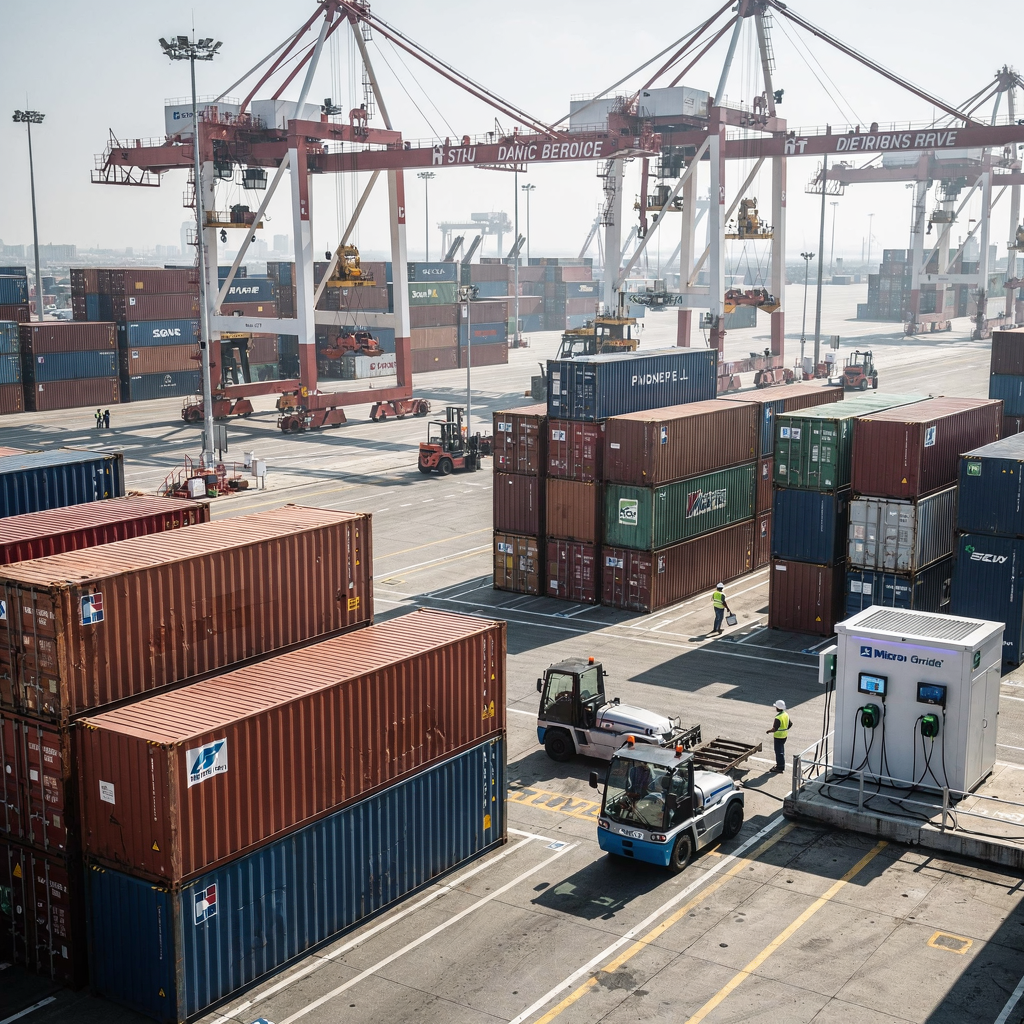
Automated container terminals and partial automation can reduce human-driven inefficiency. Automation systems that handle routine sequencing free operators to focus on exceptions. Yet automation alone will not fix poor layout or bad rules. Terminals should pair layout changes with updated control logic and with operator training. This combined approach reduces congestion at gate entry and exit and shortens turnaround time for trucks and for container vessels. The result is better throughput, less fuel per move, and improved operational planning across the site. That reduces emission intensity while increasing terminal capacity and utilization.
Integrating Terminal Operations into the Wider Supply Chain
Terminal fuel optimisation does not stop at the terminal gate. Terminals exist within a wider supply chain and they must coordinate with carriers, hauliers and inland hubs. When the terminal shares accurate arrival windows and offers predictable turnaround, the entire chain benefits. Conversely, mismatches at the gate create queuing and more idling, and that raises fuel use across the network. Effective integration reduces dwell time and improves end-to-end movement of goods.
Collaboration brings gains. For example, carriers that align vessel stow with terminal allocation reduce rehandles, and inland carriers that schedule pickups with terminal availability avoid long waits. Aligning supply and demand through coordinated slot booking and by giving carriers better visibility into terminal capacity reduces congestion and supports emission reduction. Terminal stakeholders who invest in shared data platforms make it easier to coordinate flows and to plan for peaks so that each partner can optimise their operations.
Long-term, the benefits include lower operating costs and stronger ESG performance. Terminals that reduce fuel use and that adopt renewable energies can market lower carbon handling, and they strengthen relationships with cargo owners and carriers. A full framework links terminal automation, energy management and supply chain collaboration to deliver measurable outcomes. In practice, successful terminals deploy tools for predictive berth availability and for measuring ROI of AI in port operations to make data-driven investment decisions (predictive berth modeling) and (measuring AI ROI).
Finally, when terminals take a systems view, they can prioritise changes that reduce downtime and equipment damage, and that improve safety without compromising throughput. This systems lens turns fuel savings into a broader drive for low-carbon, resilient logistics hubs.
FAQ
How much fuel can terminals save by optimizing equipment moves?
Case studies and reviews suggest terminals can save roughly 10–20% on fuel by improving planning and reducing redundant moves. One specific maritime terminal reported a 12% reduction after optimizing scheduling and routing (case study).
What role does a terminal operating system play in fuel reduction?
A terminal operating system collects real-time data and coordinates moves to prevent redundant dispatches. It also enables alerts and analytics that reduce idle running and improve utilization.
Can electric vehicles replace diesel equipment in all terminal tasks?
Electric or hybrid machines handle many short-haul tasks effectively, though some specialized equipment still relies on diesel today. Terminals often adopt a mixed fleet while they retrofit charging infrastructure and microgrids.
What quick operational changes deliver the fastest savings?
Simplifying allocation rules, sequencing quay moves better and reducing rehandles deliver immediate gains. Small layout changes that cut cross-yard travel also show fast returns.
How does real-time tracking reduce downtime?
Live telemetry flags idle periods and equipment faults early so maintenance teams act before failure. That reduces unplanned downtime and keeps productivity steady.
Are automation systems necessary to achieve fuel savings?
Automation helps, but it is not strictly required. Better rules, stronger operational planning and good analytics can produce significant savings on their own. However, automation systems scale and sustain improvements more reliably.
What metrics should terminals track to measure success?
Track moves per hour, turnaround time, utilization and fuel use per TEU. Also monitor rehandles and equipment downtime to identify areas for improvement.
How do terminals balance productivity with emission reduction?
By using multi-objective control that weights crane productivity against yard congestion and driving distance. This approach protects quay performance while reducing emissions.
How can smaller terminals adopt these practices affordably?
Smaller terminals can pilot planning changes and low-cost telemetry first, then scale upgrades. They can also use sandbox simulations to test policies before expensive retrofits.
What partnerships help terminals reduce fuel across the supply chain?
Collaborations with carriers, hauliers and inland hubs that share scheduling data reduce queues and idling. Shared platforms and agreed booking processes align flows and cut unnecessary movements.
our products
 stowAI
 stackAI
 jobAI
jobAI
Innovates vessel planning. Faster rotation time of ships, increased flexibility towards shipping lines and customers.
Build the stack in the most efficient way. Increase moves per hour by reducing shifters and increase crane efficiency.
Get the most out of your equipment. Increase moves per hour by minimising waste and delays.
stowAI
Innovates vessel planning. Faster rotation time of ships, increased flexibility towards shipping lines and customers.
stackAI
Build the stack in the most efficient way. Increase moves per hour by reducing shifters and increase crane efficiency.
jobAI
Get the most out of your equipment. Increase moves per hour by minimising waste and delays.