
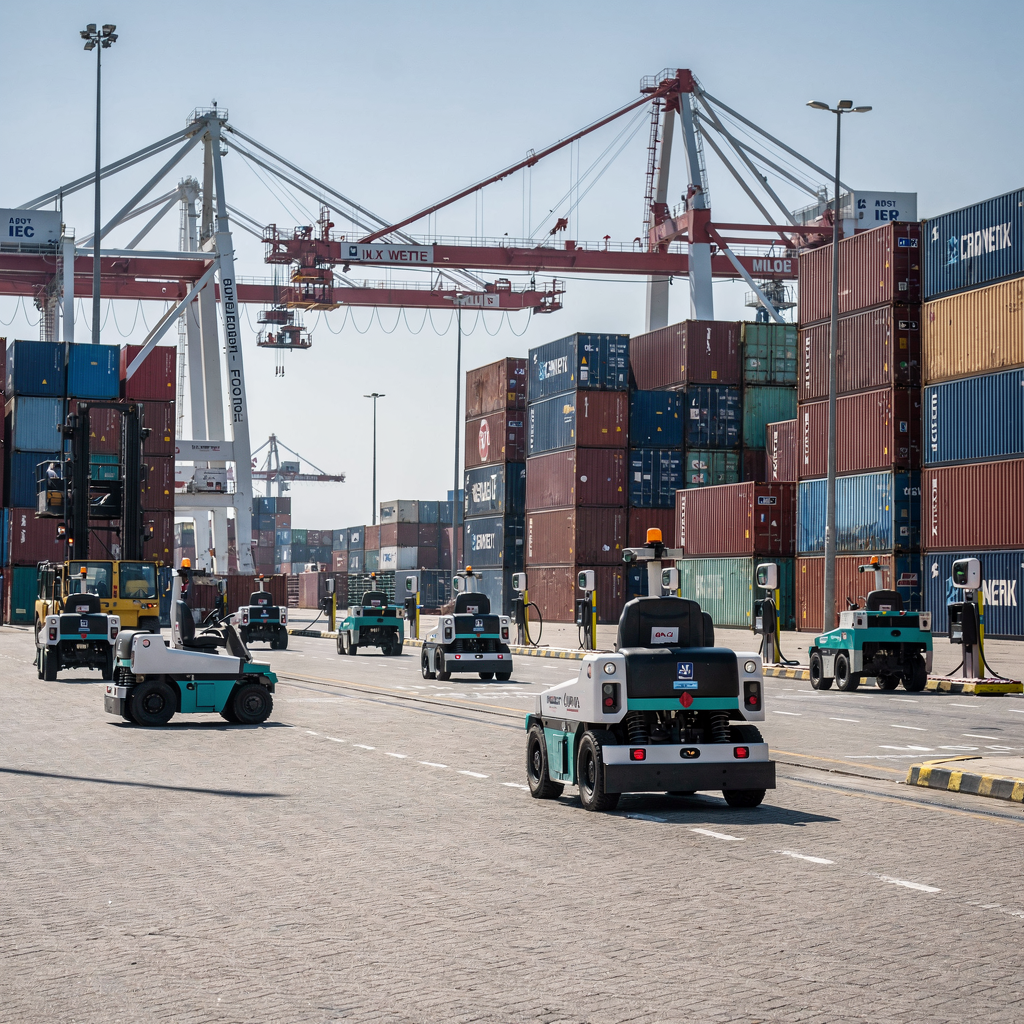
automated container terminal
An automated container terminal is a high-capacity, technology-driven facility in a deepsea port that runs container handling with minimal human intervention. First, cranes, AGV fleets, yard cranes, and a terminal operating system coordinate moves. Next, sensors and control layers monitor flows and adjust tasks. Also, an automated container terminal integrates quay cranes, yard equipment, and automated guided vehicles to move containers between berth, yard, and gate. In addition, the layout often supports a U-shaped automated container terminal or linear designs, and planners must account for container storage, container transport, and container terminal operations.
Trends in container ports shift the workload profiles and infrastructure demands. First, vessel size has grown dramatically; modern ships can exceed 20,000 TEU which compresses quay windows and shortens decision margins OECD. Also, digitalisation and 4IR technologies surface more decision data, and smart port tools let operators schedule precisely. Then, terminals adopt electrification to cut emissions and to meet regulatory pressure research. Therefore, power delivery points, charging piles, and network upgrades become core infrastructure components.
Electrification drives specific infrastructure needs. First, charging facilities and fast-charging pads must sit where AGVs naturally pause. Also, energy storage systems and local transformers reduce peak grid impact. Then, integrated scheduling tools coordinate vehicle charging with container handling and quay crane cycles. In addition, terminals consider battery swapping and battery swapping station layouts as alternative approaches to depot charging. Consequently, capital planning must balance charging station and battery pack investment against operational gains in availability and vessel turnaround.
Planners should review simulation and scheduling tools to test trade-offs. For example, systems that model terminal-equipment interactions and vehicle charging deliver measurable insights; readers can explore terminal equipment scheduling simulation solutions for examples of realistic testing terminal equipment simulation. Also, digital twins help in sizing charging infrastructure and in predicting peak loads before committing capital. Finally, an explicit focus on charging and charging scheduling reduces surprises and helps ports meet throughput targets while lowering CO2 output.
agv
AGV refers to the driverless vehicle used for horizontal transportation inside terminals. First, an AGV moves containers between the quay crane and yard blocks. Also, an automated guided vehicle can be tow-tractor style, flatbed, or pod-based. In addition, electric automated guided vehicles are common in new builds, and using battery-electric AGVs in container operations reduces local emissions sharply. For instance, electric AGVs can cut port emissions by up to 70% compared to diesel fleets research.
Battery types vary. First, terminals may use lithium-ion packs for high energy density and fast-charging capability. Second, some designs prefer modular battery packs for quick swapping. Also, battery capacity choices depend on cycle profile, payload, and shift lengths. For example, opportunity charging allows operators to fit smaller battery packs. As a result, battery pack size can fall by about 30–40%, which lowers vehicle weight and capital cost study.
Workflow integration matters. First, AGVs frequently pause during container loading/unloading, handovers, or when waiting for slot clearance. Also, these natural pauses present charging opportunities, so opportunistic charging and opportunistic scheduling reduce downtime. Then, operators must balance charge thresholds, energy consumption, and task priorities. In addition, vehicle-level telemetry and agv systems report battery state, temperature, and route history to central controllers. Consequently, the scheduling of agvs and the agv scheduling problem become active planning concerns during peak calls.
Operational gains are measurable. For instance, smart charging infrastructure has raised AGV availability and utilization by up to 25% in some implementations ESCAP. Also, smaller batteries reduce battery charging time and increase route flexibility. Thus, terminals get higher throughput, lower fuel cost, and a smaller environmental footprint. For readers who want detailed simulation libraries to model these dynamics, the AnyLogic terminal simulation library demonstrates equipment and energy flows in a testbed simulation tools.
Drowning in a full terminal with replans, exceptions and last-minute changes?
Discover what AI-driven planning can do for your terminal
charging strategies
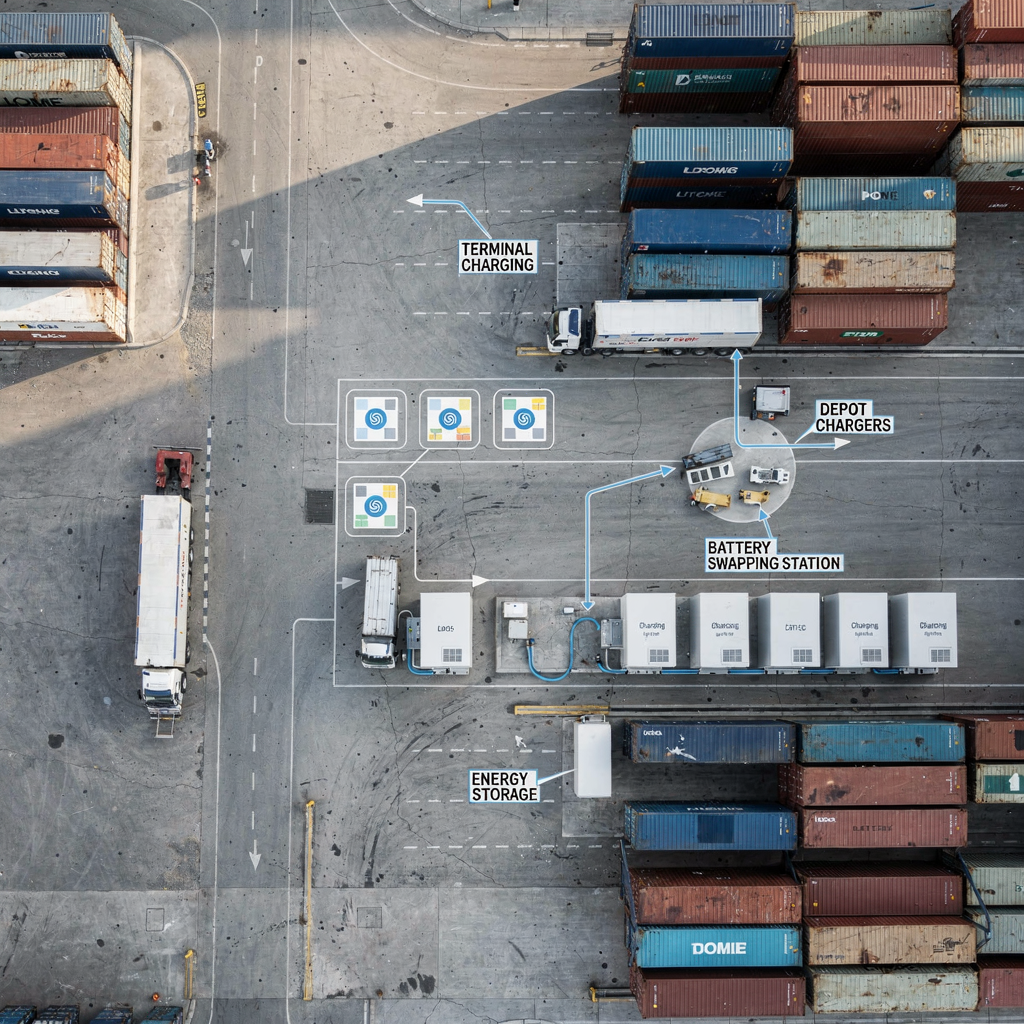
Charging strategies in container terminals range from fixed depot charging to distributed opportunity charging and battery swapping. First, depot charging places chargers in a garage where vehicles plug in during long breaks, typically overnight. Also, fixed charging emphasizes fully charged batteries and simple operations. Second, opportunity charging places fast chargers along AGV routes or at natural idle points. Then, the charging process shifts to short bursts, allowing continuous operation with shorter downtime. In addition, battery swapping and battery swapping station designs replace depleted packs with fully charged modules in minutes. Consequently, operators can choose between plug-in charging, swapping mode, and mixed approaches depending on cost and operational rhythm.
Fast-charging stations and trackside contacts form the core hardware options. First, fast charging uses high-power chargers and can deliver a useful recharge in 5–10 minutes for certain battery chemistries research. Also, wireless or on-board charging pads reduce mechanical wear and ease alignment. Then, rail or trackside contact systems offer hands-free power transfer for guided vehicles in container terminals based on consistent path planning. In addition, the charging mode and the charging rate determine how often a vehicle must recharge and how scheduling constraints bind.
Capital costs vs. operational gains present trade-offs. First, installing several charging stations or battery swapping station footprints increases upfront CAPEX. Also, energy storage systems and local transformers add to costs. Then, terminals that invest in smart charging infrastructure often report improved AGV availability and terminal throughput, which shortens vessel turnaround and offsets capital expenses over time ESCAP. In addition, an analysis should include lifecycle battery charging and swapping costs, charging piles maintenance, and labor for swapping mode. Finally, simulation of multiple charging and two charging scenarios helps to reveal which approach delivers the best return on investment; see the simulations for terminal planning resource for modelling choices terminal planning simulations.
optimize
To optimize AGV operations, terminals must define clear metrics and then tune control policies. First, key metrics include AGV availability, container throughput, and vessel turnaround times. Also, job-level KPIs matter such as waiting time at the quay, driving distance per trip, and the number of rehandles. Then, energy metrics like battery capacity utilization and energy consumption per move compare strategies. In addition, the energy consumption of agvs is a direct cost lever that terminals can reduce with better routing and charging scheduling.
Opportunity charging plays a major role in these improvements. First, implementing opportunistic charging can reduce battery size by 30–40% and improve fleet uptime by around 25% through smarter scheduling and fast charges research and ESCAP. Also, shorter charging time means more available time for container tasks, and thus higher throughput. Then, the scheduling problem becomes one of aligning charge events with natural pauses in container handling, so the fleet never waits just to recharge.
Practical scheduling methods matter. First, integrated scheduling that ties quay crane sequences to AGV movement and charging reduces conflicts. Also, vehicle scheduling must account for predicted container flow, current battery state, and waiting queues at chargers. Then, path planning that minimizes travel and groups nearby pickups reduces energy consumption and charger contention. In addition, scheduling optimization through simulation-based scenario testing helps identify the right mix of depot, opportunity, and swapping approaches. Finally, operators can test policies in a sandbox digital twin and then deploy incremental changes with safe rollouts; our JobAI approach, for example, coordinates moves across quay, yard, and gate to cut wait times and keep equipment busy reinforcement learning for ports.
Drowning in a full terminal with replans, exceptions and last-minute changes?
Discover what AI-driven planning can do for your terminal
reinforcement learning
Reinforcement learning can solve dynamic charging and routing decisions for AGVs. First, RL treats the terminal as an environment where agents take actions and receive rewards. Also, agents can learn policies that trade off energy costs, task delay, and battery wear. Then, the agv scheduling problem becomes a policy search problem rather than a static plan. In addition, RL adapts to changing vessel mixes and yard congestion, which traditional rule engines struggle to handle.
Real-time data is central. First, IoT sensors and telemetry feed battery state, charger occupancy, and energy consumption. Also, external signals like time-varying energy prices or grid load forecasts inform the reward function. Then, the model learns to schedule recharges when they are cheapest and least disruptive. In addition, reinforcement learning supports a scheduling of electric fleet that minimizes peak demand while preserving service levels.
Practical examples show value. First, pilots have used RL to produce adaptive charging schedules that avoid grid overload by staggering starts and reducing simultaneous fast-charging spikes. Also, deep reinforcement learning based approaches can incorporate high-dimensional inputs such as container flow vectors, crane schedules, and charging station states. Then, a scheduling optimization run can reduce total energy consumption and lower unexpected delays. In addition, RL handles the scheduling of agvs and the broader scheduling problem in a way that sim-trained policies transfer to live operations with guarded deployment. For more on how RL integrates with terminal replanning and disruption handling, see our dynamic internal transport replanning resource dynamic replanning.
reinforcement learning algorithm
A common approach is a Deep Q-Network (DQN) adapted for multi-agent control, though policy-gradient and actor-critic methods often work better for continuous action spaces. First, define states that include battery level, current task queue, charging station occupancy, grid load, and nearby container tasks. Also, include predicted container arrival rates and short-term crane sequences to anticipate demand. Then, the actions cover charge timing, charging station assignment, routing choices, and whether to send a vehicle for depot charging or to a battery swapping station. In addition, the reward blends throughput, energy cost, battery degradation, and fines for missed service windows.
Inputs and outputs must be explicit. Inputs include battery state-of-charge, battery capacity, charging time estimates, container flow, and the real-time grid load. Also, the model consumes path planning options and the status of charging piles. Then, outputs specify the exact charge timing, station assignment, and route for each agv. In addition, the agent can suggest batch charging policies such as shallow discharge charging strategy based on idle windows or a charge-and-shallow-discharge hybrid to extend battery life.
Training and deployment steps follow a safe path. First, simulate the terminal and the charging infrastructure to train agents without risking live operations. Also, run millions of simulated episodes so the agent sees rare events and learns robustly. Then, validate policies against KPIs like container throughput and the energy consumption of agvs. In addition, deploy policies with operational guardrails and continuous monitoring. Finally, future steps include integrating renewable generation forecasts, using deep reinforcement learning for multi-objective control, and standardising charging protocols across vendors. For practical implementation advice and to explore AI that coordinates dispatching, see our JobAI and StackAI concepts which automate execution and yard strategies in a safe, sim-trained manner fleet control integration.
FAQ
What is an automated container terminal and how does it affect charging strategy?
An automated container terminal runs most container movements using automation and digital control. As a result, charging strategies must align with automated workflows, so chargers sit where vehicles naturally pause and scheduling ties into crane cycles.
Why use opportunity charging instead of depot charging?
Opportunity charging allows short recharges during idle moments, which increases vehicle uptime and can shrink battery capacity needs. Also, it reduces the need for large depot infrastructure and can lower lifecycle costs when combined with smart scheduling.
How much can electric AGVs reduce port emissions?
Electric AGVs can reduce emissions by up to 70% compared to diesel alternatives according to research study. Also, switching to electrified fleets helps terminals meet tighter regulatory targets and improve local air quality.
What are the main hardware options for charging AGVs?
Main options include depot chargers, fast-charging stations, on-board charging pads, and battery swapping stations. Also, trackside contacts and wireless pads offer hands-free alternatives that fit certain guided vehicles in container terminals.
Can smaller batteries really work for AGVs?
Yes. Opportunity charging and fast-charging strategies can reduce battery capacity requirements by about 30–40% which lowers vehicle weight and cost data. Also, smaller packs reduce charging time and make swapping mode more practical.
How does reinforcement learning help with charging scheduling?
Reinforcement learning finds policies that balance energy cost, availability, and battery lifetime by learning from simulated interactions. Also, RL adapts to changing vessel mixes and yard congestion better than static rules.
What inputs are needed for a reinforcement learning algorithm for AGV charging?
Inputs include battery state-of-charge, charging station occupancy, container flow predictions, and grid load. Also, path planning options and crane schedules help the model align charging events with operational pauses.
Is battery swapping better than opportunity charging?
Battery swapping can restore range quickly and reduce charging piles, but it demands standardized packs and labor or automation at swapping stations. Also, the best choice depends on cost, layout, and container throughput targets.
How do terminals avoid grid overload when many AGVs charge?
Terminals use energy management systems, local storage, and staggered charging schedules to prevent peaks. Also, adaptive policies from reinforcement learning can prevent simultaneous fast charging and shift loads to cheaper periods.
Where can I learn more about simulation and AI for terminal charging?
Explore simulation libraries and RL case studies for container terminals to model charging and scheduling trade-offs. Also, see resources on terminal-equipment scheduling simulation solutions and reinforcement learning for deepsea container port operations for practical guidance simulation solutions and reinforcement learning.
our products
 stowAI
 stackAI
 jobAI
jobAI
Innovates vessel planning. Faster rotation time of ships, increased flexibility towards shipping lines and customers.
Build the stack in the most efficient way. Increase moves per hour by reducing shifters and increase crane efficiency.
Get the most out of your equipment. Increase moves per hour by minimising waste and delays.
stowAI
Innovates vessel planning. Faster rotation time of ships, increased flexibility towards shipping lines and customers.
stackAI
Build the stack in the most efficient way. Increase moves per hour by reducing shifters and increase crane efficiency.
jobAI
Get the most out of your equipment. Increase moves per hour by minimising waste and delays.