
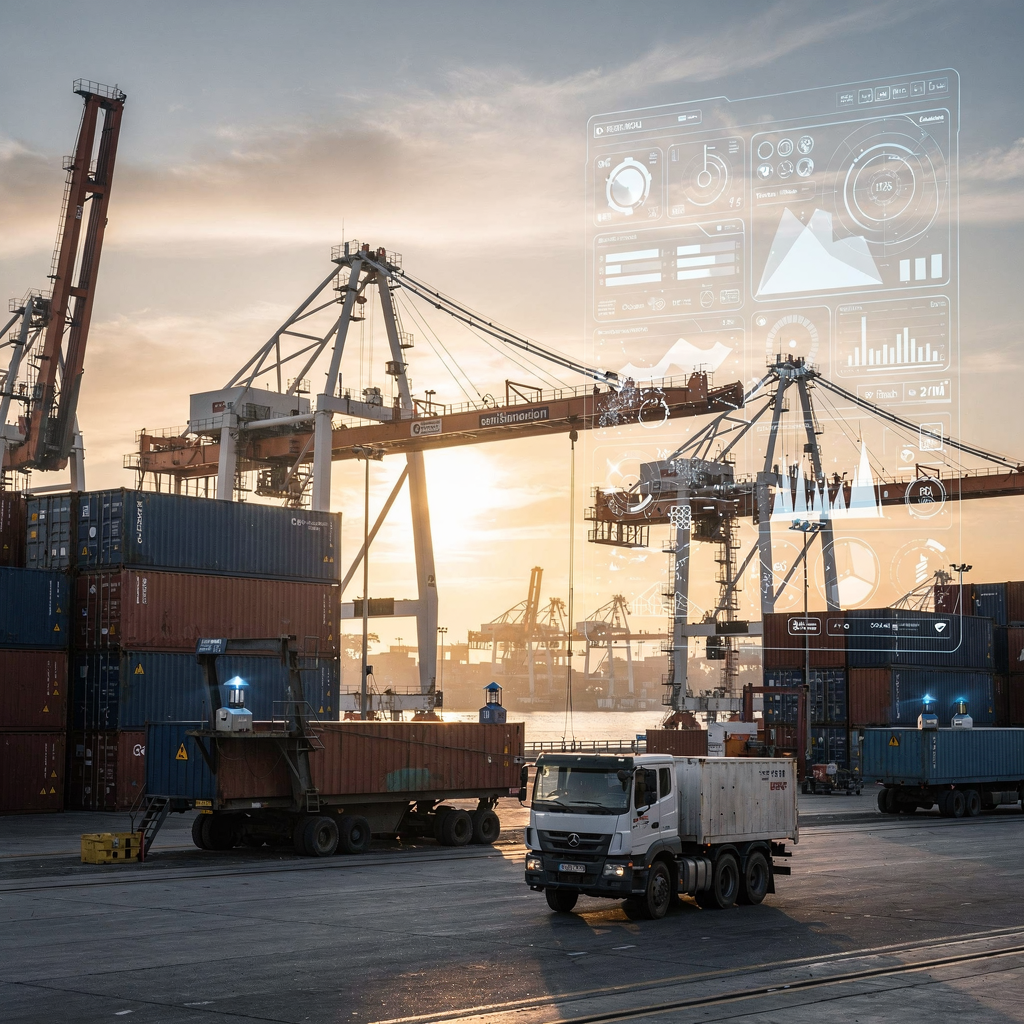
terminal Digitization in Logistics Hubs
Digitization means converting analogue workflows and records into digital formats so teams can act faster and with more clarity. In a terminal this process includes sensors, RFID tags, smart cameras, and mobile interfaces that capture status and movement. Data collection is the backbone. Smart sensor-based data capture and IoT feed dashboards so planners can see yard state, crane load, and gate queues in real time. This visibility supports lean goals by increasing transparency and reducing information waste and errors. For example, low-cost sensors and cameras allow continuous monitoring and support predictive strategies that reduce downtime and minimize forklift idling and unnecessary moves.
Terminals can adopt sensor networks and RFID to log container location, and they can pair camera feeds with AI to detect congestion and unsafe conditions. This improves inspection cycles and allows preventive maintenance planning. A recent review found that digital lean approaches can improve operational efficiency by up to 30% in logistics and manufacturing settings, a benchmark terminals can target here. At the same time digitalization supports continuous improvement by making waste visible to everyone on the team. That is critical for lean manufacturing principles to translate from the shop floor to the yard and quay.
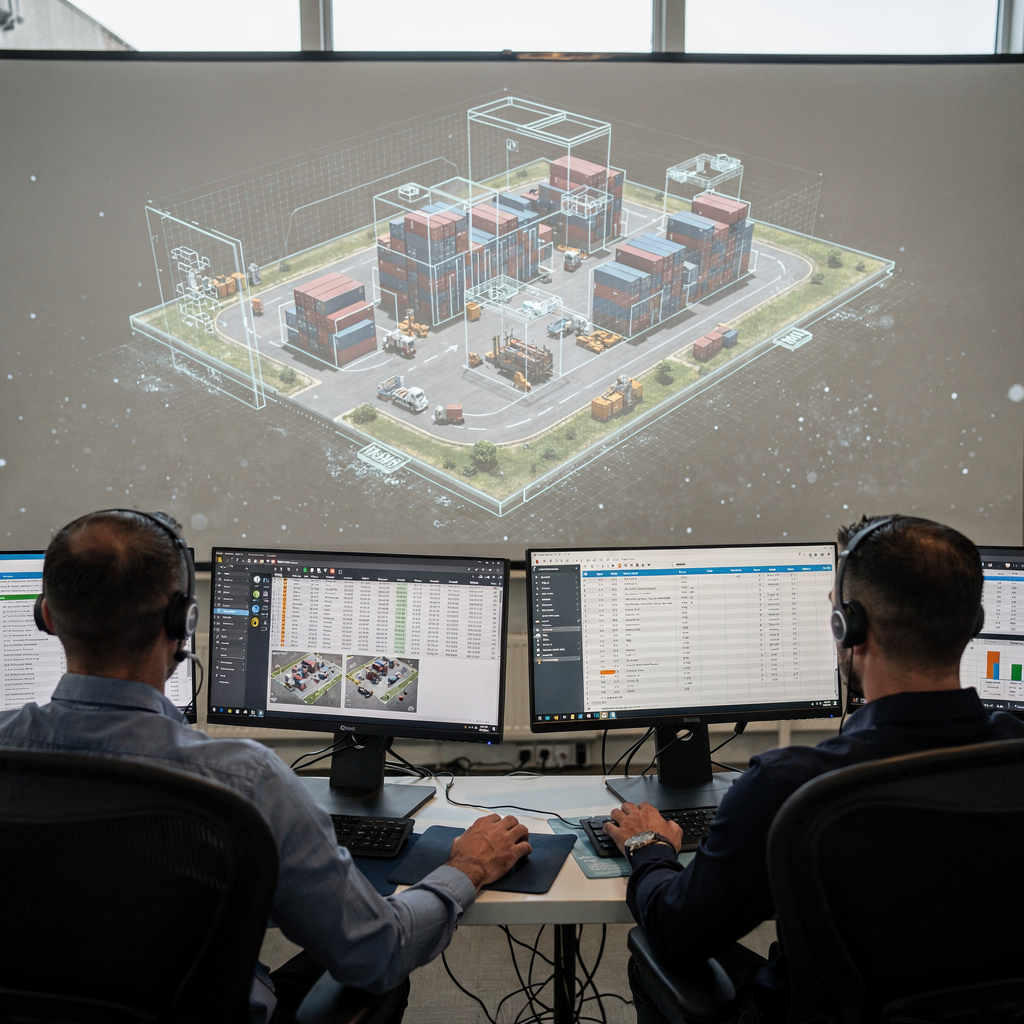
Operational teams must link sensors to unified visualization and scheduling tools so they can optimize gate flows and berth assignments. These systems reduce the time lost to manual lookups and phone calls, and they facilitate faster decision-making across the supply chain. In practice, a smart yard with integrated data allows teams to analyze trends, spot bottlenecks, and allocate equipment more fairly. For more on simulation-driven capacity work that aids this transition, see our piece on container terminal capacity planning using digital twins.
lean manufacturing Principles Applied to Terminals
Lean manufacturing ideas map directly to terminal activities and they help to reduce waste while improving throughput. Core concepts such as value stream mapping, waste elimination, and continuous improvement guide how teams prioritize tasks. In a terminal the value stream runs from vessel arrival and berth handling, through yard storage, to gate exit. Mapping that stream reveals waiting, motion, rehandling, and excess inventory. Teams then apply classic tools such as 5S, Kaizen events, and pull systems adapted to the port rhythm.
Applying 5S organizes quay crane decks and staging areas so cranes and trucks find containers fast. Kaizen workshops bring quay, yard, and gate staff together to test small changes and to iterate weekly. Pull systems can be implemented via dynamic slot reservation and priority lanes for urgent cargo. These steps reduce rehandles and make the production process more predictable. Real-world deployments report cycle-time reductions of roughly 25–30% and cost savings near 15–20% when lean practices combine with digital support (review).
Lean management and Six Sigma work well together when measurement is strong. “You can’t improve what you don’t measure,” as experts note, and digitized metrics enable that measurement (expert quote). A terminal that standardizes procedures and uses digital checklists increases product quality and customer satisfaction and reduces variation across shifts. Industrial engineering teams can run short experiments and then scale winners. For more methods on balancing stowage and crane productivity in practice, explore our article on balancing stowage quality and crane productivity.
Drowning in a full terminal with replans, exceptions and last-minute changes?
Discover what AI-driven planning can do for your terminal
Industry 4.0 Technologies Driving Efficiency
In the context of industry 4.0, several technologies combine to raise operational performance and to support continuous improvement. Real-time analytics and unified digital dashboards convert streams of sensor data into actionable insights. These dashboards enable visualization for frontline crews and for management alike. Advanced analytics and AI models then help predict equipment failures and to schedule preventive maintenance before problems escalate. Terminals that adopt predictive maintenance see fewer disruptions and improve equipment availability.
Machine learning models and edge AI can run on-site to keep latency low and to ensure robust decisions during network interruptions. Blockchain is useful for traceability and secure data exchange across partners, and it reduces disputes and paperwork. A practical guide explains how digital lean complements these Industry 4.0 technologies and supports flexibility for COOs (playbook). For example, predictive models can improve preventive maintenance scheduling and thereby improve equipment uptime and reduce fuel use.
Terminals also gain from automation in handling, remote crane operation, and in gate scanning. These automation steps must adhere to compliance rules and to safety protocols. Teams use edge computing, mobile devices, and secure APIs to integrate sensors with Terminal Operating Systems. To read about multi-agent approaches that coordinate across quay, yard, and gate, see our research on multi-agent AI in port operations. The combination of digital technologies, careful governance, and continuous improvement creates a competitive advantage and helps terminals become more resilient and sustainable.
Digital schedule and Workflow Optimisation
Modern schedule and workflow optimization in terminals uses automated planning tools for berth, yard, and gate. These tools apply constraints and objectives to create feasible plans fast. That reduces reactive firefighting and helps planners focus on exceptions. Advanced schedulers link berth calls to quay crane sequences and yard placement so moves are executable. Digital planning can also optimize production by balancing quay productivity against yard congestion and driving distances.
Dynamic rescheduling is critical. When disruptions occur, terminals that use unified scheduling report up to 40% faster response to operational disruptions because visibility and automated re-planning cut decision loops (study). Integration with TOS and with ERP avoids double entry and gives stakeholders the same view of priorities. This integration also improves notification flows so truckers, vessel agents, and customs get timely updates. Good scheduling software will analyze constraints and then propose optimized sequences that minimize moves and reduce energy use.
Loadmaster.ai uses a digital twin and reinforcement learning to train agents that recommend executable plans across quay, yard, and gate. Our JobAI, StowAI, and StackAI agents produce robust schedules with fewer rehandles and consistent outcomes across shifts. We train in simulation so planners get a cold-start-ready solution without relying on flawed historical data. For insights on integrating berth call optimization with quay crane planning, review our work on berth call optimization integration. Those practices help optimize resource allocation, minimize delays, and support sustainable terminal throughput.
Drowning in a full terminal with replans, exceptions and last-minute changes?
Discover what AI-driven planning can do for your terminal
Methodology for Implementing Digital Lean
A phased methodology reduces risk and helps teams learn. Begin with a pilot that focuses on a tight scope, test metrics, and then scale up. Use a structured approach that includes baseline measurement, hypothesis-driven experiments, and continuous review. Cross-functional teams with quay, yard, gate, IT, and safety representation make change sustainable. Change management must address training, standard work, and governance so the new tools are used consistently.
Key performance indicators include OEE, turnaround time, and a digital adoption rate metric that measures how often staff use new dashboards and tools. Operational leaders should also track improving productivity, reducing costs, and resilience. The methodology blends lean manufacturing practices with a digital transformation roadmap and it supports Six Sigma quality discipline where needed. Pilot results should inform scale-up decisions and guardrails should limit risk while the system learns.
Loadmaster.ai’s approach demonstrates this methodology in action. We create a digital twin, simulate millions of decisions, and then validate policies in sandboxed operation before go-live. This reduces the need for extensive historical training data and empowers planners with explainable KPIs. Training sessions, short Kaizen cycles, and regular audits create a systematic improvement loop. For practical techniques to reduce crane idle time and to improve execution, consult our article on reducing crane idle time.
Case Studies and Future Directions
Case evidence helps decision-makers choose sensible investments. For example, APM Terminals reported about a 15% tool efficiency improvement after rolling out digital TPM and better scheduling practices; the results came from tighter metrics and more frequent inspection cycles. At the Port of Rotterdam, pilots that combined real time monitoring with predictive maintenance reduced delays by around 20% and helped with berth predictability. These results illustrate how digital lean practices improve port operations and strengthen resilience.
Emerging trends to watch include edge computing for low-latency control, AR-assisted maintenance for faster inspection and repair, and green logistics that cut energy per move. Future research directions will likely examine how multi-agent AI and reinforcement learning can scale across terminals while preserving safety and compliance. The maritime industry faces decarbonization targets, so sustainable planning that reduces empty moves and balances energy use will rise in importance.
Looking ahead, terminals that combine a systematic literature review with hands-on pilots will win. Industrial engineering teams should analyze trade-offs and then prioritize interventions that minimize disruption. Case study work will continue to support best practices. As terminals adopt these approaches they will improve equipment availability, reduce rehandles, and empower staff. This will deliver measurable competitive advantage and better outcomes for customers.
FAQ
What is digitization in the context of terminal operations?
Digitization here means converting manual records and analogue signals into digital data streams so teams can act faster and with more clarity. It includes sensors, RFID, and camera feeds that enable real time visibility and support automated scheduling.
How does lean manufacturing apply to a container terminal?
Lean manufacturing principles such as value stream mapping, waste elimination, and continuous improvement apply directly to quay, yard, and gate workflows. Terminals use 5S and Kaizen to reduce rehandles and to improve throughput while keeping staff engaged in iterative problem solving.
Which Industry 4.0 technologies are most impactful for terminals?
Key technologies include edge AI for predictive maintenance, real-time analytics for visualization, and blockchain for secure traceability. These tools integrate with TOS systems to provide a coherent view of operations and to facilitate better decision-making.
How does digital scheduling speed up responses to disruptions?
Automated schedulers can propose reschedules within seconds and they communicate changes across stakeholders, reducing the decision loop. Studies indicate systems with dynamic re-planning can achieve up to 40% faster response to operational disruptions when compared to manual processes (study).
What methodology should a terminal use to implement digital lean?
Use a phased methodology that starts with a pilot, then scales successful practices while maintaining continuous review. Cross-functional teams, clear KPIs such as OEE and turnaround time, and robust change management are central to success.
Can AI reduce rehandles and driving distance in the yard?
Yes. Reinforcement learning agents and policy-driven optimizers can plan placements that balance the yard and minimize travel. Approaches that train in a digital twin avoid overfitting to past mistakes and deliver robust, executable policies.
Are there quick wins for reducing crane idle time?
Short experiments that focus on slot sequencing and quay-to-yard handoffs often yield quick wins. Improved visibility, better notification to truck drivers, and small changes to crane targets can raise moves per hour quickly; we document techniques in our guide to reducing crane idle time.
How do terminals ensure compliance and safety during automation?
They embed safety rules into automation logic, maintain audit trails, and keep human oversight for exceptions. Systems must meet regulatory requirements and include constraints so automated plans never violate compliance or operational limits.
What role does preventive maintenance play in a digital lean program?
Preventive maintenance reduces unexpected breakdowns and keeps equipment available, which supports predictable throughput. Predictive models augment preventive schedules by signaling when inspection should be advanced based on sensor readings.
How can I learn more about capacity and yard strategy testing?
Begin with simulation and digital twin pilots to explore layout and throughput trade-offs without disrupting live operations. We offer resources on container terminal capacity planning and on digital twin testing that help teams design safe experiments and scale improvements.
our products
 stowAI
 stackAI
 jobAI
jobAI
Innovates vessel planning. Faster rotation time of ships, increased flexibility towards shipping lines and customers.
Build the stack in the most efficient way. Increase moves per hour by reducing shifters and increase crane efficiency.
Get the most out of your equipment. Increase moves per hour by minimising waste and delays.
stowAI
Innovates vessel planning. Faster rotation time of ships, increased flexibility towards shipping lines and customers.
stackAI
Build the stack in the most efficient way. Increase moves per hour by reducing shifters and increase crane efficiency.
jobAI
Get the most out of your equipment. Increase moves per hour by minimising waste and delays.