
The Role of ai and Container Terminal Operations in Port Management
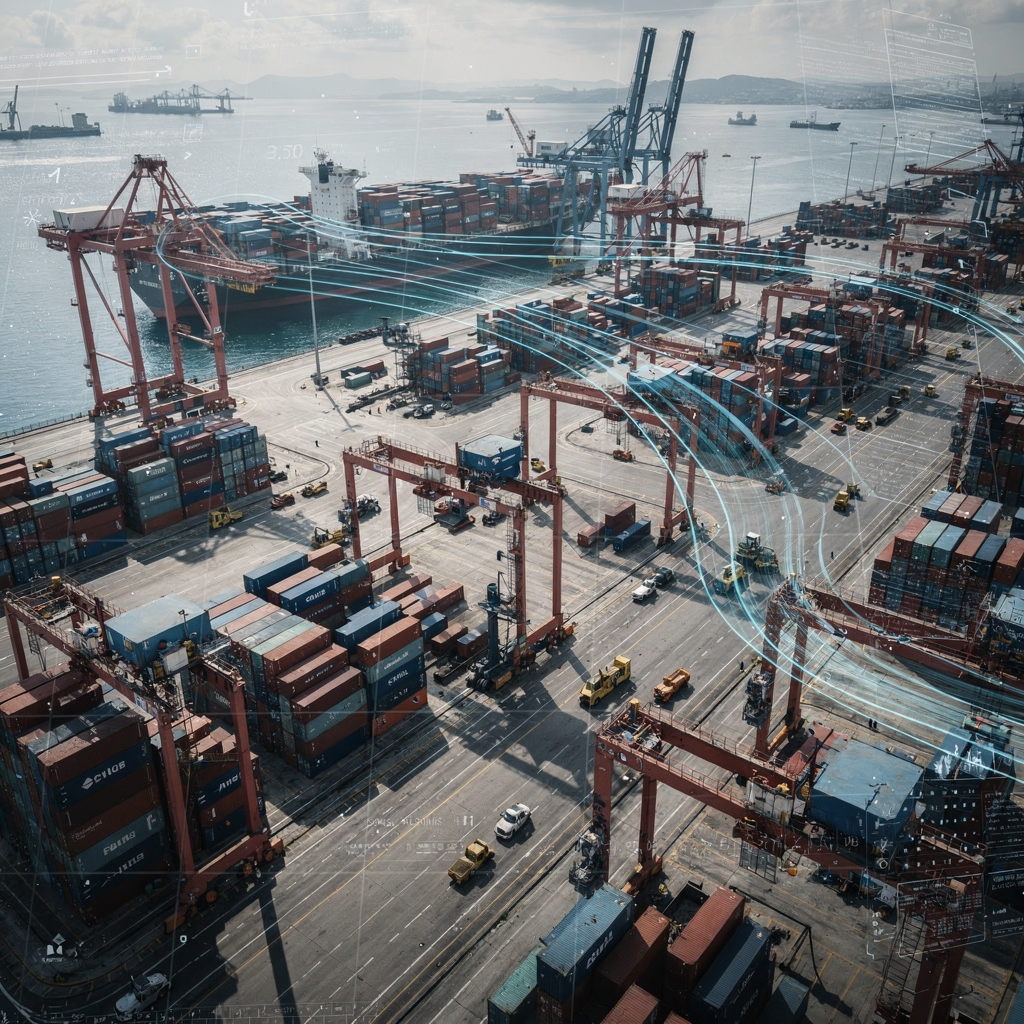
AI now underpins many aspects of modern port management. Across quay cranes, yard stacking and gate systems, AI-based controllers and planning agents work with human operators to make faster, better decisions. For example, AI algorithms sequence crane tasks to reduce unnecessary moves. They also assign stacks to cut travel distance for yard trucks. These systems help ports operate with higher predictability and less firefighting.
Automation at the quay adopts vision, motion planning and scheduling. Yard stacking uses heuristics and reinforcement learning to balance congestion against driving distance. Gate systems parse documents and predict peak windows so trucks queue less. These interventions produce measurable results. Ports that adopt AI-driven hardware and analytics report an 18–22% rise in throughput and a 15% cut in vessel turnaround time [UNCTAD Review of Maritime Transport 2024]. This increase supports global trade by reducing delays and improving reliability.
One clear gain comes from integrating a digital twin with a container terminal operating system to run simulations. Loadmaster.ai uses reinforcement learning to train agents inside a digital twin, then deploys policies with guardrails and audit trails. The approach avoids dependence on historical records and produces consistent output across shifts. That reduces the loss of tribal knowledge when a senior planner leaves. For more on vessel planning, see an explainer on container terminal vessel planning here. Also, interfaces for real data exchange improve live execution; details on integrating with existing TOS can be found here.
AI can help teams manage KPI trade-offs between quay productivity, yard congestion and truck loops. As one expert put it, “If we can properly utilize those data and information, that will help us decision-making process as well as we can improve maritime safety, security, reduce risks” [SCIRJ]. Therefore planners and operators get better visibility, and planning becomes proactive rather than reactive.
Overall, implementing AI and automation in container terminals improves predictability and reduces costly bottlenecks. This progress supports a modern port that can scale with growing container volume while complying with performance and safety goals.
Smart port and Digital Twin: Automation in the Maritime Sector
Digital twin technology mirrors a terminal’s physical layout and workflows. It runs millions of simulated scenarios so teams can test changes without disrupting live operations. The digital twin feeds an AI port strategy that balances moves across quay and yard. These simulations let ports trial dual cycling, congestion-aware crane scheduling and other complex changes safely. Loadmaster.ai’s simulation-first approach trains RL agents in a sandbox digital twin before any live rollout. Learn more about simulation-first AI approaches for terminals here.
Automated guided vehicles, automated container cranes and surveillance drones work together under a single orchestration layer. Sensors stream telemetry into a central digital twin. That provides a single source of truth for real time decision-making and for testing what-if scenarios. The internet of things links equipment and systems. As a result, the smart port can route vehicles, control energy hubs, and coordinate maintenance windows without manual rework.
Safety improves when surveillance and analytics run continuously. Advanced monitoring with AI-driven anomaly detection contributed to a roughly 30% drop in on-site accidents at digitally ready terminals [WMU digital readiness study]. Predictive maintenance and automated alerts also reduce dangerous failures. Together, these technologies increase operator confidence and reduce the burden on human supervisors.
Smart port design supports environmental sustainability too. Digital twin simulations enable energy-use scenarios and emission controls. Planners can compare layout alternatives to minimize idling, lower carbon footprints, and meet sustainability goals. For guidance on a digitalization pathway, see the terminal operations digitalization roadmap here. In short, digital twin and automation create a safer, greener, more responsive maritime port.
Drowning in a full terminal with replans, exceptions and last-minute changes?
Discover what AI-driven planning can do for your terminal
Applications of ai and Application of ai in Container Terminals: Predictive Maintenance and Machine Learning
The applications of AI in container terminals extend from simple alerts to complex policy control. Predictive maintenance models forecast equipment failures so teams schedule repairs before breakdowns occur. These models combine telemetry from sensors, environmental data and equipment logs. Predictive maintenance reduces unexpected downtime and keeps cranes and straddle carriers moving. In some terminals, AI-driven analytics have slashed crane downtime by about 40% in pilot programs.
Machine learning augments berth planning and load balancing. ML models ingest vessel schedules, historical service times and yard occupancy to suggest berthing windows that reduce queuing and speed vessel operations. Reinforcement learning goes further by testing new sequences inside a digital twin and finding strategies that supervised learning would not discover.
Examples of application of ai in container use cases include automated lashing force checks and crane split planning. These solutions tie into a container terminal operating system and the TOS’s event streams. For a primer on crane split planning, see this explanation of automated container terminal crane split planning software here. AI algorithm choices matter: rule-based engines reproduce past performance, while trained agents can pursue multi-objective trade-offs and adapt to disruptions.
Predictive analytics also supports spare-parts management and staffing. When models forecast a high risk of component failure, procurement teams preposition parts, and operator rosters adjust accordingly. This coordination reduces idle time and avoids cascading delays across gates, yard and quay. The integration of AI with management systems ensures these recommendations are actionable and auditable. Thus, AI makes maintenance predictable and more efficient.
Finally, AI tools must operate with governance in mind. Audit trails, explainable outputs and operator override functions keep control with humans. These features help terminals meet regulatory expectations while benefiting from advanced AI capabilities.
Optimize Container Handling and Energy Consumption with AI Integration
AI helps optimize container handling by routing yard trucks, allocating straddle carriers, and sequencing quay moves. Route optimisation reduces driving distance, lowers fuel use and shortens container dwell time. AI planning for yard trucks also cuts idle time and balances workloads across equipment. Solutions that combine routing algorithms and live telemetry achieve better throughput with fewer moves.
Energy consumption falls when terminals use AI to coordinate equipment and power systems. Smart scheduling aligns high-draw tasks with lower-demand periods. This reduces peak loads and smooths energy consumption across shifts. Studies show that coordinated energy use and route optimisation can reduce emission outputs by up to 12% in well-instrumented terminals. Those reductions support compliance with IMO and EU Green Deal targets and the broader sustainable development goals that ports must meet.
Integrate energy monitoring with the TOS and the digital twin so planners can quantify trade-offs. For example, delaying a non-critical reshuffle by an hour may lower carbon footprints while keeping vessel operations on schedule. Such decisions require accurate models and transparency. AI integration must therefore include data management and clear operator interfaces so teams accept recommendations.
AI in port also supports better planning for empty container repositioning. By predicting demand and aligning moves, terminals avoid unnecessary repositioning trips. That reduces both costs and environmental impact. In addition, AI enables demand-driven scheduling that helps shipping lines and cargo owners plan their flows. The result is a more efficient port with lower energy use and fewer emissions.
Finally, investments in AI should measure energy and cost metrics alongside throughput. That holistic view ensures that optimization does not trade sustainability for short-term productivity gains. Ports that track both moves per hour and carbon footprints achieve balanced performance and meet global sustainability expectations.
Drowning in a full terminal with replans, exceptions and last-minute changes?
Discover what AI-driven planning can do for your terminal
Implementing ai in Port Logistics: Benefits of ai and Automation
Implementing AI in port logistics streamlines many manual tasks. AI-powered document parsing automates customs clearance, reducing queue times at gates. This accelerates truck turnaround and improves trucker satisfaction. Labour productivity also rises; automated gate checks and smarter planning can make gate processing up to 20% faster, freeing staff for higher-value work.
AI-driven yard strategy reduces rehandles and evens RTG and straddle workloads. Systems that coordinate across quay, yard and gate cut unnecessary moves. Loadmaster.ai’s three-agent design—StowAI, StackAI and JobAI—optimizes these trade-offs by training in a realistic digital twin before live deployment. The solution reduces rehandles, shortens driving distances and stabilizes performance across shifts.
Port operators must plan workforce transition. Successful implementations pair AI tools with reskilling programs and clear exception handling workflows. Human-in-the-loop designs let experienced planners override or adjust AI recommendations when unusual conditions arise. For more about exception workflows for vessel planning, see this discussion of human-in-the-loop vessel planning here. This approach preserves institutional knowledge and provides a safety net during adoption.
AI makes scheduling more robust when disruptions occur. When a truck queue spikes or a crane fails, AI can rebalance tasks and suggest immediate alternatives. These recommendations reduce port congestion and help maintain service levels for shipping lines and cargo owners. Consequently, terminals operate with fewer surprises and higher customer satisfaction.
Governance plays an important role during rollout. Audit logs, explainable decisions and clear escalation paths maintain operator trust. When AI systems include operator-adjustable KPI weights, teams retain control over priorities. This mix of automation and human oversight delivers efficient operations while respecting regulatory and workforce realities.
Regulatory Frameworks: AI Act for the Maritime Sector
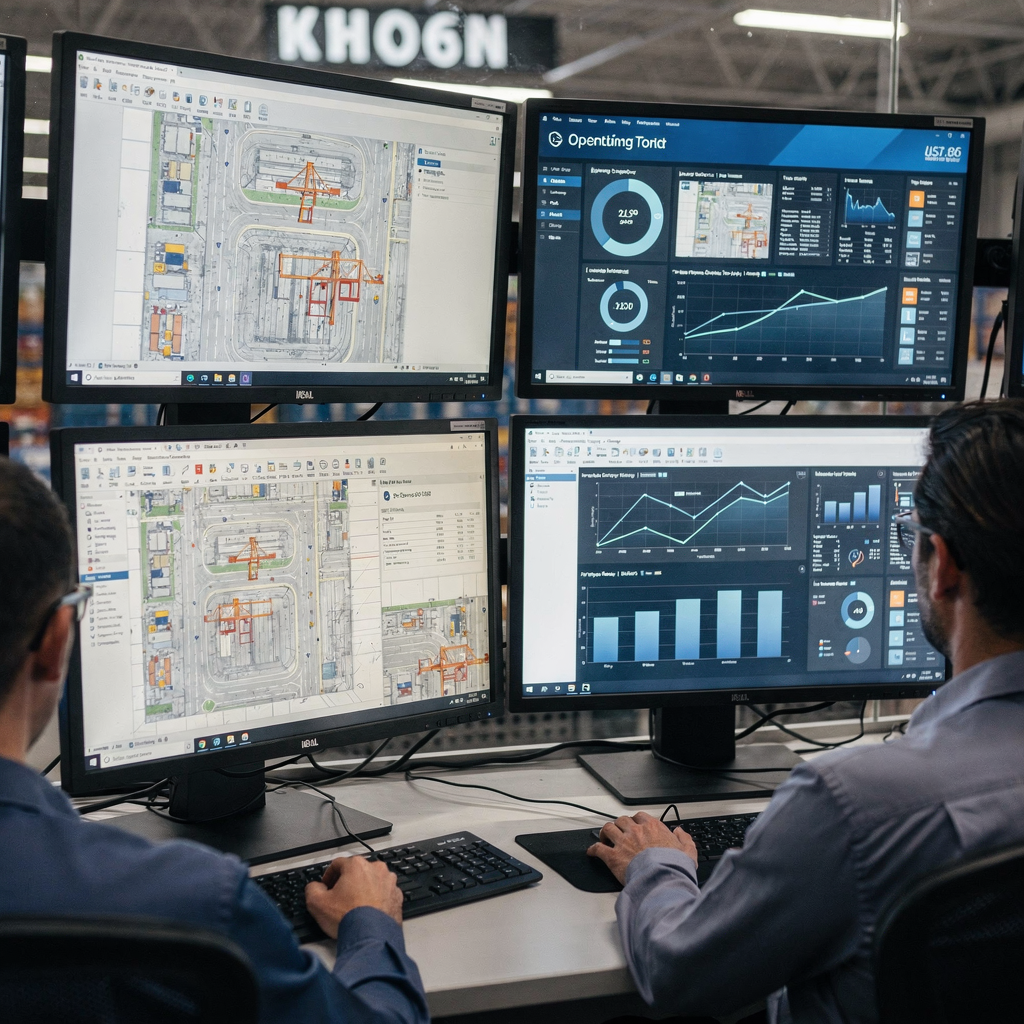
Regulation shapes how AI systems operate in ports. The EU AI Act introduces risk categories and obligations that apply to AI deployed in critical infrastructure. High-risk systems must meet requirements on transparency, robustness and documentation. These rules influence how AI is trained, tested and monitored in ports and container terminal operations.
Data sovereignty and cybersecurity standards matter for international gateways. Ports handle sensitive data about cargo, vessels and supply chain partners. As such, compliance with international standards, strong encryption and clear data governance are essential. The geopolitical dimension is also important. Control over port infrastructure reflects strategic interests and can influence trade and national security [Port power research].
A practical roadmap for governance-ready AI moves from pilot projects to full-scale roll-out. Start with sandbox testing inside a digital twin. Then run shadow mode alongside existing operations to compare outcomes. Finally, deploy with phased autonomy, human oversight and regulatory audit logs. This staged approach reduces risk and meets the EU AI Act’s emphasis on transparency.
Ports also need clear procurement and vendor assessment criteria. They must require explainability, security testing and interoperability with a container terminal operating system. For terminals that need quick wins, simulation-first agents can be cold-start ready and avoid heavy dependence on historical data. That reduces procurement friction and supports compliance during the implementation of AI.
In short, governance-ready AI combines technical rigor, security safeguards and clear human oversight. When regulators, port management and technology providers collaborate, ports achieve both efficiency and resilience. This balance supports maritime industry goals and broader environmental sustainability targets while protecting the integrity of critical infrastructure.
FAQ
What is governance-ready AI for deepsea container ports?
Governance-ready AI means AI systems designed with regulatory compliance, transparency and human oversight in mind. These systems include audit trails, explainable outputs and operator controls so port authorities can manage risk while improving performance.
How much throughput improvement can ports expect from AI?
Ports that integrate AI, automation and analytics report throughput gains in the high teens to low twenties percent range over several years. The UNCTAD review documents an 18–22% rise in throughput for advanced adopters [UNCTAD Review].
Can AI reduce accidents and equipment failures at terminals?
Yes. AI-powered monitoring and predictive maintenance have been linked to significant safety improvements, with some studies noting roughly a 30% reduction in on-site accidents at digitally ready terminals [WMU study]. Continuous sensing and anomaly detection help crews intervene before incidents escalate.
What role do digital twins play in port AI deployments?
Digital twins let teams test AI policies in a realistic environment without risking live operations. They allow reinforcement learning agents to train on millions of scenarios and validate performance against explainable KPIs before deployment.
How do ports balance emissions and throughput when using AI?
AI optimizes equipment scheduling and routing to reduce idle time and peak energy demand. That can lower emissions by double-digit percentages in well-instrumented terminals, helping ports meet environmental sustainability and IMO targets.
Will AI replace human planners in terminals?
No. AI augments human planners by automating repetitive tasks and proposing optimized plans. Human-in-the-loop workflows and reskilling programs ensure that operators remain central to decision-making and exception handling.
What governance steps should ports take before deploying AI?
Ports should begin with sandbox testing, run systems in shadow mode, require explainability and maintain audit logs. Also, align procurement with cybersecurity and data sovereignty standards to comply with the EU AI Act.
How does AI affect container dwell time and congestion?
AI optimizes yard placement and gate processing to reduce container dwell time and curtail port congestion. Smarter sequencing and routing lower rehandles and improve flow across operations.
Are there standards or case studies for AI in port operations?
Yes. Industry research and case studies document successes in predictive maintenance, digital twin adoption and AI-driven yard strategy. For practical examples and planning methods, see resources on vessel planning and TOS integration provided by terminal solution vendors.
How can terminals start with low-risk AI pilots?
Begin by integrating analytics with existing TOS in non-critical areas, such as energy monitoring or document parsing. Use a digital twin to validate policies, then scale to mission-critical tasks with governance controls and operator training.
our products
 stowAI
 stackAI
 jobAI
jobAI
Innovates vessel planning. Faster rotation time of ships, increased flexibility towards shipping lines and customers.
Build the stack in the most efficient way. Increase moves per hour by reducing shifters and increase crane efficiency.
Get the most out of your equipment. Increase moves per hour by minimising waste and delays.
stowAI
Innovates vessel planning. Faster rotation time of ships, increased flexibility towards shipping lines and customers.
stackAI
Build the stack in the most efficient way. Increase moves per hour by reducing shifters and increase crane efficiency.
jobAI
Get the most out of your equipment. Increase moves per hour by minimising waste and delays.