
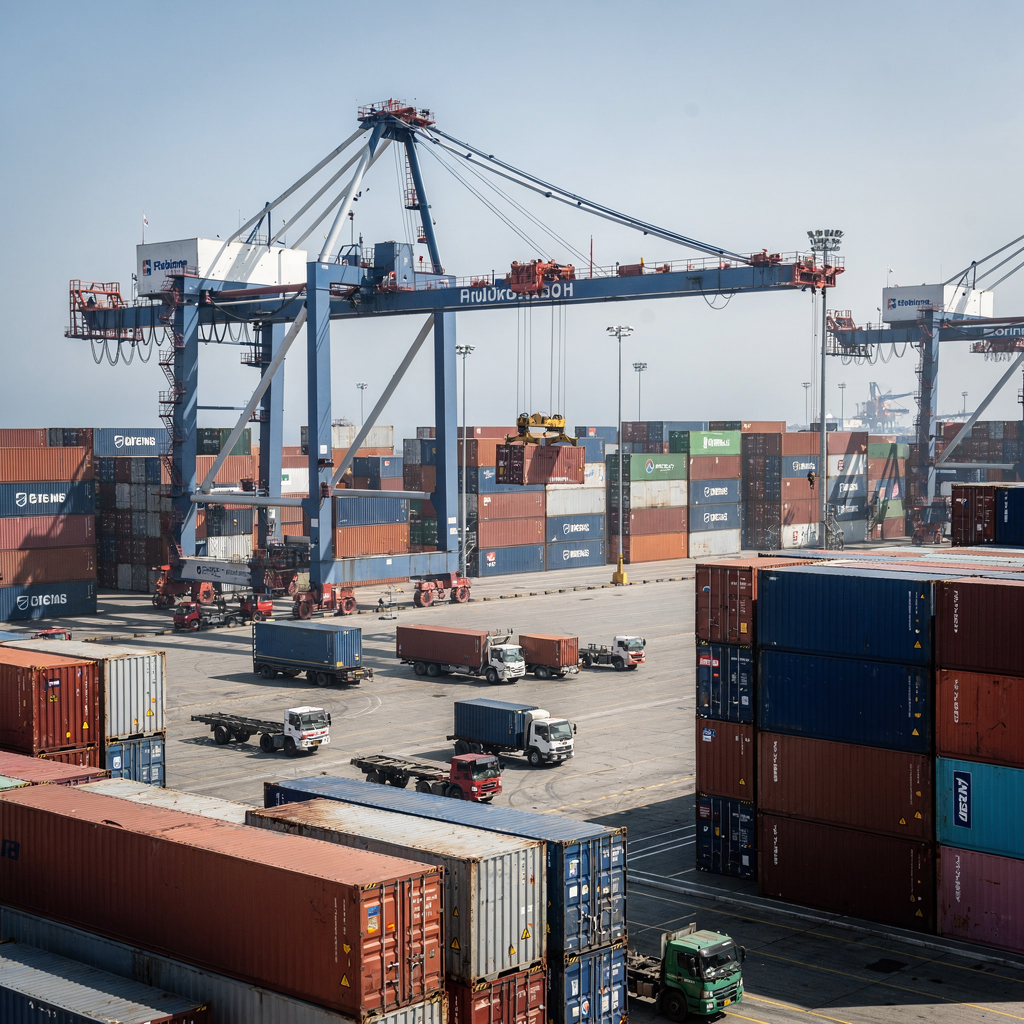
container terminals, maritime container flow: fundamentals and performance metrics
Equipment cycle time defines how long handling equipment takes to complete a full loop of loading, repositioning, and returning. It directly affects vessel turnaround and port throughput. Faster cycles raise quay productivity and reduce vessel idle time. For example, some ports report up to 30% faster cycles when they improve flow management and technology, which shows the scale of possible gains 30% faster cycles. Next, we must clarify the typical maritime container movement pattern in deepsea contexts. First, a ship berths and quay cranes lift export and import boxes. Then, yard trucks or automated guided vehicles move containers to the yard. Finally, yard cranes or stacking systems place containers into the assigned stack or buffer. This sequence repeats constantly. Each handover forms a potential bottleneck. Therefore, careful measurement matters.
Key performance metrics include moves per hour at the quay, average equipment cycle time, truck waiting time, and yard utilization. Also, berth productivity and vessel turnaround are crucial. Planners track these metrics in near real-time. They also monitor congestion and buffer occupancy to assign resources. For integrated container terminal operations the goal is to match quay crane moves to yard throughput. That match reduces idle time and makes the entire chain more reliable. In practice, optimization of container placement, and optimal scheduling of quay cranes and yard assets, both improve the flow. In addition, digital twins and AI help predict stress points and test tradeoffs before changes go live. Loadmaster.ai uses reinforcement learning agents to simulate millions of decisions in a digital twin and then apply policies that protect crane productivity while stabilizing yard workload. Finally, short cycles matter for shipping lines as they lower voyage costs and improve service reliability. For ports that adopt real-time coordination and hybrid automation, the benefits compound fast. As such, the fundamentals rest on measurable cycles, fair assignment of resources, and continued monitoring to validate improvement.
container terminal operation and the scheduling problem in deepsea ports
Container terminal operation hinges on a set of hard constraints. These include berth windows, yard capacity, crane availability, and gate hours. Each constraint forces tradeoffs. For example, a tight berth window pressures quay cranes to work faster. Meanwhile, limited yard capacity increases rehandles. As a result, the scheduling problem becomes a complex balancing act. The scheduling problem pairs conflicting demands from quay cranes, trucks, and stacks. Quay crane scheduling competes with yard truck availability. At the same time, yard allocation competes with stack accessibility. That pairing produces many infeasible or suboptimal outcomes if planners rely only on static rules.
Modern terminals face a multi-dimensional scheduling problem. They must assign quay cranes and yard cranes to tasks while avoiding deadlocks. They must also assign trucks and balance workload across bays and stacks. Additionally, they must respect constraints such as safety clearances and bay lane configurations. Real-time data sharing and JIT strategies help. Terminals that implement just-in-time operations and fast data exchange report measurable reductions in vessel idle time. For instance, improved data sharing can cut vessel idle time by up to 25% reduced vessel idle time. Consequently, integrated scheduling that pairs berth planning with yard allocation reduces the firefighting burden on dispatch teams. Our company focuses on multi-agent control so planners can shift from reactive reassignment to proactive policy-driven decisions. In practice, hybrid systems that combine human oversight with AI agents produce faster and more feasible plans. Those plans also help minimize congestion and lower fuel consumption on trucks and cranes. In short, solving the scheduling problem requires algorithms that can handle real constraints, learn from scenarios, and coordinate across the quay, yard, and gate in near real-time.
Drowning in a full terminal with replans, exceptions and last-minute changes?
Discover what AI-driven planning can do for your terminal
optimisation of yard crane and yard truck cycles
Yard crane and yard truck cycles determine how quickly containers clear the stack and return to service. Short cycles mean fewer rehandles, less congestion, and higher productivity. AI-driven approaches can dispatch yard crane tasks and yard truck work in real time. For example, reinforcement learning agents learn dispatch policies that balance immediate throughput with future feasibility. The agents account for workload, travel distances, and buffer states. They also protect quay crane productivity by prioritizing moves that prevent quay crane and yard conflicts. A well-trained agent will assign yard crane moves that reduce shifters and minimize travel distances across the yard.
Predictive maintenance plays a major role too. Statistical lifetime analysis for gantry cranes shows that predicting failures and scheduling maintenance can reduce crane downtime by 15–20% reduced downtime 15–20%. That reduction directly shortens equipment cycle time and keeps yard crane resources available. In addition, digital twins can guide optimal cycle sequences. They simulate sequences, evaluate tradeoff scenarios, and output feasible assignments before live execution. When operators test policies in a sandbox twin they validate safety rules and confirm that new assignments respect bay layout and stack constraints. For teams seeking deeper methods, mathematical programming and event-driven algorithms help construct near-optimal assignments while keeping computational time low.
Operationally, yard allocation and schedule stability improve when dispatch logic considers both current and predicted states. In practice, combining predictive maintenance, simulation, and AI-driven dispatch reduces rehandles and makes yard crane cycles smoother. Companies that deployed multi-agent approaches observed steadier productivity across shifts. To learn more about yard routing and routing algorithms that reduce truck travel distances, see our analysis of yard truck routing optimization yard truck routing optimization algorithms. Also, our work on simulation models for automated terminal operations shows how agents validate plans before live rollout simulation models. Together, these tools enhance reliability and keep equipment moving.
schedule and routes for efficient truck operations in the yard
Efficient truck schedules and routes cut waiting times and empty runs. Dynamic schedule algorithms dispatch trucks to the best pick-up or drop-off locations. They consider bay sequencing, truck availability, and buffer occupancy. Also, route-planning techniques optimize truck paths to avoid hotspots. They reassign trucks before congestion forms. First, algorithms compute feasible routes that respect stack and bay constraints. Second, they update assignments as new data arrives.
One practical technique uses event-driven dispatch combined with shortest-path routing inside the yard. That hybrid approach limits travel distances while preserving queue fairness. In case of sudden gate surges, the system reroutes trucks to less congested bays. As a result, the terminal can minimize empty runs and reduce fuel consumption. A real case showed truck waiting time fell by about 18% after a focused routing and scheduling change. At the same time, this adjustment reduced idle time at the quay and improved overall productivity.
To achieve these gains terminals often rely on advanced algorithms. Some embed Travelling Salesman Problem heuristics for multi-stop pickups, and others use reinforcement learning to adapt policies to shifting conditions. Our Event-driven AI architectures help coordinate PLC data and live telemetry so dispatch updates are timely event-driven AI architectures. Also, when a terminal uses integrated scheduling across the quay and yard, truck operations align with quay crane schedules and avoid costly mismatches. Finally, automated guided vehicles can replace trucks in some lanes, further trimming travel distances and smoothing flow. In short, a mix of dynamic schedule logic, route planning, and real-time updates delivers measurable reductions in truck idle time and improves yard throughput.
Drowning in a full terminal with replans, exceptions and last-minute changes?
Discover what AI-driven planning can do for your terminal
stack management and efficient container placement strategies
Stack management affects how often cranes must rehandle containers. Good placement reduces rehandles and shortens the truck-to-crane handover. Zone-based and cluster stacking are practical strategies. They keep like-moves together, and they preserve space for export containers and import flows. In addition, stacking heuristics can reduce travel distances by placing containers closer to likely truck routes.
Simple heuristics place containers by expected dwell time. For example, short-dwell boxes go near gates. Long-dwell boxes go deeper into the stack. That approach cuts reassignment and protects buffer capacity. Another technique uses cluster stacking to group containers by carrier or destination. That strategy makes truck pickups faster and reduces the number of movements required per container. Efficient container placement can improve yard truck cycle time by about 12% in practice. Also, digital twins let planners test stacking rules before live changes. They run simulation-based scenarios to validate capacity and check safety margins.
Our StackAI agent focuses on placement and reshuffle decisions that balance workload and protect future plans. It assigns slots so that quay cranes can operate with fewer interruptions. The agent also learns tradeoffs between near-term crane productivity and long-term yard congestion. For teams interested in stowage patterns and yard masks, see our deep analysis on AI-driven yard strategy optimization AI-driven yard strategy optimization. Furthermore, integrating programme rules from TOS with algorithmic assignment reduces manual work. When operators combine zone-based stacking with optimal assignment algorithms, they achieve a feasible plan that minimizes rehandles and speeds up handovers. Overall, strong stack rules and adaptive assignment create an efficient, flexible yard that supports both quay throughput and gate flows.
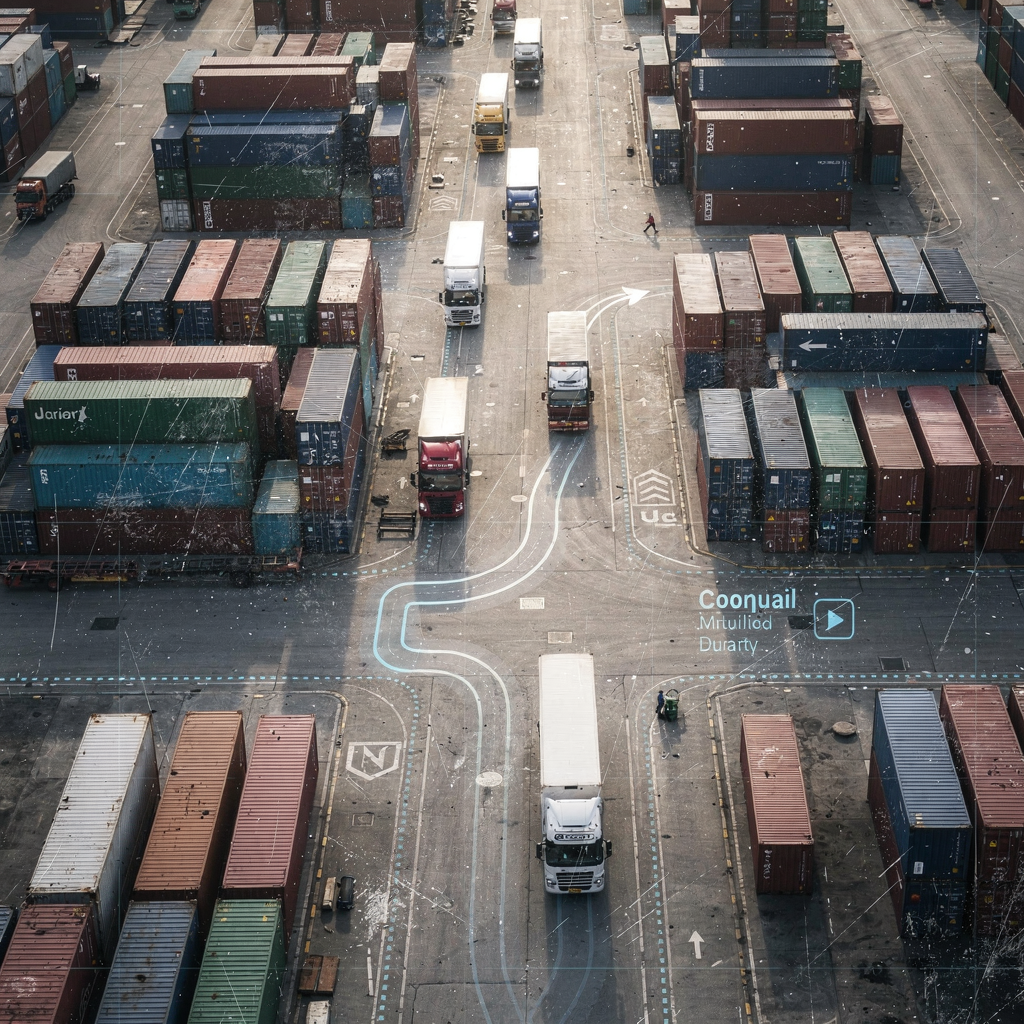
maritime container flow optimisation through digital coordination
Digital coordination synchronizes vessel ETA, yard operations, and hinterland links. Integrated platforms act as a single source of truth. They collect IoT telemetry, gate scans, and berth updates. Then they feed that data into scheduling engines and algorithms. As a result, operators can coordinate the whole chain and reduce idle time. Real-time data sharing smooths peaks and avoids congestion. For instance, quickened data transfer enables more precise cargo tracking and supports just-in-time operations precise cargo tracking.
Combining AI with JIT brings further gains. AI predicts demand patterns and recommends feasible assignments for quay cranes, yard crane, and yard truck fleets. It also helps optimize routing and reduce fuel consumption. When platforms synchronize shipping lines’ bookings with terminal plans, they reduce rework. Additionally, real-time alerts let planners reassign resources before queues form. Projected gains from such integration exceed 25% in some scenarios, if AI and JIT operate together. That estimate aligns with observed reductions in vessel idle time and faster equipment cycles advanced technologies and ship and port idle time studies.
Platforms for integrated container terminal coordination also improve predictability. They let users simulate what-if cases and validate plans in a sandbox. Loadmaster.ai builds digital twins to train policies that work across quay crane and yard layers, while respecting safety and operational rules. Our closed-loop agents—StowAI, StackAI, and JobAI—coordinate to protect crane productivity, reduce travel distances, and lower energy use. Finally, as trade volumes grow, terminals that adopt integrated optimization and flexible coordination will scale more effectively and reduce congestion at peak times.
FAQ
What is equipment cycle time and why does it matter?
Equipment cycle time is the total time for handling equipment to complete a loading, repositioning, and return loop. It matters because shorter cycles increase moves per hour, reduce vessel idle time, and improve terminal productivity.
How can predictive maintenance help reduce crane downtime?
Predictive maintenance uses statistical lifetime data and sensors to predict failures before they happen. By scheduling repairs proactively, terminals can reduce downtime by about 15–20% and keep cranes in service more consistently source.
What role do yard trucks play in overall flow?
Yard trucks move containers between quay and yard and form a critical link in the flow. Efficient routing and dynamic dispatch reduce waiting time, lower fuel consumption, and keep quay cranes fed for higher productivity.
Can digital twins improve terminal scheduling?
Yes. Digital twins let teams test schedules, stacking rules, and assignment logic in a risk-free environment. They help validate changes, measure tradeoffs, and ensure plans are feasible before live rollout.
What is the benefit of just-in-time operations in terminals?
Just-in-time operations align vessel arrivals, gate appointments, and yard moves to minimize waiting and idle time. Terminals with JIT and fast data sharing have reported up to 25% less vessel idle time source.
How do stacking heuristics reduce rehandles?
Stacking heuristics group containers by dwell time, destination, or carrier to keep commonly moved boxes together. This reduces the need to reshuffle stacks and shortens the truck-to-crane handover.
Are automated guided vehicles a good replacement for yard trucks?
Automated guided vehicles can reduce human-driven truck runs in defined lanes and cut travel distances. They fit well in terminals that can invest in automation and redesign lanes for AGV routing.
What is integrated scheduling and why is it useful?
Integrated scheduling coordinates quay crane, yard crane, and truck assignments in a unified plan. It helps balance workload, avoid infeasible pairings, and reduce congestion across the terminal.
How do AI agents like those from Loadmaster.ai differ from standard models?
Loadmaster.ai trains reinforcement learning agents in a digital twin so they learn policies that go beyond historical averages. They can operate with little or no historical data and adapt to new vessel mixes and disruptions.
Where can I learn more about yard routing and simulation for terminals?
For detailed methods on routing and simulation, see resources on yard truck routing optimization and simulation models for automated terminal operations yard routing and simulation models. These pages explain algorithms and test frameworks used in modern terminals.
our products
 stowAI
 stackAI
 jobAI
jobAI
Innovates vessel planning. Faster rotation time of ships, increased flexibility towards shipping lines and customers.
Build the stack in the most efficient way. Increase moves per hour by reducing shifters and increase crane efficiency.
Get the most out of your equipment. Increase moves per hour by minimising waste and delays.
stowAI
Innovates vessel planning. Faster rotation time of ships, increased flexibility towards shipping lines and customers.
stackAI
Build the stack in the most efficient way. Increase moves per hour by reducing shifters and increase crane efficiency.
jobAI
Get the most out of your equipment. Increase moves per hour by minimising waste and delays.