
AI in port operations: embedding operational safety rules
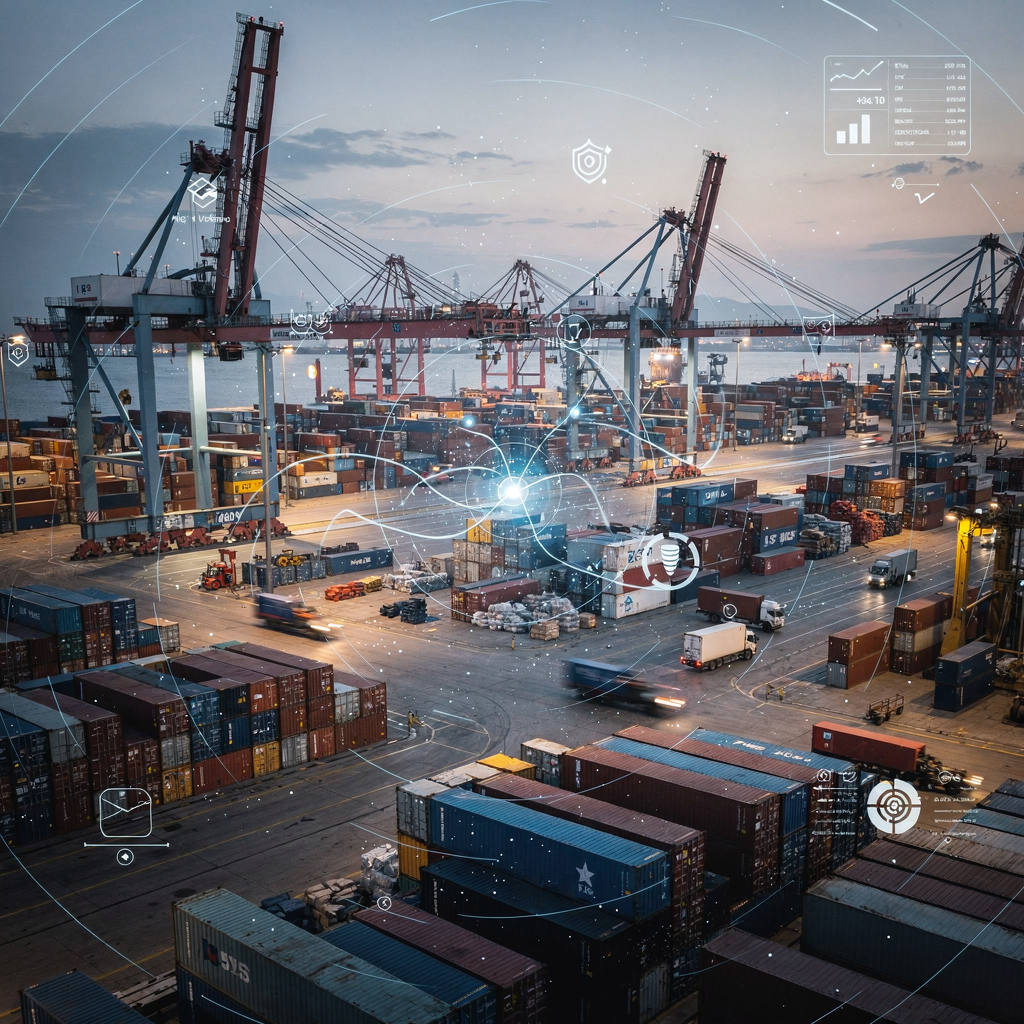
Ports handle enormous cargo volumes and they carry high safety stakes. The global shipping network moves more than 80% of world trade by volume, so small errors scale fast. AI and artificial intelligence now target these risks. In practice, AI combines rule engines and learning to improve maritime operations and ensure safety. For example, explicit safety rules can be encoded as constraints inside ai models so the system will not recommend moves that breach limits. This approach embeds the regulation, and it changes how operators work. Loadmaster.ai applies similar thinking when it trains reinforcement learning agents inside a sandbox digital twin. This method lets the terminal set the rules while the AI finds safer, higher-performing policies without copying past mistakes. For practical rule encoding, teams translate formal clauses, operator limits, and tug performance into hard constraints. Then the AI systems test thousands of plan variants until feasible options emerge. This process supports the integration of ai with legacy TOS and live telemetry. Case studies show that embedding safety rules yields measurable outcomes. One survey linked to improved incident reduction when AI-driven systems operate with embedded constraints; operators report roughly a 30% reduction in incidents in contexts where safety rules were enforced by models 30% reduction in incidents. First responders and planners also see fewer surprises. In addition, AI models that keep safety first lower regulatory friction and improve auditability. For readers who want technical depth on moving from fixed rules to learned control, see our discussion on rule-based planning and AI optimization from-rule-based-planning-to-ai-optimization-in-port-operations/. Overall, embedding ai ensures that day-to-day choices respect maritime safety while decision-making moves faster and more consistent than before.
Real-time monitoring with AI systems for compliance
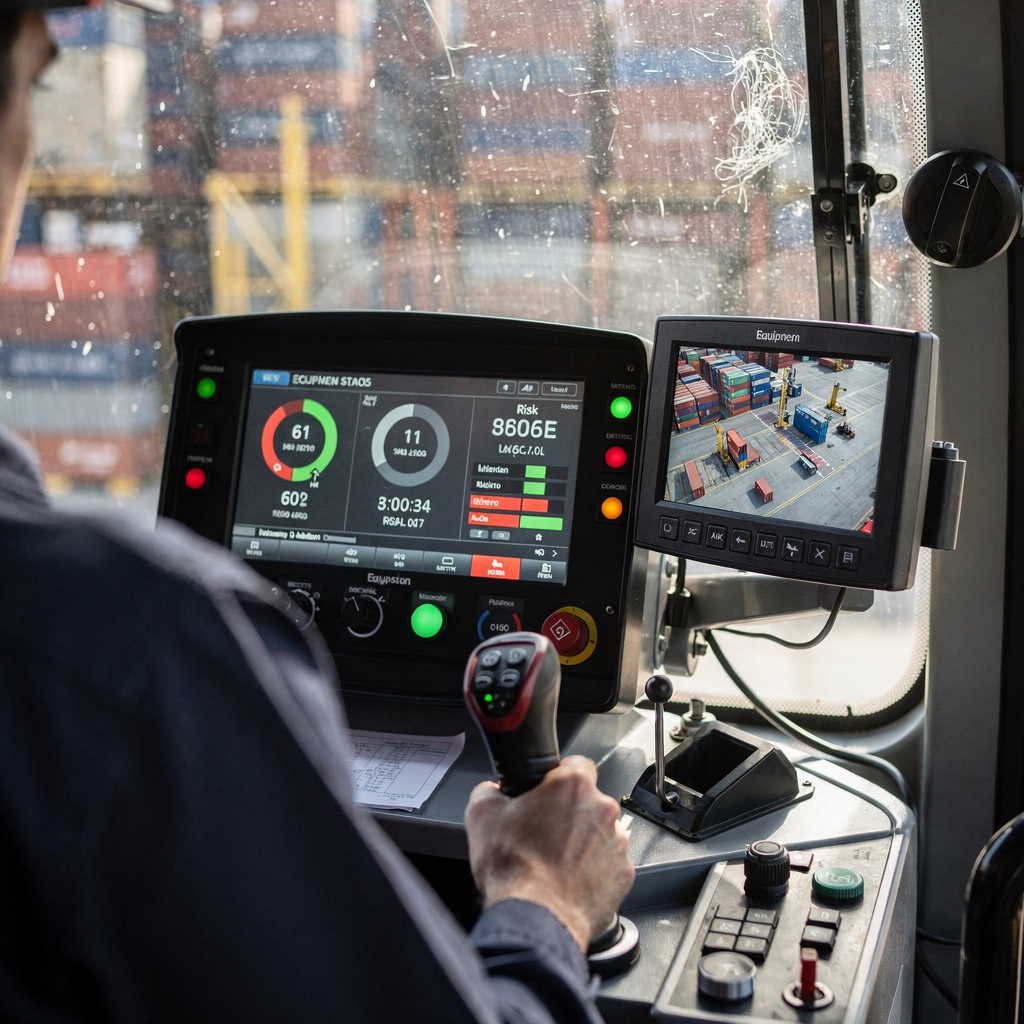
Modern ports run dense sensor networks. IoT devices stream location, load, crane position, and weather into a central platform. These data streams feed AI systems that watch for breaches and suggest corrective action. Real-time monitoring brings visibility across quay, yard, and gate. The ai stack ingests vast amounts of data and applies lightweight ai models to flag hazards. For compliance, ports integrate rule encodings so that any recommendation respects international maritime organization standards and local permits. The ai systems process telemetry from AIS, GPS, RTGs, and environmental monitors. Then the algorithms score risk and trigger an alert or automated shut-down when thresholds approach. For instance, automated alerts have prevented near-miss incidents by stopping crane moves and pausing loading and unloading operations until safe conditions returned real-time AI agents. Real-time systems must balance latency, reliability, and operator acceptance. Loadmaster.ai builds closed-loop agents that test actions in a simulator before live deployment; this lowers the chance of unsafe automation while keeping throughput high. For more on low-latency processing and integration with PLC telemetry, review our work on low-latency data processing for container terminals low-latency data processing for container terminals. The monitoring systems layer also supports audit trails, which help during compliance reviews. Consequently, real-time monitoring not only prevents incidents but also documents the sequence of ai decisions for regulators and operators. Finally, streaming data from sensors lets predictive and reactive controls coexist so ports can act fast without losing governance.
Drowning in a full terminal with replans, exceptions and last-minute changes?
Discover what AI-driven planning can do for your terminal
AI-powered vessel operations: enhancing risk mitigation
Vessel operations benefit when AI coordinates planning with weather and traffic. An ai-powered route planner fuses forecast models, traffic density, and berth availability to reduce delays. In practice, these systems combine predictive wind and current inputs with port slot constraints to generate safer approaches. Machine learning models can forecast collision probabilities and recommend timing for tug and pilot services. When combined with rule-based guardrails, the planner will never propose a move that conflicts with safety systems or operator limitations. For example, a tug schedule that the AI suggests will respect propulsion systems limits and captain preferences while reducing waiting time. Deployed ai on vessels and tugs has shortened emergency response times. Studies indicate up to a 25% faster emergency response when vessel operations use AI-supported decision-making, and crews report better situational awareness 25% improvement in crew response. In addition, AI can help optimize fuel consumption by choosing approach speeds that balance arrival time and emissions. In real-world maritime conditions, the blend of symbolic rules and learning reduces collision risk and ensures compliance to international norms. Operators still oversee final choices, but the AI supports rapid, justified recommendations. To explore how simulation-first training improves robustness before live use, see our simulation-first AI paper for inland terminals simulation-first-ai-for-inland-container-terminal-optimization/. This hybrid approach makes ai systems adaptable and reliable under changing vessel mixes and weather. Ultimately, ai supports safer vessel operations while keeping ports efficient and resilient.
Real time predictive analytics in port operations
Predictive analytics transforms how ports forecast congestion, equipment failure, and environmental hazards. Real-time predictive models use streaming data to score risk and to propose mitigation. Hybrid models combine symbolic rules with machine learning so that the model respects fixed safety limits while learning from patterns in operations. For example, a hybrid approach can predict RTG motor faults and trigger predictive maintenance with a task order to reduce downtime. This predictive maintenance reduces unexpected breakdowns and keeps cranes and propulsion systems online. In other situations, the system forecasts gate surges and suggests temporary changes to stacking rules to protect throughput. The methodology centers on lightweight ai models that can run at the edge and in the cloud, enabling fast inference near the data source. Real-time data are fed into an ai stack that balances short-term optimization with long-term KPIs. When ports deploy predictive analytics correctly, throughput often improves without compromising safety: independent reports cite throughput gains of 10–15% while maintaining compliance and safe operations throughput gains of 10–15%. These models also produce automated audit trails and explainable scores so an operator can see why a change was recommended. Hybrid systems help manage the trade-offs between crane productivity and yard quality, and they support multi-objective goals in real-time. For a deep dive on congestion-aware scheduling that uses these principles, see our exploration of multi-lane crane scheduling congestion-aware multi-lane crane scheduling. In short, predictive analytics applied in real time makes ports safer and more efficient at the same time.
Drowning in a full terminal with replans, exceptions and last-minute changes?
Discover what AI-driven planning can do for your terminal
AI for port safety: compliance and efficiency
Balancing throughput and compliance remains a central challenge. AI helps by enforcing rules in every decision and by documenting those choices for auditors. Automated compliance monitoring systems scan plans and operations to check conformance with the international maritime organization rules and port-specific permits. When the AI flags a violation, it produces an explainable sequence of ai decisions and the supporting sensor data so the operator can act. This approach has produced reports of a 30% drop in regulatory violations and lower costs due to fewer stoppages and fines 30% drop in regulatory violations. AI-driven systems also support automated audit trails that grow smarter. Self-learning compliance modules adapt when new rules are published, and they retrain against synthetic scenarios to validate behavior. This enables safe ai deployment while keeping the legal record clear. With ethical ai and clear governance, operators gain trust in recommendations and accept more automation. Deployment of AI requires attention to cybersecurity and data protection, and the system design must include role-based access and secure data transfer. Light-weight ai models at the edge can limit unnecessary streaming data and reduce exposure. For terminal teams focused on ROI and stepwise digitalization, our roadmap explains how to move from pilots to full deployment with governance-ready AI governance-ready-ai-for-deepsea-container-ports/. In practice, ai helps ports hit efficiency goals while ensuring the safety of people, assets, and the environment.
Role in maritime: future human-AI collaboration in port operations
Human-AI collaboration will shape the future of maritime operations. Emerging frameworks focus on explainable AI so that operators understand ai recommendations and can override them when needed. Standards for access to data and data sharing across ports increase model robustness and lower model drift. Shared schemas and standard APIs can enable cross-port learning while respecting data protection and commercial sensitivities. Researchers are also defining governance models for ethical ai, and the international maritime organization is part of early discussions about safety and security standards. Roadmaps for joint R&D recommend combining simulation-first training with field trials. That approach creates a deployment of AI that has been exhaustively tested in a digital twin before it touches live traffic. Loadmaster.ai’s closed-loop reinforcement agents are an example: they train in simulated terminals, then deploy with operator-set guardrails and live feedback, which reduces the need for large amounts of historical training data. This reduces the risk of losing tribal knowledge when senior planners leave. In the coming years, standardised data-sharing initiatives and common compliance monitoring systems will help AI models generalise across maritime environments. As a result, the reliability of AI and the reliability of ai systems will rise together. Finally, partnerships between port authorities, AI researchers, and regulators will be required to sustain safety gains and to fully realise the full potential of AI in a safe, auditable manner.
FAQ
How does AI embed operational safety rules in port systems?
AI embeds safety rules by encoding regulations and operator constraints as hard guardrails within ai models. Then models propose actions that never violate those guardrails while optimizing performance.
Can AI prevent near-miss incidents at the quay?
Yes. Real-time monitoring with sensor data and automated alerts can stop unsafe moves before they occur. Systems can pause loading and unloading operations or trigger a shut-down when thresholds are exceeded.
What benefits have been reported when safety rules are embedded in AI?
Ports that embed safety rules report lower incident rates, improved emergency response times, and fewer regulatory violations. Studies have documented incident reductions and response improvements in live trials real-time AI agents.
How do AI systems handle predictive maintenance?
AI systems use predictive analytics to forecast equipment failures from streaming telemetry and historical patterns. Then they schedule maintenance before breakdowns to keep cranes and propulsion systems online and to lower downtime.
Are AI recommendations explainable to human operators?
Modern systems combine symbolic rules with data-driven models to make recommendations traceable and interpretable. Explainable AI techniques produce audit trails so operators can see why a recommendation was made.
What about cybersecurity and data protection?
Deployment must include secure data transfer, role-based access, and encryption to protect operational data. Edge processing and lightweight ai models can limit exposure by keeping sensitive live data at the terminal.
How does simulation-first training help deployment?
Simulation-first training lets agents learn millions of scenarios without risking real operations. That approach reduces dependence on historical training data and supports safe, incremental ai deployment.
Can AI improve fuel consumption and emissions?
Yes. AI can optimize approach speeds and berth timing to reduce fuel consumption and lower emissions. These optimizations also contribute to lower operational costs.
What role do standards and data sharing play?
Standards for data formats and sharing improve model robustness across ports while respecting commercial and privacy constraints. Standardisation also supports cross-port predictive models and joint R&D.
How can operators adopt AI without losing control?
Operators should start with sandbox trials and guardrails that allow human override. Incremental rollouts, clear audit trails, and training keep control with the operator while letting AI deliver efficiency and safety gains.
our products
 stowAI
 stackAI
 jobAI
jobAI
Innovates vessel planning. Faster rotation time of ships, increased flexibility towards shipping lines and customers.
Build the stack in the most efficient way. Increase moves per hour by reducing shifters and increase crane efficiency.
Get the most out of your equipment. Increase moves per hour by minimising waste and delays.
stowAI
Innovates vessel planning. Faster rotation time of ships, increased flexibility towards shipping lines and customers.
stackAI
Build the stack in the most efficient way. Increase moves per hour by reducing shifters and increase crane efficiency.
jobAI
Get the most out of your equipment. Increase moves per hour by minimising waste and delays.