
Port Bottleneck: Causes and Impacts
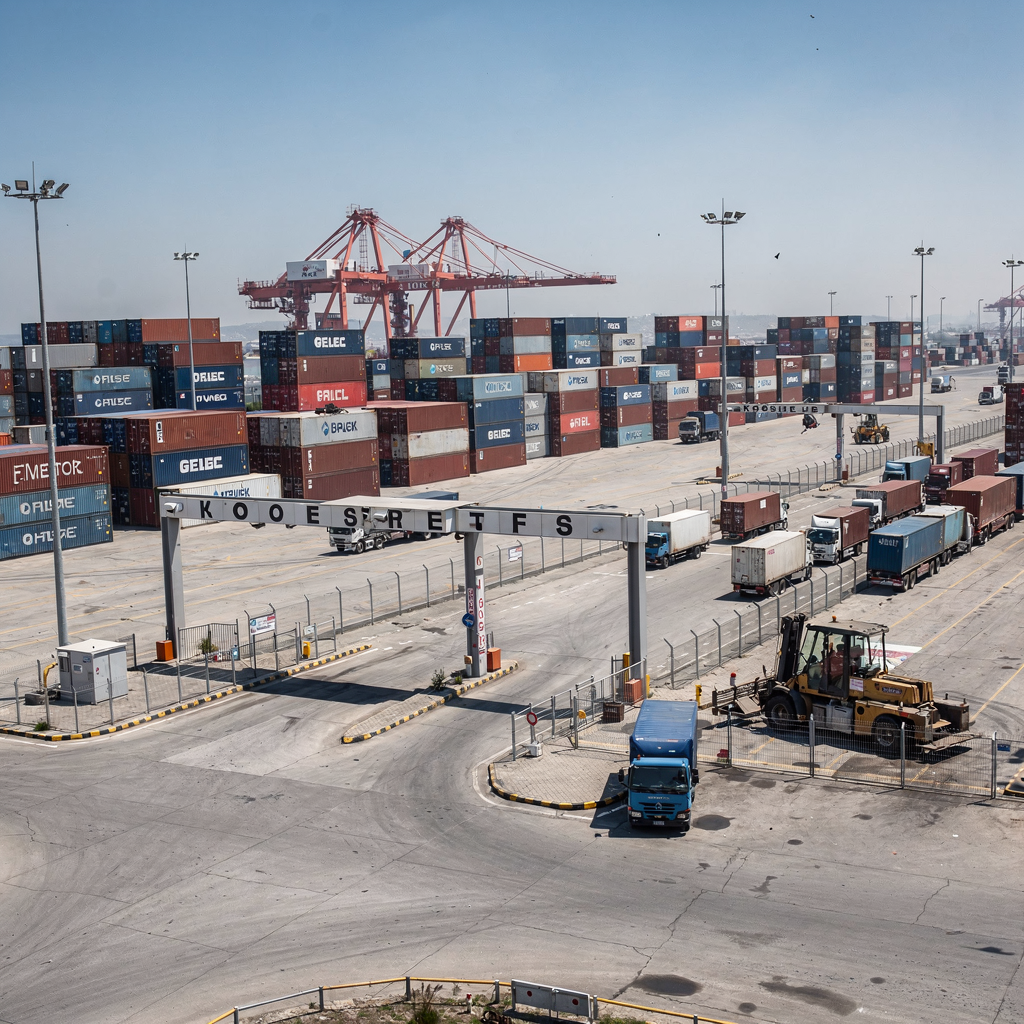
First, define the port bottleneck. A port bottleneck occurs when flows of cargo, equipment, and labour intersect and slow down. This slowdown affects vessel turnaround times directly. It reduces the number of moves per hour and increases costs for carriers and shipping companies. For example, research shows that major interruptions can cause throughput reductions of up to 15% during peak disruption events, which reduces capacity and creates backlog across the terminal network throughput reductions of up to 15%. Consequently, vessels wait longer. Therefore, carriers face increased fuel burn and idle time. In addition, shippers face higher demurrage and detention exposure when containers overstay.
Common triggers of a bottleneck include equipment failures, adverse weather, and labour shortages. First, equipment failures such as broken quay cranes or yard spreaders remove capacity fast. Then, adverse weather can force closures or slow operations. Next, labour shortages reduce the workforce available to load and unload, and thus postpone vessel arrival handling. Also, systematic issues such as imbalanced yard planning or insufficient yard space can turn a single failure into severe congestion. The Covid-19 pandemic amplified these effects, and it remains a reference point when planners study resilience and response to shocks.
Port planners must measure waiting time and dwell time to react. For instance, truck waiting times can exceed two hours at peak congestion, and gates can become choke points. A dynamic planning approach reduces firefighting and improves predictability. To help, terminals use simulation and terminal performance modelling software to test scenarios before they occur. In practice, terminal operators and terminal operator teams need tools that show impacts on quay cycles, yard flow, and the volume of container moves. Loadmaster.ai builds reinforcement learning agents that act across quay, yard, and gate to reduce rehandles, shorten driving distance, and strengthen supply chains. By acting early, planners can reallocate resources, reassign vessel berths, and protect throughput across the port and connected inland lanes.
Port Congestion and Freight Allocation in Real Time
First, port congestion forms when too many trucks, vessels, or container moves cluster at the same time and place. Then, gates and yards fill up. Trucks wait, drivers idle, and waiting time rises. For example, some studies reported trucks idling for hours during peak port congestion, which hurt supply chain efficiency and increased costs trucks idling for hours. Next, freight allocation becomes the tactical lever to relieve pressure. Freight allocation means assigning containers to specific yard blocks, lanes, or gate windows. Smart allocation balances yard occupancy, protects quay productivity, and cuts unnecessary moves.
Dynamic freight allocation uses real-time data and policies to reroute containers and adjust plans. First, sensors and gate systems provide timestamped arrival records. Then, operators and systems allocate yard slots and sequence moves. As a result, the terminal can reduce internal transport delays substantially. In simulated tests, real-time replanning cut internal transport delays by roughly 25–30% when combined with adaptive berth planning and cooperative control dynamic replanning reduced delays by 25–30%. Consequently, carriers regain schedule integrity and shippers see fewer unexpected charges.
Real-time container tracking matters here. First, tools like RFID, GPS, and IoT sensors provide location and status. Then, allocation engines use that stream to reroute or reprioritise moves. Also, advisory time-slot systems smooth truck arrival patterns and cut gate waiting time advisory-based time slot management. Furthermore, modern yard planning and container terminal operations now integrate simulation to test reroute strategies virtually before execution. Loadmaster.ai’s StackAI and JobAI agents demonstrate how closed-loop control can dynamically rebalance yards and automate execution, and thus reduce the firefighting workload for terminal operators. Finally, this approach protects quay throughput while also protecting yard space and reducing container dwell.
Drowning in a full terminal with replans, exceptions and last-minute changes?
Discover what AI-driven planning can do for your terminal
Berth Optimization to Minimise Shipping Delays
First, berth allocation drives the sequence in which vessels berth and receive service. Next, adaptive berth planning responds to changed vessel arrival patterns and equipment availability. Then, planners can shift scheduled berths, reassign cranes, and change the order of operations. This reallocation reduces idle crane time and decreases vessel arrival delay. Simulation studies show that adaptive berth planning and real-time disruption recovery improve turnaround and can reduce shipping delays by up to 30% reduce shipping delays by up to 30%. Therefore, berth planning must incorporate recovery tactics and contingency plans.
Use simulation models to test berth allocation and recovery plans before you execute them. Simulation helps compare what-if cases, evaluate the planning period, and stress-test responses to closures or slow operations. For example, digital twins let teams trial multiple berth allocation policies with realistic traffic, and then choose the policy that balances quay productivity, yard flow, and equipment utilisation. In practice, these models connect with terminal operating systems so planners can visualise outcomes. If you want deeper modelling, see simulation tools for port berth scheduling optimisation for templates and methods.
On the ground, berth-level decisions must coordinate with yard planning and gate management. First, the vessel schedule should align with yard capacity. Next, terminal operator teams must allocate crane gangs and assign moves to reduce rehandles. Also, the container vessel sequence should avoid creating hotspots in the yard. Loadmaster.ai’s StowAI augments vessel planners by testing many stowage and sequencing policies in simulation so the quay plan minimizes shifter moves and maximises crane productivity. By combining AI-driven policy search with simulation, terminals can change berth allocation in response to real-time disruption and maintain stable throughput. Finally, this reduces the need for ad-hoc manual interventions and keeps shipping lines and carriers on schedule.
Inland Connectivity for Supply Chain Visibility
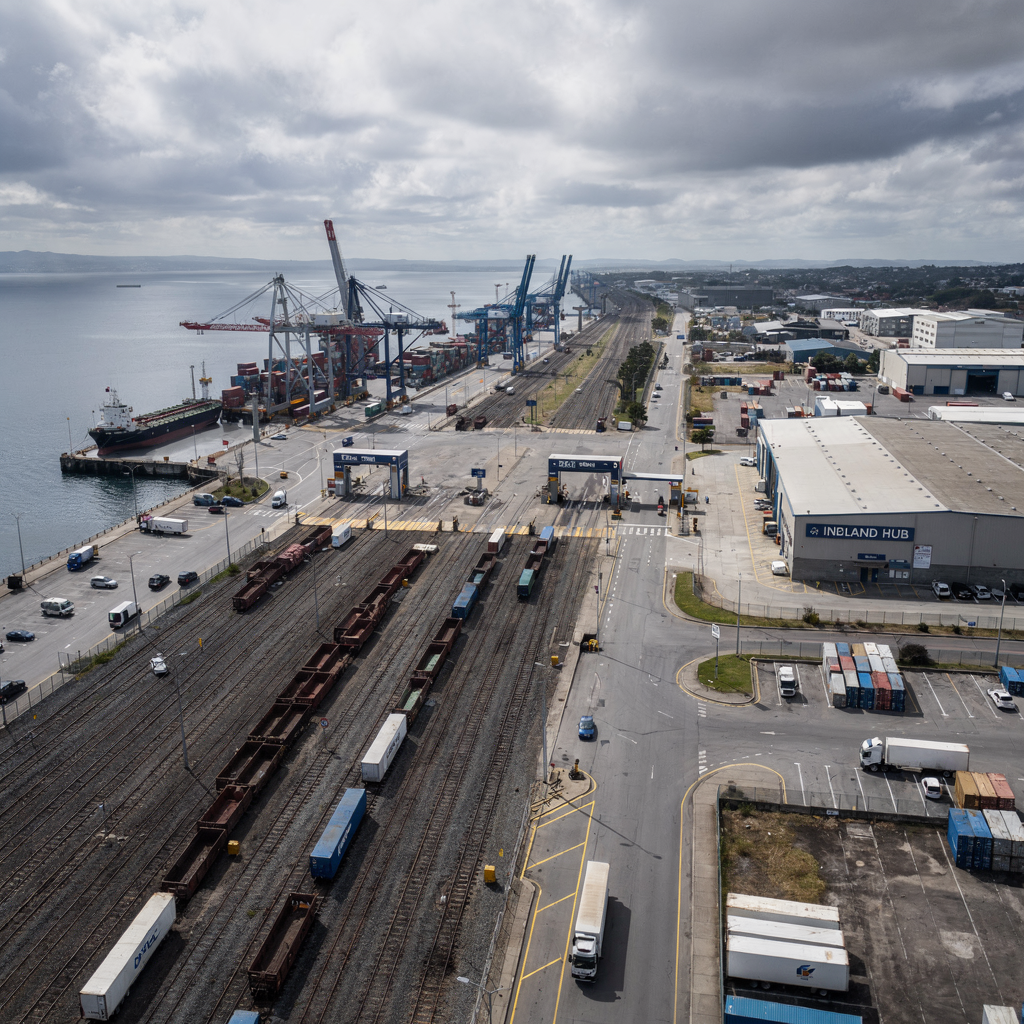
First, inland links connect port terminals to rail, truck, and inland hubs. Strong inland connectivity improves supply chain flow. Then, visibility along those links helps reduce unexpected dwell and stops. Technologies such as RFID, GPS, and IoT sensors provide the data stream that operators need. For instance, real-time container tracking helps the terminal match incoming truck arrival to yard availability and berth slots. In addition, tracking data helps plan container repositioning and avoid imbalanced yard stacks.
Supply chain visibility supports inland hubs, and therefore reduces costs for shippers and carriers. For example, a clear view of container movement shortens the time that import container units stay on chassis or in yard blocks. Also, visibility reduces demurrage and detention risk by enabling earlier interventions. Studies of synchromodal networks recommend integrating sea, rail, and road movements to improve planning and strengthen supply chains synchromodal supply chains. Consequently, terminals that integrate inland data can plan windows, reroute cargo, and align vessel calls more accurately.
To implement this, terminals must connect TOS, rail operators, and trucking platforms. APIs and EDI links help. Also, simulation for yard planning and terminal operation can prove the value of improved inland connectivity before investment. For guidance on modelling these interactions, review maritime terminal simulation tools for yard planning and terminal operating system integration materials. Finally, Loadmaster.ai supports real-time container policies by training agents in a digital twin, and then deploying them to coordinate quay, yard, and gate moves. In this way, automation and better visibility reduce container dwell and improve overall supply chain efficiency.
Drowning in a full terminal with replans, exceptions and last-minute changes?
Discover what AI-driven planning can do for your terminal
Resilience at the Hub: Preventing Demurrage and Detention
First, define demurrage and detention. Demurrage is the charge for keeping a container at the terminal beyond the free time. Detention is the charge for keeping the container outside the terminal beyond the agreed window. Both fees penalise shippers and increase total cargo cost. For example, long waiting time at gates and severe congestion in yards convert short delays into demurrage and detention events. Therefore, proactive planning tools matter. Also, advisory time-slot management has evidence of reducing waiting times and cutting demurrage fees by about 20% advisory time-slot systems cut waiting time and demurrage.
Dynamic replanning measures help avoid container overstays and reduce demurrage and detention exposure. First, reroute empty containers proactively to balance the yard and protect space for import container arrivals. Next, use allocation engines to prioritise moves with pending demurrage and detention windows. Also, schedule chassis returns and truck windows to avoid overlap and reduce dwell time. Furthermore, simulation and digital twins can forecast when demurrage and detention risks will rise, and then propose corrective actions. For a practical modelling approach, consider container terminal simulation libraries and terminal performance modelling software for scenario planning.
Terminal operator actions must link with carrier and shipper priorities. For example, shipping lines and carriers might change vessel schedules, and then the terminal must adapt. Loadmaster.ai’s multi-agent RL approach trains StowAI, StackAI, and JobAI to balance quay productivity and yard occupancy while protecting shipments from fees. In short, this reduces the need for manual firefighting. Finally, a resilient hub uses data, allocation rules, and automation to keep containers moving, lower demurrage and detention costs, and maintain relationships with shipping companies and shippers. This approach boosts supply chain resilience and reduces surprise charges across the network.
The Future of Shipping Freight: Dynamic Optimization and AI
First, AI-driven tools will shape how terminals respond to dynamic changes and disruptions. Second, artificial intelligence and reinforcement learning agents can search policies beyond historical averages. For instance, Loadmaster.ai trains agents in a digital twin so they learn by simulation, and then deploy with operational guardrails. This approach avoids relying solely on historical data, and it enables cold-start performance. As a result, the terminal can proactively replan moves, adjust berth allocation, and reroute internal transport when disruptions occur.
Emerging systems will enable multi-agent cooperation across carriers, yards, and gates. Then, cooperative intermodal network flow control can dynamically reroute flows across modes. Research highlights the value of cooperative control for container routing and continuous adjustment cooperative intermodal transportation network flow control. Also, real-time disruption management methods help coordinate scheduled transport services and reduce ripple effects across the supply chain real-time disruption management. Therefore, terminals that adopt AI-based optimisation will better protect throughput and reduce rehandles.
Integrating synchromodal transport will coordinate sea, rail, and road moves. Next, planners will use real-time container location data and dynamic allocation to align vessel schedule changes with inland arrivals. Additionally, terminals will apply automation to speed decisions and to reduce inconsistent outcomes between shifts. Finally, this future will raise supply chain resilience and allow hub ports to handle growth in the world’s container volumes. As shipping freight grows and ultra-large container vessels enter the port, smart optimization and resilient systems will keep operations fluid, reduce shipping delays, and maintain throughput even during disruption insights into terminal improvements.
FAQ
What causes a port bottleneck?
Port bottlenecks arise when the flow of vessels, trucks, and container moves exceeds available capacity. Common causes include equipment failures, adverse weather, labour shortages, and imbalanced yard planning that creates hotspots.
How does dynamic freight allocation help reduce port congestion?
Dynamic freight allocation assigns containers to yard slots and sequences moves in response to real-time conditions. By doing so, it balances yard occupancy, reduces rehandles, and shortens internal transport times.
Can berth optimization cut vessel turnaround times?
Yes. Adaptive berth allocation that uses simulation and recovery plans can reduce vessel turnaround and shipping delays. Simulation studies show improvements that can approach a 30% reduction in delay under disruption scenarios.
What technologies improve inland connectivity and visibility?
RFID, GPS, and IoT sensors provide the real-time data that improves visibility between port terminals and inland hubs. APIs and integrated TOS systems also connect carriers, rail operators, and trucking platforms.
How do terminals prevent demurrage and detention?
Terminals prevent demurrage and detention by prioritising moves with imminent free-time expiry, smoothing truck arrivals with advisory slot systems, and dynamically reallocating yard space to receive import container volumes. These measures reduce unexpected fees for shippers.
What role does artificial intelligence play in port operations?
Artificial intelligence enables reinforcement learning agents and optimisation engines to test policies in simulation and then apply them in live operations. AI helps terminals adapt to disruptions, optimise crane sequences, and stabilise performance across shifts.
Are simulation tools useful before deploying new terminal strategies?
Yes. Simulation and digital twins let planners test planning approaches and recovery actions without disrupting live operations. They help evaluate berth allocation, yard planning, and capacity investments before execution.
How do carriers and shipping companies interact with terminal planning?
Carriers and shipping companies coordinate vessel schedules and cargo priorities with terminal operators. Real-time updates from carriers allow terminals to reallocate berths and adjust vessel handling plans to reduce waiting time for ships.
What is synchromodal transport and why does it matter?
Synchromodal transport coordinates different transport modes—sea, rail, and road—under a unified planning approach. It matters because it enables flexible rerouting, improves resilience, and strengthens supply chains in the face of disruption.
How can my terminal learn more about modelling yard operations?
Start with terminal simulation guides and tools that model container yard operations, berth scheduling, and terminal equipment. For deeper resources, explore materials on maritime terminal simulation tools for yard planning and simulation tools for port berth scheduling optimisation for practical templates and case studies.
our products
 stowAI
 stackAI
 jobAI
jobAI
Innovates vessel planning. Faster rotation time of ships, increased flexibility towards shipping lines and customers.
Build the stack in the most efficient way. Increase moves per hour by reducing shifters and increase crane efficiency.
Get the most out of your equipment. Increase moves per hour by minimising waste and delays.
stowAI
Innovates vessel planning. Faster rotation time of ships, increased flexibility towards shipping lines and customers.
stackAI
Build the stack in the most efficient way. Increase moves per hour by reducing shifters and increase crane efficiency.
jobAI
Get the most out of your equipment. Increase moves per hour by minimising waste and delays.