
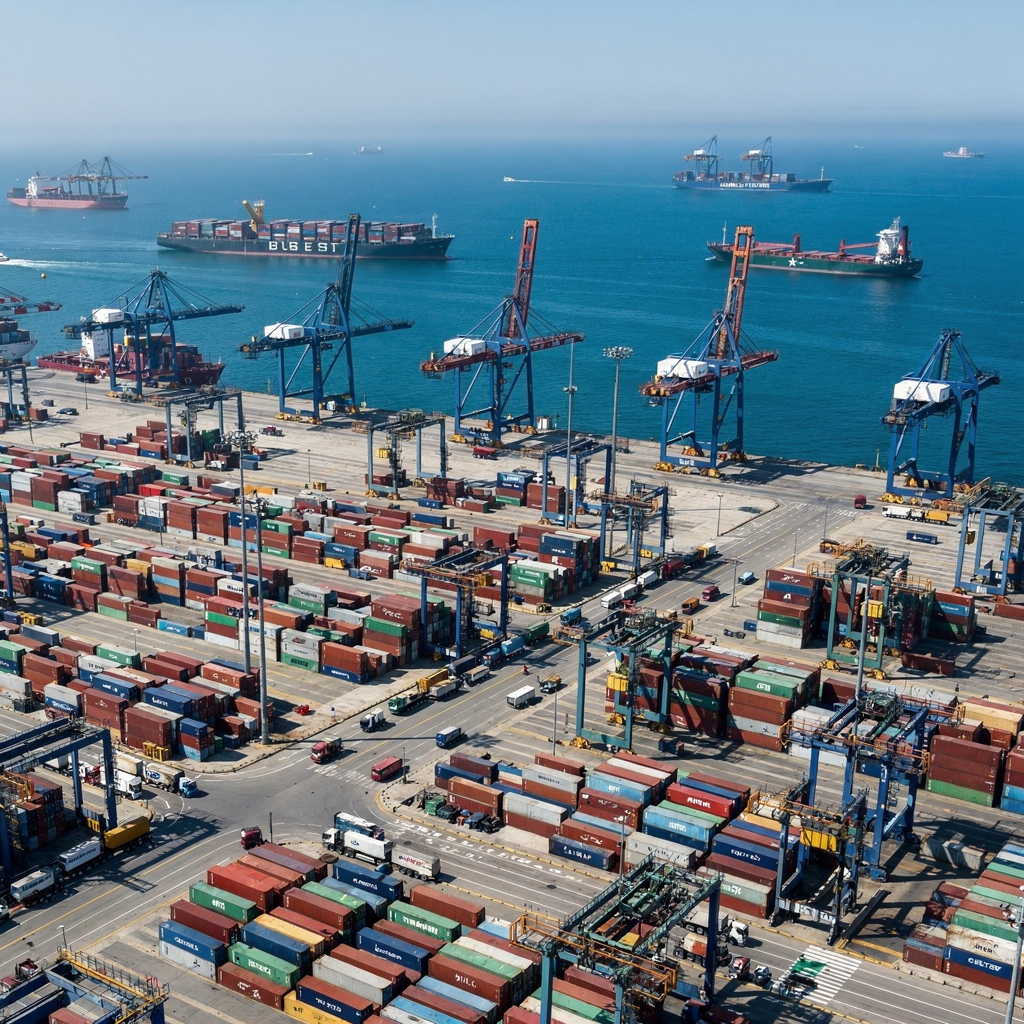
Dwell time metric: port dwell time and container flow
Dwell time is a core metric in maritime logistics. More precisely, dwell time refers to the time a container or cargo stays inside a port area before being moved onward. That definition matters because it links quay operations, yard use, gate throughput, and hinterland transport. Port dwell time acts as a direct indicator of congestion, storage fees, and detention risk. Shipping planners use this metric to measure efficiency and to flag bottleneck risks that affect the entire supply chain.
Data sources feed the dwell time metric. Terminal Operating Systems (TOS) record container arrival timestamps, gate scans, yard moves, and vessel load/unload events. Vessel schedules add planned arrival times and cut-off windows. Together, those feeds create container flow traces that support prediction models. For readers who want more detail on TOS inputs and integration, see our primer on Terminal Operating Systems and how they link to operational AI (Terminal Operating System (TOS)).
Predicting dwell time from container flow is challenging. Historical patterns help, but variance is high. For example, a simulation-based predictive model trained on TOS data reported roughly 12% predictive accuracy, which illustrates how complex the task can be and why historical averaging often misses future states ((PDF) AI-Enhanced Smart Maritime Logistics: Spotlighting Port …). That low accuracy signals that ports need smarter, anticipatory approaches rather than simple curve fitting.
To reduce this uncertainty, teams combine arrival times with yard state snapshots, weather feeds, and carrier notifications. Real-time container telemetry and container tracking add granularity. Consequently, models can account for transient surges and equipment failures. However, data gaps persist. Some terminals lack consistent gate timestamping or have siloed booking systems. Those gaps blunt the accuracy of any metric. Therefore, practitioners treat dwell time as a probabilistic indicator rather than a fixed value.
Finally, dwell time links to actionable KPIs. Planners use it to set target average dwell and to prioritize moves that unlock capacity. Loadmaster.ai trains RL agents within a digital twin to control quay and yard policies; the agents optimize multiple KPIs that affect dwell time, such as crane productivity and driving distance. This approach helps terminals move from reactive firefighting to proactive scheduling while keeping a pulse on container flow.
Factors influencing container: key factors behind high dwell
Understanding factors influencing container residence is essential. Internal issues like yard capacity, berth allocation, and customs clearance can raise average dwell. External factors such as weather, hinterland transport delays, or road strikes also force longer stays. Each factor interacts with the others, and the combined effect can multiply wait times and cause backlog. In short, a single disruption can cascade into a terminal-wide slowdown.
Yard capacity limits are one common cause of high dwell. When storage space fills, operators must reshuffle containers, which increases handling and rehandles. That practice raises operational costs and creates a bottleneck in throughput. Berth allocation can create similar pressure. If vessel schedules bunch up, cranes cannot keep a steady unload cadence, and containers spend more time waiting. Customs clearance is another known choke point. Slow inspections or missing documents trigger detention fees and extend dwell for specific shipments.
External factors are equally influential. Severe weather or blocked inland transport routes delay truck pick-ups. That effect was visible during the COVID-19 crisis when longer dwell times surged worldwide due to operational disruptions and supply chain interruptions (The container shipping crisis during COVID-19 disruption). The Port of Rotterdam reported elevated dwell levels that amplified congestion and raised costs for carriers and shippers (Ocean Shipping Freight Market Update).
Quantifying impact helps prioritize fixes. Studies show that yard-related delays and mis-planned berth sequences often explain a large share of high dwell incidents at major hubs. Data quality issues compound the problem. Inconsistent timestamping, missing gate scans, and poor linkage between booking systems and TOS records create gaps in dwell time data. As a result, predictive models may underfit critical patterns. The UNCTAD review highlights that integrating diverse data streams is necessary to improve forecasts (Review of Maritime Transport 2023).
Finally, operators must measure and monitor the right indicators. Average dwell time is a starting point, but it can hide tails where a few boxes cause great harm. Tracking dwell time patterns by commodity, carrier, and lane uncovers root causes. Doing so supports targeted interventions, whether that means expanding storage space, adjusting berth plans, or tightening customs coordination. In practice, better data and clearer causal attribution reduce the risk of prolonged backlog and deliver more resilient operations.
Drowning in a full terminal with replans, exceptions and last-minute changes?
Discover what AI-driven planning can do for your terminal
Logistics strategies to reduce dwell time: how to reduce dwell in ports
Operators use several logistics approaches to reduce dwell time. Yard-planning and slot-allocation focus on placing containers to minimize reshuffles and driving distances. Good slotting rules group fast-moving export boxes near gates and position import boxes for quick handover to trucks. That layout reduces unnecessary moves and shortens internal travel times. In practice, balanced stacking and dynamic reallocation of space deliver immediate benefits.
AI-driven scheduling tools also play a major role. Modern solutions fuse vessel arrival times, TOS snapshots, and carrier notices to forecast slot demand. Reinforcement Learning (RL) offers an attractive alternative to rule-based systems because it tests many policies in simulation and selects those that optimize multiple KPIs. For example, Loadmaster.ai trains RL agents within a digital twin to improve quay planning and yard strategy. The agents learn policies that reduce rehandles, balance workloads, and protect future moves without needing perfect historical data. This method supports cold-start deployment and avoids repeating known past mistakes.
Practical yard improvements include proactive reshuffles during low-peak windows and staggered job sequencing to keep cranes productive. Terminals that adopt predictive crew and equipment schedules reduce idle time and lower the average unload duration per TEU. Real-time container status updates and container tracking enable dispatchers to react faster to late arrivals or equipment faults. Those small gains compound into measurable reductions in dwell time.
One smart port initiative reported a 15% reduction in average dock time after adopting coordinated scheduling, gate automation, and visibility tools. The effort combined better TOS integrations with improved coordination among carriers, customs, and terminal planners. For readers exploring predictive KPIs and shortsea terminal use cases, see our analysis of predictive KPIs for shortsea terminals (Predictive KPIs for Shortsea Container Terminals).
Finally, technology must pair with process redesign. Training planners on new decision rules and embedding alerts into daily workflows ensure that scheduling improvements persist. Together, yard planning, AI-driven scheduling, and improved coordination help terminals significantly reduce dwell time and deliver faster delivery to the hinterland.
Actionable insights for supply chain efficiency: reduce container dwell time
Reducing container dwell time delivers clear benefits for supply chain efficiency. Shorter dwell means lower storage fees, faster turnover, and improved inventory management for shippers. It also helps carriers avoid detention fees and keeps schedules tighter. As a result, customer satisfaction and on-time delivery rates climb. From an economic perspective, fewer idle boxes free up capacity and lower freight costs for everyone in the lane.
Practical data-sharing protocols can transform decision-making. When shipping lines, customs, inland depots, and terminals exchange status updates, planners get a fuller view of incoming demand. Simple APIs and EDI feeds unlock that visibility. For terminals with mixed automation and manual processes, robust integration with TOS helps coordinate moves and prevents local congestion. See our piece on decoupling fleet control logic from TOS for more on integration approaches (Decoupling fleet control logic from TOS).
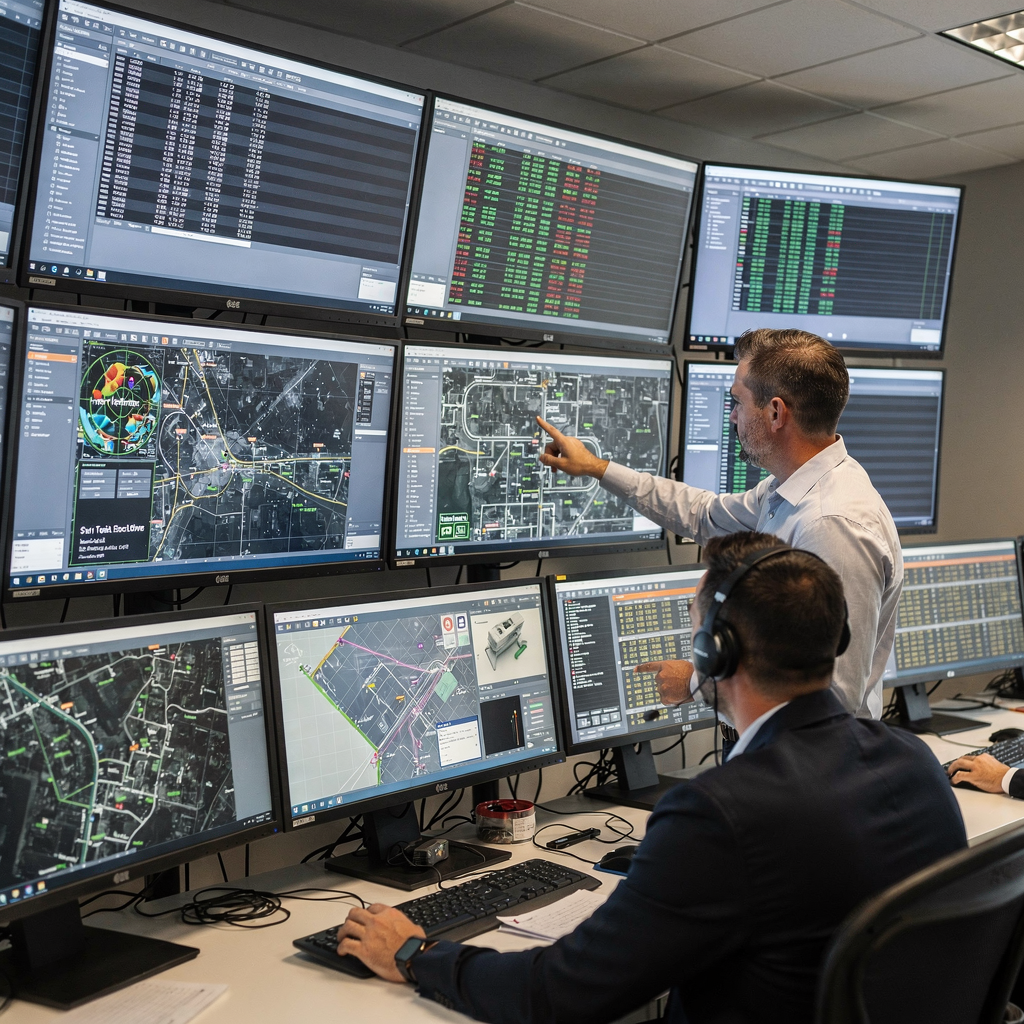
Dashboards and alerts turn data into action. A compact dashboard that highlights containers at risk of prolonged dwell and flags approaching detention thresholds can shift planning from reactive to proactive. Alerts for expected gate surges or yard saturation allow planners to stagger arrivals or open overflow lanes. Real-time data feeds and event-driven alerts reduce wait times and prevent bottleneck escalation.
Companies should also invest in basic tracking solutions. Real-time tracking and container tracking provide mile-by-mile visibility on laden boxes. That data ties directly into forecasts for arrival times and unload sequencing. Supply chain teams can then prioritize shipments that matter most to production lines or retail windows. The overall supply chain benefits when terminals and carriers coordinate to prioritize fast-movers and manage slower shipments into ICDs.
Finally, adopt small experiments to prove value before scaling. Use a sandbox digital twin to test scheduling tweaks and measure impact on average dwell and handling costs. Loadmaster.ai’s RL-driven sandbox approach reduces dependency on historical data and lets terminals test policies safely before live deployment. These experiments show how targeted changes in yard planning and data sharing can reduce container dwell time and improve supply chain efficiency.
Drowning in a full terminal with replans, exceptions and last-minute changes?
Discover what AI-driven planning can do for your terminal
Port congestion and excessive dwell time: impacts on supply chain
Excessive dwell time directly increases port congestion and creates cascading delays across the supply chain. When containers sit longer, storage space constricts and cranes face uneven workloads. That imbalance drives slower throughput and longer waits for arriving container ships. In turn, carriers must slow sailing schedules or re-route vessels, which raises freight costs and disrupts delivery windows.
Costs escalate quickly. Carriers face higher berth waiting charges and may incur detention for late truck pickups. Shippers see increased storage fees and inventory carrying costs. The Port of Rotterdam’s rising average dwell times illustrate how local delays can ripple through global trade and freight networks (Ocean Shipping Freight Market Update). That real-world example shows how terminal-level inefficiency translates into more expensive and less predictable shipping lanes.
Port congestion also reduces predictability in the booking and scheduling process. When carriers cannot rely on consistent berth and yard performance, they add buffers to arrival times and increase lead times for bookings. Those buffers inflate inventory levels and force shippers to plan more safety stock. The result is a less efficient, more capital-intensive system that undermines sustainable supply chain goals.
Relief strategies focus on capacity and coordination. Extending gate hours relieves afternoon peaks and spreads arrivals across more hours. Opening inland container depots (ICDs) diverts storage away from the quay and shortens average dwell at the terminal, though ICDs can shift congestion inland if not managed with proper data flows (Evaluating Port-to-ICD Logistical Bottlenecks). Dynamic slot allocation and better carrier coordination reduce vessel turnaround. Additionally, predictive analytics can identify likely congestion events before they peak, enabling proactive resource shifts.
Operationally, terminals must also track key thresholds. When dwell time exceeds benchmark thresholds, the probability of backlog and cascading disruption rises sharply. Terminals should monitor detention exposure, backlog by service, and crane idle time. Those indicators help trigger emergency responses such as overtime gates, temporary stacking adjustments, or prioritized unload for time-critical shipments. By measuring and acting early, ports protect carriers and shippers from the most severe disruption and preserve customer experience across the network.
Strategies to reduce container dwell time: metric and future directions
Proven strategies to reduce container dwell time range from process changes to advanced analytics. Short-term moves include improving gate workflows, balancing yard stacks, and adjusting berth sequences. Mid-term efforts add predictive scheduling, better TOS integration, and data-sharing agreements with carriers and customs. Long-term transformation relies on AI-driven orchestration and adaptive control loops that optimize across quay, yard, and gate.
For technology leaders, reinforcement learning stands out. RL agents can test millions of scenarios in a digital twin and learn policies that improve crane utilization while limiting yard congestion. Loadmaster.ai uses this approach to train StowAI, StackAI, and JobAI agents that jointly optimize vessel stow, yard placement, and execution to reduce rehandles and shorten driving distances. The agents work without requiring a long history of clean data, which avoids a common machine learning pitfall and supports cold-start deployments.
A unified metric framework helps measure progress. Combine average dwell time with tail metrics, such as the 95th percentile dwell and the number of boxes exceeding detention thresholds. Also include direct impact indicators like storage fees paid, detention exposure, and crane moves per hour. This balanced dashboard conveys both steady-state performance and extreme events. It supports continuous improvement and lets teams benchmark against peer terminals.
Looking ahead, several trends will shape port operations. AI-enhanced digital corridors promise tighter coordination across ports, carriers, and inland hubs. Blockchain-based document flows can reduce customs delays and speed clearance. Real-time container telemetry and advanced container tracking will sharpen arrival time predictions and optimize slot allocation. Together, these advances help ports optimize operations and make dwell time a manageable control variable rather than an unpredictable risk.
To sustain gains, combine technology with governance. Clear data-sharing protocols, shared KPIs across stakeholders, and transparent enforcement of cut-off rules ensure coordinated action. When terminals, carriers, customs, and inland depots collaborate, they reduce systemic friction and support resilient global trade. Ultimately, the goal is simple: improve throughput, reduce cost, and protect the entire supply chain from the next major disruption.
FAQ
What exactly is dwell time?
Dwell time refers to the period a container or cargo remains within a terminal or port area before it is moved onward. It measures how long boxes occupy storage space and helps planners identify bottlenecks and detention exposure.
Why does container dwell time matter for carriers?
Container dwell time affects berth productivity, storage fees, and detention risk for carriers. Longer dwell increases carriers’ exposure to costs and can force schedule buffers that reduce sailing frequency and increase freight rates.
How do terminal systems measure dwell time?
Terminals measure dwell using timestamps from gate scans, yard moves, and vessel operations recorded in the TOS. Integrating real-time data and container tracking improves timestamp fidelity and forecast quality.
Can AI help predict and reduce dwell time?
Yes. AI models, especially reinforcement learning agents trained in a digital twin, can test policies and learn strategies that lower rehandles and shorten average dwell. These agents adapt to new vessel mixes and yard states without relying solely on historical data.
What role does data sharing play in reducing dwell?
Data sharing among carriers, customs, and terminals improves visibility on arrivals and clearance status. That visibility enables better slot allocation, reduces wait times, and lowers the chance of unnecessary reshuffles.
Are there simple operational changes that reduce dwell time?
Yes. Extending gate hours, improving yard slotting, and prioritizing fast-moving cargo can quickly reduce average dwell. Piloting these changes in a sandbox helps measure their impact before full roll-out.
How does dwell time affect the wider supply chain?
Higher dwell time reduces vessel throughput and increases freight and inventory costs across the network. That leads to less predictable delivery windows and higher working capital requirements for shippers and supply chain partners.
What is a good metric mix to monitor dwell performance?
Combine average dwell time with tail metrics such as the 95th percentile dwell, count of containers over detention thresholds, and crane moves per hour. This mix captures both steady performance and extreme events.
How do inland container depots (ICDs) change dwell dynamics?
ICDs can relieve quay-side storage and lower port dwell, but they can also shift congestion inland if not integrated with real-time data flows. Coordinated planning and tracking between terminals and ICDs are essential.
How can my terminal get started with predictive approaches?
Begin by improving data quality in the TOS and implementing simple dashboards that highlight at-risk containers. Then trial predictive models in a digital twin or sandbox to test policies. For deeper automation, explore RL-driven solutions that optimize quay, yard, and gate jointly.
our products
 stowAI
 stackAI
 jobAI
jobAI
Innovates vessel planning. Faster rotation time of ships, increased flexibility towards shipping lines and customers.
Build the stack in the most efficient way. Increase moves per hour by reducing shifters and increase crane efficiency.
Get the most out of your equipment. Increase moves per hour by minimising waste and delays.
stowAI
Innovates vessel planning. Faster rotation time of ships, increased flexibility towards shipping lines and customers.
stackAI
Build the stack in the most efficient way. Increase moves per hour by reducing shifters and increase crane efficiency.
jobAI
Get the most out of your equipment. Increase moves per hour by minimising waste and delays.