
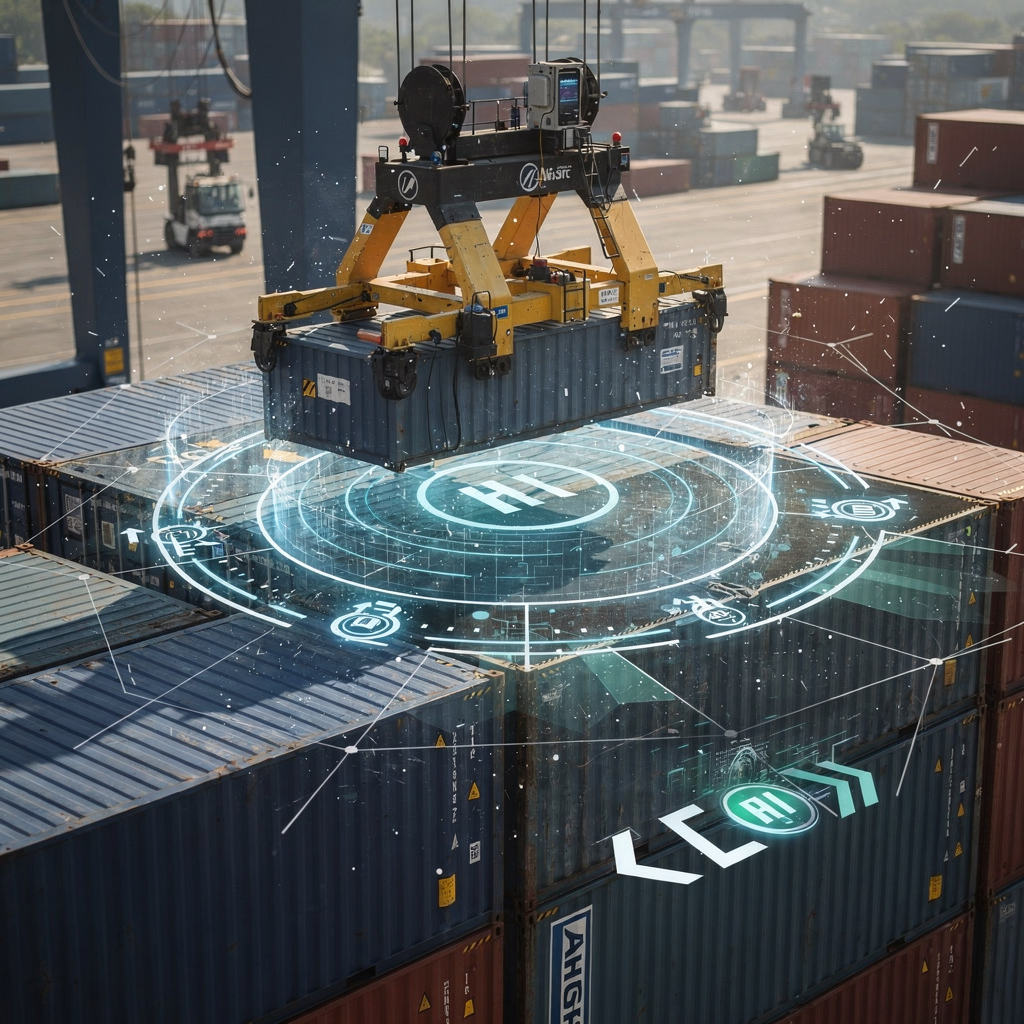
Introduction to AI, port and container terminal optimization
Container terminal optimization sits at the crossroads of global trade, technology, and regulation. A container terminal links ships, trucks, rail, and warehouses, and it must move millions of TEU each year. Efficient terminals shorten vessel turnaround, reduce trucking queues, and lower costs for shipping lines. AI helps terminals predict demand, sequence moves, and allocate equipment so terminals perform more reliably. AI drives faster berth planning, smarter crane scheduling, and better yard stacking, and it reduces human firefighting while lifting overall terminal efficiency.
Statistics underline the need for better tools. UNCTAD reports that “container ships in developed ports wait on average 12 hours less than in developing ports,” and that gap represents lost time and cost in the supply chain UNCTAD Review of Maritime Transport 2023. AI can narrow that gap by enabling predictive arrival handling and adaptive resource allocation. AI models can forecast volumes, and they can help identify congestion before it forms. AI enhances planning across quay, yard, and gate so terminals meet tighter service expectations.
The EU AI Act changes how terminals adopt advanced systems. The law classifies high-risk AI, and it requires transparency, human oversight, and robustness for critical infrastructure like ports. Terminal managers must reconcile the speed and scale of AI with the new compliance rules. Ensuring that AI systems meet the Act’s rules affects design, deployment, and auditing. That pressure pushes operators to choose solutions that are safe by design and auditable.
Loadmaster.ai builds reinforcement learning agents that operate inside explainable guardrails, and our approach suits terminals that want cold-start readiness and audit trails. We spin up a digital twin, train policies against KPIs, and deploy with operational guardrails so terminals integrate AI without repeating past mistakes. This mix of simulation-led learning and operational governance provides a pathway to comply with the EU AI Act while still achieving measurable gains in quay throughput and yard balance.
To read more on planning and capacity, see our write-up on using simulation for container port capacity planning. Also, terminal operators can explore how to reduce crane idle time in practical settings via our guide on reducing crane idle time with better planning. Both resources explain how AI planning links to measurable changes in container dwell time and terminal efficiency.
Application of AI in container terminal operations and terminal operation
AI changes how terminals sequence work and how people interact with systems. Predictive analytics for berth scheduling uses ETA data and cargo manifests so planners prioritize arrivals. AI predicts vessel arrival windows and suggests optimal berth slots. For example, AI can reduce idle quay crane time by recommending reschedules when delays arise. Kearney estimates AI integration can cut handling times by up to 30% through optimized crane scheduling and yard management Kearney report. That is a strong incentive to implement AI in operational workflows.
Real-time resource allocation and yard management rely on streaming telemetry and decision policies. Edge AI and connected IoT sensors feed location, equipment status, and container characteristics so the AI can assign moves and plan reshuffles. Terminals that integrate berth-call optimization with quay-crane planning reduce gaps between plan and execution; readers can consult our piece on integrating berth call optimization with quay crane planning for practical patterns and API needs.
The EU AI Act imposes human-in-the-loop and explainability obligations for high-risk systems. Systems must surface rationale for suggested moves, and operators must remain able to override the automated plan. That requirement shapes the system architecture: AI should output ranked options, expected KPIs, and constraint checks so human supervisors validate or adjust decisions. Ensuring that AI systems explain why they prefer a move or a container stacking decision helps terminal crews trust the recommendations. The Act also requires operators to maintain audit trails, which teams must design into the deployment.
Transparency and explainability demand that developers treat AI like a cooperative tool rather than a black box. For instance, reinforcement learning agents can provide decision histories and KPI trade-off visualizations so a planner sees why an agent prioritized fewer rehandles over slightly lower crane productivity. Terminals should insist on traceable metrics, and they should integrate those traces into control-room dashboards. That combination of real-time suggestions and clear explanations lets teams use AI while meeting regulatory expectations and human oversight rules.
Drowning in a full terminal with replans, exceptions and last-minute changes?
Discover what AI-driven planning can do for your terminal
AI technologies for modern container terminals, smart port and port logistics
Modern container terminals use a mix of AI technologies to solve different problems. Machine learning handles demand forecasting and anomaly detection. Computer vision inspects containers, reads codes, and monitors gate queues. Digital twins simulate the whole terminal so teams can test policies before live rollout. Together, these components enable a smart port that operates with less friction and more foresight.
Smart port concepts include autonomous vehicles for yard handling, IoT sensors for equipment health, and connected systems that coordinate moves across domains. For example, autonomous straddles can follow optimized routes to reduce driving distance and fuel burn. Edge AI processes local sensor streams so devices act with low latency even when network links degrade. Our product suite uses digital twins and reinforcement learning to train agents in simulation, and then the agents adapt live with operational guardrails.
Data-platform architectures matter. A robust architecture ingests berth schedules, terminal operating system (TOS) events, gate manifests, and equipment telematics. The container terminal operating system must expose APIs for the AI to send actions and to receive confirmations. Terminals that adopt microservices and message buses can integrate AI with less friction. For practical guidance, review our article on handling TOS migration projects without disrupting terminal operations which explains how to link new AI capabilities with legacy systems.
Interoperability and cybersecurity are now regulatory and commercial priorities. The EU AI Act requires that deployed AI systems be robust against manipulation and that they maintain data privacy. Terminals must encrypt telemetry, enforce role-based access, and keep logs for audits. Interoperability standards help terminal operators integrate third-party AI tools without creating brittle dependencies. To protect operations, terminals should adopt secure APIs and run periodic penetration tests and red-team exercises.
Key applications of AI in container handling and container stacking
AI optimizes crane operations, yard placement, and container retrieval, and it reduces unnecessary moves. AI planning can place imports where retrieval windows align with truck arrivals, and it can keep exports grouped for rapid load sequencing. By predicting container flows and aligning placement with expected handling sequences, terminals reduce rehandles and shorten container dwell time.
In yard stacking, AI uses heuristics and learned policies to decide where to place each container. Reinforcement learning agents, for example, can plan placements to minimize future reshuffles while also balancing yard workload. Our StackAI agent focuses on yard balance and travel distance, and it works within safety constraints so planners retain final authority. Case studies show that learned stacking policies increase throughput and reduce average handling distances.
AI-driven crane scheduling assigns lifts to cranes to maximize gross moves per hour while reducing interference. When a vessel mix shifts, AI rebalances crane allocation so the quay keeps moving. Where terminals implement automated container sequencing, they see measurable gains. Research shows AI-enabled logistics platforms can cut fuel consumption and emissions by 15–20% by optimizing berthing and cargo movement sequences Research on AI in Logistics Optimization. This environmental benefit aligns with port sustainability targets and national emission policies.
Another notable metric: surveys at regional ports report faster decision-making and resilience after AI adoption. One survey of 510 port professionals found AI improved operational decision speed by 40% in Egyptian ports survey on AI impact in ports. That improvement matters during disruptions because faster, higher-quality decisions reduce knock-on delays. Loadmaster.ai’s closed-loop approach trains agents in sandboxed digital twins, so terminals receive tested policies before live use and so they avoid the pitfalls of training only on past, possibly flawed, data.
Drowning in a full terminal with replans, exceptions and last-minute changes?
Discover what AI-driven planning can do for your terminal
Benefits of AI and AI in container terminal for port operation
The benefits of AI in terminals span economics, resilience, workforce safety, and sustainability. Economically, AI can increase throughput and reduce operating cost by improving move rates and lowering idle equipment time. Kearney’s analysis suggests up to a 30% reduction in handling time with optimized scheduling and yard management Kearney report. That gain flows to shipping lines and terminal stakeholders as faster turnarounds and lower demurrage risk.
AI improves resilience. By predicting container volumes and rebalancing resources during peak events, AI reduces cascading delays. Terminals that integrate real-time replanning capabilities can adapt to late arrivals, gate surges, and equipment failures, and they avoid manual firefighting. For more on replanning in live systems, our discussion of real-time replanning capabilities shows how to keep the yard stable when conditions change.
Workforce augmentation matters. AI supports operators by automating repetitive tasks and by surfacing vetted options for complex decisions. That preserves jobs while shifting roles toward supervision and exception handling. Safety improves because fewer manual movements, fewer unnecessary trips, and clearer sequencing reduce hazards. In addition, AI helps predict maintenance of terminal equipment so teams schedule repairs proactively and avoid unplanned downtime.
Sustainability benefits are measurable. Optimized container movements lower fuel consumption and emissions, and smarter stacking reduces truck idling. The research literature reports 15–20% fuel and emissions reductions when terminals apply AI for berthing and sequence optimization sustainability review. For terminals with climate targets, these efficiencies provide measurable progress toward sustainable port operations and regulatory reporting.
Automation in container, role of AI and AI integration under the EU AI Act
Automation levels range from decision support to fully automated execution. Human oversight remains necessary under EU rules, and systems must provide clear escalation paths. Terminals should define automation levels for each task and specify when human validation is required. For example, routine crane assignments may execute automatically, while unusual container characteristics or high-risk moves require planner sign-off. This graded approach aligns with the Act’s demand that “ensuring that AI systems” provide avenues for human control and auditing.
Compliance challenges include data privacy, proper risk classification, and audit readiness. Terminals must document training data sources, or in RL scenarios they must document simulation fidelity and validation tests. Loadmaster.ai’s sandbox training model reduces reliance on historical customer data, which helps address “data dependency” and eases some privacy concerns. Still, terminals must maintain logs and be ready for third-party audits.
Best practices for integration of AI include phased pilots, digital twins for offline validation, and multi-stakeholder governance boards. Terminals should design operational guardrails, test edge-case scenarios, and measure KPI trade-offs. To scale successful pilots, teams should follow standardized APIs and robust testing procedures. Read about our multi-agent approach and how operators can scale pilots in our overview of multi-agent AI in port operations.
Looking forward, AI will become more embedded in terminal ecosystems, and regulations will evolve alongside technology. Terminals that plan for explainability, human oversight, and secure data flows will extract the full potential of AI while meeting the EU AI Act’s demands. Advanced AI technologies like reinforcement learning will continue to mature, and they will enable more proactive control of container flows, faster container retrieval, and more consistent terminal performance. To explore specific algorithmic strategies, our piece on smart algorithms for container location assignment offers practical examples and results.
FAQ
What is container terminal optimization and why does it matter?
Container terminal optimization is the process of improving how terminals move, store, and handle containers to increase throughput, reduce costs, and lower emissions. It matters because small improvements at terminals scale across global supply chains and reduce vessel waiting times and truck congestion.
How does AI help reduce container dwell time?
AI helps by predicting arrivals, sequencing moves, and placing containers where they will be retrieved efficiently, which shortens container dwell time. AI also coordinates quay and yard activities so containers move with fewer reshuffles.
What does the EU AI Act require for terminal AI systems?
The Act requires transparency, human oversight, robustness, and logging for high-risk AI systems used in critical infrastructure like ports. It mandates explainability so operators can review why an AI suggested a particular plan.
Can terminals use AI without large historical datasets?
Yes. Simulation and reinforcement learning let teams train agents in a digital twin rather than relying solely on historical data. That approach is useful when past data are limited or when historical practice includes inefficiencies.
What role do human operators play when AI is implemented?
Human operators validate and oversee AI decisions, handle exceptions, and set KPI priorities and guardrails. The EU framework expects human-in-the-loop arrangements for critical decisions.
How much can AI improve terminal efficiency?
Studies and industry reports show potential improvements ranging from move-rate increases to handling-time reductions around 30% in some cases. Environmental gains such as 15–20% lower fuel consumption are also reported in the literature.
Is cybersecurity important for AI in ports?
Absolutely. AI systems rely on data integrity and secure communications, so terminals must protect telemetry, enforce access controls, and run audits. Cybersecurity helps ensure operational continuity and regulatory compliance.
How does AI deliver environmental benefits?
AI optimizes vessel berthing, sequencing, and equipment routing, which reduces idle time and fuel usage. These efficiencies lower emissions and support sustainable port operations goals.
What are common barriers to AI adoption at terminals?
Common barriers include legacy systems integration, data quality issues, staff reskilling needs, and regulatory uncertainty. Careful planning, pilot testing, and governance can overcome these barriers.
How can I learn more about implementing AI at my terminal?
Start with pilots that use digital twins, involve planners early, and choose solutions designed for explainability and audit trails. Explore resources like our guides on capacity planning and crane idle reduction for practical steps to begin.
our products
 stowAI
 stackAI
 jobAI
jobAI
Innovates vessel planning. Faster rotation time of ships, increased flexibility towards shipping lines and customers.
Build the stack in the most efficient way. Increase moves per hour by reducing shifters and increase crane efficiency.
Get the most out of your equipment. Increase moves per hour by minimising waste and delays.
stowAI
Innovates vessel planning. Faster rotation time of ships, increased flexibility towards shipping lines and customers.
stackAI
Build the stack in the most efficient way. Increase moves per hour by reducing shifters and increase crane efficiency.
jobAI
Get the most out of your equipment. Increase moves per hour by minimising waste and delays.