
latest news
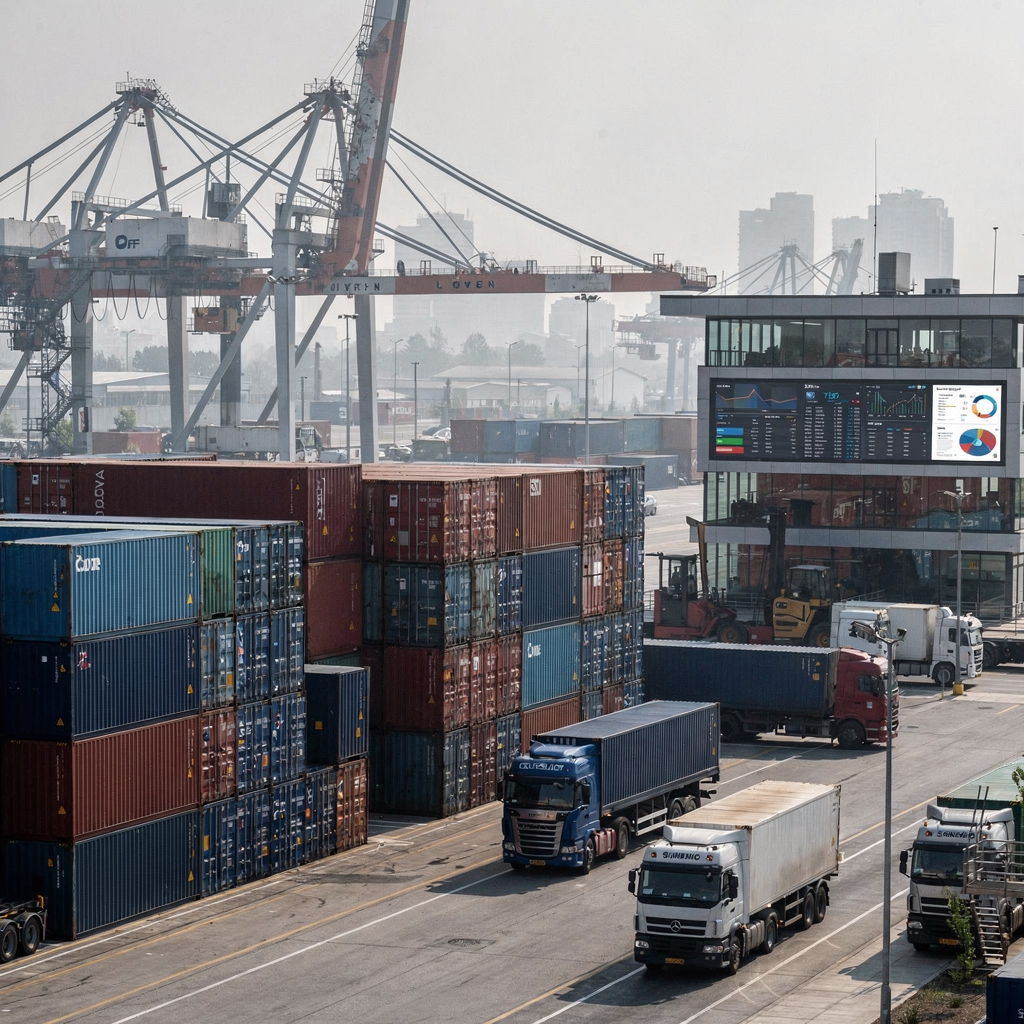
AI modules for container port yard storage optimization
overview of ai-powered container terminal operating system in maritime logistics A container terminal operating system combines software, hardware and procedures to manage yard and quay activities. It tracks containers from ship to truck and rail, schedules crane work, and assigns storage. When AI is added, the container terminal operating system gains predictive capabilities, dynamic allocation […]
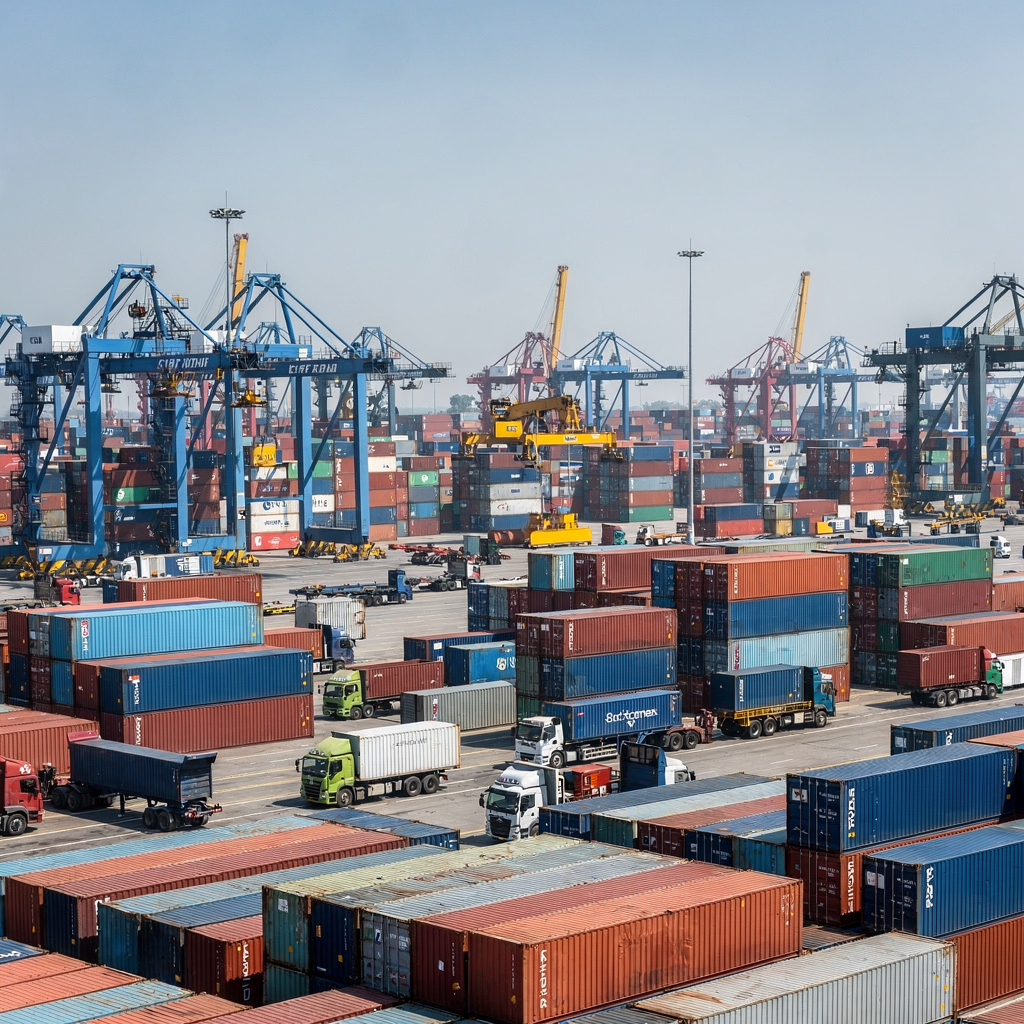
Container terminal optimisation to reduce driving distances
understanding container and container terminal operation First, this chapter defines core processes in a modern container terminal. Import and export flows arrive by ship and truck. Port planners register incoming container vessels and trucks. Next, terminal staff assign storage slots and sequence container loading and unloading. Then, cranes lift containers between quay and yard. Finally, […]
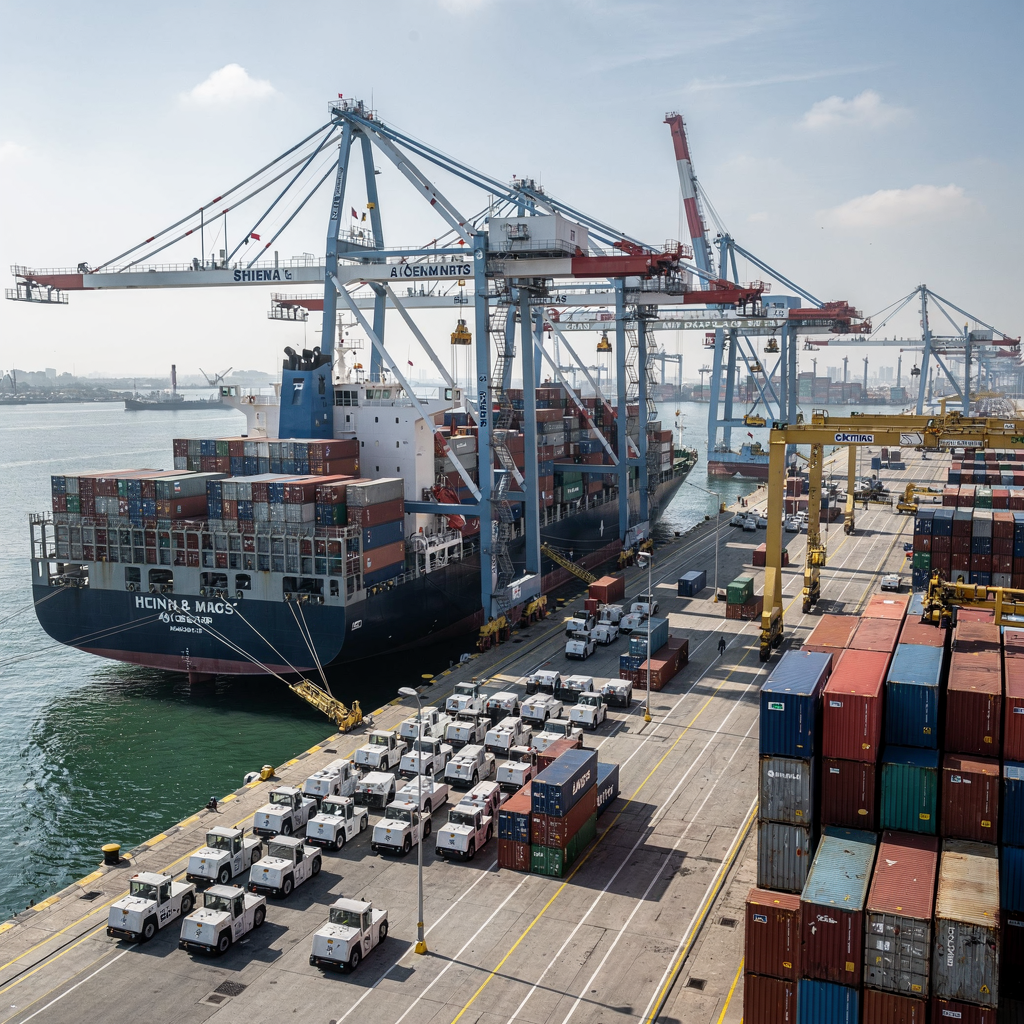
AI algorithm for quay crane scheduling at container terminal
Quay Crane Scheduling Challenges in Container Terminal Quay crane scheduling sits at the heart of efficient container terminal operations. In simple terms, quay crane scheduling assigns cranes to handle container tasks on arriving container ships. The goal is to minimize vessel turnaround time and to maximize throughput at the berth. However, this is not simple. […]
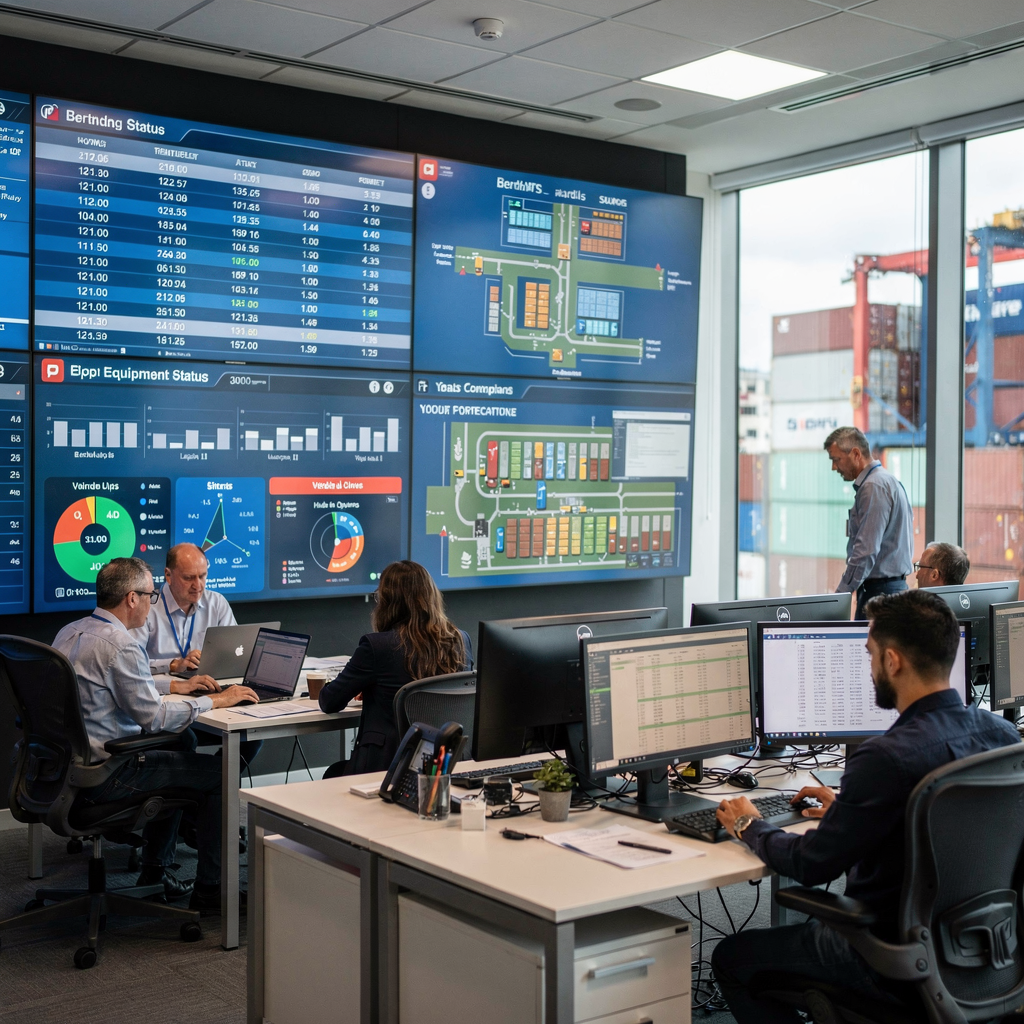
Reducing port stay time in container terminal operations
port operations inefficiency: scope of harbour challenges Port operations inefficiency shows up in long queues, delayed berths and slow handovers. First, inefficiency raises costs for shipping lines and freight forwarders. Second, it extends vessel turnaround time and increases idle time at quay. Third, it erodes port efficiency and harms service reliability. For example, research found […]
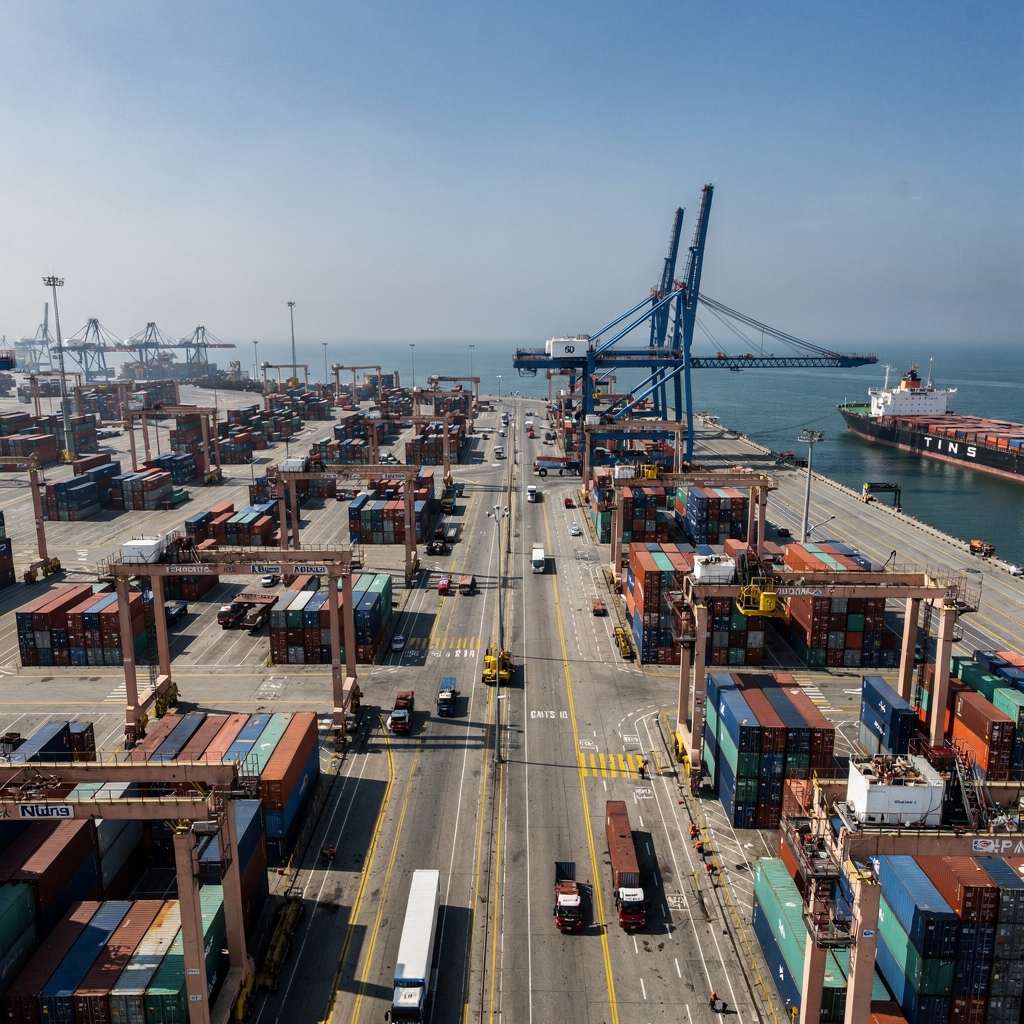
Optimize port terminal capacity with machine learning model
Challenges in terminal capacity at a modern container port Ports face rising pressure from global trade growth, and that pressure shows at the terminal yard. Yard complexity comes from stacking space limits, constrained equipment, and tight vessel schedules. As a result, terminal operators must juggle container storage, yard cranes, and truck flows in real time. […]
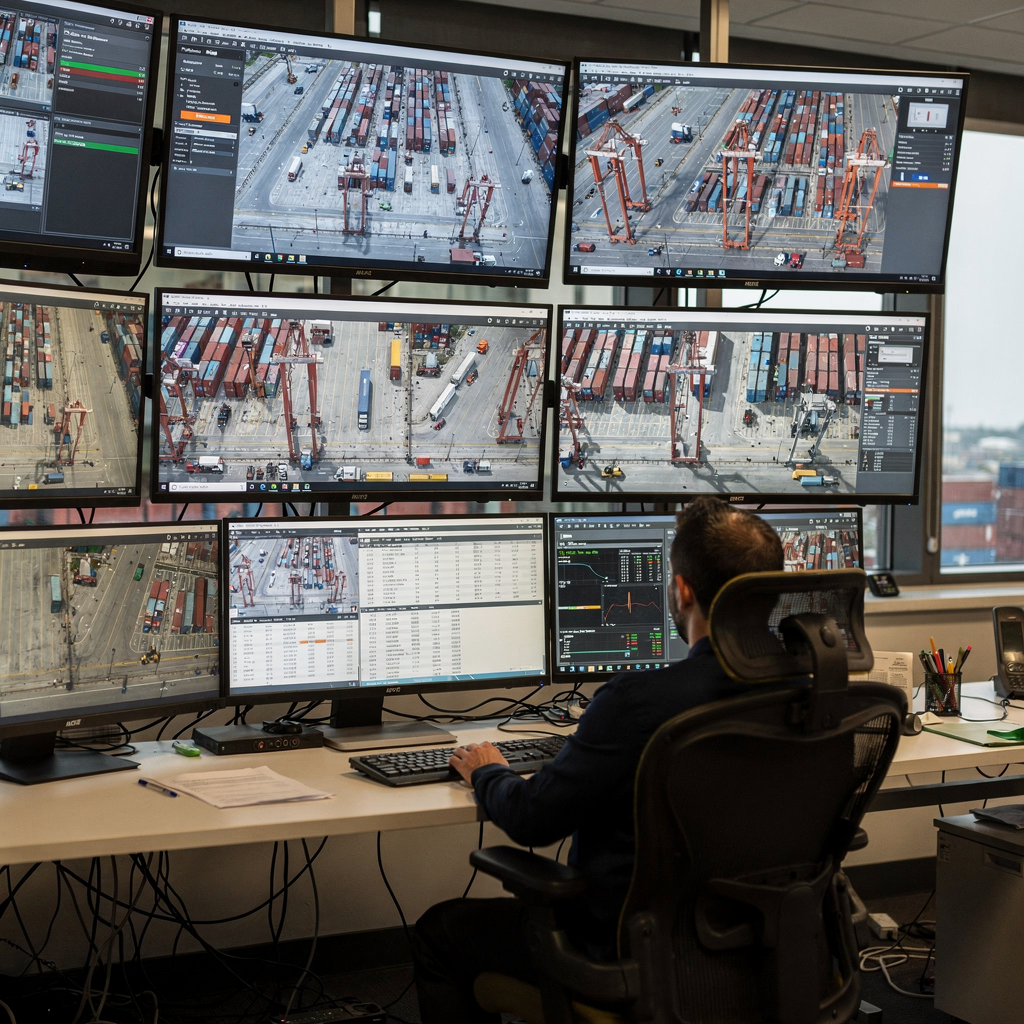
Real-time dispatch optimisation in container terminals
The Scheduling Problem in Maritime Container Terminal The scheduling problem in a maritime container terminal centers on allocating scarce equipment and time slots to many competing tasks. Terminals must assign quay cranes, yard cranes, and terminal truck moves while respecting constraints. This leads to combinatorial optimization problems that scale fast. As a result, exact solutions […]
