
latest news

Terminal process planning tools for operational efficiency
terminal management system: integration and core functionality Also, a terminal management system acts as the central hub that ties together Terminal Operating Systems, Warehouse Management Systems, CRM and ERP. It is the single place where planners, dispatchers and managers see the plan and the exceptions. In practice, this MANAGEMENT SYSTEM reduces friction, and it supports […]
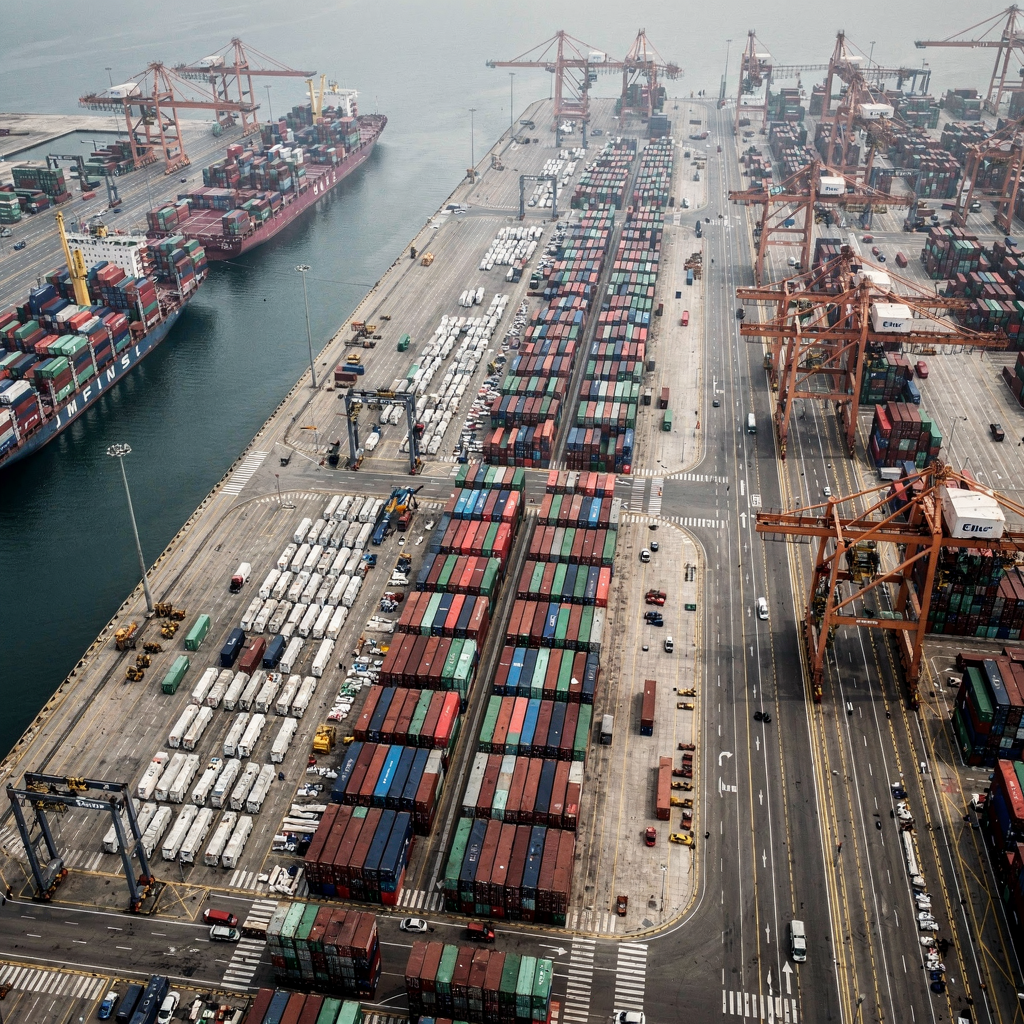
Reduce terminal bottlenecks simulation in port operations
simulation model for port terminal bottleneck analysis First, a clear discrete-event approach frames how a simulation model represents terminal activities. Next, the DISCRETE EVENT logic maps vessel arrivals, berth service, crane cycles, and gate processing into events that advance time. Also, this method separates short actions, such as move assignments, from longer tasks, like quay […]

Terminal capacity planning software with simulation
How simulation Enhances terminal Capacity Planning Terminal capacity planning defines limits, forecasts demand, and allocates space and staff. The goal is to plan for rising passenger and cargo volumes while avoiding costly expansion. However, growth often brings peaks, variability, and complex interactions. Also, long queues and inconsistent service appear when planners react rather than plan. […]
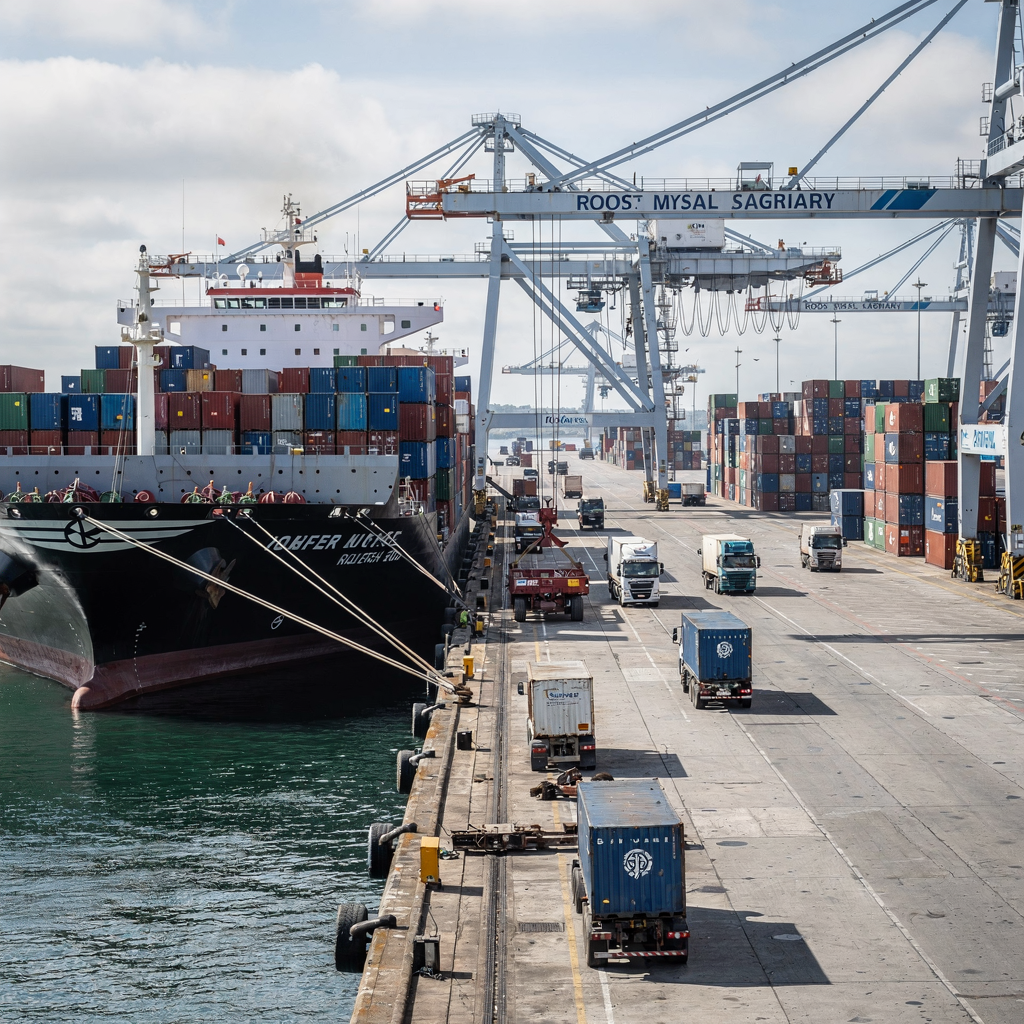
Container terminal simulation: how to simulate operations
simulation model of container terminal operations First, define the scope clearly. A good simulation model begins by naming the flows to represent: import, export and transshipment activities. These three activity types cover the main INTERMODAL movements and determine yard layout and staffing. In practice, terminals manage quayside work, internal yard stacking, and gate handling as […]
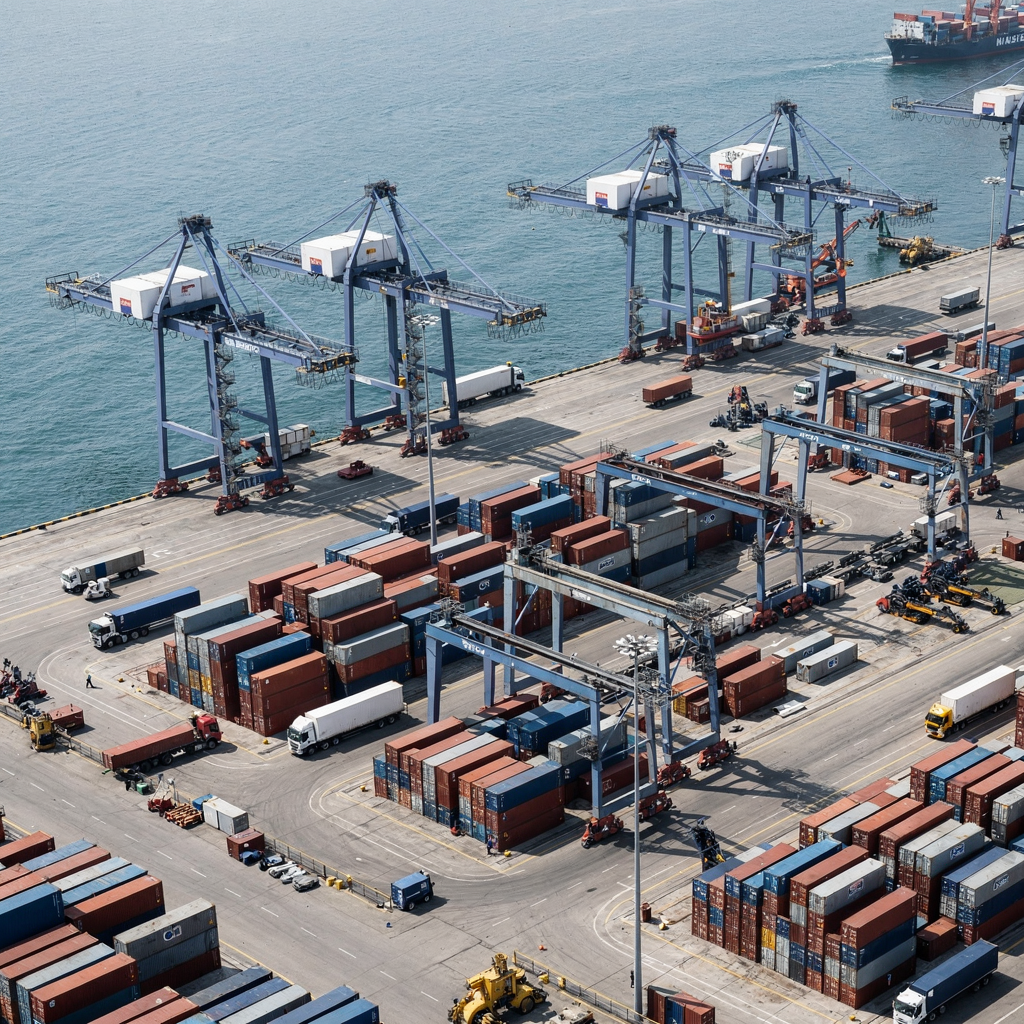
Simulation and optimisation tools for TOS terminals
Simulation in a terminal operating system Simulation plays a central role inside a Terminal Operating System (TOS). First, it builds a virtual representation of quay operations, yard flows, and gate activity. Next, it feeds planners with what-if scenarios and clear simulation outputs. In practice, simulation complements live data streams and helps teams predict the impact […]
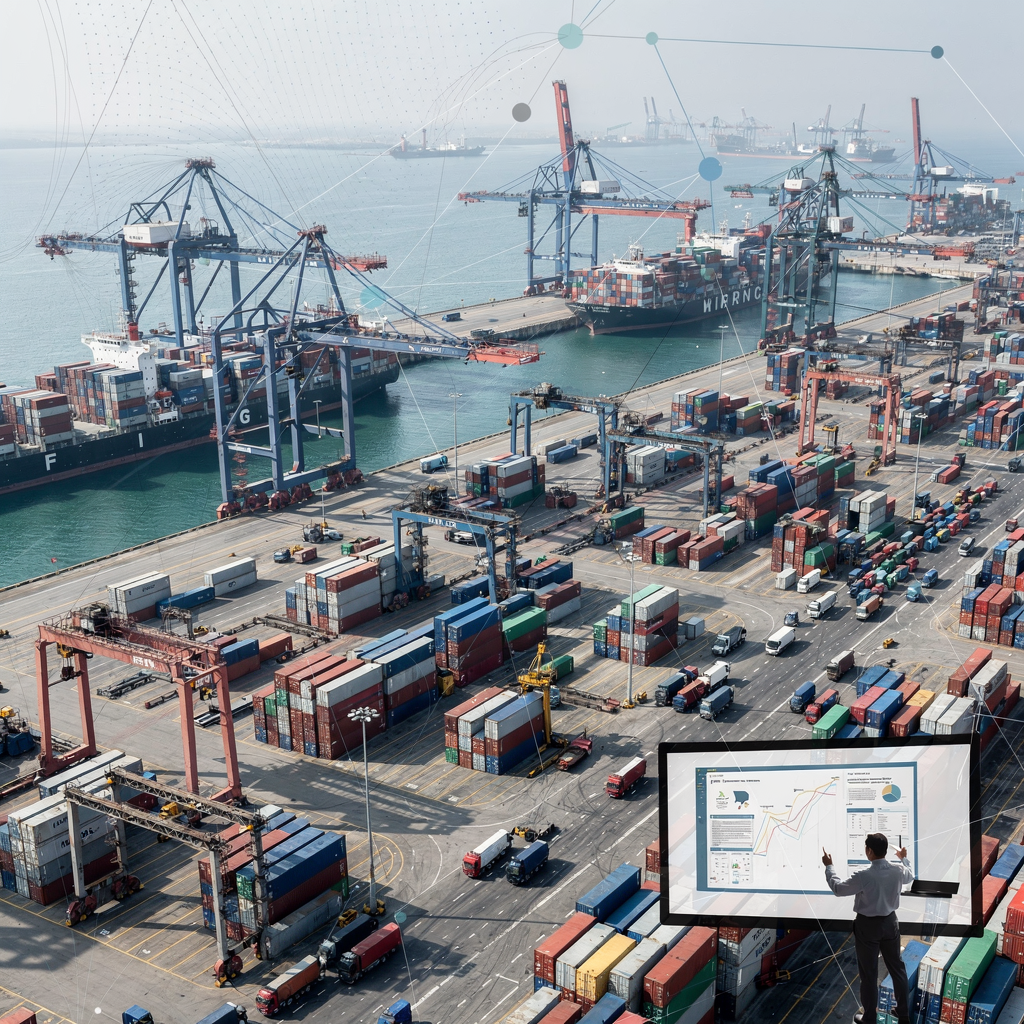
Enterprise simulation tools for port and terminal logistics
Simulation in Port Logistics: Foundations and Benefits Enterprise simulation has grown into a core planning approach for modern port operations. It creates a virtual replica of real processes so planners can test ideas without risk. In port logistics this means teams can model vessel arrival patterns, cargo movements, yard stacking and multimodal handoffs. A clear […]
