
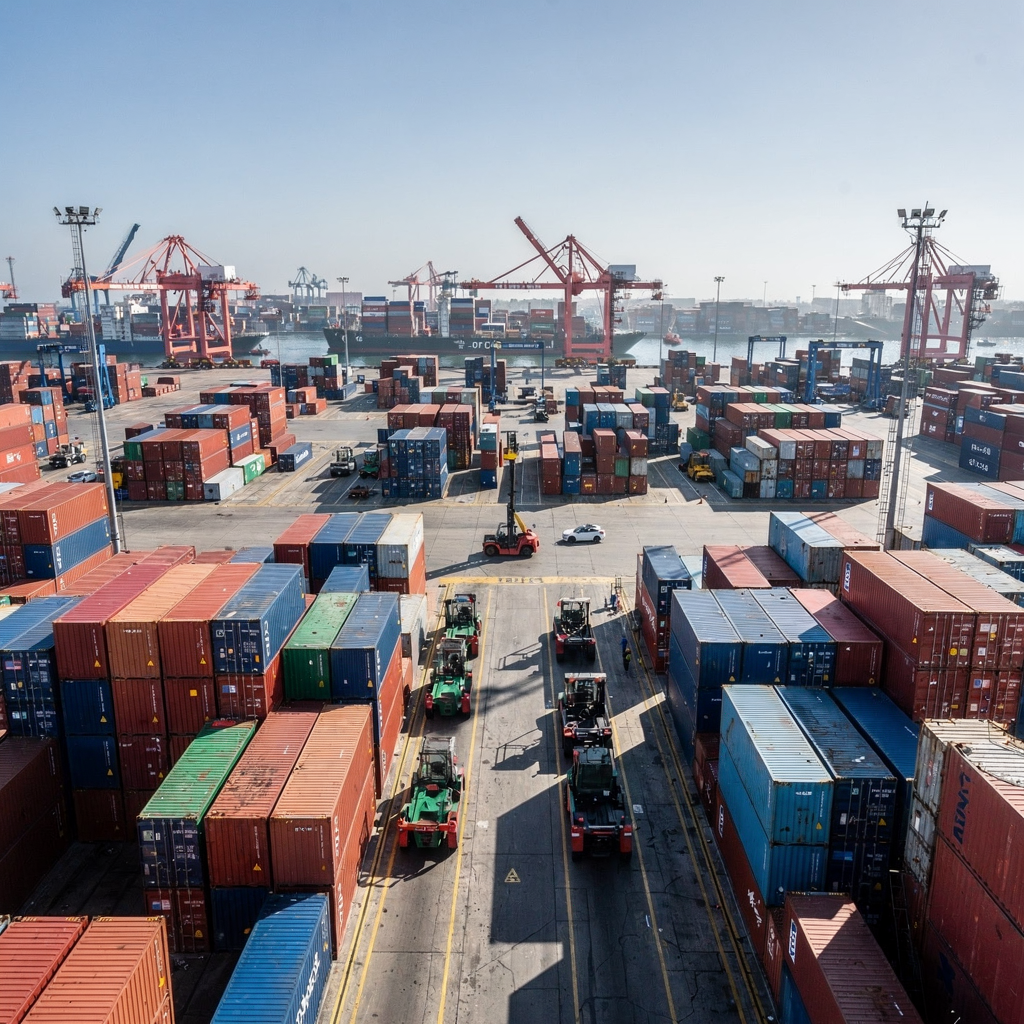
Quay Operations
Quay operations centre on berthing, crane sequencing, and swift transfer of goods from ship to shore. First, a berth is assigned. Then quay teams stage the lift plan and position equipment. In this phase, a tight sequence of moves must balance speed with safety. Research finds that “the synchronization of quay cranes, yard cranes, and automated guided vehicles (AGVs) through intelligent scheduling algorithms significantly improves operational efficiency” Journal of ETA Maritime Science. Therefore, planners aim to minimise idle time at the berth. Consequently, ships spend less time alongside and lines gain reliability.
Quay cranes are the linchpin. Proper quay cranes scheduling reduces idle gaps and smooths the flow to the storage area. For example, improved sequencing has shown throughput gains of up to 15–20% when matched to yard strategies and truck movements Multi-Agent Systems for Container Terminal Operations. Meanwhile, coordinated turns between cranes prevent blocking patterns. Thus, a focused schedule cuts unproductive handover times.
Automation and automation-ready equipment change how terminals plan these moves. ATT platforms and AGV fleets shift the execution burden from people to policy. As a result, the quay can continue to operate through peaks with fewer manual touchpoints. Loadmaster.ai trains RL agents to stow and schedule, which helps the vessel planner and dispatcher make better choices in real time. In practice, this reduces ship time alongside and raises quay resource utilisation, which provides commercial advantage for a port seeking modern, resilient service.
Finally, safety and governance must be built into every plan. Sensors feed the control room. They help the operator verify conditions and maintain safe distances. For instance, live telemetry supports decision loops that sequence cranes so that equipment does not conflict. Thus, good quay planning is both about speed and about keeping people and machines safe at the same time.
Yard Operations
Storage techniques shape throughput once cargo leaves the quay. The container yard layout and stacking rules determine how quickly boxes can be retrieved for delivery. First, planners set block stacking patterns. Then they decide lane planning and access aisles. These decisions cut internal moves and lower reshuffle counts. For example, smart placement reduces rehandles and shortens travel paths. As a result, terminals report better space use and steadier workloads across shifts.
RTG and RMG cranes move stock within blocks. The automated guided vehicles layer handles short hauls between stacks and gates. However, achieving a high-performing flow requires more than fast lifts. It requires a holistic strategy that balances where units sit with how they will be collected. Loadmaster.ai’s StackAI concept places and reshuffles to protect future plans while minimising driving distance. Therefore, the strategy reduces needless internal moves and avoids bottlenecks.
Yard control must also contend with mixed traffic and changing demand. For instance, a peak at the gate can cascade into longer retrieval times if stacks are badly positioned. Operators can mitigate this with flexible lanes and predictive staging. For that reason, digital twins and simulation are valuable tools; they demonstrate scenarios before policies reach live equipment. See how simulation can help with capacity planning and testing by visiting the digital twin resources at Loadmaster digital twin container port yard strategy testing.
Safety is essential in dense work areas. Sensors and clear rules reduce collisions. In addition, governance ensures that the operator follows constraints and that automation respects physical limits. Overall, a modern yard approach blends hardware, software, and procedures. It aims to keep stacks sorted, moves short, and throughput predictable across every shift.
Drowning in a full terminal with replans, exceptions and last-minute changes?
Discover what AI-driven planning can do for your terminal
Job Scheduling
Job scheduling defines who moves what, when, and how across the whole site. Its objective is simple. Coordinate resources to maximise throughput while minimising delays, extra moves, and idle time. Good scheduling aligns quay and storage tasks so that one area does not starve the other. Scheduling also balances multiple KPIs such as crane productivity, travel distance, and rehandle risk. For instance, studies report throughput lifts of 15–20% when intelligent scheduling is applied across quay and storage functions throughput improvement findings.
Multi-agent systems and dynamic schedulers lead current research. A multi-agent approach lets individual agents negotiate tasks and priorities in real time. In practice, this facilitates a ship working along a berth while linking moves inside the storage blocks multi-agent scheduling. Another path uses RL agents trained in digital twins to test policies before deployment. As a result, planners avoid risky experiments on live operations. Loadmaster.ai uses RL to train agents without needing historical data and then refines policies online. This approach helps pilots scale from small trials to full production without long data collection phases.
Dynamic schedulers also adapt to disruptions. For example, when a crane fails or a truck surge hits the gate, agents reassign tasks to keep flow moving. AI models can recommend which moves to postpone and which to accelerate. Importantly, these systems provide explainable rules and audit trails to support governance and operational acceptance. For case studies and more on multi-agent AI in terminals, see the exploration of multi-agent approaches at Loadmaster multi-agent AI in port operations.
Automated Truck Terminals
Automated truck terminals (ATT) connect the gate to the yard and quay. An ATT includes trucks, gates, and a control centre that assigns tasks. The system orchestrates truck arrivals, paths, and handovers while enforcing safety rules. Often, a fleet management layer tracks each vehicle and schedules the next pickup. In practice, ATT reduces waiting time and levels demand spikes at the gate. This makes operations more predictable for both quay and storage.
Communication networks and AI-driven task assignment make ATT effective. Low-latency telemetry and reliable control channels let the control centre manage a mixed fleet. For example, a fleet of autonomous vehicles and tractors can be coordinated to meet berth demand. This reduces idle trips and lowers energy use. Also, vendors such as Easymile provide vehicle platforms that can integrate into these networks. When ATT integrates with the terminal operating system, the overall flow improves. For a detailed view of how automation ties into scheduling, visit the simulation and automation resources here simulation models for automated terminal operations.
Safety and interoperability remain challenges. Equipment from different vendors must speak the same language. Therefore, standard APIs and robust sensor suites are essential. For instance, a collision avoidance sensor must be trusted across brands and traffic modes. Operators require resilience to network loss and tools that let a human pilot step in if needed. Consequently, ATT deployments are phased. They move from a pilot to larger blocks as maturity grows. Finally, successful ATT rollouts demand clear governance and tested control policies before live operation.
Drowning in a full terminal with replans, exceptions and last-minute changes?
Discover what AI-driven planning can do for your terminal
Integration
Coordinating quay cranes, storage handlers, AGVs and ATT yields seamless flow. Integration links real-time data streams so decisions stay aligned. For example, sharing berth-call predictions with the yard reduces surprise peaks inside the storage area. When systems share positions, planners can stage moves that cut travel. Therefore, integration reduces handoffs and keeps equipment busy.
System architecture matters. Event-driven designs and open APIs let modules react to changes quickly. In practice, a central control plane can broadcast a vessel’s ETA and then reweight priorities across the site. That approach helped terminals reduce vessel turnaround by roughly 10–12% when berth and yard schedules were synchronized with truck flows vessel turnaround reduction study. Integration uses data to present a single operational picture, which in turn supports fast decisions.
Security and interoperability must be designed in. Access control, telemetry integrity, and audit logs ensure that automation respects corporate and regulatory rules. At the same time, integration enables predictive analytics that highlight where the fleet or cranes might overheat. Embotech and similar optimisation engines can fit into an ecosystem to tune schedules. For cities with high demand, such as Los Angeles, a harmonised stack reduces gate queues and boosts throughput. In short, a coordinated approach provides resilient, flexible operations that meet targets.
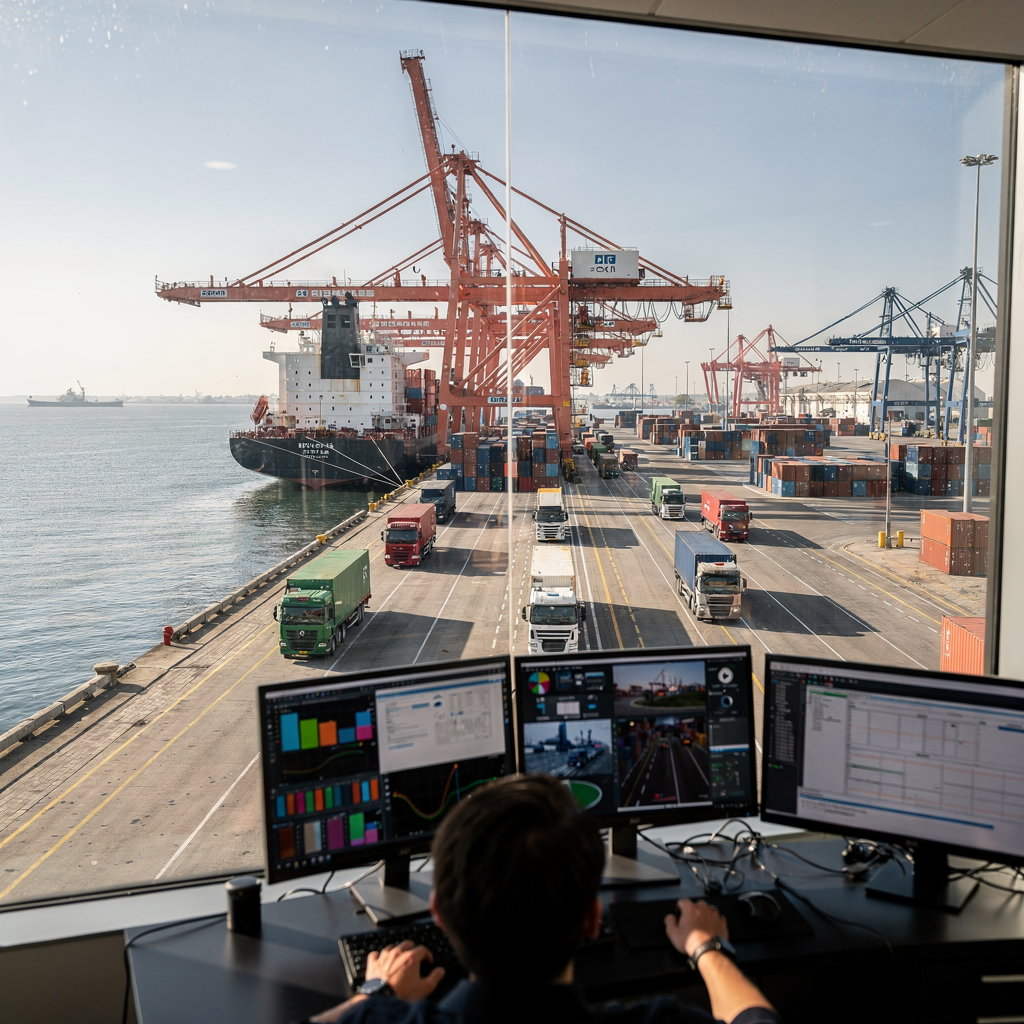
Performance Metrics
Measuring results drives continuous improvement. Key indicators include throughput, vessel turnaround, and resource utilisation. Throughput measures moves per hour. Turnaround measures total time a ship spends at the berth. Resource utilisation tracks how busy cranes, vehicles, and operators are. Terminals compare these KPIs against targets to gauge success. In many deployments, automation and smart scheduling deliver significant gains in these metrics. For instance, targeted automation projects can lift crane and equipment utilisation by 18–25% while cutting idle time and rehandles resource utilisation findings.
Benchmarking ATT systems against manual scheduling helps quantify benefits. Bench tests often simulate peak days and stress conditions. They measure how policies react under mixed traffic and equipment faults. Dashboards then present variance and trends so managers can spot drift. Predictive analytics add another layer. They forecast congestion and recommend preemptive reshuffles. For more on reducing crane idle time and planning, consult Loadmaster’s applied guidance reducing crane idle time with better planning.
Finally, continuous improvement relies on visible metrics and short feedback loops. Regular review cycles refine policies and adjust KPI weights. Organisations must present clear governance and audit trails to support audits and regulatory compliance. In operational terms, a modern measurement suite will capture position, sensor status, and queue lengths. These inputs support a flexible response to peaks and help the company move from reactive fixes to proactive control. As maturity grows, teams shift from firefighting to strategic optimisation and steady gains across the whole site.
FAQ
What is ATT job scheduling and why does it matter?
ATT job scheduling coordinates how automated trucks, gates, and handlers move cargo within a terminal. It matters because better schedules cut vessel time alongside, shorten truck waits, and raise equipment utilisation.
How do quay cranes affect vessel turnaround time?
Quay cranes determine how fast containers move between ship and shore. Faster, less interrupted crane operation reduces ship berth time and improves schedule reliability.
What are common yard storage strategies?
Terminals use block stacking, lane planning, and staging based on retrieval patterns. These approaches minimise rehandles and shorten travel distances for retrievals.
How do multi-agent systems improve scheduling?
Multi-agent systems let distinct decision-makers negotiate tasks in real time. They adapt to local changes while keeping global goals aligned.
Can ATT systems work with existing TOS software?
Yes. Modern ATT solutions are designed to integrate via APIs and standard messages so that operation remains coherent across systems. Integration reduces duplication and improves responsiveness.
What safety measures are needed for automation?
Sensors, collision avoidance, secure communications, and governance are essential. They ensure that automated flows respect physical constraints and legal requirements.
Do automated trucks require special infrastructure?
Some retrofitting may be needed for accurate positioning and mixed-traffic control. However, many projects start with pilot lanes and expand as maturity and confidence increase.
How do you measure ATT performance?
Measure throughput, turnaround time, utilisation, and rehandle rates. Dashboards and predictive models then guide continuous improvement.
What challenges do terminals face when integrating automation?
Challenges include heterogeneous equipment, network resilience, and operational governance. Careful pilots, clear KPIs, and staged rollouts help manage these risks.
Where can I learn more about digital twin testing for terminals?
Digital twin resources provide a safe environment to train AI agents and test schedules before live deployment. See Loadmaster’s simulation and testing materials for practical guidance.
our products
 stowAI
 stackAI
 jobAI
jobAI
Innovates vessel planning. Faster rotation time of ships, increased flexibility towards shipping lines and customers.
Build the stack in the most efficient way. Increase moves per hour by reducing shifters and increase crane efficiency.
Get the most out of your equipment. Increase moves per hour by minimising waste and delays.
stowAI
Innovates vessel planning. Faster rotation time of ships, increased flexibility towards shipping lines and customers.
stackAI
Build the stack in the most efficient way. Increase moves per hour by reducing shifters and increase crane efficiency.
jobAI
Get the most out of your equipment. Increase moves per hour by minimising waste and delays.