
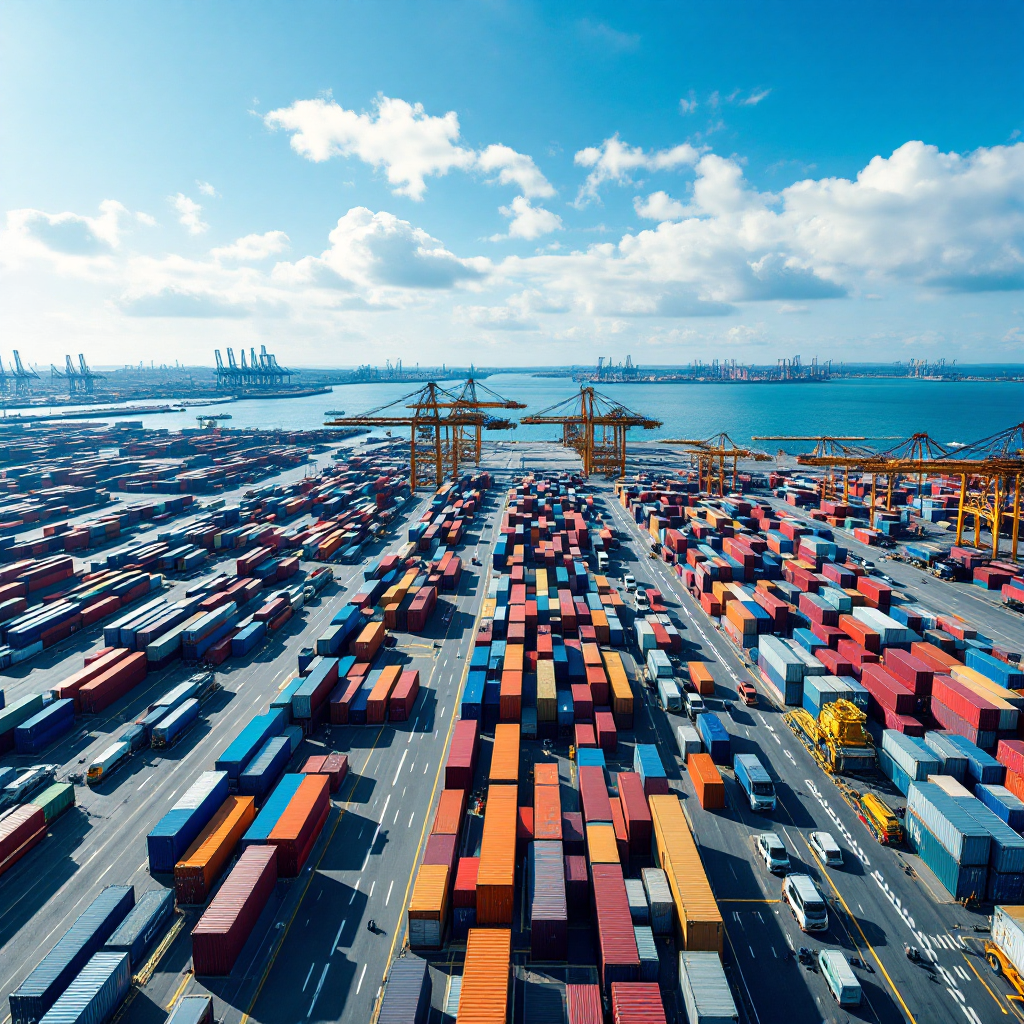
container terminal layout and rubber tyred gantry fundamentals
High-density container terminal layout begins with a clear yard grid and efficient lanes for trucks, and for RTG movement. In many terminals the yards sit parallel to the quay and they sit perpendicular to the quay in other designs, and each variation affects stacking capacity and throughput. A terminal needs defined truck lanes, storage space, and stacking area to handle peaks. The layout determines crane travel distances and the number of rtg cranes required to keep operations smooth. In a dense yard a typical rtg terminal concentrates stacks in blocks and assigns rtgs to zones so the operator can reduce interference and avoid long travel.
The rubber-tyred gantry sits as the principal handling equipment in landside stacking areas. A rubber-tyred gantry moves on tires and can travel between lanes to reach stacks, and it lifts containers for stacking containers or for retrieval to trucks. The rubber-tyred gantry design gives mobility that fixed gantry crane models cannot match, and this mobility supports flexible lane assignment. Designers must account for stack height constraints, stacking capacity, and safety clearances. Storage density and stacking capacity improve when yard slots match container flows, and when the number of rtg cranes aligns with expected workload.
Key constraints include yard slots, crane travel distances and crane interference. Travel distance drives RTG operating time, and idle time rises when paths conflict. Interference occurs when two rtgs converge on adjacent lanes, and that reduces crane productivity. Effective layout reduces reshuffles and limits unnecessary container moves, so yard capacity increases while dwell time falls. Real-world studies show that optimized RTG scheduling can raise terminal productivity by up to 15% and cut operational cost when matched with yard design Efficiency and productivity in container terminal operation. For design guidance, consider simulation study inputs to size number of rtg cranes and to set lane widths; a simulation model helps test stacking area layouts before investment.
When you plan an rtg yard, integrate terminal operating system data and yard maps. Then automate routine assignments and route sequences so rtgs follow efficient paths. This saves operator time, and it keeps yard slots from becoming bottlenecks.
gantry crane and rtg crane capabilities in high-density yards
Gantry crane and rtg crane designs suit different terminal zones. Gantry crane and quay crane equipment operate at the waterside to load and unload vessels. In contrast rtg cranes serve the landside stacking area and the storage yard. Gantry crane designs tend to be fixed on rails and focus on quay crane productivity, and they maximise container moves per vessel call. RTG cranes use rubber tyred mobility to reach stacks and to redistribute containers between lanes. A gantry crane handles vessel flows, whereas an rtg handles yard reconfiguration and stacking tasks.
Differences in load capacity, mobility and operational zones shape handling rates. A quay crane lifts heavy loads directly from the ship and hands containers to trucks or yard equipment, so quay crane productivity impacts vessel turnaround. RTG cranes usually lift containers up to the stack height used in the yard, and stacking cranes or automated stacking cranes target higher density or higher stack operations. In many terminals the number of rtg cranes determines how fast the yard clears truck queues and how fast containers move to and from storage. Designers measure crane productivity and operator cycles to set staffing and to size equipment.
Operational zones matter. If an rtg yard sits parallel to the quay, movement between quay transfer points and stacks is shorter. If the stacking area sits perpendicular to the quay, transfer moves may require more lane time. These geometric choices affect travel distance minimisation and dwell time. A well-packed yard reduces container handling time but raises the risk of interference, and the RTG operating plan must adapt to balance those trade-offs. Research shows optimized RTG scheduling and automated systems can cut average handling time by up to 12% when real-time inputs guide assignments Design of a Deep Learning Model to Automate Container Entry and Yard Operations.
Finally, the human operator stays important for complex decisions, and automation complements rather than replaces skilled staff. For further reading on reducing crane idle time and improving overall crane productivity, see approaches that target crane cycles and yard sequencing reducing crane idle time.
Drowning in a full terminal with replans, exceptions and last-minute changes?
Discover what AI-driven planning can do for your terminal
rtg scheduling algorithms for efficient crane operation
RTG scheduling requires strategies that bring speed and stability to yard operations. Real-time scheduling and batch scheduling differ in approach and in the types of inputs they need. Real-time solutions react to live container flows, gate arrivals and equipment status; they support adaptive decisions for urgent moves and for congestion relief. Batch scheduling focuses on larger blocks of tasks that planners commit to at discrete intervals. Both have a place in terminal operations, and hybrid workflows often work best in high-density yards.
Heuristic and AI-driven models offer distinct advantages. Heuristic rules produce fast, interpretable assignments by following simple priorities such as shortest travel time, earliest vessel departure or minimal reshuffles. AI models, including deep learning and reinforcement learning, can learn complex patterns and adapt to recurring disruptions. For example a simulation model paired with AI yielded measurable gains in a pilot; the model reduced yard congestion by up to 25% when it prioritised tasks by dwell time and vessel departure schedules PORT CONGESTION PROBLEM, CAUSES AND SOLUTIONS. The best systems blend rules for predictable flows with AI for stochastic events.
Key metrics for rtg task prioritisation include dwell time reduction, travel distance minimisation and crane utilisation. A scheduling engine that minimises travel distance directly reduces RTG operating time and energy consumption. Optimising dwell time for critical containers helps meet vessel schedules and supports quay crane productivity. A useful metric is crane utilisation percentage; higher utilisation often raises throughput but it may also increase interference risk. Decision support tools and simulation study outputs guide the trade-offs between utilisation and resilience. To explore real-time optimisation techniques and yard sequencing, consult a guide to real-time container terminal yard optimization strategies real-time yard optimisation strategies.
AI-driven systems require clean data streams, and IoT tracking usually supplies that. RFID, OCR and GPS feeds enable real-time visibility for container position and for RTG operation. A terminal operating system that integrates these feeds gives AI models the grounding they need to prioritise effectively. When combined with a digital replica for what-if testing, planners can validate schedules before execution digital replica for scenario simulation. Effective scheduling reduces unnecessary container moves and improves handling and stacking across the yard.
straddle carrier and straddle automation to streamline yard tasks
Straddle carrier and rtg workflows intersect in many yards, and coordination between the two delivers smoother container handling. Straddle carrier vehicles pick up containers from stacks and transport them to truck lanes or to transfer points for loading. In some terminals straddle operations act as the link between quay crane productivity and the RTG yard. When terminals automate straddle workflows they can reduce manual handovers and shorten transfer times. Automation frameworks instruct straddle routes, manage pickup priorities and integrate with the terminal operating system for synchronous execution.
Automation of straddle processes uses sensors, route optimisation and scheduling logic. Straddle automation can reduce idle times at handover points, and it can cut the number of times a container needs to be reshuffled. When straddle carrier activity synchronises with RTG operation, the yard sees fewer delays and higher throughput. For terminals that manage both straddle and rtg fleets, unified control systems lower error rates, and they increase predictability in container flows. This integration is particularly important in transshipment terminal settings where quick box turnover matters.
Benefits of integrating automated straddle flows with RTG include fewer manual handovers, higher throughput and reduced energy consumption. Automation also reduces the cognitive load on operators, and automation reduces the time spent on routine scheduling tasks. In addition, fewer handovers mean less wear on handling equipment and lower lifetime maintenance costs. A coordinated setup improves handling and stacking efficiency and increases storage capacity when reconciling landside and waterside demands.
Practical deployments show gains when terminals combine automated container tracking, straddle automation and RTG scheduling. Many container terminals see faster gate processing and more consistent service levels when they unify control layers.
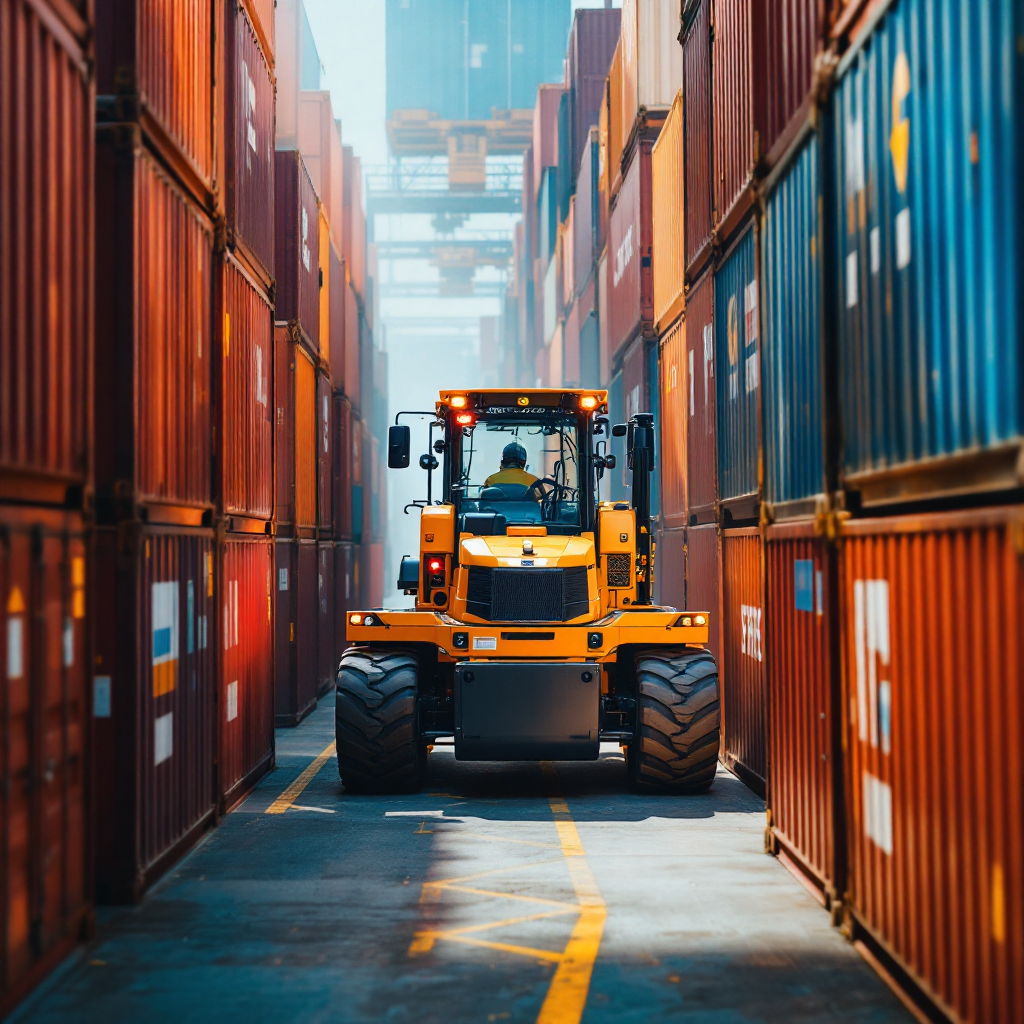
Drowning in a full terminal with replans, exceptions and last-minute changes?
Discover what AI-driven planning can do for your terminal
container handling metrics and transportation research findings
Measuring container handling performance gives terminals the insight they need to prioritise improvements. Key performance indicators include dwell time, crane utilisation and yard capacity. Dwell time measures how long a container stays in the yard from gate-in to gate-out, and terminals track it to spot congestion. Crane utilisation measures how effectively cranes serve the workload, and yard capacity estimates how many containers can sit in stacks without blocking flows. Together these metrics reveal bottlenecks and guide strategic investments.
Recent transportation research has produced actionable findings. A study of automated entry and yard models reported a 12% reduction in average container handling time when AI prioritised RTG tasks based on real-time inputs Design of a Deep Learning Model to Automate Container Entry and Yard Operations. Additionally, work at the Port of Antwerp estimated that improving RTG scheduling can increase terminal productivity by up to 15% Efficiency and productivity in container terminal operation. A transloading feasibility report also suggested that optimized RTG scheduling could improve operational capacity by roughly 10-20% depending on traffic density Transloading Facility Feasibility Study.
Simulation model experiments provide deeper context. A simulation study showed that prioritising RTG jobs by dwell time and departure windows can reduce yard congestion by up to 25% and improve turnaround times PORT CONGESTION PROBLEM, CAUSES AND SOLUTIONS. Those results matter for planners who must balance storage density, stacking cranes usage and the number of rtg cranes in service. Simulation outputs also help estimate energy consumption and equipment wear under different scheduling rules, and they support decisions about adding automated rtg or automated stacking cranes to increase storage capacity.
Transportation research and operational research techniques converge when terminals deploy pilots. Real-world pilots for robotized marine container terminals reported productivity gains up to 18% in some trials An approach for designing robotized marine container terminals. These pilots highlight the benefits of integrating AI, IoT tracking and simulation model testing to optimise container moves and reduce dwell. When combined with tactical improvements like better truck lanes and smarter gate booking, terminals meet throughput targets and provide reliable service across the supply chain. For further reading on container terminal productivity improvement strategies see targeted guides on crane cycles and yard sequencing container terminal productivity strategies.
terminal throughput strategies and future directions
Balancing vessel schedules with yard operations is the central throughput challenge for any terminal. Planners must synchronise quay crane productivity with RTG operation and with landside flows. A successful strategy aligns vessel berth windows, truck appointment systems and yard sequencing so containers move smoothly from quay to stack and back. For example predictive truck appointment systems help reduce gate queues and they improve RTG operating time by smoothing peaks in arrivals. Terminals that integrate berth planning with yard plans reduce unnecessary container moves and increase overall throughput.
Emerging trends shaping future terminal design include digital twins, IoT tracking and AI integration. Digital replicas let planners test scenarios and measure impacts on storage space and stacking capacity before changes hit the real yard. IoT tracking supplies real-time container position data for scheduling engines, and AI layers improve prioritisation for urgent moves. Hybrid models that combine heuristic rules with AI can handle stochastic arrivals and equipment failures better than single-method approaches. Ongoing research stresses the need for pilots and for data governance so these systems stay reliable in live operations.
Future research directions include hybrid optimisation, energy consumption modelling and wider use of automated rtg and automated container handling. Terminals exploring automated solutions must weigh the impact on the number of rtg cranes required, on operator roles, and on storage density. The benefits of automation often appear in lower dwell time and higher throughput, but terminals must validate results with simulation model experiments and with real-time pilot trials. Transportation research points to gains when terminals adopt scenario simulation to estimate impacts on quay crane productivity and on landside flows.
Finally, operational efficiency depends on removing non-value work from operators so they can focus on exceptions and on throughput improvements. As terminals continue to modernise, integrating digital systems with proven scheduling logic will help many terminals meet growing demand and reduce congestion throughout the supply chain.
FAQ
What is RTG job prioritization?
RTG job prioritization is the process of deciding which yard tasks the RTG cranes should perform first. It balances factors like vessel departure time, dwell time, crane travel distance and yard congestion to maximise throughput and reduce delays.
How does yard layout affect RTG performance?
Yard layout determines travel distances, the number of lanes and the location of stack blocks, all of which influence RTG operating time. A compact, well-mapped layout reduces travel time, lowers energy use and improves crane utilisation.
What metrics should terminals track to improve RTG scheduling?
Key metrics include dwell time, crane utilisation, travel distance, and yard capacity. Tracking these indicators helps planners test scheduling adjustments and measure gains in productivity and in service levels.
Can AI improve RTG scheduling in high-density yards?
Yes. AI-driven models can learn patterns in container flows and adapt to real-time disruptions to prioritise tasks more effectively than static rules alone. Combining AI with heuristics often yields a robust hybrid approach.
What role do straddle carriers play with RTGs?
Straddle carriers move containers between stacks and truck lanes and act as the transfer link between quay crane and RTG operations. Coordinating straddle and RTG workflows reduces manual handovers and boosts throughput.
Are simulation studies useful before changing RTG schedules?
Simulation studies let planners test scenarios and quantify expected improvements in dwell time and congestion. They provide confidence in proposed changes and help size equipment like the number of rtg cranes needed.
How much productivity improvement can optimized RTG scheduling yield?
Case studies and research show improvements ranging from about 10% to 18% in productivity when terminals implement optimized scheduling and automation. Exact gains depend on terminal size, traffic density and implementation quality.
What data sources feed effective RTG scheduling systems?
Effective systems use terminal operating system data, gate appointment systems, IoT tracking like RFID and OCR, and real-time equipment status. Clean, timely data is essential for accurate prioritisation and for reducing errors.
How do automated RTG and automated stacking cranes compare?
Automated RTG systems provide mobility and flexibility for landside stacks, while automated stacking cranes usually support higher density and more compact stacks. The choice depends on storage density, budget and integration with existing infrastructure.
How can terminals reduce the administrative burden on operators?
Terminals can automate routine communications and data lookups so operators spend less time on email and manual triage.
our products
 stowAI
 stackAI
 jobAI
jobAI
Innovates vessel planning. Faster rotation time of ships, increased flexibility towards shipping lines and customers.
Build the stack in the most efficient way. Increase moves per hour by reducing shifters and increase crane efficiency.
Get the most out of your equipment. Increase moves per hour by minimising waste and delays.
stowAI
Innovates vessel planning. Faster rotation time of ships, increased flexibility towards shipping lines and customers.
stackAI
Build the stack in the most efficient way. Increase moves per hour by reducing shifters and increase crane efficiency.
jobAI
Get the most out of your equipment. Increase moves per hour by minimising waste and delays.