
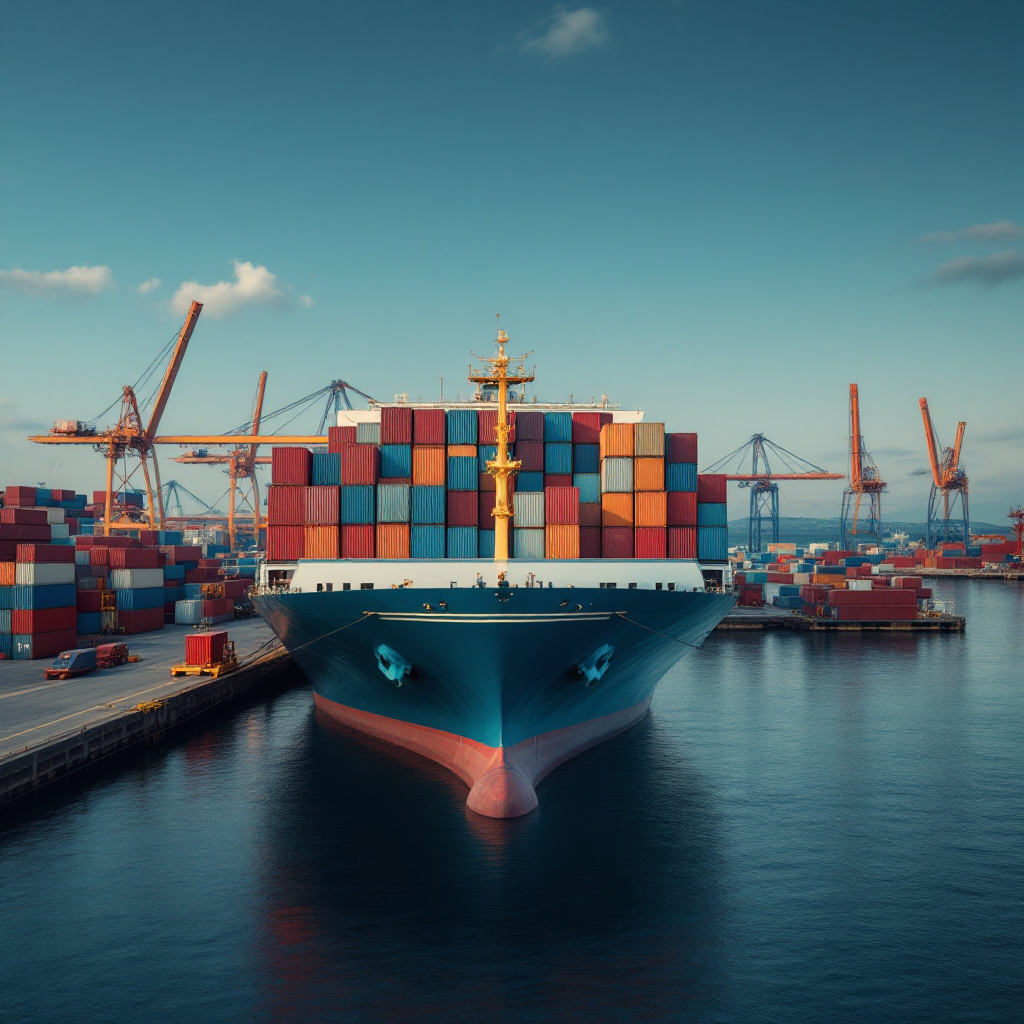
container terminals: Role in maritime stowage planning
Container terminals act as the key interface between shipping lines and port operators. They handle incoming and outgoing container flows, coordinate yard moves, and feed data to stowage planners. For operations teams, terminals supply container dimensions, weight classes, and the presence of special cargo such as dangerous cargo or refrigerated cargo. In addition, terminals record container status codes, pickup and drop-off windows, and gate appointments. These signals shape the stowage plan and the execution of loading and unloading at the berth.
Effective planning involves clear data. Terminals must share accurate container size, tare weight, and load weight as well as the container’s final discharge port. Also, terminals must identify type of cargo for safe handling. For example, reefer containers and dry cargo containers need different yard placements and power hookups. Therefore, the stowage plan depends on the terminal’s ability to cluster like containers, to stage heavy containers near the crane, and to flag hazardous items for segregation.
Terminal layout and yard operations directly affect the stowage plan. Yard blocks, lane widths, and crane reach determine where containers can be picked and placed with minimal reshuffles. So, an integrated approach helps. For more on integrating the yard and the ship schedule see this resource on integrating stowage and yard planning in port operations: integrating stowage and yard planning in port operations. Also, the terminal’s container moves data helps planners reduce unnecessary moves and shorten berth time. A study found that inefficient stowage and terminal choreography can increase port handling times by up to 20% (On improving containership stowage planning). Thus, terminals shape both the stowage plan and the loading sequence.
Terminals also supply real-time signals. Yard-management systems report container location, and crane controllers report lift cycles. Therefore, late changes such as no-shows or gate surges require rapid replanning. In that case, digital tools and APIs can reroute containers and update the master bay plan problem quickly. For terminals seeking to reduce unproductive container moves, see a practical guide here: reducing unproductive container moves in container terminals. Finally, operations teams that receive hundreds of emails per day can automate decision routing. This reduces errors and keeps the data flowing into the stowage plan in a timely way.
stowage plan for container ships: Balancing capacity and stability
A stowage plan for container ships sets where every container will sit for the voyage. The objectives are clear. First, maximize the use of space on the ship. Second, maintain ship stability and safety. Third, enable efficient load and unload at each port call. Planners must map containers to bays, to stacks, and to slots. They must also consider crane reach and discharge order at each stop. Therefore, the stowage plan directs terminal lifts, yard sequencing, and berth time.
Ship stability constraints are front and centre. Planners track the ship’s center of gravity and metacentric height. They model hull stress and stack weight limits. SOLAS rules guide many requirements for safe cargo securing and for Information on dangerous cargo. For example, researchers stress that “stability constraints must be rigorously incorporated into stowage plans to prevent excessive stress on the ship’s hull and maintain balance throughout the voyage” A model for container stowage planning considering stability. Planners therefore test load cases for ballast conditions and for container shifts in rough weather.
There is a constant trade-off between maximizing payload and maintaining seaworthiness. Loading more containers increases revenue. But heavy concentrations of weight can raise hull stress and increase the risk of structural damage. For instance, one study that combined yard and ship planning found that improper weight stacking could increase structural stress by as much as 15% (Integrated Containership Stowage Planning). So, planners avoid stacking too many heavy containers at one end or on one side of the ship.
In practice, the stowage plan involves balancing multiple constraints. These include the sequence of ports, the need to minimize moves in the yard, and the physical limits of container stacks. Planning for container calls also includes lashing and securing requirements for ocean transit. Therefore, stowage planning must account for both the immediate lift sequence and the full-voyage stability profile. To help meet those aims, operators often use advanced terminal planning systems that link crane scheduling with the master bay plan problem; see technical discussions on advanced terminal planning here: advanced container terminal planning systems.
Drowning in a full terminal with replans, exceptions and last-minute changes?
Discover what AI-driven planning can do for your terminal
cargo containers: Weight distribution and stacking rules
Cargo containers come in several main categories. There are standard containers, reefers, dry cargo containers, and specialized units for OOG cargo. Each type of containers has handling requirements. For example, reefers require power and temperature checks before they load. Dangerous cargo needs segregation and placarding. Planners must place containers to meet regulatory segregation, to enable safe cargo handling, and to reduce moves during discharge.
Stacking rules control where heavier containers go. Planners place heavier containers below lighter cargo. This preserves the ship’s centre of gravity and maintain stability. The phrase heavier containers is often used to describe weights that must be placed low. By contrast, light containers should go above heavy stacks or near the top of a bay. Also, cube containers and containers with odd dimensions need special slots to avoid damage to other containers. Planners therefore label stacks with maximum permissible stack weight and with stress ratings for each section of the ship.
Blocking minimisation is a key objective. Planners seek to reduce the number of containers that block others in lower tiers. Blocking leads to extra moves and to longer crane cycles. Studies show that inefficient stowage can increase port handling times by up to 20% (On improving containership stowage planning). Therefore, good stowage reduces handling and improves throughput. It also reduces the risk of damage to other containers during extra moves.
Improper weight distribution can stress the hull and compromise the stability of the vessel. One research model noted that technical limitations related to stack weight and stress are critical to ensuring safe stowage (A model for container stowage planning considering stability). Another study quantified that stress increases by up to 15% with poor stacking choices (Integrated Containership Stowage Planning). So, planners enforce stack weight limits and distribute weight fore-to-aft and port-to-starboard. In this way they ensure the safety of the ship and the cargo safety across the voyage.
container ship stowage: Optimisation models and computational methods
The stowage problem challenges planners with many competing objectives. Planning involves assigning thousands of containers to slots while respecting weight, balance, and port call constraints. The problem is NP-hard, so exact solutions become infeasible at scale. Academic surveys confirm this complexity and survey a broad range of methods (Literature survey on the container stowage planning problem) and (Literature survey on the container stowage planning problem).
Common approaches include integer linear programming and metaheuristics. Integer linear programming captures many constraints and produces high-quality stowage plan solutions. Metaheuristics such as genetic algorithms and simulated annealing deliver near-optimal solutions more quickly for large instances. Hybrid and integrated models combine yard planning and ship stowage. They aim to reduce unproductive moves and to ensure safe stowage across all ports.
Researchers also design frameworks that consider irregular ship holds, container types, and stability simultaneously. One framework “surpasses conventional approaches by meticulously orchestrating not just standard container stowage but also ensuring the judicious placement of specialized containers” (Research on the Stowage Planning Model and Algorithms for Container …). These integrated models help address the master bay plan problem and ensure load sequences that match crane schedules and yard constraints.
Because the problem is NP-hard, planners often prefer near-real-time solutions that trade optimality for speed. For operational use, heuristics and fast re-optimisation deliver acceptable plans within terminal time windows. In practice, planners combine algorithms with human oversight. Tools flag violations, propose alternate placements, and simulate ship stability scenarios. Also, AI-driven systems are emerging to automate repetitive communications that surround stowage changes. For operators exploring digital upgrades, read about a container terminal digitalization roadmap here: container terminal digitalization roadmap.
Drowning in a full terminal with replans, exceptions and last-minute changes?
Discover what AI-driven planning can do for your terminal
efficient stowage: Improving port handling and throughput
Efficient stowage reduces crane idle time and shortens berth stays. This yields direct cost savings. When planners minimise blocking, cranes make fewer moves per container. Also, yard reshuffles drop. Studies show that smart stowage and coordinated yard operations can save up to 20% of port handling time (On improving containership stowage planning). Therefore, ports prioritise sequencing algorithms and load and unload plans that match crane cycles.
Coordination is crucial. Ship planners, crane operators, and yard management must share the same plan. Sequencing algorithms produce a loading order that minimises unblocks and that respects the final discharge sequence. Then, terminal operators stage containers in the optimal blocks for fast pickups. For a detailed study on reducing unproductive moves, see this operational piece on reducing unproductive container moves in container terminals: reducing unproductive container moves in container terminals. Also, crane idle time falls when planners align lift sequences to quay crane schedules; more on that is here: reducing crane idle time in deepsea container ports.
Sequencing matters at the container level. Planners place containers that discharge early near accessible bays. They place long-haul containers deeper in the stack. This approach shortens the process of load and unload at each port. Also, it reduces the need for restows and yard reshuffles. Consequently, throughput rises and turnaround time drops. For terminals using tandem or twin-lift operations, AI-based decision support helps plan lifts and reduce crane cycles. Such systems provide sequencing suggestions, and they update when exceptions occur.
Operationally, terminals also improve throughput by automating low-value tasks. Email and manual triage slow decision-making. By using automation to handle routine emails about container status and exceptions, planners spend more time on high-value decisions. In short, efficient container placement and coordination across teams improve port throughput and reduce costs.
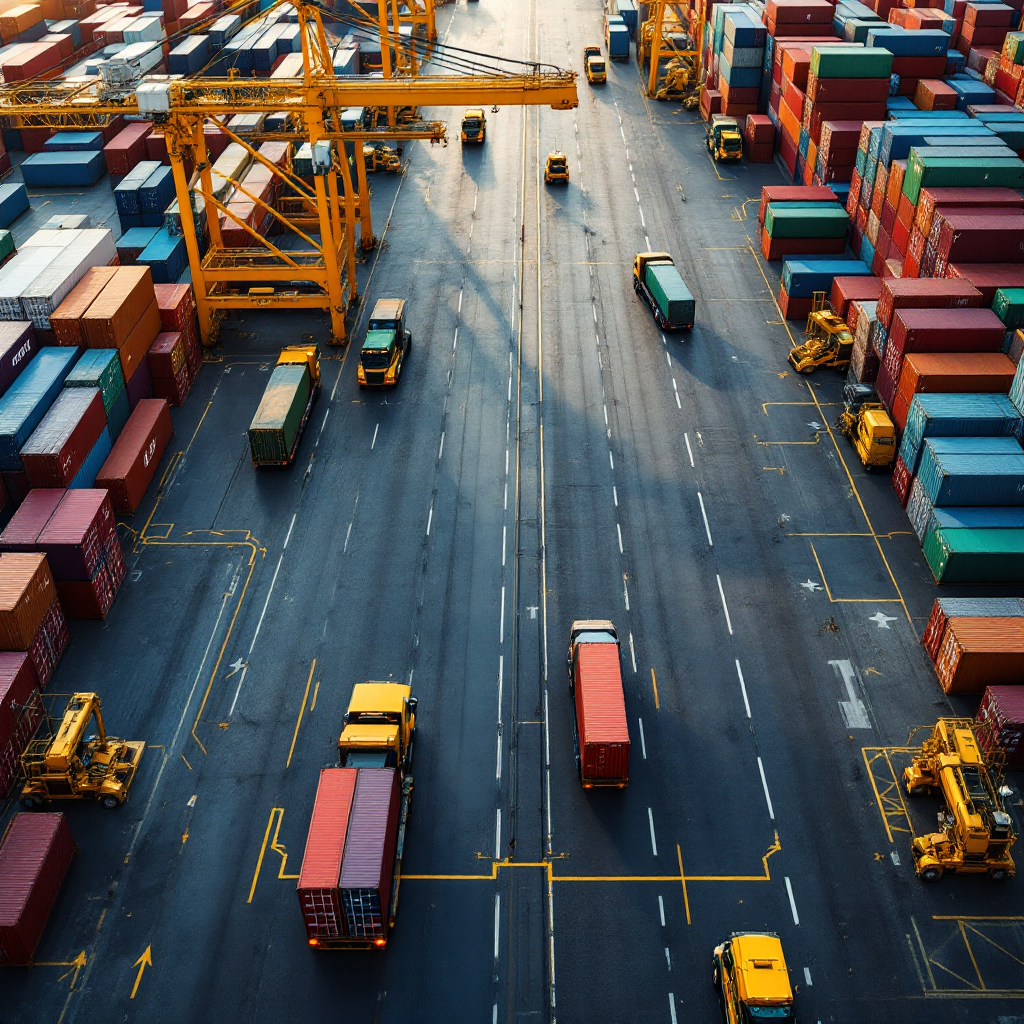
safety and efficiency: Ensuring seaworthiness and compliance
Safety and efficiency go hand in hand. Planners must ensure the safety of the ship while maximising efficiency. Securing containers with appropriate lashing and securing gear prevents in-transit shifts. Also, planners check that the centre of gravity stays within allowable limits at every leg of the voyage. They do this both before and after ballast changes. The goal is to ensure stability and to reduce lashing forces that affect stack weight on the hatch and on the hull. For more technical discussion on the impact of lashing forces on terminal operations and stack weight, see: impact of lashing forces on terminal operations.
Regulatory compliance matters. SOLAS and local port authorities require accurate declarations for weight and hazardous cargo. Also, terminals must ensure stowage plan involves proper segregation for dangerous cargo. The placement of these containers must follow rules to avoid accidental mixing and to preserve firefighting access. Thus, stowage planners document compliance and provide the necessary declarations to the ship and to the port state.
Monitoring centre of gravity and hull stress during the voyage is essential. Onboard systems and shore-side planners should exchange load condition reports. When weather forecasts predict heavy seas, planners may change ballast or rearrange cargo at the next call. This planning ensures the safety of maritime operations and keeps the crew and cargo safe. Advanced analytics and digital twins can model stress under different sea states. They can predict whether a proposed loading plan will keep the stability of the vessel within limits.
Looking ahead, real-time data integration and AI-driven planning will shape the future. Digital twins, machine learning, and automated decision agents will help produce effective stowage plans and adapt them automatically when gates or vessel call timings change. Also, integrating stowage with yard and crane planning reduces human errors and improves safety and operational efficiency. For operators rolling out AI in container ports, practical readiness steps are collected here: operational readiness strategies for rolling out AI in container ports.
FAQ
What is a stowage plan?
A stowage plan maps every container to a specific slot on a container ship and to a timing for loading and discharge. It ensures that the ship maintains balance, obeys stacking rules, and supports efficient load and unload at each port.
Why do container terminals matter for stowage planning?
Terminals supply critical data such as container size, weight, and yard location. They also execute the lifts and yard moves that turn a stowage plan into reality. Good terminal coordination reduces reshuffles and berth time.
How do planners manage heavy containers?
Planners place heavier containers low in stacks and near the ship’s centerline when possible to maintain stability. They also respect stack weight limits and spread weight fore and aft to avoid hull stress.
What regulations affect container stowage?
SOLAS rules and local port regulations require weight verification, segregation of dangerous cargo, and secure lashing. Plans must include these regulatory checks before the vessel sails.
Are stowage problems computationally hard?
Yes. The container stowage planning problem is NP-hard, which makes exact optimisation difficult for large instances. Surveys document this complexity and the common use of heuristics and ILP models (Literature survey on the container stowage planning problem).
How can terminals reduce crane idle time?
By sequencing loads to match crane cycles and by staging containers in optimal yard blocks, terminals reduce crane idle time. Advanced scheduling and coordination between ship planners and crane operators also help.
What role do reefers play in stowage planning?
Reefer containers need power points and temperature oversight. Planners assign them to blocks with electrical access and ensure their placement supports quick inspections and minimal disruption during port calls.
Can AI help with stowage planning?
Yes. AI and integrated optimisation can suggest near-optimal plans and adapt to late changes in real time. AI also automates routine communications and email triage so planners focus on exceptions and validation.
How does poor stowage affect ports and ships?
Poor stowage increases port handling times, leads to extra container moves, and raises the risk of structural stress on the ship. Research links inefficient stowage to up to 20% higher handling times and measurable increases in hull stress (On improving containership stowage planning).
What is the master bay plan problem?
The master bay plan problem is the challenge of assigning containers to bays and slots while respecting balance, discharge sequence, and operational constraints. Solving it well reduces reshuffles and improves the ship’s stability and turnaround time.
our products
 stowAI
 stackAI
 jobAI
jobAI
Innovates vessel planning. Faster rotation time of ships, increased flexibility towards shipping lines and customers.
Build the stack in the most efficient way. Increase moves per hour by reducing shifters and increase crane efficiency.
Get the most out of your equipment. Increase moves per hour by minimising waste and delays.
stowAI
Innovates vessel planning. Faster rotation time of ships, increased flexibility towards shipping lines and customers.
stackAI
Build the stack in the most efficient way. Increase moves per hour by reducing shifters and increase crane efficiency.
jobAI
Get the most out of your equipment. Increase moves per hour by minimising waste and delays.