
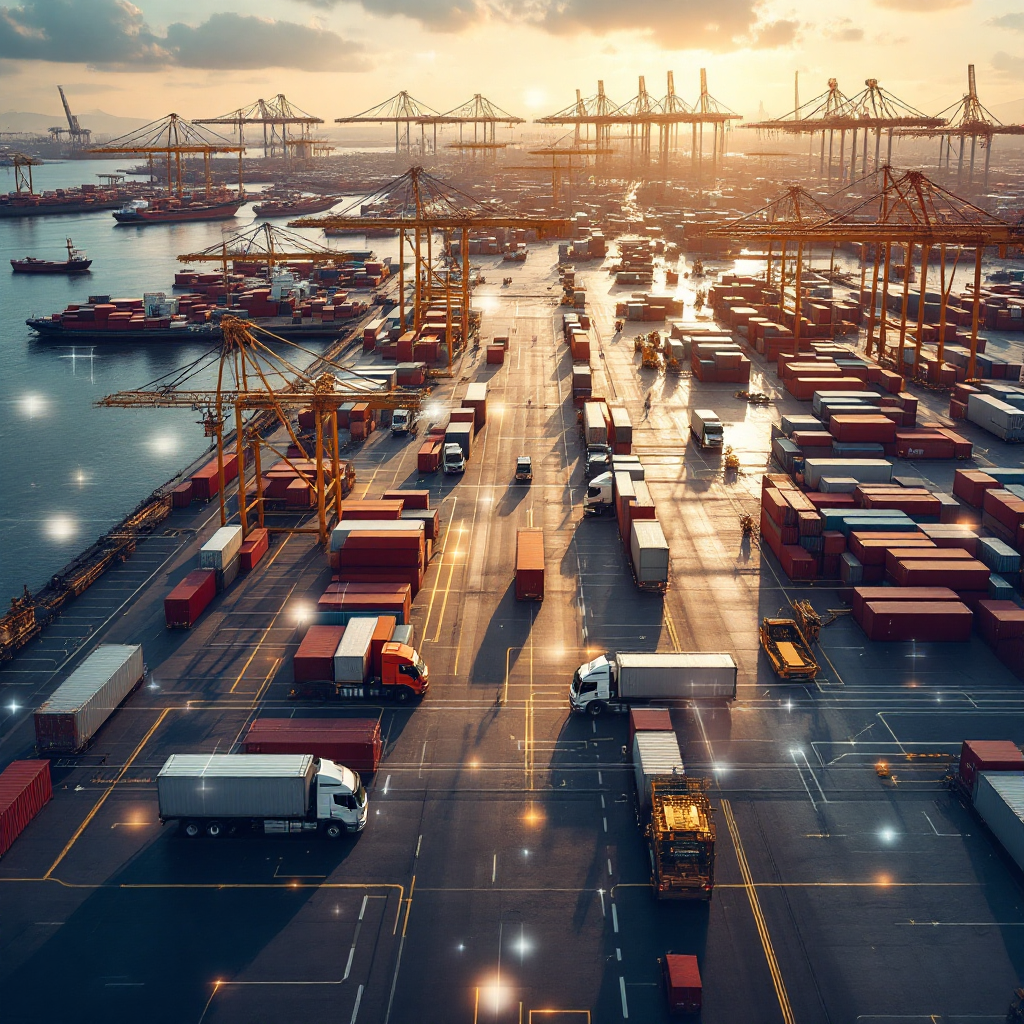
AI Integration and Port Operations: Strategic Alignment
AI integration within container port operations starts with a clear business case. First, define what AI will do for the port and why. Then, align goals with measurable outcomes such as reducing container dwell times and improving safety. Leaders must set KPIs for yard utilisation, berth productivity, and vessel turnaround. One strong industry finding shows that 63% of intermodal terminals ranked capacity and yard utilisation as their top operational challenge. This fact guides strategy and prioritization.
Governance must include executive sponsors, a cross-functional steering group, and clear decision rights. Create roles that bridge technology and operations. For example, appoint a Port AI lead and a Terminal AI coordinator who own KPIs and vendor selection. This structure helps ports and terminal teams avoid siloed pilots. It also ensures that AI projects map to port management objectives and to supply chain goals.
Strategy should be pragmatic and phased. Start with high-impact use cases such as berth planning, container handling prioritization, and predictive maintenance. Use performance targets that executive teams track weekly. Also, build governance for data, security, and vendor access. Embed AI ethics and safety checks into procurement and into contracts.
Senior leadership must fund skill development and change programs. Train operator teams and terminal operators on new workflows and decision-making aids. Share success metrics and celebrate early wins to build momentum. If you want a deep dive on berth planning and congestion management, see the analysis on berth call optimization strategies for congested container terminals.
Finally, align AI investments with wider digital transformation in the port ecosystem. Combine AI with automation and with better analytics to create measurable returns. That approach helps an efficient port move from experimentation to scaled value.
Operational Readiness: Data Infrastructure and Operating System Requirements
Operational readiness depends on data quality, and on the readiness of the operating system landscape. Begin with a full audit of ERP and of the TOS. Check data completeness, timestamps, and the frequency of updates. Ports should test whether the terminal operating system can expose the necessary feeds. Also verify that the TOS, the ERP, and sensor streams share common identifiers for containers and assets.
Real data pipelines must be secure and resilient. Plan for cloud or edge compute depending on latency needs. Many ports deploy edge nodes close to cranes and to gates so that AI can run with low latency. Using real-time feeds improves AI forecasts and reduces congestion. For a practical example of how real-time analytics improve predictions, the South Korean case study shows better container flow forecasts after adding comprehensive data capture and analytics.
Design APIs so AI systems can read and write to management systems safely. Use role-based access and clear audit logs. Secure pipelines help maintain data integrity and reduce regulatory risk. Also, include data versioning to track model inputs and to reproduce decisions during audits.
Plan for sensor networks and for IoT gateways where needed. Add sensors on cranes and on automated guided vehicles to feed performance metrics. Ensure that the network architecture supports the expected data volume without packet loss. Test end-to-end from sensor to model to action.
Finally, ensure the operating system and the network can support scaling. If you need guidance on integrating vessel planning and yard planning, see the technical discussion on integrating vessel planning and yard planning in terminal operations. That resource helps teams match system design to operational demands.
Drowning in a full terminal with replans, exceptions and last-minute changes?
Discover what AI-driven planning can do for your terminal
Automation and AI Agents: Enhancing Workflows in the Container Terminal
Introduce AI agents to automate repetitive tasks and to speed decisions. AI agents can triage operational emails, assign tasks, and suggest actions. This cuts manual lookup and helps operators focus on exceptions.
Deploy AI-driven scheduling for berth allocation and for equipment tasks. Use algorithms that balance vessel priorities and yard workloads. Connect these algorithms to cranes, to automated guided vehicles, and to remote operator consoles. When AI agents propose moves, provide clear rationale and confidence scores so human operators can accept or override decisions. That design builds trust and operational reliability.
Automation and robotics must interoperate. Test APIs between AI software, automated guided vehicles, and crane controllers. Validate safety interlocks and emergency stop behavior. A practical study shows early anomaly detection in automated cranes reduced equipment-related incidents and improved operator confidence. Integrate predictive maintenance signals with maintenance teams to reduce unplanned downtime and to schedule repairs during slack periods.
Evaluate human-machine interaction carefully. Define clear escalation paths and maintain manual modes. Ensure that operator training covers both normal and failure scenarios. This approach minimizes disruption when automated systems hand control back to humans. For scheduling best practices, review research on real-time job scheduling for autonomous equipment in terminal operations.
Finally, assess how automation affects cargo flows and congestion. Use AI to sequence container moves to reduce rehandles and to minimize yard congestion. For more on reducing rehandles, see the strategies at reducing container rehandles in port operations. That content helps teams align automation with measurable gains.
Digital Twin and Terminal Optimisation
Digital twin models let teams test AI-driven scenarios before they touch the quay. A digital twin mirrors the physical yard, and it simulates gate processing, berth activity, and crane cycles. Team members can run what-if scenarios and can measure throughput, congestion, and emission impact. Use these findings to tune AI algorithms and to plan phased rollouts.
Run simulations that measure container flow and that forecast peak demand. With proper calibration, a digital twin can predict container volumes and can highlight bottlenecks before they appear. One European port validated AI plans with a digital twin and reported a 15% reduction in operational costs after rollout. Use simulation outputs to refine rules for AGVs and for berth planning.
Digital twin technology also supports training. Operators and operator supervisors can practice in a realistic virtual environment. That training reduces errors during the live cutover and shortens ramp-up time. Simulate failure modes so teams rehearse recovery steps and so systems log operator responses for later review.
When validating AI models, keep test data separate from production data. Use staged environments and shadow runs to verify behavior under load. This approach cuts deployment risk and cuts downtime during go-live. Also, ensure the digital twin receives regular data updates from TOS and from sensors so that its predictions remain accurate over time.
Finally, tie optimization results to measurable KPIs. Use the digital twin to show forecasted gains in berth productivity and in yard utilization. Then, compare simulated outcomes to live data after deployment. For insights on reducing unproductive moves and improving yard crane scheduling, consult resources on reducing unproductive container moves and on yard crane scheduling and dispatching. That methodology helps teams move from theory to measurable benefit.
Drowning in a full terminal with replans, exceptions and last-minute changes?
Discover what AI-driven planning can do for your terminal
Implementing AI in Port: Change Management and Workforce Preparation
Implementing AI requires a deliberate change management plan. Start with stakeholder mapping and with role redesign workshops. Communicate the scope of AI projects and share timelines. Provide clear explanations of what AI will automate and what will remain human-led. That transparency reduces anxiety and improves buy-in from terminal operators and from union representatives.
Train staff on new tools, and include scenario-based practice. Focus training on data literacy, on how AI models make recommendations, and on how to escalate exceptions. Create operator checklists and quick reference guides for common decision points. Offer refresher sessions and hands-on labs so operators build confidence. Ports that invest in continuous learning often show faster adoption and higher reliability.
Design feedback loops between frontline teams and AI developers. Capture operator feedback and use it to refine algorithms and to adjust operating procedures. This iterative process improves model quality and aligns AI with real-world constraints. That shift improves response times and reduces error rates.
Plan for phased rollouts with pilots in low-risk areas. Use pilot metrics to identify training gaps, and then expand scope. Include performance incentives for teams that meet target KPIs. Also, incorporate safety drills and joint reviews to check operational reliability during the transition. Maintain a visible executive sponsor who tracks progress and who removes roadblocks quickly.
Finally, prepare HR and recruitment plans for new skills. Hire data engineers, and retrain skilled operators as AI supervisors. Encourage a culture of experimentation and of continuous improvement. That culture helps ports and terminal teams stay adaptive as AI capabilities evolve and as the future of AI reshapes work patterns.
Logistics and Vessel Operations: Measuring Impact of AI Integration
Define measurable metrics before deployment. Track yard utilisation, berth productivity, vessel turnaround time, and container dwell. Also monitor safety signals generated by AI-powered navigation and by crane monitoring systems. Use those metrics to quantify improvements and to prioritize next steps.
Apply predictive analytics to maintenance workflows. AI-driven predictive maintenance helped one major terminal cut equipment downtime by about 25%. That result came from sensors on cranes, from machine telemetry, and from scheduled work orders. Combine maintenance data with TOS logs and with ERP records to improve forecast accuracy.
Measure cost impacts as well. Match operational costs before and after AI pilots. Consider both hard savings and soft savings such as reduced overtime and faster customer communications. For forecasting modal shifts and yard capacity optimization, review the work on AI-based prediction of modal shifts. That research links forecasts to yard planning decisions and to supply chain performance.
Monitor congestion and delay metrics continuously. Use AI to detect emerging congestion and to suggest mitigation steps, such as re-sequencing berths or accelerating gate processing. Also measure emission changes when optimization reduces idle time and when berth planning smooths vessel arrivals. Quantify safety outcomes by tracking anomaly alerts and by recording any reductions in near-miss events.
Finally, publish results to stakeholders. Share clear dashboards and weekly summaries that show progress against targets. Use real-world evidence to expand successful pilots. When you combine AI with robust change management and with measured outcomes, ports worldwide can improve operational efficiency and resilience in global trade.
FAQ
What is operational readiness for AI in container ports?
Operational readiness refers to the preparation needed to deploy AI successfully in port workflows. It includes aligning strategy, upgrading data pipelines, and training operator teams to work with AI tools.
How does AI reduce container dwell time?
AI reduces dwell time by improving berth planning, by optimizing yard crane sequences, and by predicting container flow. These functions cut waiting and rehandling, which shortens the time containers spend in the yard.
What data systems should a port audit first?
Start with ERP systems and the TOS, then check sensor and IoT feeds from cranes and gates. Ensure timestamps, container IDs, and transaction logs are accurate and accessible for AI models.
How do digital twins help before live rollouts?
Digital twin models simulate yard and berth activity so teams can test AI-driven scenarios safely. They identify bottlenecks and validate optimization strategies without causing downtime.
Can AI improve safety at the berth?
Yes. AI-powered monitoring and anomaly detection can identify risky actions early and alert operators. These alerts reduce collisions and equipment incidents when coupled with clear escalation paths.
What role do AI agents play in port communications?
AI agents automate repetitive communications and can route emails to the right team. For operations teams that handle many inbound messages, AI agents save time and reduce errors by grounding replies in ERP and in TMS data.
How should ports measure AI project success?
Define KPIs such as yard utilisation, berth productivity, vessel turnaround, and predictive maintenance gains. Compare these metrics before and after AI deployment and track safety and emission indicators too.
What training do terminal operators need?
Provide training on data literacy, on how AI recommendations appear, and on override procedures. Include hands-on labs and scenario rehearsals to prepare teams for live operations.
How do ports manage integration with existing automation?
Test API interoperability and safety interlocks between AI software and automated guided vehicles or crane controls. Run shadow-mode tests and confirm that human operators can assume control quickly if needed.
What is a good first AI use case for a port?
Start with a focused problem such as berth planning, gate throughput, or email automation for operations. These areas deliver measurable returns and help build confidence for wider AI adoption.
our products
 stowAI
 stackAI
 jobAI
jobAI
Innovates vessel planning. Faster rotation time of ships, increased flexibility towards shipping lines and customers.
Build the stack in the most efficient way. Increase moves per hour by reducing shifters and increase crane efficiency.
Get the most out of your equipment. Increase moves per hour by minimising waste and delays.
stowAI
Innovates vessel planning. Faster rotation time of ships, increased flexibility towards shipping lines and customers.
stackAI
Build the stack in the most efficient way. Increase moves per hour by reducing shifters and increase crane efficiency.
jobAI
Get the most out of your equipment. Increase moves per hour by minimising waste and delays.