
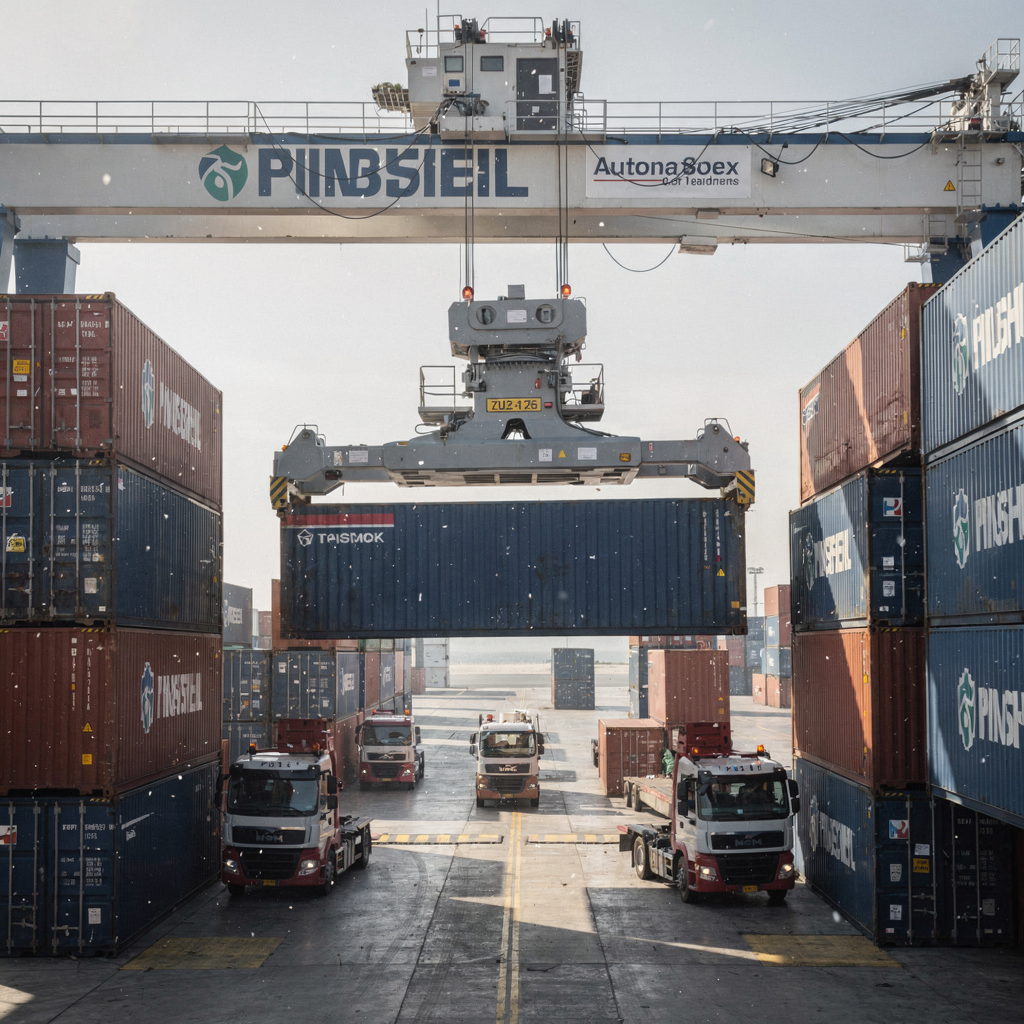
simulation: Defining container terminal simulation
Additionally, furthermore, this chapter answers a simple question: what is container terminal simulation and why should a terminal manager care. Furthermore, it creates a clear starting point for readers who plan changes and want measurable gains. In short, container terminal simulation is a virtual replication of a terminal’s activity that lets teams test choices before they act. Specifically, the approach can reproduce vessel calls, berth work, quay moves, yard stacks, and truck flow. For example, a digital twin approach blends models with live feeds to assess resilience and sustainability; researchers explain that a twin helps ports plan for disruption Digital Twin for resilience and sustainability assessment of port facility. Additionally, stakeholders run what-if tests to compare alternatives without touching the real yard.
Furthermore, discrete event methods account for the stochastic nature of handling and delays. Also, DES captures random arrivals and variable service times so planners can evaluate realistic outcomes. Moreover, the method helps terminal operators understand resource trade-offs and performance variability. A key quote from Rockwell Automation highlights the value of modelling: “Moving cargo quickly and efficiently through a port can result in significant competitive advantage” Arena Simulation Software in Port & Terminal. Additionally, the technique avoids disruption to live operations while producing metrics that decision makers trust.
Furthermore, when teams combine DES with AI agents, they create closed-loop control that can adapt in deployment. Also, our company uses reinforcement learning agents trained inside a twin to improve planning. Specifically, we train StowAI, StackAI, and JobAI in a safe sandbox, then validate them before go-live. Consequently, this reduces firefighting and keeps equipment busy. Finally, the next chapters explain the role of ports, how a model is built, and how to run scenarios that produce clear KPIs.
port: Understanding the role of ports in global logistics
Additionally, next, ports act as hubs that channel goods across a global supply chain. Furthermore, container terminals sit at the heart of maritime logistics and connect sea transport, hinterland rail, and road networks. Also, a well-run terminal increases throughput and supports trade. For example, operational friction at a single berth can ripple across lanes and raise costs. Additionally, port management teams track vessel schedules, berth windows, and gate work to keep flows balanced. A targeted study of port and terminal dynamics shows how berth occupancy and approach channel use create constraints that planners must resolve Simulation for Ports – ResearchGate.
Furthermore, core operations include ship arrivals, berth allocation, crane handling, yard storage, and truck movements. Also, quay crews discharge and load boxes while yard staff stack and retrieve them. Additionally, gate staff process trucks and check documentation. Next, terminal operating systems (TOS) coordinate many of these tasks and feed data into models. Additionally, linking a TOS to a twin lets teams simulate real-world rules and constraints as they plan expansion or reorganization. For more on berth and quay planning, see our piece on integrating berth call optimisation with quay crane planning integrating berth call optimisation with quay crane planning.
Furthermore, efficiency at the terminal level influences national competitiveness and supply chain resilience. Also, delays at a single node can add days to shipments and raise inventory costs. Consequently, operators aim to ensure steady flows and limit vessel delays. In practice, terminals that simulate options reduce costly rehandles and shift from reactive firefighting to proactive decision making. Finally, the next chapter covers how to construct a model and the data you need to run reliable experiments.
Drowning in a full terminal with replans, exceptions and last-minute changes?
Discover what AI-driven planning can do for your terminal
model: Constructing a container terminal model
Additionally, furthermore, building a credible model starts with identifying physical components and their interactions. Also, the model represents berths, quay cranes, yard blocks, gate systems, road access, and rail interfaces. Next, the modeler defines equipment types and capacities so the simulation captures the type of equipment and resource limits. Additionally, essential data inputs include vessel schedules, handling times, equipment cycle times, spatial layout, and service rules. For instance, accurate handling times and crane cycles let you measure realistic crane productivity and yard utilization. Also, teams often gather telemetry from TOS and equipment to build representative state transitions.
Furthermore, a simulation model must include the terminal layout and stacking rules so the agent or planner can assess moves and rehandles. Additionally, model granularity varies by objective. For example, a greenfield design requires different system requirements compared with testing a small expansion inside existing terminals. Next, you select simulation tools and platforms. Also, popular packages include Arena, FlexSim, and Simio, while some practitioners use bespoke engines to emulate specific automation and automation behaviours. For research on port-scale modelling and tools, experts discuss simulation for complex terminals Simulation for Ports – ResearchGate.
Furthermore, teams must also integrate scenario drivers such as peak demand, seasonal variability, and external disruptions. Also, a good model captures stochastic arrival patterns and variable service times. Additionally, the model should feed key performance metrics for evaluation. Next, include a clear procedure for verification and validation so stakeholders trust the results. For terminals that want adaptive control, simulation ties into agent training and decision making. Finally, readers can learn more about real-time replanning by reviewing our notes on real-time replanning capabilities in container port software real-time replanning capabilities.
simulation model: Metrics and performance evaluation
Additionally, furthermore, once the simulation model runs, focus on a defined set of KPIs that reflect operational goals. Also, typical metrics include berth occupancy, crane moves per hour, yard utilisation, truck turnaround time, and total throughput. Additionally, throughput often measures TEUs processed per day and helps teams estimate revenue and capacity. For example, studies show crane productivity can improve by 15–20% via process changes driven by simulation results Simulation for Ports – ResearchGate. Furthermore, port simulation software can generate distributions of outcomes so planners evaluate risk and variability.
Additionally, run scenarios that reflect equipment changes, shift patterns, and peak-hour demand. Also, test what-if cases such as new quay cranes, revised stacking policies, and altered gate hours. Next, use scenario evaluation to identify bottlenecks and compare trade-offs between quay productivity and yard congestion. Additionally, simulation helps a terminal operator balance objectives and ensure controllable outcomes. For strategic resource planning, combine model outputs with TOS data and KPIs to guide staff and equipment reallocation. Also, you can assess environmental impacts by linking a twin to emissions models and energy usage.
Furthermore, bottleneck identification flows from targeted experiments. Also, the model highlights where vessels wait, where cranes idle, and where trucks queue. Next, teams apply optimization routines on top of the model to propose improved schedules or yard assignments. Additionally, our company trains agents inside a twin so policies directly maximise explainable KPIs rather than imitate past practice. Finally, for related reading on gross crane rate benchmarks see our analysis of gross crane rate benchmarks in container ports gross crane rate benchmarks.
Drowning in a full terminal with replans, exceptions and last-minute changes?
Discover what AI-driven planning can do for your terminal
optimization: Strategies to enhance terminal efficiency
Additionally, furthermore, simulation underpins practical optimisation and resource planning. Also, teams use the model to test scheduling rules, shift composition, and equipment mixes. Next, experiments reveal gains from process adjustments and automation upgrades. Additionally, simulation-driven changes can increase crane productivity by 15–20% and balance berth occupancy into more efficient ranges, as field studies report Simulation for Ports – ResearchGate. Furthermore, improved equipment utilisation directly reduces vessel delays and truck queues.
Additionally, strategies include revising stacking rules, changing gate operating hours, and reallocating quay cranes. Also, automation and AI agents can coordinate moves to minimise travel and rehandles. Next, integrating RL agents trained in a twin enables closed-loop control that adapts in real-time. Additionally, our approach spins up a sandbox twin and trains StowAI, StackAI, and JobAI to balance quay productivity and yard congestion without needing historical data. Furthermore, this cold-start capability helps greenfield projects and existing terminals facing new vessel mixes.
Additionally, optimisation must also consider environmental targets. Also, a twin lets teams assess emissions and energy use before committing capital. Next, port management can evaluate trade-offs between throughput and environmental outcomes. Additionally, linking simulation results with port simulation software or a TOS gives operators practical plans ready for implementation. Finally, for tactical scheduling and job sequencing readers may want to explore our work on job scheduling for yard and quay operations job scheduling for yard and quay operations.
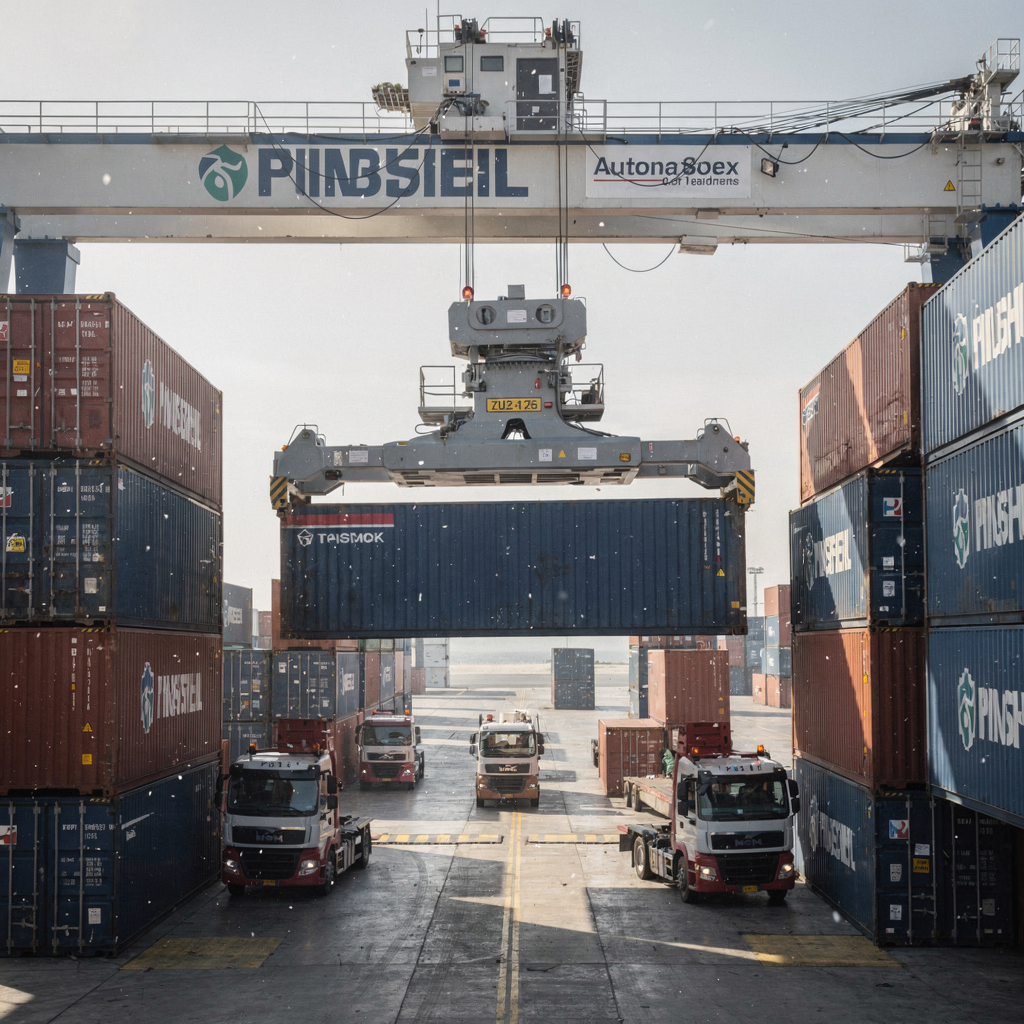
port optimization: Case studies and future outlook
Additionally, furthermore, leading terminals use simulation to guide expansion and reorganization. Also, large hubs like Rotterdam and Singapore apply twins and models to improve berth allocation and environmental performance. For example, digital twin deployments help operators assess resilience and sustainability under disruption Digital Twin for resilience and sustainability assessment of port facility. Additionally, case studies show measurable improvements when teams couple simulation with targeted process changes.
Furthermore, future trends point to tighter integration of AI, IoT, and autonomous equipment. Also, hybrid systems that mix human dispatching with automated agents will become common. Next, AI will support decision making at scale and enable faster reaction to vessel delays and variable demand. Additionally, regulators will expect traceable decision logic and explainable policies, so solutions must include audit trails and guardrails. For guidance on scaling AI across operations see our discussion on scaling AI across port operations scaling AI across port operations.
Furthermore, sustainability improves when simulation assesses emissions and energy consumption. Also, operators can compare electrification options, truck flow changes, and alternative stacking strategies. Additionally, integrating simulation with port simulation software and a TOS gives comprehensive evaluations before capital spends. Next, the combination of RL agents and a twin lets terminals accomplish multi-objective goals while keeping managers in control. Finally, simulation will remain central to terminal optimisation as automation and connectivity trends accelerate.
FAQ
What is container terminal simulation?
Additionally, container terminal simulation is a virtual replication of terminal operations used to test scenarios without real-world disruption. Furthermore, it models vessel calls, crane work, yard stacking, and truck flows to support decision making.
Why do terminals use a digital twin?
Additionally, a digital twin links modelled processes with live data so teams can assess real-time impacts. Furthermore, it helps assess resilience and environmental outcomes under disruption and supports adaptive control.
What KPIs should I track in a terminal model?
Additionally, typical KPIs include berth occupancy, crane moves per hour, yard utilisation, truck turnaround time, and throughput. Furthermore, these metrics let managers evaluate trade-offs and identify bottlenecks.
Which simulation tools are common for ports?
Additionally, popular platforms include Arena, FlexSim, and Simio for discrete event modelling. Furthermore, bespoke engines also exist for advanced automation and agent training.
Can simulation improve crane productivity?
Additionally, yes; studies indicate crane productivity can rise by 15–20% after process improvements informed by simulation. Furthermore, experiments reveal how scheduling and stacking rules drive those gains.
How does AI fit with simulation?
Additionally, AI agents can train inside a twin to learn policies that balance multiple KPIs. Furthermore, this method reduces reliance on historical data and helps automate decision making with guardrails.
Is simulation useful for greenfield design?
Additionally, simulation helps evaluate layouts, equipment mixes, and system requirements for a new terminal. Furthermore, it supports cost estimation and optimal placement decisions before construction.
Do I need a TOS to benefit from simulation?
Additionally, a TOS provides useful operational rules and telemetry that improve model fidelity. Furthermore, simulations can run with limited data but integrate with a TOS for higher accuracy and deployment readiness.
How does simulation help environmental goals?
Additionally, models can link to emissions and energy calculators to evaluate environmental impacts. Furthermore, terminals can compare electrification and operational changes before committing to infrastructure investments.
Where can I learn more about implementing simulation in my terminal?
Additionally, start with focused pilots that validate a sandbox twin and then scale to full yard experiments. Furthermore, our resources on berth-crane integration and job scheduling provide practical next steps and case studies integrating berth call optimisation with quay crane planning, job scheduling for yard and quay operations.
our products
 stowAI
 stackAI
 jobAI
jobAI
Innovates vessel planning. Faster rotation time of ships, increased flexibility towards shipping lines and customers.
Build the stack in the most efficient way. Increase moves per hour by reducing shifters and increase crane efficiency.
Get the most out of your equipment. Increase moves per hour by minimising waste and delays.
stowAI
Innovates vessel planning. Faster rotation time of ships, increased flexibility towards shipping lines and customers.
stackAI
Build the stack in the most efficient way. Increase moves per hour by reducing shifters and increase crane efficiency.
jobAI
Get the most out of your equipment. Increase moves per hour by minimising waste and delays.