
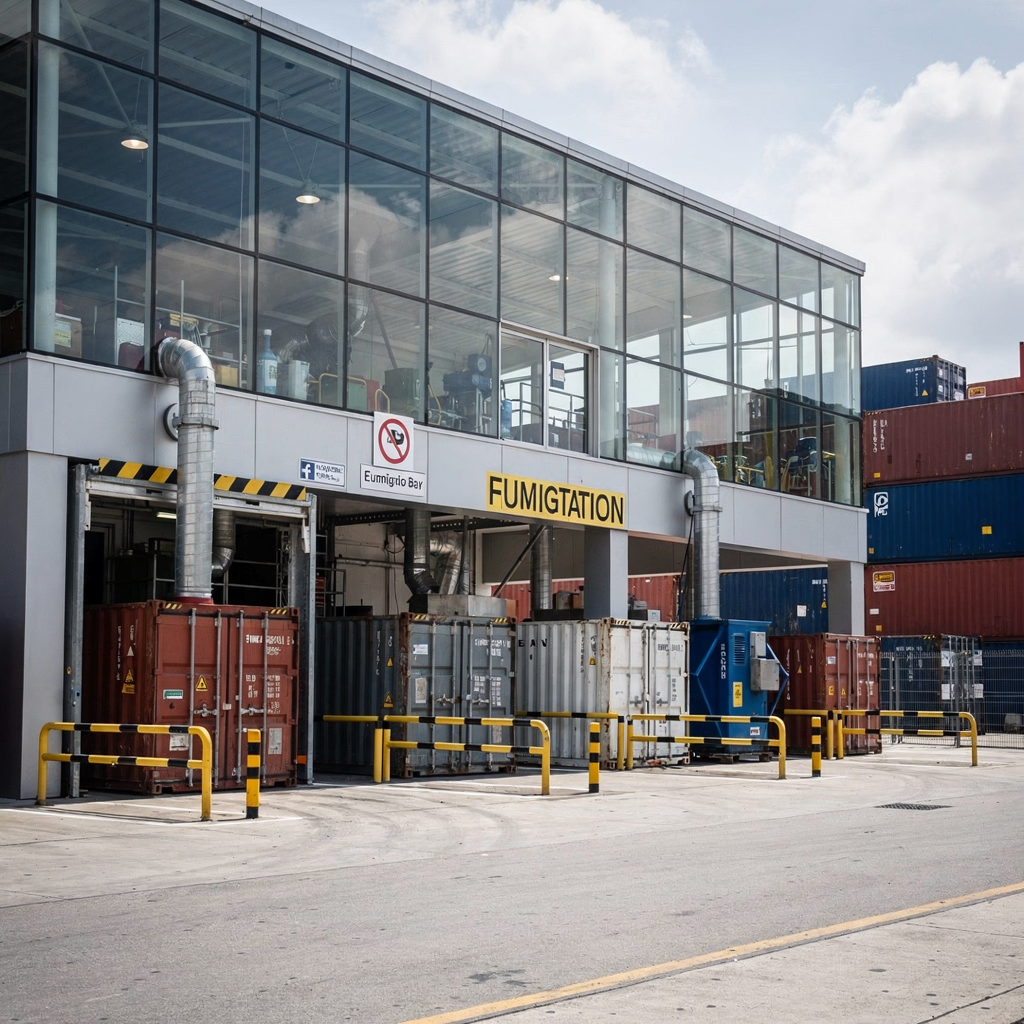
fumigation and container fumigation in Inland Container Terminals
Fumigation controls pests that may travel with international shipments. First, fumigation removes or neutralizes fumigant gas that protects goods and prevents the introduction of invasive species. Next, fumigation also safeguards workers and prevents the destruction of the cargo by living organisms that can damage plant products or wooden pallets. For shipping containers and their contents, the practice reduces the risk that harbor pests move across borders. According to logistics reports, roughly 30% of containers arriving at major ICTs require treatment. Therefore, terminals must plan for frequent intervention.
Container fumigation refers to a targeted form of fumigation inside sealed units. It protects global trade and supports phytosanitary regulations. Also, container fumigation can involve gassing a sealed box, then allowing safe aeration. The use of methyl bromide in container pest control has declined significantly since the Montreal Protocol. The Protocol has driven a reduction of over 50% in global use of methyl bromide for container fumigation, and that shift affects terminal planning and supplier choices. At the same time, some fumigants remain in use, for example phosphine and sulfuryl fluoride, so terminals must know which gases they accept and which are restricted or banned in many destination countries.
Terminals must ensure that the container is ventilated to remove harmful residues before handlers open doors. In practice, this means a combination of site design and process rules to guarantee safety. For instance, the international plant protection convention and local phytosanitary regulations require documentation and markings when fumigation is performed. Therefore, a clear plan that matches international regulations and terminal capacity will safeguard cargo while keeping operations efficient. Loadmaster.ai helps terminals plan for variability and reduce last-minute firefighting so that planned fumigation slots do not cascade into yard congestion terminal congestion solutions. Finally, proper planning protects supply chains and maintains a pest-free flow of goods.
Site planning: warehouse and fumigation services infrastructure
Site planning begins with designated areas for fumigation and aeration. First, allocate a dedicated zone within the warehouse or adjacent yard. Second, ensure physical separation between fumigation bays and general storage to prevent cross-contamination. Third, place safety barriers and controlled access points so only trained personnel and a fumigator can enter during the exposure period. Also, you must provide clear routes for equipment and emergency exit paths. Terminals should adopt an international standard for layout to comply with relevant regulations and to safeguard workers.
Designated zones require proper ventilation and monitoring. Install fixed monitoring stations and provide portable gas detectors for inspectors. Ventilation equipment must handle both forced and passive airflow. In addition, provide a system to ventilate the container quickly where necessary, and a lockdown procedure to prevent accidental leakage. Install signage and specific markings that indicate that a unit has undergone fumigation of containers and must remain sealed until testing confirms safe levels. Also, plan for storage of wooden pallets and dunnage in a separate area to avoid mixing treated and untreated materials.
Fumigation services must integrate with terminal workflows. For example, a terminal operating system should flag containers slated for fumigation at gate-in. Then, those containers can be routed to the fumigation bay as part of the vessel or truck sequence. Using digital twins to simulate fumigation slots helps alleviate bottlenecks. Loadmaster.ai’s simulation approach can test layouts and timings in a sandbox before applying changes live, which helps reduce rehandles and yard congestion using simulation for capacity planning. Also, coordinate with fumigation services providers to pre-book slots. That reduces waiting times and prevents delays that could lead to additional dwell and storage issues. Finally, training staff in safety protocols and personal protective equipment use keeps operations compliant and reduces incidents.
Drowning in a full terminal with replans, exceptions and last-minute changes?
Discover what AI-driven planning can do for your terminal
The container fumigation process and pest control measures
Start the container fumigation process with an initial inspection. First, perform an initial inspection to check for visible infestation and to note the type of goods and wood packaging. Second, seal the unit properly. The seal must be robust to allow the fumigant gas to reach required concentrations inside the container. Third, dose the container with the chosen fumigant at rates that match cargo type, temperature, and container volume. Typical gases used include methyl bromide and phosphine gas, though alternatives such as sulfuryl fluoride are increasingly used. The choice depends on destination restrictions and type of fumigant used.
During exposure, monitor concentration and temperature. Use portable gas detectors and fixed sensors to track levels within the container. Keep records of exposure period and peak concentration. Also, temperature monitoring helps predict the required exposure time because efficacy varies with temperature and moisture. For example, aeration times for methyl bromide typically average about 48 hours, but they can range from 24–72 hours depending on climate and the type of goods inside the container (Montreal Protocol data). Therefore, terminals must set conservative buffers in schedules to avoid delays.
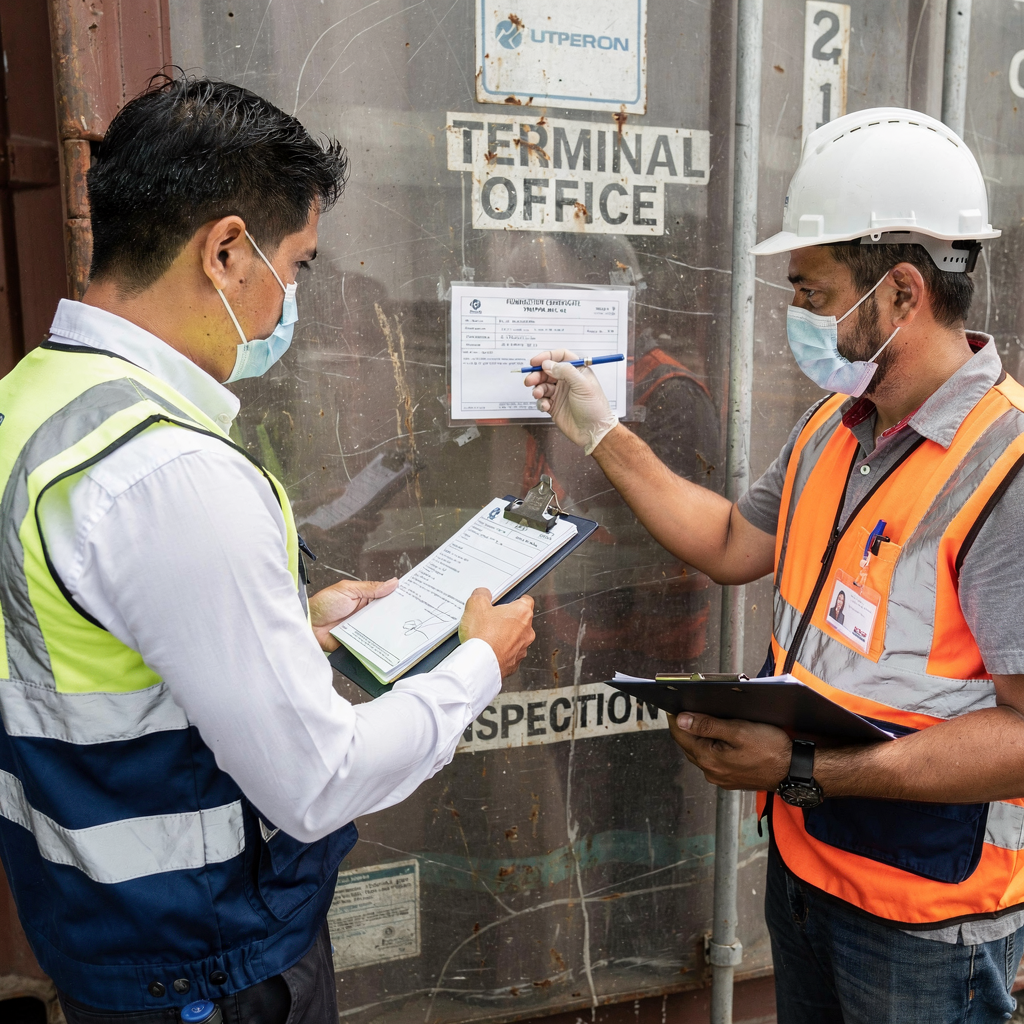
After exposure, allow aeration and test before opening. A fumigated container must be tested until instrumentation shows safe levels. This is the moment when the container is ventilated to remove residual gas and is safe to handle. The container fumigation process also includes marking the unit and issuing a fumigation certificate. The fumigation certificate is critical for customs and for destination countries that require proof of treatment under the International Plant Protection Convention and ISPM protocols. Finally, recordkeeping is essential. Maintain chain-of-custody records and monitor for any leak or unexpected readings. A successful fumigation protects cargo and helps terminals meet biosecurity requirements while keeping workers safe.
Regulatory compliance: ispm 15, phytosanitary standards and fumigation certificate
ISPM 15 focuses on wood packaging and wood packaging material to prevent the spread of pests. The standard requires that wooden pallets and dunnage be treated, marked, and accompanied by documentation. For export, the exporter must ensure that wood packaging complies with the international plant protection convention (IPPC) standards and that specific markings appear on treated materials. If wood packaging is untreated or improperly marked, customs can hold the shipment and require fumigation or return, which can lead to delays and additional costs.
Phytosanitary documentation and a fumigation certificate are often required by destination countries. A fumigation certificate shows who performed the treatment, the type of fumigant used, exposure period, and treatment date. It confirms that the necessary steps were taken to eliminate pests and to prevent the introduction of invasive species. Customs authorities typically check these certificates on arrival. A missing or incomplete fumigation certificate can result in fines, quarantine actions, or destruction of the cargo. Therefore, terminals should integrate document validation into gate processes to catch discrepancies early.
Compliance reduces risk and protects trade lanes. For example, the Montreal Protocol has influenced which fumigants are permitted and which are restricted or banned in many jurisdictions. Methyl bromide, once widely used, has seen its use restricted and banned in many countries because it harms the ozone layer (Montreal Protocol report). Consequently, terminals must track changing regulations and update supplier contracts. Use real-time systems to verify that fumigation certificates are genuine and match terminal records; this reduces human error. For guidance on stacking and handling hazardous or treated units in the yard, review industry best practice material such as hazardous cargo stowage rules that intersect with fumigation planning hazardous cargo stowage rules. Ultimately, rigorous compliance safeguards cargo, trade relationships, and the terminal’s reputation.
Drowning in a full terminal with replans, exceptions and last-minute changes?
Discover what AI-driven planning can do for your terminal
Scheduling cargo fumigation and handling a fumigated container
Scheduling cargo fumigation requires tight coordination. First, tag containers needing treatment at the gate. Then, reserve time slots for fumigation services and plan routing to the fumigation bay. Use the terminal operating system to flag these containers in the vessel stow and yard plan. Also, create buffers in schedules to allow for aeration and testing. Since aeration may take 24–72 hours for methyl bromide, conservative lead times avoid unexpected hold-ups that lead to delays. A well-synced schedule helps maintain throughput and reduces rehandles.
Track each job with clear statuses: awaiting treatment, under treatment, aerating, tested safe, and released. For true resilience, couple scheduling with simulation and real-time replanning so that the terminal can adapt when equipment or workforce changes. Loadmaster.ai’s closed-loop optimization and digital twin techniques support these adjustments and can help reduce the firefighting that planners face when fumigation windows slip real-time replanning. Also, keeping a shared dashboard for fumigation tasks improves communication among dispatchers, fumigators, and gate teams.
Handling a fumigated container requires strict safety protocols. Always test air at the door before entry. Use portable gas detectors and follow personal protective equipment rules. If a unit fails the air test, do not open it; instead, extend the aeration period or reintroduce ventilated air until safe. Proper monitoring and training reduce fumigant exposure incidents by as much as 70% when combined with infrastructure and procedures (safety monitoring data). When containers pass testing, issue the fumigation certificate and update the terminal system so handlers know the unit is safe. Finally, when loading a fumigated cargo onto another transport mode, ensure all documentation travels with the shipment to meet destination checks and phytosanitary regulations.
Export considerations: selecting fumigation services for wood packaging material
Select a reputable fumigation services provider by checking credentials, experience, and compliance history. First, verify licenses and that the provider uses certified fumigators. Second, confirm they issue a properly completed fumigation certificate that meets the destination country’s requirements. Also, ask about the provider’s standard operating procedures for sealing, dosing, and aeration. Request references from other exporters and check for records of safe operations and low incident rates.
Export cargo often contains wooden pallets and wood packaging material that must meet ISPM 15. Therefore, ensure that the fumigator can treat and mark wood packaging and provide IPPC-compliant documentation. For export shipments, choose treatments accepted by destination countries. Also, consider the type of fumigant used and whether it is restricted in the target market. For example, methyl bromide may be banned in many countries, and some destinations prefer phosphine or sulfuryl fluoride. Learn which gases used are permitted in destination countries to avoid shipments being returned or destroyed.
Look ahead to future trends in pest control. Alternatives to methyl bromide and improved biosecurity measures are emerging. Integrated pest management, better inspection technology, and targeted treatments reduce dependency on broad fumigant gas exposure. Terminals and exporters should pilot newer approaches to balance efficacy with environmental responsibility. When choosing a provider, prioritize those that can certify sustainable methods and that understand phytosanitary regulations. Also, confirm they can handle multimodal moves and offer clear chain-of-custody records for the fumigated cargo. Finally, choose partners that help safeguard cargo and maintain the exporter’s reputation in global trade.
FAQ
What is fumigation and why is it used for containers?
Fumigation is the application of gaseous fumigants to eliminate pests inside a sealed space like a container. It is used to prevent the introduction of invasive species and to protect plant products, wooden pallets, and other cargo from pest damage.
How long does container fumigation typically take?
Aeration times vary by fumigant, temperature, and cargo type. For methyl bromide, aeration averages about 48 hours but can range from 24–72 hours depending on conditions, so planners must allow time buffers.
What safety protocols should teams follow when opening a treated container?
Always test the air at the door using gas detectors, wear personal protective equipment, and follow documented safety protocols. If detectors show unsafe levels, re-aerate and retest before entry.
When is a fumigation certificate required?
A fumigation certificate is required for many international shipments and for wood packaging under ISPM 15 and IPPC rules. Customs and phytosanitary authorities often demand the certificate on arrival.
How does ISPM 15 affect export shipments?
ISPM 15 mandates that wood packaging material be treated, marked, and accompanied by documentation. Non-compliant wooden pallets can lead to quarantine, fines, or the destruction of the cargo.
Which fumigants are commonly used and what are their restrictions?
Common fumigants include methyl bromide, phosphine, and sulfuryl fluoride. Methyl bromide is restricted under the Montreal Protocol and is banned in many countries, so exporters must confirm destination acceptance before use.
How can terminals schedule fumigation without causing delays?
Integrate fumigation flags into vessel stow planning, reserve fumigation slots, and build buffers for aeration into schedules. Tools that enable real-time replanning and simulation help reduce knock-on delays.
What should I look for when selecting fumigation services?
Check for certified fumigators, valid licenses, experience with export phytosanitary regulations, the ability to treat wood packaging material, and reliable documentation processes for fumigation certificates.
Can planning and technology reduce fumigation-related disruptions?
Yes. Simulation, digital twins, and planning agents can optimize slot allocation and yard flows, reducing rehandles and congestion. For example, Loadmaster.ai offers simulation-driven solutions to improve terminal resilience and planning.
What are the risks of non-compliance with fumigation rules?
Non-compliance can lead to shipment holds, penalties, destruction of the cargo, and reputational harm. A single rejected shipment can also create downstream supply chain delays and increased costs.
our products
 stowAI
 stackAI
 jobAI
jobAI
Innovates vessel planning. Faster rotation time of ships, increased flexibility towards shipping lines and customers.
Build the stack in the most efficient way. Increase moves per hour by reducing shifters and increase crane efficiency.
Get the most out of your equipment. Increase moves per hour by minimising waste and delays.
stowAI
Innovates vessel planning. Faster rotation time of ships, increased flexibility towards shipping lines and customers.
stackAI
Build the stack in the most efficient way. Increase moves per hour by reducing shifters and increase crane efficiency.
jobAI
Get the most out of your equipment. Increase moves per hour by minimising waste and delays.