
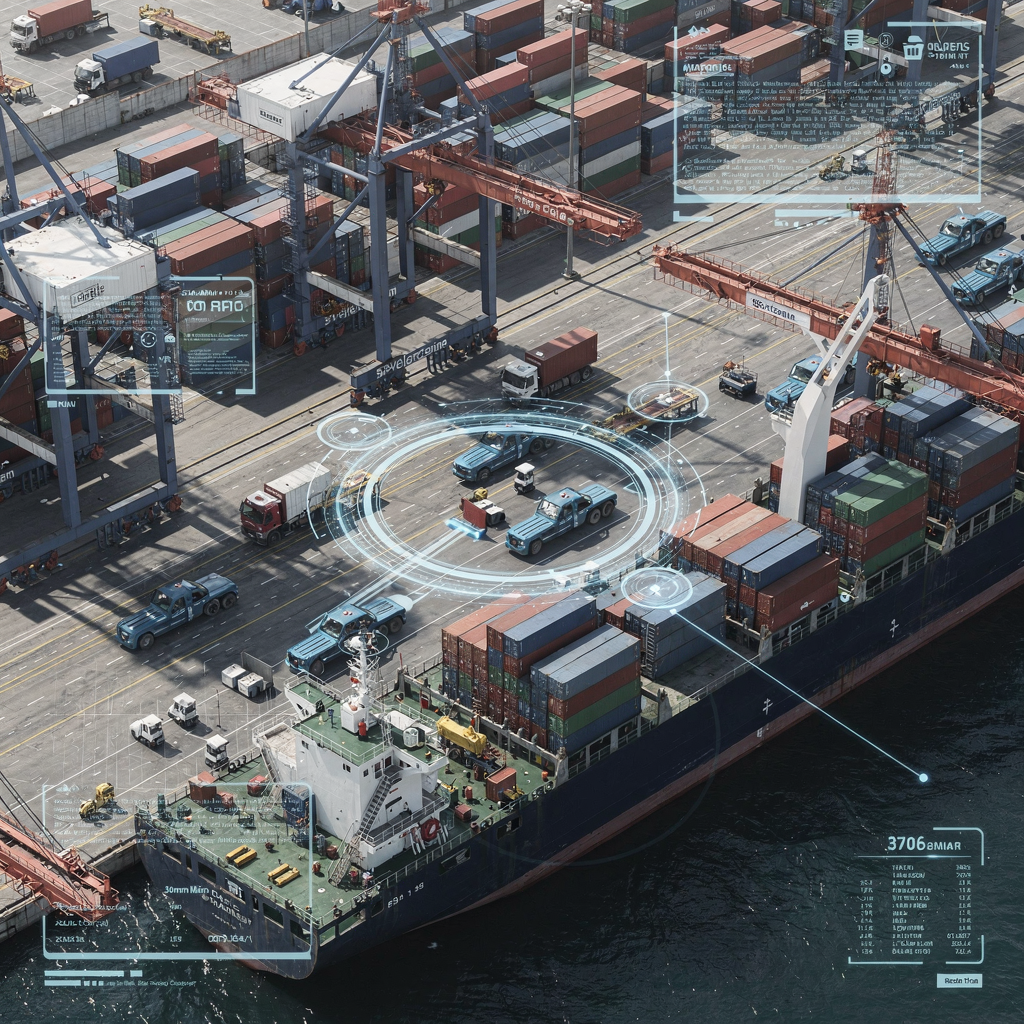
understanding AI in port operations and maritime operations
AI is transforming how modern PORT OPERATIONS and MARITIME OPERATIONS run. First, AI gives teams faster situational awareness. Second, it predicts congestion and equipment faults. Third, it guides planners with recommended actions. For example, AI Assistants capture sensor streams and supply real-time insights that reduce turnaround time and human error, as explored in industry reports on AI Assistants in port workflows. Therefore, leaders in logistics note large, measurable benefits when adopting AI. For instance, C.H. Robinson reported that AI has executed more than three million shipping tasks, showing scale and reliability in freight workflows as the company describes.
Understanding AI starts with use cases. Predictive maintenance shortens downtime. Scheduling models reduce ship and truck wait times. Decision-support agents help berth planners choose work sequences. In addition, AI reduces manual rework by steering operations toward balanced KPIs. Loadmaster.ai applies reinforcement learning to container TERMINAL planning. Our approach trains agents in a digital twin of the yard, so terminals get policy-driven control that adapts to changing loads and vessel mixes. This method differs from supervised historical models that only copy past choices. Thus, AI reduces overreliance on tribal knowledge and supports port authorities and port operators who must keep ports running.
Ports must balance many goals at once. Port management faces trade-offs between quay productivity and yard congestion. However, advanced AI models can weigh those trade-offs in real time. The wider adoption of AI will also affect GLOBAL TRADE flows. As AI adoption grows, ports operate with more predictability. Still, AI adoption and implementing AI require careful governance. Port industry leaders must address cybersecurity, integration of AI with legacy systems, and workforce transformation. For more on redesigning processes, see a strategic note on scaling AI that highlights the need to change processes, not just add tools from BCG. Finally, while AI continues to evolve, the power of AI to reshape modern maritime operations is clear. Practically, ports that start with short pilots and clear KPIs find the transition to AI easier. Understanding AI in context helps ports design realistic roadmaps and begin implementing AI without disrupting operations.
automation, terminal and AI integration in smart port ecosystem
Automation and AI integration create the backbone of a SMART PORT ecosystem. First, automation systems handle repetitive physical work. Then, AI controls and coordinates those machines. Together, they form a next-generation port where cranes, AGVs, RTGs, and TOS software share intent and timing. For example, terminal AUTONOMOUS equipment can follow optimized schedules that reduce idle time. At the same time, AI in port coordinates the sequence of moves to minimize travel and avoid rehandles. This blending of automation and AI is essential for ports to operate efficiently.
Integration of AI is not only technical. It requires process change. Ports must reconfigure roles for planners and dispatchers. They must adopt automation where it creates the most value. Loadmaster.ai’s multi-agent approach shows how AI-driven agents can work with existing TOS. Our JobAI coordinates execution, StackAI manages yard balance, and StowAI optimizes stowage sequences. This approach enables ports and terminal teams to move from firefighting to proactive control. It also helps ports navigate peaks and unexpected breakdowns with policy-driven responses.
Smart port technologies include edge devices, IoT and AI, and cloud orchestration. These components let ports scale AI clusters and run models that predict vessel arrival times and equipment degradation. Yet scaling requires new infrastructure and careful planning. Keysight outlined key challenges in scaling AI data-center clusters that apply to port compute needs in their analysis. Hence, port authorities must coordinate investments in compute, networks, and security while planning for phased automation. Ports like the Port of Rotterdam and other busy hubs are already piloting integration of AI and automation at scale. To explore yard strategy testing and digital sandboxing, see our work on digital twin capacity planning digital twin yard strategy testing. Ultimately, integration of AI at the terminal level drives better throughput and lower cost. As a result, terminals that embrace AI-driven automation realize improved port efficiency and stronger resilience.
Drowning in a full terminal with replans, exceptions and last-minute changes?
Discover what AI-driven planning can do for your terminal
digital twin and port planning: applications of AI solutions
Digital twin technology recreates the physical terminal in software. In that virtual world, planners test strategies and run AI projects without disrupting live operations. A digital twin lets you simulate berth sequences, crane allocations, and yard flows. It also enables reinforcement learning agents to learn strategies in millions of trials. In practice, a digital twin is where AI becomes useful fast. Loadmaster.ai spins up a digital twin to train RL agents, so terminals are cold-start ready and gain measurable improvements before go-live. The digital twin approach is a cornerstone of many ai solutions for ports.
Using a digital twin improves port planning in specific ways. First, it supports berth allocation tests that reduce ship waiting. Next, it helps yard planning to cut driving distances and rehandles. Later, teams can integrate hazardous stowage rules, gate scheduling, and inter-terminal truck tracking scenarios. For further reading on container-terminal capacity planning and simulation, see a practical guide on using digital twins to test terminal layouts container terminal capacity planning using digital twins. Also, our simulation methods tie into operational safety research where embedding rules into AI decision models is critical embedding safety rules into AI.
AI technologies in port rely on the digital twin to verify outcomes. For example, AI algorithms to predict container moves or crane sequences can be validated in the twin. This reduces risk during deployment. In addition, planners can explore “what-if” scenarios for port tariffs, workforce shifts, or sudden vessel arrivals. The twin helps port planners test extreme cases so live operations avoid shocks. As a result, port planning becomes data-driven. The overall port benefits include better berth utilization, fewer rehandles, and lower fuel consumption—helping reduce the carbon footprint of port operations. For teams seeking to learn more about simulation techniques and capacity planning, our research on using simulation for container port capacity planning guides practical steps using simulation for capacity planning. Therefore, digital twin plus AI delivers repeatable, auditable improvements to port planning and terminal operations.
port traffic management with AI models and optimizing operations
AI MODELS now predict vessel arrivals, optimize gate scheduling, and forecast congestion. These models blend AIS feeds, weather, berth schedules, and historical patterns. Consequently, terminals can shave hours from vessel turn times. For instance, AI models for vessel arrival prediction improve berth call accuracy and reduce idle crane time. Studies show AI reduces manual scheduling and improves throughput. For an operational perspective on berth-call integration, see our piece on integrating berth call optimization with quay crane planning berth call and quay crane planning.
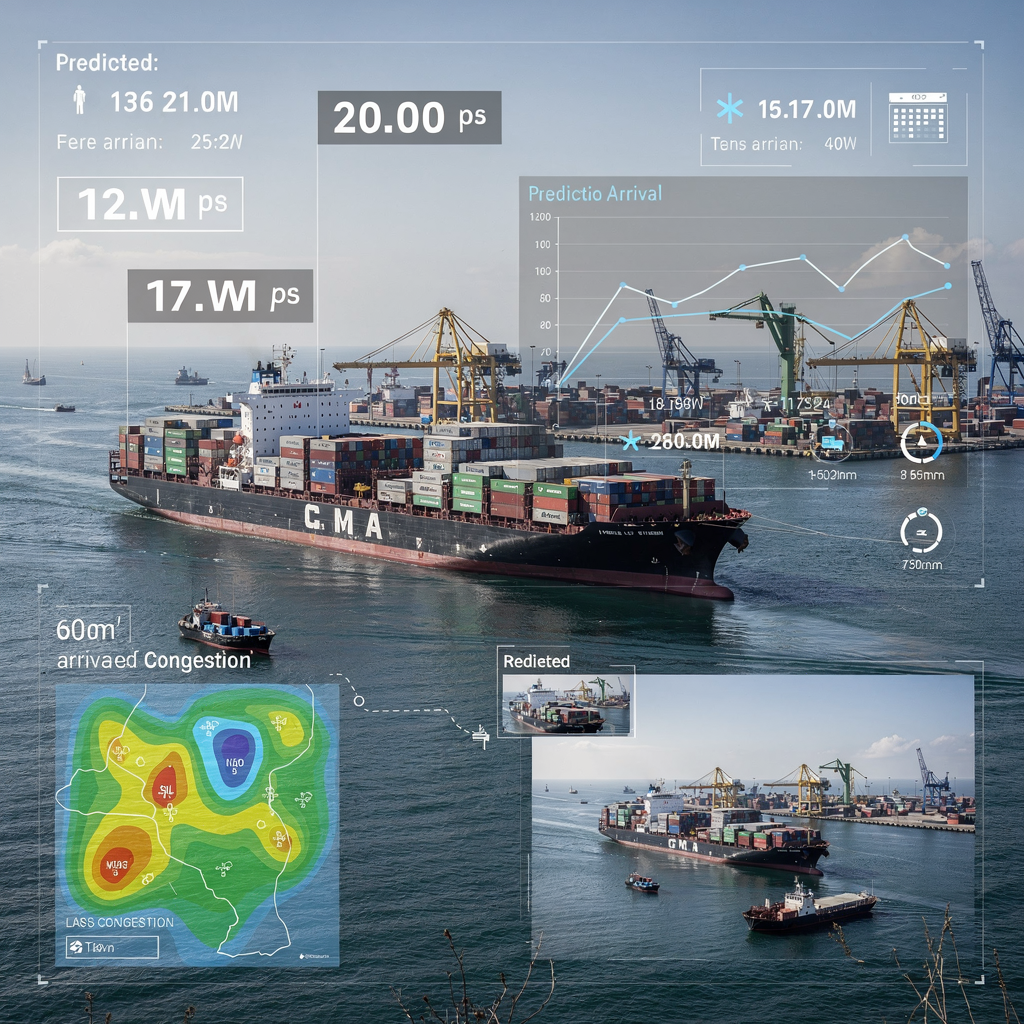
Optimizing operations starts with accurate port traffic forecasts. AI forecasts let terminals plan labour, maintenance, and equipment allocation. Then, dispatchers use the forecasts to sequence jobs and reduce queuing. These steps improve container operations and gate throughput. Quantitatively, leaders in logistics report big impacts: AI in freight forwarding automates quoting to tracking, which delivers labor savings and scale benefits as Wisor AI documents. Moreover, a median ROI of 3.5x over three years has been reported for AI investments in transportation and logistics, signaling strong returns for well-executed projects per industry analysis.
AI outputs feed execution systems and automation. For example, optimized gate schedules reduce truck dwell and speed gate cycles. AI also recommends crane assignment to balance workload across shifts and reduce crane idle time. Terminal operators can apply multi-agent coordination to keep quays productive while protecting yard flow. We explore multi-agent coordination and its practical benefits for terminals in our research on multi-agent AI in port operations multi-agent AI for port operations. In short, port traffic management with AI improves throughput and reduces waiting time. These gains help busiest ports stay competitive and support global port operations with reliable service. As ports operate under pressure from global trade dynamics, AI-driven traffic management becomes essential to maintain resilience and service quality.
Drowning in a full terminal with replans, exceptions and last-minute changes?
Discover what AI-driven planning can do for your terminal
AI makes streamline operations: logistics operations and operations with AI
AI makes routine workflows smarter and faster. First, AI automates repetitive tasks across equipment, labour, and paperwork. Second, it harmonizes data streams so teams gain end-to-end visibility. Third, it sends actionable alerts so planners act early. Together, these effects streamline operations and improve logistics operations across the value chain.
Operational examples include automated gate sequencing, predictive maintenance for cranes, and dynamic yard placement. Each example reduces idle time and lowers costs. AI systems can analyze data from sensors and cameras to detect early failures and trigger maintenance. In that way, AI reduces unplanned downtime and protects service levels. The combination of IoT and AI enables continuous monitoring, which helps ports operate more safely and predictably. In practice, integrating AI in shipping and terminal workflows also improves customs clearance processes and cargo operations, lowering total dwell time.
AI in port also improves collaboration with carriers and truckers. When terminals provide accurate ETAs and gate slots, supply chain partners plan better. As a result, empty truck moves fall and carbon footprints decline. Loadmaster.ai focuses on policy-driven control rather than copying the past. Our agents learn from simulation, so terminals get improvements without large historical data requirements. This reduces one common barrier to implementing AI and automation. Additionally, by balancing stowage quality with crane productivity we help reduce shifts spent firefighting while optimizing long-term KPIs; see our work on balancing stowage and crane productivity for technical details balancing stowage and crane productivity.
Finally, operations with AI extend beyond the gate. AI enables smarter planning of feeder calls, inland haulage, and transshipment flows. Ports that embrace AI gain more consistent performance across shifts. They also find that ai systems can analyze data at scale and produce predictable recommendations. Overall, ai-driven port change reshapes how ports deliver service, making a more efficient port and strengthening the broader port ecosystem.
the AI journey: implementing AI for smarter operations and benefits of AI
The AI journey spans pilots to full-scale rollouts. First, teams define clear KPIs and select a pilot block. Next, they build a digital twin and test AI agents against those KPIs. Then, they move to staged deployments with guardrails and explainability. Loadmaster.ai’s deployment path follows this pattern: sim-train agents, validate in a sandbox, then deploy with live feedback and constraints. This path cuts risk and accelerates measurable gains.
Implementing AI and automation requires governance, training, and process redesign. A recent MDPI study highlights digital transformation challenges that ports must manage, ranging from data integration to workforce change on challenges in port digitalization. Implementation also needs compute and data infrastructure. Keysight documents the data-center challenges for large AI clusters, which port authorities must consider when planning scale on AI clusters. Still, the benefits justify investment. Across transportation and logistics, investments in AI deliver strong returns when combined with process change and upskilling. One analysis reports a 3.5x median ROI over three years for AI investments in the sector industry ROI findings.
Challenges include cybersecurity, change management, and legacy integrations. However, leaders who adopt staged pilots, clear KPIs, and digital twins reduce risk. In addition, multi-agent AI helps balance competing KPIs in the terminal. This approach makes deployment safer and outcomes more robust. Successful AI implementation brings gains such as fewer rehandles, higher crane utilization, and shorter driving distances. These benefits of AI also increase resilience to disruptions and help ports navigate volatile demand. For practical tactics on reducing crane idle time and improving scheduling, review our research on crane idle-time reduction techniques reducing crane idle time.
As the AI journey progresses, the future of AI in ports becomes clearer. Advanced AI will increasingly support port tariffs, operational safety, and environmental targets. Ports that adopt AI projects and embrace AI early will find stronger competitiveness. Finally, the power of AI lies in continuous learning and policy-driven control. By combining digital twin simulation, reinforcement learning, and careful deployment, ports and terminal teams can transform port operations and build ports of the future that serve global trade reliably and sustainably.
FAQ
What is the role of AI in port operations?
AI helps ports predict arrivals, schedule cranes, and optimize yard placement. It also supports predictive maintenance and real-time decision support so teams act earlier and more confidently.
How does a digital twin help terminal planning?
A digital twin creates a virtual replica of the terminal for safe testing. It lets teams run AI projects and simulate scenarios without affecting live operations, reducing deployment risk.
Can AI reduce vessel turnaround time?
Yes. AI models for vessel arrival prediction and berth allocation reduce waiting and improve crane sequencing. These changes lower overall turnaround and increase throughput.
What infrastructure do ports need to scale AI?
Ports need reliable networks, edge devices, and compute capacity for model training and inference. Investments in secure data centers and operational integrations are also essential.
Are there examples of measurable AI impact in logistics?
Yes. For example, C.H. Robinson reported AI performing over three million shipping tasks, and industry studies cite a median ROI of 3.5x over three years for AI investments in logistics C.H. Robinson report, sector ROI analysis.
How do multi-agent AI systems help terminals?
Multi-agent AI coordinates quay, yard, and gate actions simultaneously. This reduces conflicts and balances KPIs, keeping cranes busy while protecting yard flow. See our research on multi-agent coordination for more detail multi-agent AI in port operations.
What challenges do ports face during AI adoption?
Key challenges include data integration, cybersecurity, and workforce change. Also, scaling compute and redesigning processes are necessary to realize full value, as noted in port digitalization research on transformation challenges.
How quickly can terminals see benefits?
Pilots validated in a digital twin can show gains within weeks to months. Full-scale rollouts take longer, but staged deployments reduce risk and accelerate measurable improvements.
Will AI replace planners and port staff?
No. AI augments planners by handling routine trade-offs and proposing robust plans. Planners remain essential for oversight, governance, and strategic decisions.
How can I learn more about using simulation for capacity planning?
Review practical guides and case studies on container terminal capacity planning using digital twins. Our simulation resources explain how to test layouts and train agents before go-live using simulation for capacity planning.
our products
 stowAI
 stackAI
 jobAI
jobAI
Innovates vessel planning. Faster rotation time of ships, increased flexibility towards shipping lines and customers.
Build the stack in the most efficient way. Increase moves per hour by reducing shifters and increase crane efficiency.
Get the most out of your equipment. Increase moves per hour by minimising waste and delays.
stowAI
Innovates vessel planning. Faster rotation time of ships, increased flexibility towards shipping lines and customers.
stackAI
Build the stack in the most efficient way. Increase moves per hour by reducing shifters and increase crane efficiency.
jobAI
Get the most out of your equipment. Increase moves per hour by minimising waste and delays.