
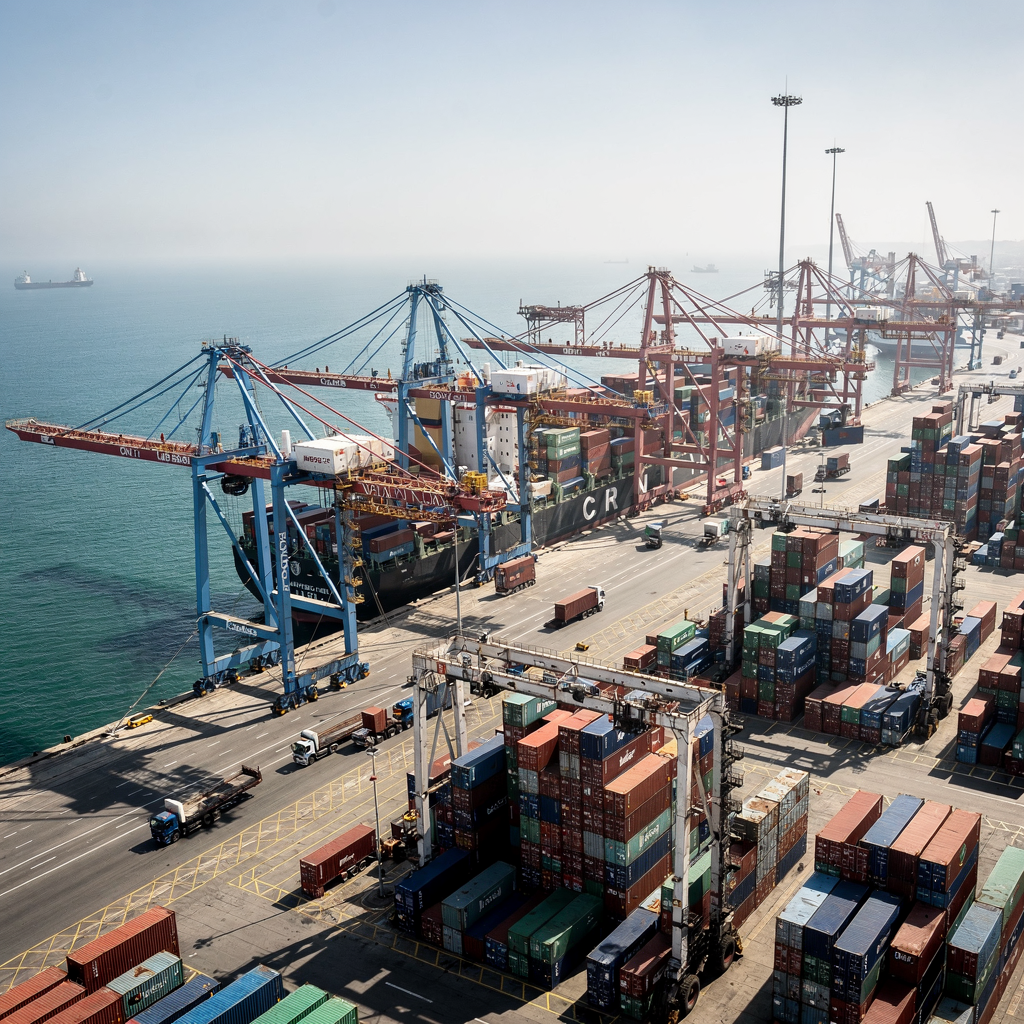
Understanding Gross Crane Rate in Container Ports
The gross crane rate measures how many container moves a ship-to-shore (STS) crane completes per hour. It covers both loading and unloading moves under standard working conditions. Terminal teams use this metric to judge quay productivity and to plan berth windows, and it directly affects how fast a vessel can leave port. High crane rates shrink vessel turnaround time, and shorter turnarounds raise terminal throughput and customer satisfaction.
Practitioners define gross crane rate as crane moves per hour (mph). This includes all lift cycles while the crane is assigned to a vessel, and it counts both export and import moves. For clarity, researchers often report the metric for specific vessel sizes. For example, a study of top global ports reported average crane moves per hour for ships above 8,000 TEU, with leaders achieving 30+ moves per hour (study on terminal productivity). That same approach helps when comparing terminals with different vessel mixes and berth lengths.
The metric matters because it links quay performance to yard demands. When a crane speeds up, the yard must absorb more flows, and gate operations must keep up. If the yard cannot, rehandles and delays rise. For these reasons many operators use digital twins to test scenarios and to balance quay and yard KPIs; those models let teams simulate trade-offs without disrupting live operations (digital twins for yard strategy testing). In practice, planners combine real-time telemetry, skilled operators, and technology to hit target crane rates. Loadmaster.ai’s RL approach trains agents in a sandbox so terminals can find robust sequences that raise moves per hour while protecting yard flow and minimizing rehandles. The next sections present benchmarks, drivers, and practical steps to move from data to sustained performance.
Typical Benchmarks and Quantitative Data
Modern, efficient terminals commonly target around 30 moves per hour per crane on large vessels. For example, a global analysis showed top ports regularly exceed 30 moves per hour on ships larger than 8,000 TEU (global port productivity analysis). The Port of Melbourne’s recent review set a similar marker and noted that “achieving a crane rate of 31 moves per hour represents a benchmark for efficient terminal operations” under optimal conditions (Port of Melbourne report, 2023). Those numbers reflect modern quay equipment, solid yard handling, and experienced crews.
Historic series show steady gains. UNCTAD data trace improvements from below 20 moves per hour in earlier decades to routine 30+ rates at advanced facilities (UNCTAD monograph). The trend reflects better crane design, improved container stowage planning, and process upgrades. At the same time, regional performance can vary. A benchmarking exercise of South African terminals contrasted local rates to global standards and highlighted clear improvement opportunities (SA terminals benchmarking). That report urged targeted investments in training and equipment to close the gap.
Benchmarks depend on working assumptions. Reported peak rates often assume optimal crane working time and minimal interruptions. When analysts state a 31 moves-per-hour peak, they assume near-continuous crane activity and favourable vessel stowage. For realistic planning, terminals use distributions of hourly rates rather than single peaks. They then stress-test schedules with tools that model yard congestion, equipment cycles, and gate peaks. If you want to explore how simulation helps test capacity and plan for varied vessel mixes, see resources on capacity planning with digital twins (capacity planning with digital twins).
Drowning in a full terminal with replans, exceptions and last-minute changes?
Discover what AI-driven planning can do for your terminal
Factors Affecting Crane Rates
Several clear factors change gross crane rate. First, crane technology matters. Manual STS cranes deliver solid performance in skilled hands. Semi-automated and fully automated cranes increase repeatability and can raise sustained moves per hour. Equipment age and maintenance also shape outcomes. A newer crane with improved drives and control software helps operators keep cycle times low.
Second, operator skill and training make a large difference. Experienced crane operators sustain high hourly rates and reduce cycle variability. Operators coordinate quay work with yard handlers, and they read stow plans and adjust for tricky lifts. Training programs and standardized handovers reduce mistakes. Loadmaster.ai’s StowAI concept improves planner decisions so crane operators face cleaner, executable sequences and so operations stay consistent across shifts. To explore how multi-agent approaches coordinate quay and yard, review our piece on multi-agent AI in port operations (multi-agent AI coordination).
Third, terminal layout and yard processes influence crane productivity. Stacking strategy, RTG or straddle carrier distribution, and the distance between the berth and stack affect cycle time. Using mobile cranes or flexible yard equipment to back up STS operations can reduce shuttle time and improve throughput (seaport capacity manual). Yard dwell and congestion cause waits and rehandles that drag down per-crane rates. Finally, vessel characteristics matter. Larger ships with dense stowage patterns and many internal moves often require more complex sequencing. Quay design and berth length set constraints on how many cranes can operate simultaneously. To reduce idle time and maintain steady crane cycles, planners often combine better sequencing and dynamic job scheduling (reducing crane idle time). Each of these levers works together; improving one without the others will yield only partial gains.
Expert Insights and Quotations
Industry studies and port reports stress the centrality of crane productivity. Le-Griffin observed that “crane moves per hour are a direct reflection of the transfer functions of a container terminal,” and he argued that raising those moves is key to faster turnarounds and competitiveness (Le-Griffin, 2006). That phrase captures why terminals measure crane rate and why operators prioritize it in process design.
The Port of Melbourne report framed a realistic upper bound when it said that “achieving 31 moves per hour represents a benchmark for efficient terminal operations” under current constraints (Port of Melbourne, 2023). That statement helps set expectations for planners who must balance ideal performance against yard capacity and labor availability. Also, the South African benchmarking report showed how targeted interventions can narrow the gap to world leaders by focusing on training, equipment, and process improvements (SA benchmarking). These resources provide practical guidance for terminals assessing upgrade paths.
Experts agree that increasing gross crane rate is not just a hardware problem. It also needs better planning, sequencing, and execution. Loadmaster.ai’s product suite addresses that mix. StowAI helps vessel planners produce crane-friendly sequences, StackAI improves yard placement and rehandle avoidance, and JobAI coordinates execution to keep equipment busy and delays low. Together these agents provide closed-loop optimisation so terminals can test policies in simulation before they change live operations. For technical readers wanting deeper methods, check work on simulation models for automated terminal operations (simulation models). The quoted lines from leading studies and the port review anchor the benchmarks to real-world evidence and to operational levers.
Drowning in a full terminal with replans, exceptions and last-minute changes?
Discover what AI-driven planning can do for your terminal
Summary of Key Statistics
Top global ports report gross crane rates that often exceed 30 moves per hour for ships larger than 8,000 TEU. This is documented in a productivity study that examines high-capacity terminals and their performance on large vessels (2012 study). The Port of Melbourne cited a practical peak of roughly 31 moves per hour under ideal crane working time assumptions (Port of Melbourne report). Historical UNCTAD figures show a long-term rise from sub-20 moves per hour decades ago to routine 30+ in many modern terminals (UNCTAD monograph).
Regional benchmarks vary. A South African terminal benchmarking exercise compared local rates to global peers and highlighted varied outcomes across terminals, with clear improvement opportunities through targeted investment and training (SA terminals benchmarking). When presenting statistics, analysts usually clarify their working assumptions: peak numbers assume high crane working percentage and minimal interruptions. For planning purposes, terminals should use distributions of hourly crane rates and not rely solely on peaks. They should also examine variance and median values to set realistic targets.
For readers building a performance dashboard, the following quick reference can help guide targets: top global ports (2012): 30+ moves per hour on large ships (source); Port of Melbourne (2023): ~31 mph peak (source); South African terminals (2015/16): varied, with a push toward global benchmarks (source); UNCTAD (1973–75): below 20 mph historically (source). If you wish to convert these benchmarks into scenario tests, consider simulation and digital twin methods to quantify risk and to measure the impact of equipment or process changes (simulation for capacity planning). That testing helps you predict how an uplift in crane rate will affect yard congestion, rehandles, and overall throughput.
Conclusion
Modern, efficient container terminals typically aim for around 30 moves per hour per STS crane on large vessels. Achieving and sustaining that benchmark takes more than a single change. You need modern cranes, skilled operators, tight yard discipline, and better planning. Continuous benchmarking against global ports helps to identify gaps and to prioritise investments. The Port of Melbourne’s 31 moves-per-hour figure offers a realistic operational target for well-resourced terminals (Port of Melbourne). At the same time research shows long-term gains as technology and practice improve (UNCTAD).
Practically, terminals should focus on three areas to lift gross crane rate. First, invest in crane technology and maintenance. Second, strengthen operator training and standardise execution. Third, optimise the yard and gate to reduce waits and rehandles. In addition, consider advanced planning and control systems. Loadmaster.ai offers simulation-trained RL agents that coordinate vessel stowage, yard placement, and execution so teams can test new policies in a safe digital twin, and then deploy with guardrails that protect operations. For more on multi-objective coordination and reducing idle time, see our articles on multi-agent AI and reducing crane idle time (multi-agent AI) and (reducing crane idle time). By combining technology, process, and people, terminals can raise the sustained crane rates that matter to customers and carriers.
FAQ
What is gross crane rate and how is it measured?
Gross crane rate is the number of container moves a ship-to-shore crane completes per hour during vessel operations. It counts both loading and unloading moves and typically excludes long interruptions that are outside normal operations.
What benchmarks should my terminal aim for?
Modern efficient terminals commonly target around 30 moves per hour on large vessels, with a practical peak cited near 31 moves per hour in some studies (Port of Melbourne). Use that figure as a reference and adapt targets to your vessel mix and yard constraints.
Which factors most influence crane productivity?
Key factors are crane technology, operator skill, yard layout, stacking strategy, and vessel stowage complexity. Gate flows and maintenance practices also affect sustained hourly performance.
Can automation increase crane moves per hour?
Yes. Semi-automated and fully automated systems can raise repeatability and reduce variance in cycle times. Automation often pairs with improved planning to deliver consistent gains.
How do yard operations affect crane rates?
Poor yard placement and long driving distances increase shuttle times and cause crane idling or waits. Optimised stacking, balanced equipment usage, and reduced rehandles let cranes operate with fewer interruptions.
Should terminals use simulation to set crane rate targets?
Absolutely. Simulation and digital twins let you test scenarios without disrupting live operations. They also help quantify trade-offs between quay productivity and yard congestion (capacity planning with digital twins).
What role does operator training play?
Operator training improves sustained performance and reduces errors that cause delays. Standardised procedures and cross-shift handovers reduce variability and support higher average moves per hour.
How do vessel size and stowage influence crane rate?
Larger vessels often allow continuous crane work and can support higher per-crane hourly rates if stowage is favorable. Complex stows and internal moves can reduce hourly productivity.
How can AI help raise gross crane rate?
AI that coordinates stowage, yard placement, and job execution can improve sequences and reduce rehandles. Loadmaster.ai trains RL agents in simulation to find policies that increase moves per hour while keeping yard flow stable.
Where can I find more detailed studies and benchmarks?
Key sources include port productivity analyses and UNCTAD monographs, and specific case reports such as the Port of Melbourne review and regional benchmarking reports (SA benchmarking) and (UNCTAD). These reports provide data and context for setting realistic goals.
our products
 stowAI
 stackAI
 jobAI
jobAI
Innovates vessel planning. Faster rotation time of ships, increased flexibility towards shipping lines and customers.
Build the stack in the most efficient way. Increase moves per hour by reducing shifters and increase crane efficiency.
Get the most out of your equipment. Increase moves per hour by minimising waste and delays.
stowAI
Innovates vessel planning. Faster rotation time of ships, increased flexibility towards shipping lines and customers.
stackAI
Build the stack in the most efficient way. Increase moves per hour by reducing shifters and increase crane efficiency.
jobAI
Get the most out of your equipment. Increase moves per hour by minimising waste and delays.