
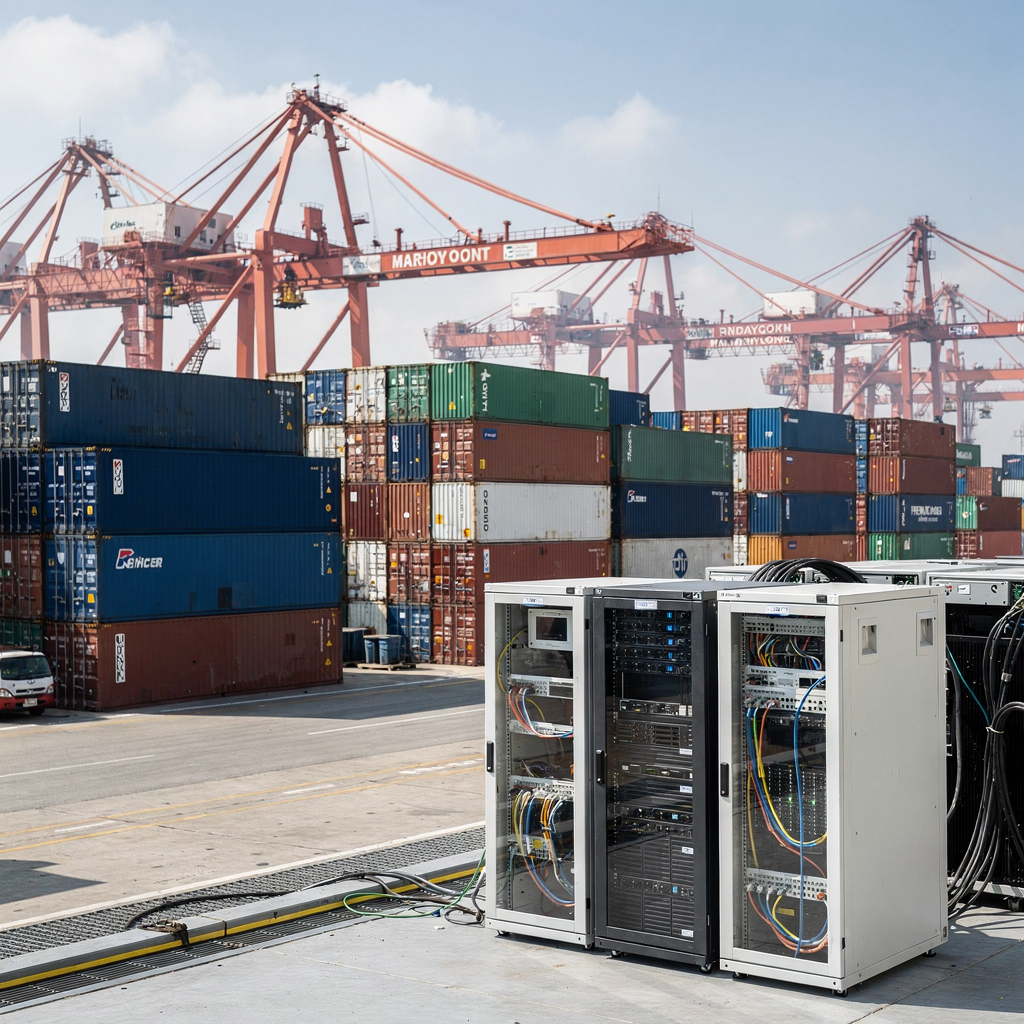
cloud computing: benefits of cloud for container ports
Cloud computing reshapes how container ports manage operations, and it does so by offering massive scale and centralized control. For planners and terminal operators the power of the cloud lets them process large volumes of telemetry, manifest records, and camera feeds in one place. This centralized approach supports integrated decision-making across quay, yard, and gate, and it helps stakeholders share insights with supply chain partners. The benefits of cloud for ports include scalable storage, pooled compute resources, and unified analytics so teams can see patterns that single terminals might miss. Large ports produce an extraordinary amount of data daily; for example, some major terminals generate over 10 TB per day from sensors and video sources report, and cloud platforms are built to absorb that volume.
Pay-as-you-go cloud services reduce upfront capex and let ports scale analytics when needed. Teams can run complex AI workloads and train an ai model on months of aggregated activity in a secure data center without buying racks of hardware. Cloud providers and cloud service providers supply managed databases, GPU instances, and tools to version models. Using a cloud platform makes it simple to spin up simulations and run what-if scenarios across container terminals. That capability ties directly to strategic planning and long-term optimization, and it supports cross-port benchmarking.
Cost efficiency comes from economies of scale. Port operators avoid idle compute power and pay only when they run analytics jobs or retrain models. For terminals that want both analytics and compliance, cloud architecture can centralize logs, encryption keys, and access controls. At Loadmaster.ai we train reinforcement learning agents initially in a simulated environment and then use cloud infrastructure to host larger training runs. This workflow lets our agents learn policy with scale and then be tuned for a specific terminal. If you want to read more about cloud-native approaches for terminals, see our guide on cloud-native software for container port operations here.
edge computing: benefits of edge computing and real-time data at ports
Edge computing brings processing closer to machines and sensors. In a port this matters because cranes, AGVs, and cameras need immediate feedback. Edge AI devices perform inference at the source to reduce delay. When a safety alarm or a crane motion decision is required, systems that deploy them at the edge can respond in milliseconds. Edge computing and cloud together provide a balance: local systems secure rapid reaction and the cloud handles heavy analytics. Edge computing reduces the need to send raw video streams offsite and lowers bandwidth costs. Studies suggest local filtering and preprocessing can cut network traffic by up to 80% according to industry guides.
Low latency is the headline advantage of edge solutions. Edge AI can trim response times to under 10 milliseconds, which supports automated crane control and real-time security alerts research shows. Ports often host on-site servers, embedded gateways, and hardened edge device appliances. These units run lightweight ai model inference, accept telemetry from PLCs, and coordinate with terminal operating systems. They process data locally so only summaries or events are forwarded to the central cloud, and they improve resilience during network outages.
Security improves because sensitive manifests and high-resolution imagery remain on-premise when necessary. Edge computing also supports local encryption and policy enforcement to meet EU data-sovereignty requirements. For teams that want to learn how edge can reduce response time and maintain uptime, our analysis of low-latency data processing for container terminal AI solutions covers practical deployment patterns in more detail. If the goal is to combine fast local control with strategic cloud analytics, edge computing and cloud are the right pair for ports.
Drowning in a full terminal with replans, exceptions and last-minute changes?
Discover what AI-driven planning can do for your terminal
edge ai vs cloud ai: key differences between edge ai and cloud processing
Comparing edge AI vs cloud reveals clear trade-offs. Edge AI delivers fast local inference for operational control, and cloud systems provide large-scale training and cross-terminal analytics. The key differences between edge make themselves obvious in latency, compute limits, and network reliance. On latency, edge responses can fall below 10 ms while cloud response times often range from 50 to 200 ms under normal network conditions studies note. That gap decides whether an AI decision can safely control a moving crane or just inform planning dashboards.
Compute power and compute resources are not equal. Cloud data centers host abundant GPUs and tuned infrastructure. They support long-running training jobs where ai model parameters are updated across many iterations. In contrast edge devices contain constrained processors and smaller memory footprints. As a result you must design edge ai models to be efficient, and you may keep heavier models in the cloud. This pattern means models are trained in the cloud and then deployed at the edge for inference, which balances capability and speed.
Network dependency differs too. Cloud systems depend on stable links and can be affected by outages, whereas edge of a network allows local continuity. That makes edge ai and cloud ai a complementary pairing. For ports seeking robust operations the recommended approach is hybrid: let edge AI handle immediate decisions while the cloud supports predictive maintenance, deep analytics, and long-term optimization. For readers interested in how RL agents interact with both layers, the simulation-first ai approach at Loadmaster.ai explains how training in simulated environments uses cloud resources and then moves policies to live terminals here.
edge computing vs cloud: performance, latency and security
Performance in terminal operations depends on matching workload to the right environment. Edge computing vs cloud choices affect throughput and control loops. For real-time control, edge systems reduce loop delays and keep essential functions active during network slowdowns. For bulk analytics like fleet-wide utilization and long-range forecasts the cloud offers scale. Throughput of streaming video and telemetry can be managed by local preprocessing, and this reduces the load on cloud servers and cuts costs.
Latency matters for safety and precision. Edge AI reduces control loop delay and reduces jitter, which helps crane motion profiles and collision avoidance. Conversely, cloud processing is acceptable for non-critical analytics and for training ai algorithms that improve over time. A balanced design routes immediate sensing and actuation through edge nodes while non-urgent tracking and planning are processed in a central data center. This split gives both speed and breadth.
Security and data sovereignty receive special attention in ports. Edge helps with local retention and encrypted storage to meet regional rules like the EU AI Act. Centralized cloud architectures offer strong identity and access management, and cloud providers maintain hardened defenses. For resilience, design systems so critical controls function if the cloud is unreachable. Orchestration complexity increases with distributed edge fleets. Deploying edge devices across a terminal requires robust update mechanisms and monitoring. For port operators who want practical patterns, see our guide on implementing dual cycling and equipment allocation which outlines orchestration steps for real operations read more.
Drowning in a full terminal with replans, exceptions and last-minute changes?
Discover what AI-driven planning can do for your terminal
use edge computing: combining real-time edge insights with cloud processing
To use edge effectively you need clear hybrid workflows. Local inference handles immediate tasks, and aggregated outputs feed the cloud for deeper analysis. In practice a terminal will run object detection and collision warnings on an edge device, then send metadata and events to a centralized cloud server for trend analysis. This pattern reduces bandwidth and keeps critical control loops local. For example, only container movement summaries and exception records are sent to the cloud, rather than hours of raw video.
Hybrid workflows support continuous improvement. You can train an ai model in the cloud using historical data and simulated runs, and then deploy them at the edge for live inference. Periodically the cloud retrains models with new telemetry and updated KPIs, and then sends model updates to edge units. That cycle lets teams balance model complexity and responsiveness. Deploying edge introduces challenges: model distribution, version control, and rollback capabilities must be robust. Deploying edge also requires secure channels for updates, and orchestration tools that handle hundreds of devices.
One efficient pipeline filters and compresses data locally. Edge nodes process raw signals to extract events, they aggregate metrics, and then they forward those metrics to central cloud services. This approach makes cloud analytics both cost-effective and timely. Loadmaster.ai’s JobAI and StackAI operate within this pattern: closed-loop policies run on local controllers while strategic retraining occurs in a cloud platform. For a deeper look at exception handling and human-in-the-loop vessel planning, our workflow piece covers coordination patterns between human planners and automated agents see the case study. If you want to learn how to process data locally for immediate decision making, design your pipeline so that only summaries are sent to the cloud and full records remain on-site unless needed.
edge and cloud ai benefits: ai development and future of edge
Cloud and edge AI benefits combine to accelerate ai development and operational outcomes. In the cloud teams run large-scale simulations and train agents, and at the edge they deploy lean inference engines to act fast. Strategic analytics, like predictive maintenance and cross-port planning, rely on aggregated historical views in the cloud. For example, predictive maintenance models that detect bearing wear benefit from long-term trend analysis processed in a central data center. These models then inform on-site systems that schedule inspections and adjust equipment usage.
Trends on AI show a steady move toward smaller, optimized models on edge hardware. Model compression, quantization, and specialized inference runtimes let edge ai models run with limited memory and power. This trend supports more capable ai at the edge while keeping costs down. The future of edge includes broader 5G coverage, better on-site compute modules, and clearer rules on data sovereignty in regions like the EU. That combination will let terminals keep sensitive data locally while still using cloud resources for heavy training.
For terminal operators the choice is practical: design for hybrid from the start and plan updates, governance, and rollback strategies. Loadmaster.ai’s approach uses simulation-first training to produce policies that are cold-start ready, then refines them with online feedback. This reduces the need for vast historic datasets and speeds deployment. Looking ahead, advances in on-device AI and improvements in cloud architecture will let ports run smarter, safer, and more efficient operations. To explore trends in port automation and what to expect next, see our trends in container port automation 2026 article here.
FAQ
What is the main difference between cloud and edge AI for ports?
The main difference lies in where processing happens. Cloud AI runs heavy analytics and training in remote data centers while edge AI performs inference close to equipment for faster response.
Why is low latency important for terminal operations?
Low latency matters because cranes and vehicles require immediate commands to maintain safety and efficiency. Delays increase the risk of errors and reduce throughput.
Can terminals use both cloud and edge together?
Yes. Hybrid designs let edge handle real-time control while the cloud supports strategic analytics and model training. This split balances speed and scale.
How much data do container ports typically generate?
Large terminals can produce terabytes daily; some report over 10 TB per day from sensors and video. This scale favors cloud storage and selective local processing source.
What are common edge devices used in ports?
Common hardware includes rugged gateways, on-site servers, and embedded accelerators. These devices run inference, filter raw feeds, and act as the first layer of automation.
How do cloud platforms help AI development for terminals?
Cloud platforms provide compute resources for large-scale training, simulation environments, and storage for aggregated datasets. They enable teams to run experiments and retrain models efficiently.
How does using edge reduce bandwidth costs?
Edge nodes pre-process and compress raw data, sending only summaries or events to the cloud. This can cut network traffic by up to 80% in some deployments reference.
What security advantages does edge computing offer?
Edge keeps sensitive records and high-resolution imagery on-premise, reducing exposure. This approach also eases compliance with regional rules like EU data controls.
How do updates work for distributed edge fleets?
Updates require robust orchestration, secure channels, and rollback plans. Best practice is to stage updates in a sandbox, test in a pilot, and then roll out gradually.
How can Loadmaster.ai help combine edge and cloud for terminals?
Loadmaster.ai trains agents in simulation using cloud infrastructure and then deploys optimized policies for live operations. This method reduces dependence on historical data and supports real-time adaptation in the terminal.
our products
 stowAI
 stackAI
 jobAI
jobAI
Innovates vessel planning. Faster rotation time of ships, increased flexibility towards shipping lines and customers.
Build the stack in the most efficient way. Increase moves per hour by reducing shifters and increase crane efficiency.
Get the most out of your equipment. Increase moves per hour by minimising waste and delays.
stowAI
Innovates vessel planning. Faster rotation time of ships, increased flexibility towards shipping lines and customers.
stackAI
Build the stack in the most efficient way. Increase moves per hour by reducing shifters and increase crane efficiency.
jobAI
Get the most out of your equipment. Increase moves per hour by minimising waste and delays.