
container: Understanding Automated Export Container Remarshaling
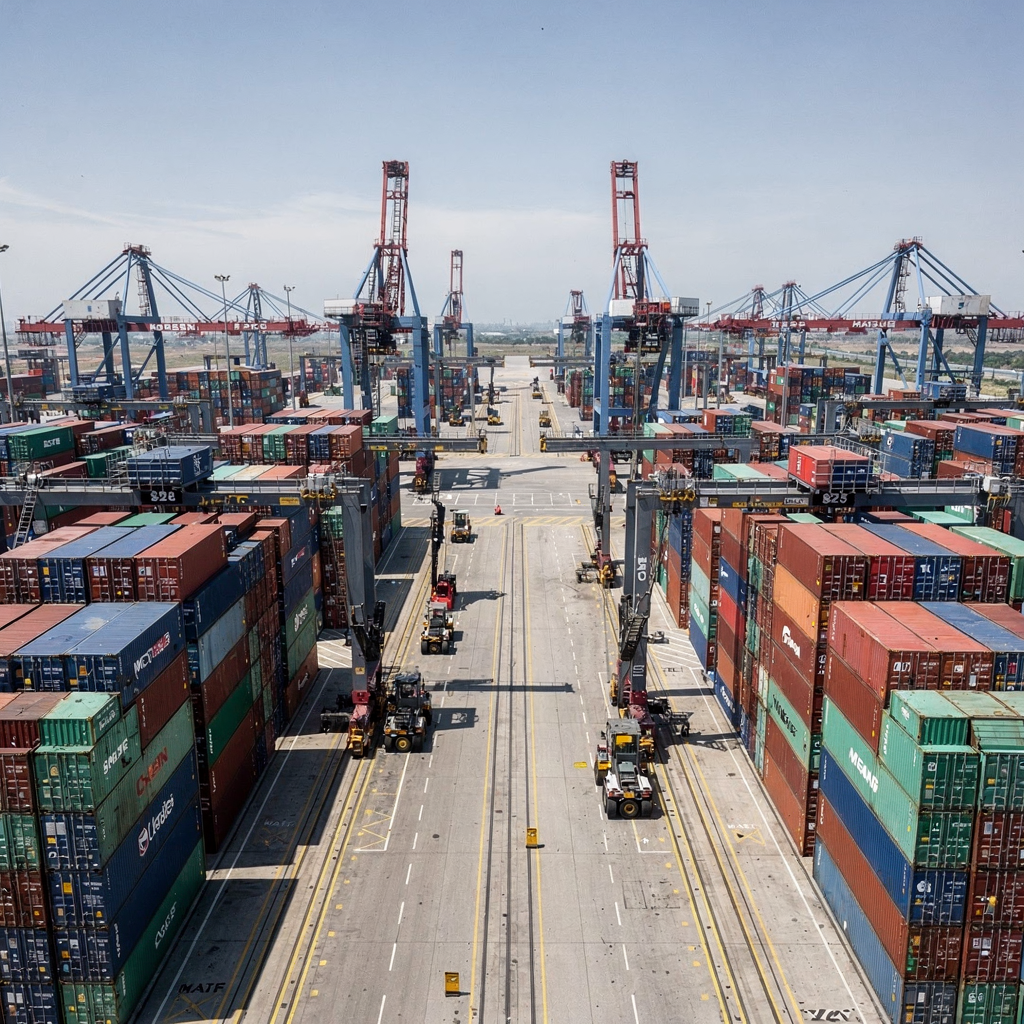
Remarshaling describes the deliberate rearrange of export boxes inside a yard so that they are ready for fast retrieval and loading. In automated settings the operation takes on extra importance. Automated container terminals impose perpendicular block layouts. As a result inbound and outbound boxes share blocks and the storage pattern matters. That shared use forces operators to move stacks in advance. The goal is to reduce delays at the quay and to minimize driving distances for yard equipment. Studies report measurable gains. For example, optimized plans can reduce expected retrieval time by up to 15–20% (Inbound container remarshaling problem in an automated container terminal). At the same time research shows overall handling efficiency gains of roughly 10–25% when yards use data-driven strategies (Yard Operations and Management in Automated Container Terminals). Those percentages translate into faster ship service and lower cost per move. They also improve terminal throughput and customer reliability. The career of a planner changes. Instead of firefighting, planners can run proactive policies that protect crane productivity and yard balance. Companies like Loadmaster.ai use simulation-first AI to train agents that propose stowage and stack placements, and then test them in a digital twin before live rollout. For more on our simulation approach see the article on simulation-first AI for inland terminal optimization. The literature now treats remarshaling as a strategic lever rather than a simple cost. For instance a recent review notes that “remarshaling is no longer an avoidable cost but a necessary operation to achieve higher automation efficiency and throughput” (MDPI). Finally, ports such as rotterdam increasingly plan their storage with these findings in mind. As a result port container turnaround can improve and downstream logistics become more predictable.
allocation: Yard Space Allocation Strategies
Smart space allocation reduces travel and speeds loading. First planners separate short-term locations from long-term stacks. Next they assign slots by predicted retrieval order. That assignment is dynamic and data-driven. For example appointment systems smooth peaks and reduce gate congestion. Appointment-based workflows assign priority pockets near the quay. In addition yard templates guide automated pickers and stacking cranes. A good yard template reduces unnecessary relocation and helps the yard crane stay productive. Many terminals adopt predictive assignment rules that place containers with similar loading slots together. That approach cuts driving time and the number of rehandles. Simulation and optimization support those policies. Operators often run what-if runs before committing to a template. Loadmaster.ai can spin up a digital twin and train StackAI to place and reshuffle so that the yard remains balanced and travel distances fall. See our piece on moving from rules to AI for more context from rule-based planning to AI optimization in port operations. In practice an allocation problem is solved under many constraints. Those constraints include stack height limits, crane reach, and safety zones. When the system forecasts outbound containers the model reserves nearby slots. Then it adjusts when a vessel schedule shifts. The method reduces queuing at the quay and keeps cranes moving. In the best implementations numerical policies are updated every few minutes. Consequently they adapt to late gates, delays, and unexpected transshipment flows. For terminals moving toward automation, the combination of appointment systems and predictive allocation yields measurable improvements in operational efficiency. Finally, those improvements lower fuel use, reduce emissions, and help terminals meet sustainability targets; for example see our analysis on sustainable port operations sustainable port operations with AI.
Drowning in a full terminal with replans, exceptions and last-minute changes?
Discover what AI-driven planning can do for your terminal
stack: Stack Management and Constraints
Stack design governs how fast the yard can move boxes. Operators must respect stack height limits. They must also consider weight distribution and crane reach. Stacking cranes and yard crane equipment have fixed travel and lift envelopes. So planners define allowed stack profiles. Those profiles tell the system where heavy or high-priority boxes sit. When stacks are deep, the top containers block the ones below. That blocking increases rehandles. To prevent that, planners stage high-turn containers on top or in access aisles. Also, equipment utilization improves when stacks are arranged to match crane cycles. For example, pairing quay sequences with adjacent stacks reduces empty moves. A key metric is utilization of stacking cranes and RTGs. Optimised stack layouts raise utilization and throughput. Several case studies show fewer equipment moves after layout changes, and higher crane productivity per hour. One benchmark reported handling efficiency rising by about 10–25% after adopting automated placement strategies (Yard Operations and Management in Automated Container Terminals). Stack configurations also influence safety and load limits. Weight constraints prevent placing very heavy containers above fragile units. Therefore stowage planning and the stack plan must interact. That interaction is nontrivial, because the yard must service multiple vessels and transshipment demands. In this situation container movement needs to be choreographed. Planners use simple heuristic rules for day-to-day shuffles, and more advanced policies for peak windows. When terminals combine those rules with trained agents they achieve both consistency and flexibility. For technical readers, discrete and combinatorial constraints make the scheduling problem challenging. Yet pragmatic templates reduce complexity, and automated controllers manage the rest. The outcome is less crowding, shorter crane cycles, and improved operational velocity.
container stacking: Rehandling-Free Container Stacking Plans
Rehandling adds cost and delays. A rehandling-free intra-block strategy reduces those penalties. The technique aims to stack containers so that no one inside a block needs to be moved twice for the same vessel call. Practically, operators build stacks that follow the vessel loading sequence. That approach is called a rehandling-free intra-block remarshaling plan in the literature. To reach that state many terminals run algorithms that simulate future moves and then lock high-turn boxes into accessible slots. There are two main solution families. One uses greedy heuristics and simple priority rules. The other uses formal optimization and search. Heuristic rule approaches are fast, and they often work well in real time. However they cannot always guarantee minimal moves. Conversely, optimisation formulations can produce optimal stacking plans, but they require more computation. A hybrid path blends both methods. For example systems may run a fast greedy pass, and then improve the result with a local search. In research, generating a rehandling-free intra-block remarshaling method has reduced extra moves significantly. Quantitatively, eliminating unnecessary moves can cut handling costs and delays by up to 15% according to empirical studies (Optimization of yard remarshalling operations in automated container terminals). Those savings come from fewer crane shifts, lower fuel for yard tractors, and shorter queues at the quay. Also the plan frees up stacking cranes for other work, which raises overall productivity. In practice, Loadmaster.ai’s StackAI can propose these stacking patterns in a sandbox, test them, and then hand over executable moves with safe guardrails. That reduces reliance on historical rules and preserves performance across shifts and personnel changes.
Drowning in a full terminal with replans, exceptions and last-minute changes?
Discover what AI-driven planning can do for your terminal
allocation problem: Modelling the Container Allocation Problem
Formal models give planners reliable guidance. Researchers model yard allocation and remarshaling as mixed-integer or integer linear programs. The inbound container remarshaling problem has dedicated formulations in the literature (Mixed-Integer Linear Programming Formulations for the Remarshaling Problem). Those models try to minimize a cost function that blends crane waiting, travel distance, and rehandling. Move-based formulations count each relocation move explicitly. Allocation-based formulations assign final slots directly and infer needed moves. The trade-off is clear. Move-based models often yield higher fidelity, but they grow combinatorially and hit computational limits fast. Allocation-based models shrink the search space, and they solve larger instances faster. To bridge the gap many teams adopt hybrid meta-heuristics that blend greedy initialization with local search and simulated annealing. Such hybrid methods can jointly optimize quay and yard operations, so they align crane scheduling with yard tasks (A Hybrid Meta-Heuristic Approach for Solving Single-Vessel Quay and Yard Operations). In experiments, numerical experiments show that these hybrids find near-optimal solutions within acceptable run times (Optimization of yard remarshalling operations). At the same time transportation research in this area evaluates trade-offs between model fidelity and solver time (Optimization study). For practice, planners often use a two-stage approach. First they run a fast allocation pass to create a yard template. Then they refine critical blocks with a local mixed-integer solve. In optimization parlance this is a decomposition strategy. For terminals that seek automation-ready policies, simulation-trained agents can approximate the mixed-integer optima without consuming large historical datasets. This technique reduces the need for heavy computational runs in live shifts, and it produces robust, executable plans that respect stacking, weight, and equipment limits. Authors like Liu and Yang have shown benefits of combined allocation and scheduling in joint models. For those seeking deeper technical background, see the treatments in operations research and the european journal of operational research.
berth allocation: Integrating Berth Allocation with Yard Operations
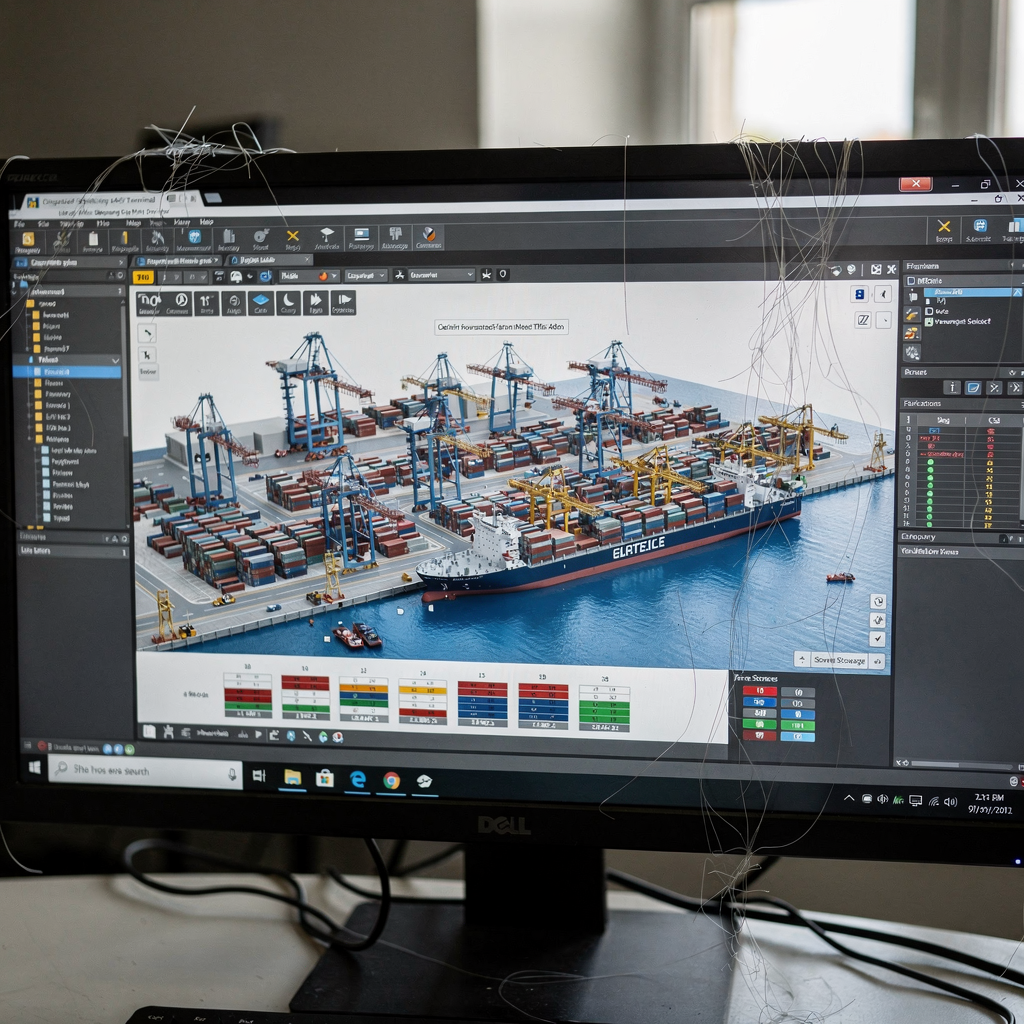
Synchronising berth and yard plans improves the full service chain. When quay crane schedules match yard readiness, ships meet loading windows faster. To achieve that, planners co-optimize berth allocation and yard remarshaling. Models link quay crane assignments with yard moves. They then produce schedules that keep cranes busy and reduce the number of containers to be shifted inside the yard. In this integrated setup berth allocation decisions drive which stacks should be pre-staged. The model balances crane productivity and yard congestion. For terminals that handle transshipment flows, integration prevents bottlenecks where mainline calls conflict. Also real-time rescheduling handles delays, and it adapts berth plans to late arrival patterns. One practical outcome is reduced loading time at the quay and fewer idle crane cycles. Coordinated planning lowers the chance that a stack blocks containers to be loaded. Additionally, combining berth allocation with yard control improves equipment utilization and reduces fuel costs. Some integrated frameworks embed crane scheduling directly inside the yard optimizer. Those frameworks are useful for ports that have dense vessel rotations and limited storage. When berth allocation is co-optimised, empirical studies consistently report improvements in throughput and reduced waiting. For tangible reading on execution and crane sequencing see our article on quay crane split planning automated container terminal crane split planning software. Finally, integrated systems must also manage exception flows. For those, human-in-the-loop workflows and resilient AI policies ensure safe overrides and steady service; explore our approach in exception handling workflows with human-in-the-loop vessel planning. The result is an end-to-end uplift in seaport performance and customer satisfaction, and more predictable arrival-to-departure cycles.
FAQ
What is remarshaling and why does it matter?
Remarshaling is the rearrange of containers inside the yard to improve retrieval for export. It matters because optimized plans reduce crane idle time, cut driving distances, and speed vessel loading.
How much can optimized remarshaling improve retrieval time?
Research reports reductions in expected retrieval time of roughly 15–20% when optimization is applied (example study). That lower retrieval time converts into faster quay cycles and better terminal throughput.
Do appointment systems help yard allocation?
Yes. Appointment systems smooth inbound peaks and allow the yard to pre-stage export containers. This reduces gate queues and concentrates moves near the quay.
Can automated terminals avoid rehandling entirely?
Not always, but rehandling-free stacking plans aim to eliminate unnecessary moves inside blocks. Combining heuristics with optimization can significantly lower rehandling and related costs.
What models do researchers use to plan remarshaling?
Models range from greedy heuristics to mixed-integer programming and integer linear formulations. Hybrids that mix fast heuristics with local search offer a pragmatic compromise between speed and solution quality.
How does berth allocation interact with yard moves?
Berth allocation sets the time windows for cranes. When berth schedules align with yard staging, the number of internal relocations falls and cranes spend more time loading and less time waiting.
Can AI replace yard planners?
AI can augment planners by testing many scenarios and producing robust templates faster than manual methods. Systems like the reinforcement-learning agents developed by some vendors learn to balance quay productivity and yard flow while keeping planners in control.
Is simulation necessary before deployment?
Simulation is valuable. It produces safe, tested policies and avoids rollouts that lock in bad practices. Using a digital twin helps verify agent decisions under realistic disruptions.
What are the main constraints in stack design?
Key constraints include stack height, weight limits, crane reach, and safety zones. These constraints shape where high-turn export containers can be placed for easy access.
Where can I read more about integrating quay and yard optimizations?
See the literature on hybrid meta-heuristics for joint quay and yard problems (example paper) and practical engineering articles on crane split planning and AI integration at Loadmaster.ai crane split planning software.
our products
 stowAI
 stackAI
 jobAI
jobAI
Innovates vessel planning. Faster rotation time of ships, increased flexibility towards shipping lines and customers.
Build the stack in the most efficient way. Increase moves per hour by reducing shifters and increase crane efficiency.
Get the most out of your equipment. Increase moves per hour by minimising waste and delays.
stowAI
Innovates vessel planning. Faster rotation time of ships, increased flexibility towards shipping lines and customers.
stackAI
Build the stack in the most efficient way. Increase moves per hour by reducing shifters and increase crane efficiency.
jobAI
Get the most out of your equipment. Increase moves per hour by minimising waste and delays.