
crane operations at deepsea container port quays: challenges and metrics
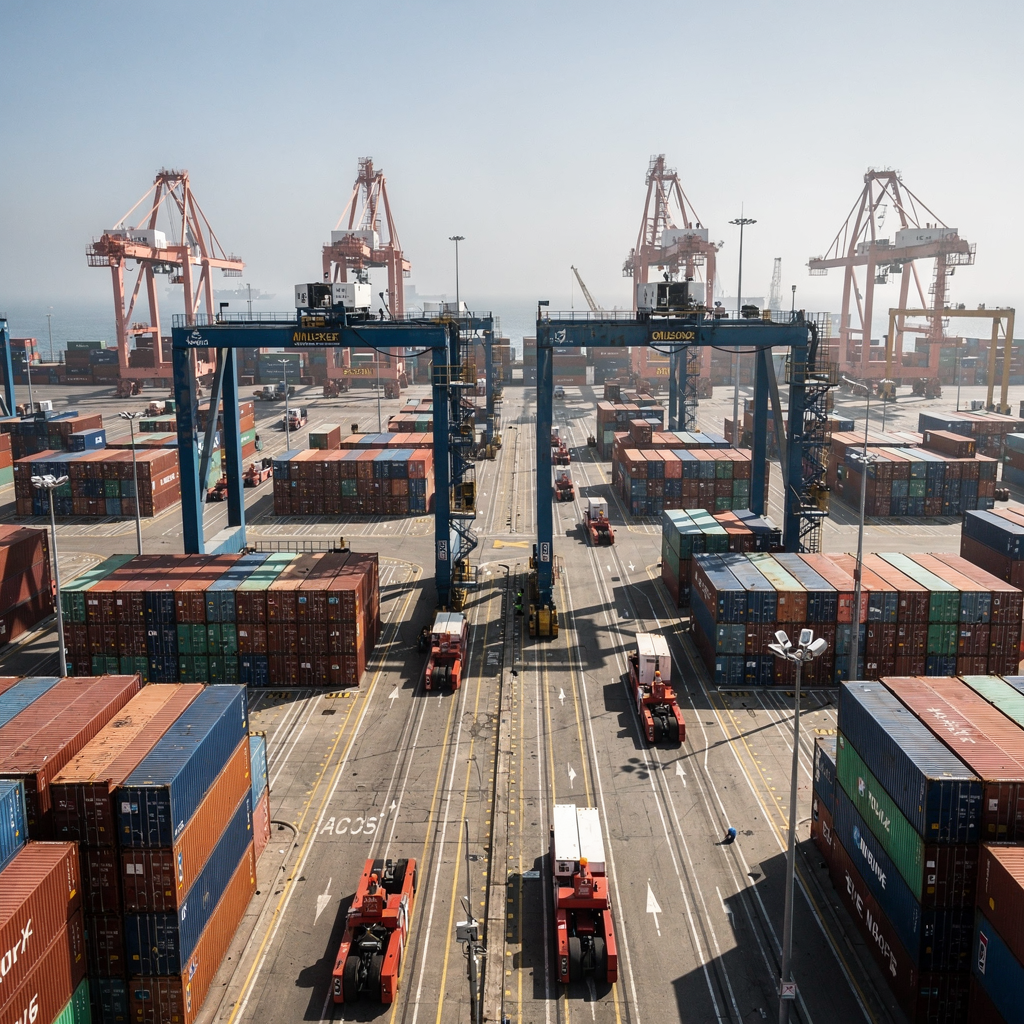
Quay cranes are the heavy lifters at the ship’s edge and they drive ship-to-shore productivity. They load and unload containers directly between vessel and shore. In multi-lane operations, several quay cranes work side by side along a berth and must avoid interference. The scheduling of these assets shapes vessel turnaround and terminal rhythm. Key performance indicators measure that rhythm: vessel turnaround time, crane intensity, and idle time. Crane intensity describes how many cranes work per vessel or TEU and influences berth occupancy. Idle time captures lost productive minutes when cranes wait for containers, trucks, or yard slots. Reducing idle time raises throughput and lowers operating cost.
Congestion hurts throughput and increases emissions. When quay cranes queue or block each other because of poor coordination, vessels wait longer and trucks idle longer at gates. Studies quantify the gains from smarter scheduling: improving crane intensity to match vessel calls can boost throughput by up to 15% (Container Port Performance Index 2023). Coordinated plans that cut idle time and crane interference can lower handling time by around 10–20% (MDPI study on terminal productivity). That reduction translates into fewer diesel hours for yard trucks and quay equipment, and therefore lower energy use and emissions. Terminals chasing efficiency must quantify these trade-offs and balance quay productivity versus yard congestion and driving distance. Loadmaster.ai helps planners model those trade-offs with reinforcement learning agents that balance KPIs in a sandbox digital twin. For readers seeking berth-level forecasting and how quay density interacts with berth planning, see our predictive berth availability modeling resource predictive berth availability modeling.
In practice, the quay crane scheduling problem appears in many guises. Planners face scheduling problems driven by vessel arrival variability, tidal influence at container terminal, and stack congestion. The problem in a container terminal is rarely isolated: quay cranes must align with yard flows, gate windows, and ITS constraints. Realistic metrics pair throughput with energy consumption at container terminals so decision makers can measure both productivity and sustainability. To improve the efficiency of container operations, terminals must treat quay crane allocation as both a local and a system-wide optimization. The integrated scheduling problem forces planners to coordinate cranes, berths, and yard resources in one coherent plan.
yard crane: roles and integration in automated terminals
Yard crane is the workhorse that handles container stacking and retrieval in the container yard. It moves containers between storage blocks, feeder lanes, and automated guided vehicles. In automated container terminal configurations, yard cranes perform repetitive pick-and-place tasks with precision and speed. Their functions include placing inbound containers, rearranging stacks for easy retrieval, and supporting export loading sequences. Efficient yard crane deployment reduces rehandles and supports quay productivity by presenting slots that minimize quay waiting. The strategy for yard crane scheduling therefore affects the entire terminal flow.
Integration between yard cranes and quay cranes relies on buffer capacity and predictable handoffs. Automated guided vehicle units move containers between quay and yard, so synchronising AGV cycles with yard crane tasks is essential. A common setup uses AGVs to shuttle containers from quay crane drop-off points to specific slots, and yard cranes to finalize placement. This pattern reduces driving distance and idle windows for quay cranes, and it supports minimal energy consumption at container operations when movements are optimised (see equipment move optimisation). Infrastructure needs for these systems include dedicated lanes, robust telematics, and a terminal operating system that supports low-latency telemetry. Terminals that aim to be U-shaped automated container terminal designs need clear routing, power supply for cranes, and resilient communications.
In automated settings, yard cranes in automated container setups must obey strict constraints and adapt to changing demand. The yard crane must manage container stacking patterns to protect future plans and reduce interference with truck flows. That calls for cranes that can reshuffle quickly and for control systems that prioritise minimal travel. Loadmaster.ai’s StackAI capability mirrors this thinking: it places and reshuffles containers to balance the yard, minimise travel, and protect future plans. The coordination of cranes in automated container terminals and AGVs creates a complex dance. To orchestrate it, terminals must upgrade both physical infrastructure and decision logic to support integrated scheduling of handling equipment and to reduce problems like rehandles and excessive travel.
Drowning in a full terminal with replans, exceptions and last-minute changes?
Discover what AI-driven planning can do for your terminal
yard crane scheduling: algorithms and real-time control
Yard crane scheduling blends heuristic rules and optimisation models to organise stacking and retrieval. Simple heuristics place inbound containers in the nearest available slot. Optimisation models weigh future retrieval demand, predicted vessel calls, and yard crane travel time to place containers where they reduce rehandles. Heuristic approaches are fast and robust, which helps when the terminal faces real-time disruptions. Optimisation delivers better long-run performance but needs reliable inputs. Many terminals now use hybrid methods: heuristics for execution and optimisation for strategic placement.
Dynamic scheduling to balance stacking area congestion demands adaptive control. Real-time sensors, TOS feeds, and AGV telemetry inform these adjustments. The yard crane scheduling must react to unexpected events like a late truck or a delayed vessel berth. Reinforcement learning strategies can simulate millions of scenarios and learn policies that balance conflicting goals, such as protecting quay productivity while minimising travel and rehandles. Loadmaster.ai’s StackAI is an example of a simulation-first agent designed for such problems; it learns policies against explainable KPIs and executes with guardrails so planners keep authority.
Data sources for adaptive decision support include terminal operating systems, crane telemetry, vessel stow plans, and gate manifests. AI-based decision support systems fuse these feeds and suggest actionable moves. For example, allocation and quay crane scheduling can be coordinated with yard crane placement to minimise handover wait. Solving the quay crane scheduling problem often requires linking yard crane schedules to quay assignments so cranes do not idle while waiting for yard availability. When AI agents simulate future yard states, they reduce the need for firefighting and improve consistency across shifts. Academic work underlines the value of combining operational research and big data analytics for such control (synergistic effect study). The scheduling method that combines fast heuristics, lookahead optimisation, and learned policies addresses the classic scheduling problems that trouble terminals.
crane scheduling and berth allocation: joint optimisation
When berth planning and crane deployment are synchronised, terminals unlock measurable gains. Integrated berth and quay crane planning balances vessel arrival times with crane intensity choices. Joint optimisation models treat berth allocation and quay crane as linked decisions. They schedule berths so quay crane assignment and scheduling produce steady workloads. This reduces peak congestion and prevents long stretches of idle time. Studies show that coordinated berth and crane scheduling can reduce handling time by 10–20% and improve throughput by roughly 15% when crane intensity aligns with vessel calls (productivity improvement study) and (Container Port Performance Index).
Many practical models address the berth and quay crane allocation problem as an integrated scheduling problem. The integrated scheduling of handling equipment with berth planning resolves conflicts like cranes competing for the same bay or yard slots. A typical formulation minimizes vessel makespan subject to crane availability constraints. Some models extend to the full crane assignment and scheduling problem, including quay crane allocation problem variants and specific quay crane assignment problems for complex berths. The berth allocation and quay crane connection ensures that a vessel assigned to a berth receives an executable crane plan, which decreases unexpected delays.
In terms of tools, terminals use mixed-integer programming, metaheuristics, and increasingly, machine learning. The allocation and quay crane assignment decisions can be produced offline and adapted online with rolling horizons. For example, a quay crane assignment problem that includes tidal influence at container terminal and variable call sizes yields more robust schedules. Loadmaster.ai complements these approaches by training RL agents in a digital twin to propose quay crane assignment and scheduling that respect yard constraints and dispatcher guardrails. For readers interested in vessel planning theory and how stow decisions affect crane needs, see our detailed guide on vessel planning container terminal vessel planning explained.
Drowning in a full terminal with replans, exceptions and last-minute changes?
Discover what AI-driven planning can do for your terminal
AGV integration and congestion-aware multi-lane scheduling
Automated guided vehicle routing ties quay cranes and yard cranes into one flow. AGVs move containers from quay crane drop zones to the container yard and back. Their schedules interact with quay crane cycles and yard crane placement. A mismatch creates queues at the quay and idle cranes. Congestion-aware multi-lane crane scheduling recognises AGV capacity and adapts crane pacing so vehicles arrive just-in-time. That coordination avoids crane interference and reduces waiting.
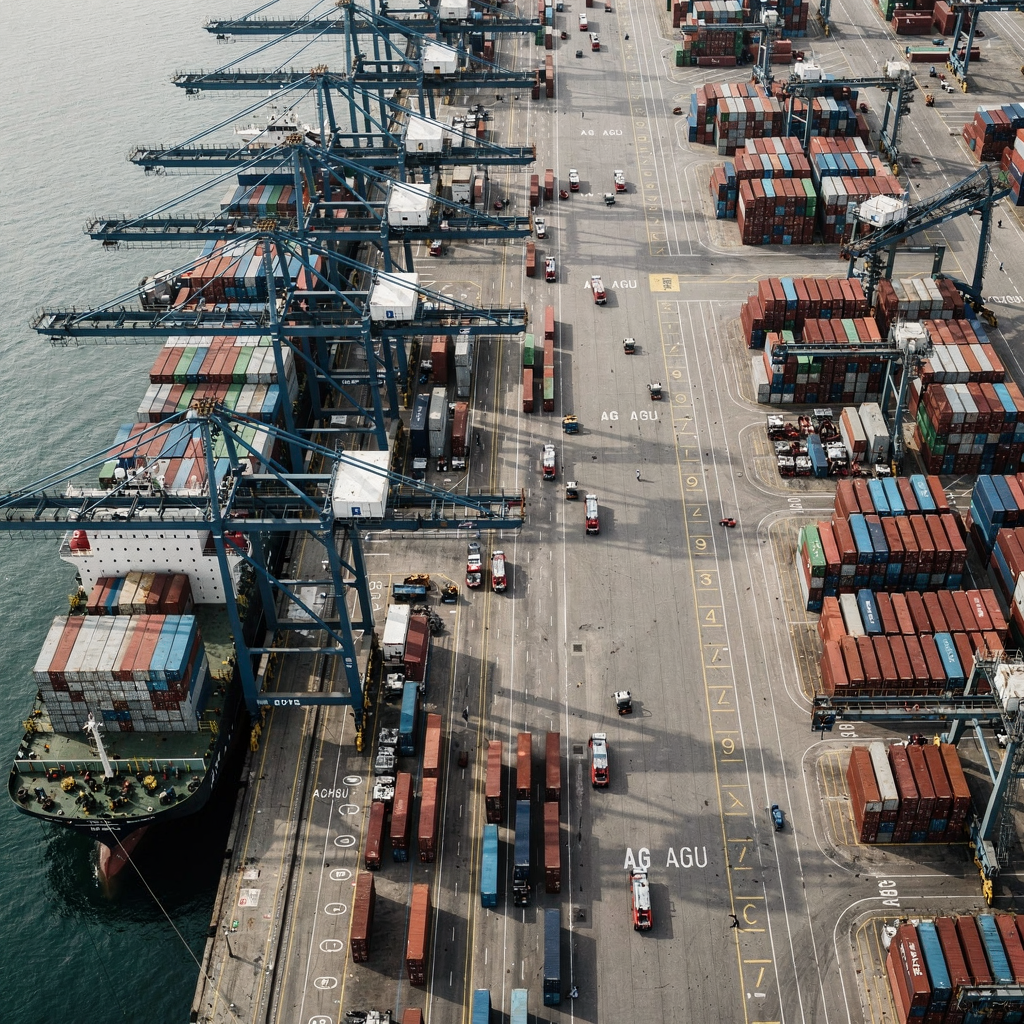
Real-time data analytics are central to reducing interference. Sensors on quay cranes, AGVs, and yard cranes stream telemetry that an orchestration engine uses to update plans. The agv scheduling problem is therefore coupled with crane schedules. By solving the agv scheduling problem alongside quay crane scheduling, planners can smooth peaks and prevent handover bottlenecks. Coordinated scheduling frameworks combine rule-based constraints with optimisation and learned policies to adjust both crane assignments and AGV dispatch in real time.
Congestion-aware multi-lane scheduling models consider lane-specific interference and crane walking times. They prevent unsafe overlap and enforce separation while optimising productivity. Applied research supports these ideas; integrated berth allocation and crane solutions show measurable performance gains when multi-lane constraints are included (Assessing performance of container slot allocation heuristics). For terminals seeking lower energy profiles, coordinated scheduling reduces driving distance and engine idle, offering a path to minimal energy consumption at container facilities. Loadmaster.ai’s JobAI demonstrates how dispatcher automation coordinates moves across quay, yard, and gate to cut wait times and keep equipment busy, which supports efficiency of automated container terminals.
Case studies and future directions
Major deepsea ports have faced visible pain from congestion. The LA-LB complex experienced gridlock and showed how berth misalignment and crane interference ripple across the supply chain. Ports that introduced coordinated scheduling and better resource scheduling saw clear improvements. Quantitatively, coordinated optimisation of equipment in ports delivered 10–20% handling time reductions and roughly a 15% throughput boost by aligning cranes with vessel calls (coordinated optimisation study). These outcomes translate into fewer truck hours, fewer idle vessels, and improved supply chain reliability.
Environmental benefits follow. Lower idle time reduces fuel use for quay cranes and yard vehicles and cuts energy consumption at container terminals. Studies that measure terminal productivity link reduced handling time directly to lower emissions (MDPI). Emerging trends include AI-driven optimisation, digital twins for sandbox testing, and evolving EU and global standards for AI governance in operations. Terminals that adopt simulation-first AI can realise cold-start benefits, avoiding the need for perfect historical data to improve performance. Loadmaster.ai uses simulation-trained RL agents to create policies that outperform historical averages and maintain operational guardrails to meet regulatory expectations.
Future tools will emphasise integrated berth and crane scheduling, automated gate coordination, and standards-based interfaces for data exchange. For terminals planning brownfield upgrades, our guide on brownfield versus greenfield automation offers practical steps and pitfalls to avoid brownfield vs greenfield automation. Digital twins and low-latency data processing will underpin adaptive control, while coordinated scheduling between quay cranes and yard cranes will remain central to improving the efficiency of container throughput. As maritime container volumes grow, ports that invest in scheduling optimization and integrated scheduling problem solutions will keep competitive edges and reduce systemic congestion.
FAQ
What are quay cranes and why do they matter?
Quay cranes are large ship-to-shore gantries that transfer containers between vessel and shore. They matter because their productivity directly affects vessel turnaround, berth occupancy, and overall terminal throughput.
How does yard crane scheduling affect quay operations?
Yard crane scheduling determines how quickly inbound containers clear the yard and become accessible for export. Poor yard crane deployment creates handover delays that make quay cranes idle and lowers crane intensity.
What is congestion-aware multi-lane crane scheduling?
It is a scheduling scheme that accounts for crane interference across adjacent lanes and coordinates resources to prevent blocking and queues. The approach reduces idle time and improves overall throughput.
Can AGVs improve coordination between quay and yard cranes?
Yes. Automated guided vehicle schedules bridge quay and yard tasks and remove truck variability. When AGVs are synchronised with cranes, handover waits drop and energy consumption at container terminals falls.
What quantitative gains can joint berth and crane optimisation bring?
Research shows coordinated methods can reduce handling time by 10–20% and raise throughput by up to 15% when crane intensity matches vessel calls (source). These figures depend on local conditions and implementation quality.
How do reinforcement learning agents help in terminal scheduling?
Reinforcement learning agents learn policies by simulating many scenarios in a digital twin. They propose decisions that balance multiple KPIs and adapt to disruptions without relying on historical mistakes.
Are there standards or best practices for integrating AI in ports?
Yes. Best practices include sandbox testing, operational guardrails, explainable KPIs, and adherence to applicable AI governance like EU frameworks. These measures ensure safe, auditable deployments.
What infrastructure supports automated yard crane systems?
Terminals need robust communications, reliable power, dedicated lanes for AGVs, and integration with the TOS. Low-latency telemetry and resilient control logic are also critical.
How does Loadmaster.ai fit into crane scheduling workflows?
Loadmaster.ai provides RL-based agents that train in a digital twin to optimise quay crane assignment and yard placement. The technology augments planners with executable policies that reduce rehandles and balance workloads.
Where can I learn more about berth forecasting and equipment move optimisation?
For berth forecasting, see our predictive berth availability study. For equipment move energy savings, review our optimisation guide on saving fuel in terminal operations (optimising equipment moves).
our products
 stowAI
 stackAI
 jobAI
jobAI
Innovates vessel planning. Faster rotation time of ships, increased flexibility towards shipping lines and customers.
Build the stack in the most efficient way. Increase moves per hour by reducing shifters and increase crane efficiency.
Get the most out of your equipment. Increase moves per hour by minimising waste and delays.
stowAI
Innovates vessel planning. Faster rotation time of ships, increased flexibility towards shipping lines and customers.
stackAI
Build the stack in the most efficient way. Increase moves per hour by reducing shifters and increase crane efficiency.
jobAI
Get the most out of your equipment. Increase moves per hour by minimising waste and delays.