
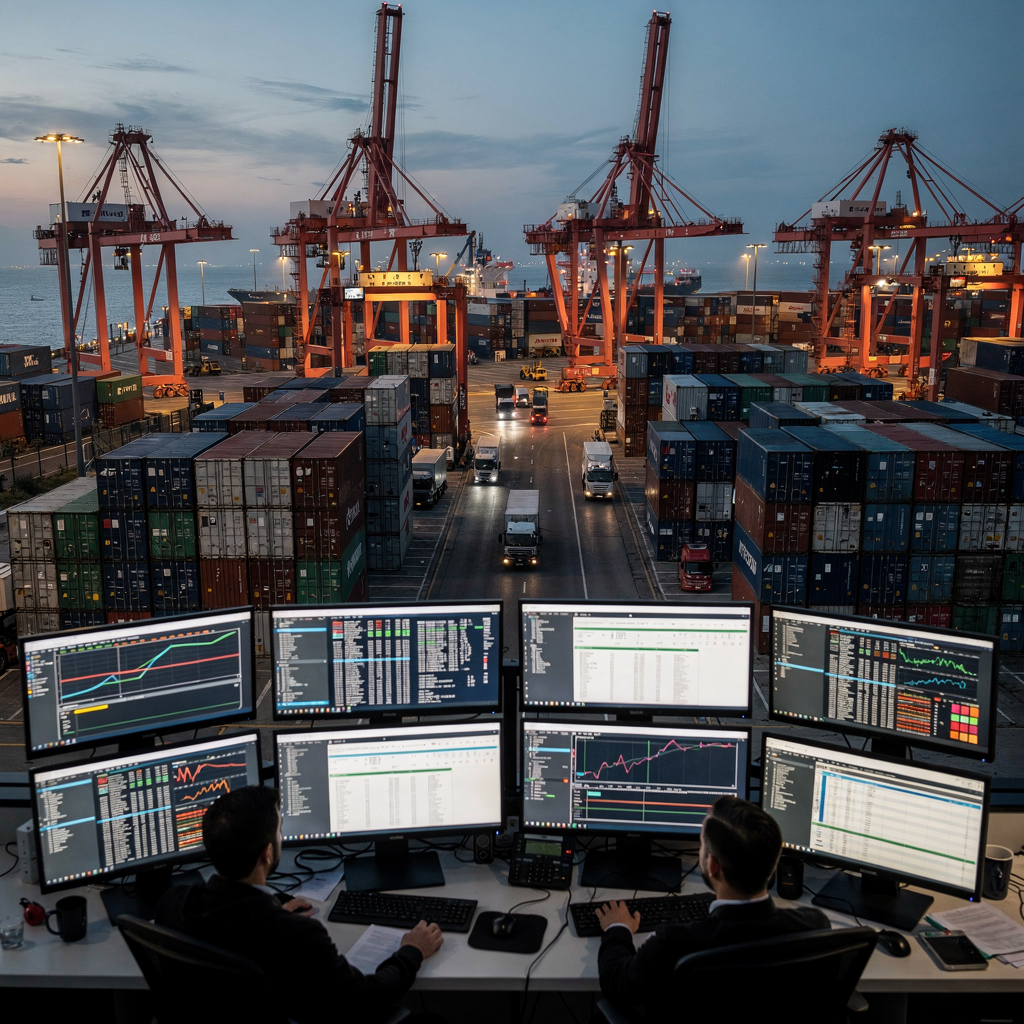
port operations and exception handling in container terminal operations
Port operations face constant disruption from congestion, weather, quay equipment faults, and customs delays, and those disruptions raise operational risk for shipping lines and carriers. Exception handling in container terminal operations focuses on identifying anomalies, flagging them, and applying swift corrective action to protect vessel schedules and protect KPIs. Research shows that “Port-related uncertainty is the dominant source of ship schedule disruptions” and that fact highlights why ports must adopt structured exception handling workflows (source).
Practically, an effective exception handling system blends automated alerts with human review and decision-making. First, sensors and IoT feeds monitor quay crane performance, gate queues, and container yard occupancy, and they stream telemetry in real-time to analytics platforms. Then, automated rules and early-warning models raise an alert when dwell time or container volumes deviate from expected ranges. Finally, a human operator evaluates context and approves a remediation plan, which may include berth re-sequencing, crane reallocation, or empty container repositioning. This human-in-the-loop pattern reduces human error while maintaining operational flexibility.
Ports that combine automated detection with human oversight report measurable improvements in schedule reliability and throughput. For example, studies indicate that HITL exception handling reduced vessel schedule deviations by up to 25% and improved container transshipment throughput by 15-20% (study, workshop). To implement this, port operators should map complex workflows, define escalation paths, and deploy decision support systems that surface the critical facts for rapid human intervention. Loadmaster.ai demonstrates one approach by training reinforcement policies in a digital twin so systems can suggest executable plans and reduce firefighting across shifts.
leveraging ai agents for real-time decision support in maritime logistics
AI agents can run continuous what-if analyses, and they can suggest actions to reduce idle time and improve moves per hour. Advanced AI enables terminals planning to simulate millions of possible schedules, and then recommend policies that respect constraints and optimize multiple objectives. Loadmaster.ai uses reinforcement learning to create StowAI, StackAI, and JobAI, and those agents improve vessel planning, yard placement, and dispatcher coordination in a closed-loop manner.
AI models can process AIS feeds, gate logs, and sensor telemetry in real-time and they can surface priority alerts for human review. For example, a predictive alert that a quay crane will exceed scheduled maintenance thresholds can prompt preemptive maintenance, reducing unplanned downtime and avoiding cascading delays. In practice, integrating artificial intelligence with existing TOS via APIs allows terminals to automate routine choices, and still keep humans in the loop for exceptions. The application of AI to anomaly detection in maritime environments can reach over 90% accuracy when human oversight refines the signals (source).
This decision support approach reduces operational cost and increases throughput while preserving safety and governance. AI agents advise, and humans decide; the balance reduces human error and speeds response. If you want technical context on vessel planning and policy-driven AI, see our primer on container terminal vessel planning explained. Also, read about dwell time analytics and prediction for further context on managing container dwell (dwell time prediction).
Drowning in a full terminal with replans, exceptions and last-minute changes?
Discover what AI-driven planning can do for your terminal
integrating smart port terminals automation with human-in-the-loop workflow
Smart port terminals combine automation with human expertise to maintain resilience, and they integrate TOS telemetry, PLC data, and cloud analytics into a single operational picture. Automation improves repeatable tasks such as automated stacking crane moves or gate processing, and human-in-the-loop workflows handle exceptions that require judgment. During deployment, terminals should design guardrails, explainable outputs, and audit trails so operators trust AI recommendations. Loadmaster.ai focuses on safe-by-design policies that include hard constraints and explainable KPIs to support EU compliance and operational governance.
Integrating AI into terminal operations requires careful data integration and role design. Sensor feeds from quay cranes, RTGs, and truck scanners must align with job schedules so teams can automate mundane tasks and escalate true exceptions. For example, when a container yard segment nears capacity, StackAI can suggest reshuffles that balance yard density and protect crane productivity. Then, a human yard strategist reviews the plan, adjusts priorities if needed, and authorizes execution. This loop maintains consistency across shifts and limits loss of tribal knowledge when planners rotate or retire.
Automated terminals present special cases; some models do not apply to fully automated cargo handling, and terminals must adapt AI strategies for unique equipment and flows (study). In practice, terminals should simulate operations in a digital twin, train policies with reinforcement learning to discover non-obvious strategies, and then deploy with operational guardrails. For a deeper dive into stacking crane control and automation pairing, see our article on automated stacking crane optimization. This approach helps reduce manual intervention, raise crane utilization, and minimize idle time while keeping humans in control of exceptions.
use case: predictive anomaly detection and predictive maintenance in container terminal environments
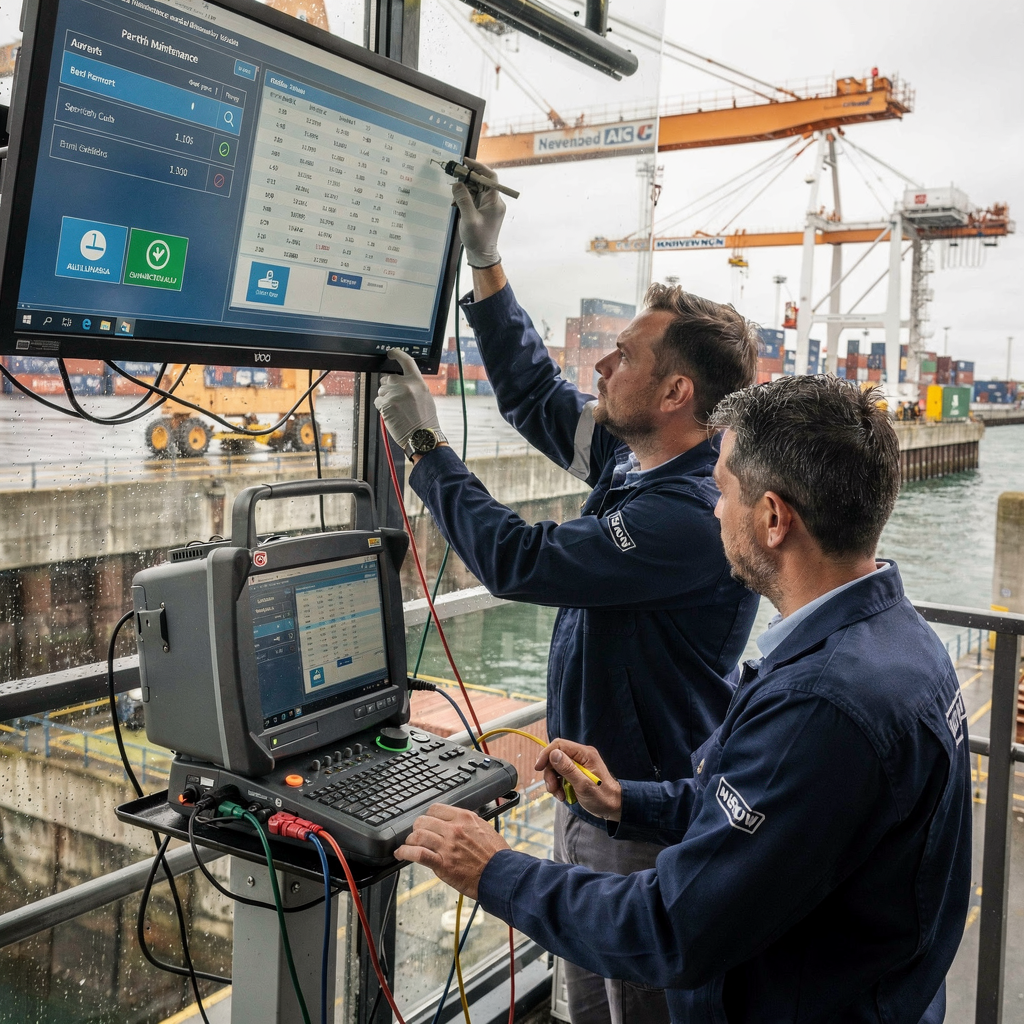
This use case shows how predictive analytics and predictive maintenance reduce downtime and protect vessel schedules. First, terminals collect telemetry from quay crane motors, gearboxes, and remote sensors, and they stream that data into analytics engines. Then, machine learning models detect deviation patterns that precede failures, and they raise alerts so planners can schedule service before a breakdown impacts a berth. The result reduces downtime and avoids costly rescheduling across the carrier network.
In trials, combining automated anomaly detection with human oversight improved anomaly detection accuracy above 90% when operators confirmed or corrected flags (source). Predictive maintenance models also free capacity by reducing idling and by increasing moves per hour on average. When an analytics engine forecasts a crane motor overheating, the system can trigger a maintenance window, and then reallocate quay crane tasks to maintain throughput. This use case also connects to predictive berth planning so the terminal can preserve berth occupancy and minimize vessel wait times (predictive berth availability).
To implement this, teams must build robust data pipelines, test models in simulation, and define human escalation rules. Predictive maintenance complements exception handling workflows by enabling operators to trade off short-term throughput and long-term equipment health. The net effect delivers measurable gains in reliability and reduces operational cost, and it prepares terminals for green ports targets by avoiding emergency repairs and reducing energy waste.
Drowning in a full terminal with replans, exceptions and last-minute changes?
Discover what AI-driven planning can do for your terminal
optimization of throughput and berth allocation with ai technologies for carrier supply chain
AI technologies support berth allocation, stowage sequencing, and equipment allocation to improve throughput and reduce operational cost. Reinforcement learning and optimization solvers can balance competing KPIs such as crane productivity, yard congestion, and driving distance, and they can propose actionable plans that minimize rehandles and cut container dwell. Loadmaster.ai uses a simulate-and-learn approach to avoid dependence on historical data, and that cold-start readiness helps terminals with limited clean history to adopt advanced AI quickly.
Effective berth allocation requires predictive insights into vessel ETAs, cargo handling rates, and current yard occupancy. By combining predictive arrival models with real-time sensor data, AI can suggest berth windows that reduce vessel berthing time and queueing. Studies show HITL exception handling improves schedule adherence and can reduce schedule deviations by up to 25% (study). This leads to measurable gains in throughput and fewer disruptions across the carrier supply chain.
In practice, terminals should integrate decision support systems into their operational control rooms, and they should allow planners to adjust optimization weights during peaks or disruptions. For specialized topics such as equipment pool optimization and equipment responsiveness, explore our posts on equipment pool optimization and on improving PLC-integrated AI systems (PLC-integrated AI). These resources explain how to reduce idle time, increase moves per hour, and keep quay operations aligned with yard strategy.
application of ai for container tracking, crane automation and downtime reduction in container handling
AI applications in container tracking, crane automation, and downtime reduction improve visibility and control across the terminal. Container tracking relies on combined AIS, gate logs, and yard sensors to map container dwell time, and then AI reconciles records to flag missing or misrouted units. That visibility helps manage empty container repositioning and reduces stacking conflicts in the container yard. A smart container port that uses analytics can reduce manual checks and streamline cargo handling.
Crane automation benefits when AI supplements controller logic with learned policies. For example, a quay crane may execute job sequences suggested by an AI agent to increase moves per hour while minimizing yard interference. The use of reinforcement learning helps the system to discover policies that balance throughput and yard congestion, and the deployment includes human oversight so operators can accept or modify recommended sequences. This application of AI reduces downtime and lowers operational cost by smoothing peaks and protecting equipment health.
AI also improves container handling outputs by predicting container dwell and advising restow decisions to avoid cascading delays. Terminals can integrate AI via APIs into existing systems, and they can preserve audit trails for governance and for measuring measurable gains. With consistent use, AI adoption shifts operations from firefighting to proactive planning, and it helps port operators align tactics with longer-term port development and green ports goals. To learn about the relationship between yard density and crane rates, consult our analysis on yard density and gross crane rate.
FAQ
What is exception handling in container terminals?
Exception handling identifies, flags, and resolves unexpected events that disrupt planned operations. It combines automated detection with human judgment to restore normal flow and to protect vessel schedules and KPIs.
How do AI agents support real-time decision support?
AI agents analyze sensor feeds and historical patterns to surface alerts and recommend actions. They simulate options in a digital twin and then present ranked plans for human review, which accelerates decision-making and reduces idle time.
Can predictive maintenance really reduce downtime at a terminal?
Yes. Predictive maintenance uses sensor data and analytics to detect early signs of equipment degradation, and it schedules interventions before failures occur. That proactivity reduces unplanned downtime and helps maintain berth availability.
How does human-in-the-loop improve AI recommendations?
Human-in-the-loop lets operators validate and refine AI outputs, which increases trust and accuracy. The human feedback also retrains models or updates policies so future recommendations better fit operational realities.
What is the role of reinforcement learning in terminal automation?
Reinforcement learning trains policies through simulation to optimize multiple objectives that are hard to encode with rules. It helps create adaptive strategies for stowage, reshuffles, and dispatch that outperform historical averages.
Are these AI systems compatible with existing TOS?
Yes. Solutions like those described integrate via APIs and EDI so they work alongside terminal operating systems. This allows terminals to automate tasks while keeping existing operational processes and governance intact.
How do AI models handle berth allocation under port congestion?
AI combines ETA forecasts, equipment availability, and yard occupancy to propose berth windows that reduce queuing. It can also suggest contingency plans when port congestion threatens vessel schedules.
What measurable gains can terminals expect from AI adoption?
Terminals often see fewer rehandles, higher crane utilization, and shorter driving distances, which translate into improved throughput and lower operational cost. Studies report up to 25% improvement in schedule reliability in HITL workflows.
Is deploying AI risky from a regulatory perspective?
Deployments can follow safe-by-design principles with explainable KPIs and audit trails to support governance and upcoming AI regulations. Proper guardrails and human oversight reduce legal and operational risk.
How should a terminal start testing these technologies?
Begin with a digital twin to simulate policies and to measure outputs before live deployment. Use a sandbox and incremental rollout with operator training so the team learns to trust and to collaborate with the AI.
our products
 stowAI
 stackAI
 jobAI
jobAI
Innovates vessel planning. Faster rotation time of ships, increased flexibility towards shipping lines and customers.
Build the stack in the most efficient way. Increase moves per hour by reducing shifters and increase crane efficiency.
Get the most out of your equipment. Increase moves per hour by minimising waste and delays.
stowAI
Innovates vessel planning. Faster rotation time of ships, increased flexibility towards shipping lines and customers.
stackAI
Build the stack in the most efficient way. Increase moves per hour by reducing shifters and increase crane efficiency.
jobAI
Get the most out of your equipment. Increase moves per hour by minimising waste and delays.