
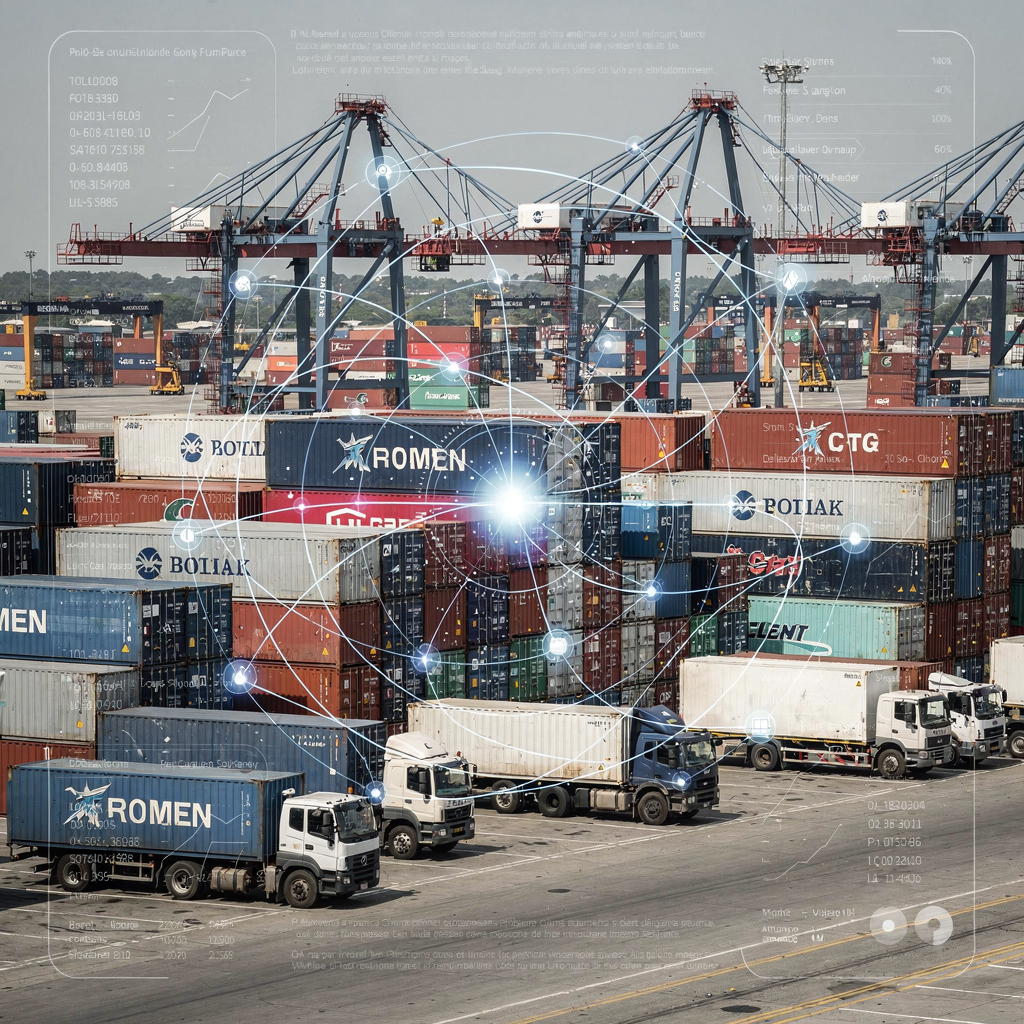
Artificial Intelligence and the paradigm shift in Container Terminal Operations
AI is changing how modern container terminals run. AI-enhanced PLC systems combine Programmable Logic Controllers with learning agents to enable adaptive control. They monitor equipment and they make quick decisions. Traditional PLCs follow fixed logic. In contrast, AI systems learn patterns and respond to new conditions. This paradigm flips the old model of rule-based control. It shifts terminals from reactive firefighting to proactive orchestration. As a result, operators get more predictable outcomes and stronger performance.
Adaptive control means the system can alter setpoints, task priorities, and sequences as conditions change. For example, an AI agent can re-sequence crane tasks when a vessel arrives early. It can also reroute trucks to reduce congestion. These moves reduce idle time and improve throughput. Studies show AI-enhanced equipment can reduce cycle times by about a quarter; Siemens reports a 25% reduction in cycle times from AI-enabled automation (Siemens whitepaper). Likewise, predictive maintenance driven by AI cuts unplanned stoppages by up to 30% (research).
Throughput in many terminals rises when equipment responds faster. Industry reports link AI-driven automation to 15–20% throughput improvements in port settings (McKinsey). Loadmaster.ai trains reinforcement learning agents to balance quay productivity, yard congestion, and driving distance. As a result, the terminal operator sees fewer rehandles and steadier crane utilisation. In practice, AI enables operators to optimize resource use while keeping safety high. The integration of AI with PLCs is a practical path to improve responsiveness and cut costs across the yard and quay.
Machine Learning and Predictive Analytics to enhance Terminal Operations
Machine learning ingests telemetry and sensor feeds to find patterns that humans miss. In terminals, sensors capture crane positioning, gate flows, RTG load, and truck wait times. Machine learning models then predict short-term demand spikes and equipment wear. These predictions help planners take action before problems escalate. Predictive analytics reduces surprises. That ability directly improves throughput and reduces downtime.
AI algorithms process sensor data in real-time and flag anomalies. For instance, a supervised model can predict a motor fault hours before failure. Then maintenance crews intervene on schedule. This use of predictive maintenance can cut unplanned downtime by 20–30% according to industry analysis (study). Machine learning models also enable cycle-time reduction. A terminal planner can use a model to simulate multiple sequencing options and pick the best one for current conditions. The result is smoother quay operations and less yard congestion.
Under varying load, AI enhances equipment response by tuning parameters continuously. For example, during peak arrivals, an AI model can reallocate cranes and prioritise moves that clear space quickly. This approach optimizes crane and truck interactions. It also reduces driving distance and fuel. Loadmaster.ai applies reinforcement learning to train agents in a digital twin. These agents learn policies that balance KPIs such as moves per hour and yard density. The approach avoids reliance on historical averages. Instead, it finds robust strategies that improve performance across scenarios.
Drowning in a full terminal with replans, exceptions and last-minute changes?
Discover what AI-driven planning can do for your terminal
AI integration: Application of AI in Container Terminal Operating Systems
Integrating AI with existing terminal systems takes planning and careful engineering. First, operators map data sources: PLCs, TOS messages, RTG telemetry, and gate sensors. Next, teams build secure data pipelines and validation checks. Then, AI models run in a sandboxed digital twin to test behavior against KPIs. This phased approach reduces risk and keeps the TOS in the loop. Many terminals choose a TOS-agnostic path so they can integrate without replacing the TOS itself. Loadmaster.ai’s agents, for example, connect via APIs and EDI to existing stacks and terminal operating systems to deliver closed-loop optimisation safely.
To integrate legacy PLCs, teams add edge gateways that translate PLC signals into modern telemetry. That lets AI feed real-time inputs into the decision layer without touching core PLC logic. The AI then suggests setpoint changes or scheduling adjustments. The terminal operator reviews these recommendations through dashboards and guardrails. When confidence is high, the system can push approved actions automatically to the PLC or the TOS. This hybrid setup helps terminals automate while retaining human oversight.
Security and scalability matter. Convergence of IT and OT increases attack surface, so teams must apply segmentation, encryption, and audit trails (Yokogawa). Interoperability requires clear schemas and TOS-compatible messaging; see guides on interfaces for data exchange with existing port operations TOS for practical options. For a successful rollout, integrate in phases: pilot a single block, validate KPIs, then scale. This method keeps costs down and allows teams to refine AI behaviour with live feedback.
Predictive Maintenance and Yard Management: Benefits of AI-Driven Systems
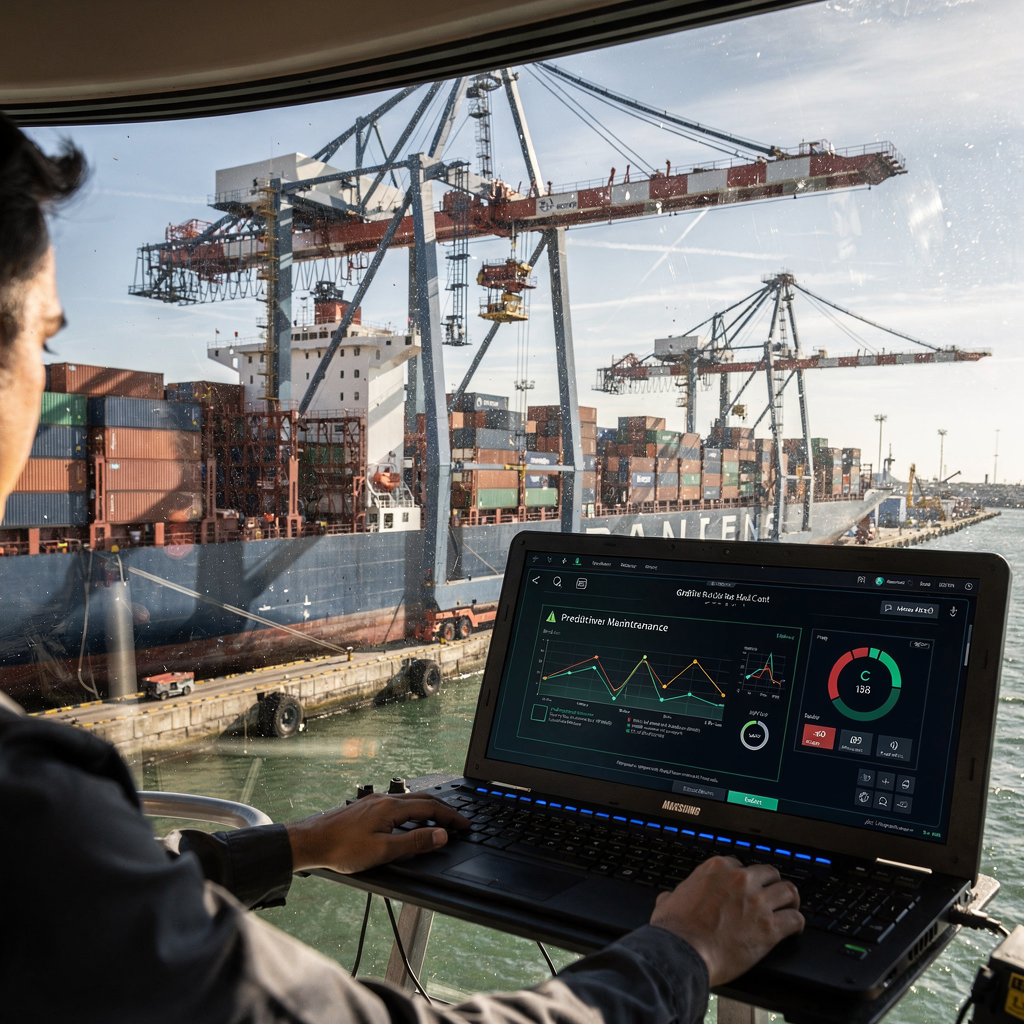
Predictive maintenance uses AI and sensor fusion to forecast failures. Terminals can monitor vibration, temperature, and cycle counts. Machine learning models then estimate remaining useful life. With those forecasts, maintenance teams plan interventions during low-impact windows. That reduces downtime and maintenance cost. Industry sources note that predictive maintenance enabled by AI can improve equipment availability by up to 30% (research). The payoff shows in fewer emergency repairs and more consistent throughput.
AI-driven yard management coordinates crane, truck, and yard assets. The system assigns container placement to reduce future shifters. It balances workload across RTGs and straddles. As a result, travel distances drop and crane idle time falls. Loadmaster.ai’s StackAI and JobAI illustrate this approach by simulating millions of scenarios to find policies that reduce rehandles and shorten routes. This kind of AI reduces human variation and stabilises performance across shifts.
Key metrics to monitor include downtime, maintenance cost savings, and uptime gains. Terminals implementing AI report 15–20% throughput boosts and up to 30% reductions in unplanned downtime in comparable settings (McKinsey). Beyond numbers, AI also improves safety by reducing operator workload and clarifying priorities. Well-designed AI gives clear recommendations and maintains audit trails to support governance and future compliance needs.
Drowning in a full terminal with replans, exceptions and last-minute changes?
Discover what AI-driven planning can do for your terminal
Case Studies: Top 10 Container Terminal Implementations of AI in Container Terminals
Leading ports and terminal operators have deployed AI-PLC solutions with measurable results. Some implement autonomous stacking cranes paired with AI scheduling. Others focus on gate automation and truck appointment systems. A few combine predictive maintenance with dynamic crane allocation to improve reliability. For example, several European terminals piloted AI agents that raised crane productivity and reduced rehandles. Reports show 25% cycle-time reductions in AI-enabled automation trials and marked throughput gains (Siemens).
Comparing implementations reveals common patterns. Successful terminals begin with a clear KPI set and a sand-boxed digital twin. They also ensure strong integration with the TOS and PLCs. Case studies emphasise gradual scaling. First, pilot a specific block or process. Then expand once the ai model performs. This approach cuts deployment risk and improves operator buy-in. For technical teams, the key is making AI recommendations explainable so terminal operators trust suggested changes.
ROI figures depend on scope. Typical pilots that targeted crane sequencing and yard placement reported payback within 12–24 months. Gains showed in lower diesel use, fewer rehandles, and more consistent moves per hour. For further technical examples and ROI measurement techniques, readers can consult practical guides on measuring ROI of AI in deepsea container terminals and ASC optimisation case studies. Those resources give concrete modelling methods and sample results that terminal managers can adapt for their own sites.
Future of AI and Machine Learning in Port and Supply Chain: AI Implementation Roadmap
The future of AI and machine learning points to more autonomy across yard and quay. Expect smarter gates, autonomous trucks, and cranes that self-optimize. Advanced AI will handle multi-objective trade-offs in real time. This development will transform how ports and terminal plan and execute moves. Early adopters will gain competitive edge in throughput and cost.
A phased implementation roadmap helps terminals adopt AI safely. Phase one is discovery: map data, benchmarks, and KPIs. Phase two is simulation: build a digital twin and trial agents offline. Phase three is pilot: run the AI alongside human planners and compare results. Phase four is scale: expand functionality across the yard and integrate with full TOS workflows. Phase five is continuous learning: keep refining models with live feedback. Loadmaster.ai’s approach reflects this roadmap. They deploy sim-trained reinforcement learning agents that are cold-start ready and then refine them online. This method avoids the need for extensive historical data and helps terminals automate quickly.
Emerging trends include tighter IT/OT convergence, lighter edge inference for latency-sensitive tasks, and more robust security standards. Terminals that embrace AI will see steady improvements in productivity and uptime. They will also better manage disruptions in the supply chain. To read about practical implementations, see guides on automated stacking crane optimisation and job scheduling for deepsea container port yard optimisation within the same operator community. Overall, applying AI across terminal processes will be a stepwise journey. It will require technical skill, operator trust, and clear KPIs. Yet the potential of AI to transform container terminal operations is already visible in pilots and production deployments.
FAQ
What is PLC-integrated AI and how does it work in a terminal?
PLC-integrated AI pairs Programmable Logic Controllers with learning models that advise or control equipment. The PLC handles low-level actuation while AI provides adaptive decisions based on telemetry and KPIs. That split keeps safety-critical control where it belongs and lets AI optimize higher-level choices.
How does predictive maintenance reduce downtime in container terminals?
Predictive maintenance uses sensor data and AI models to forecast faults before they happen. Teams can schedule repairs during windows that minimise impact, which reduces emergency fixes and cuts downtime. Industry studies show downtime reductions of up to 30% with predictive approaches.
Can AI work with my existing terminal operating system (TOS)?
Yes. Many AI implementations use TOS-agnostic APIs and middleware to exchange messages with the TOS. Integration focuses on data exchange and well-defined guardrails so the AI can suggest or enact changes without replacing the TOS. For integration patterns, consider resources on interfaces for data exchange with existing port operations TOS.
What benefits can a terminal operator expect from AI adoption?
Terminals typically see improved throughput, fewer rehandles, and better equipment utilisation. AI also stabilises performance across shifts and reduces energy use via fewer empty moves. These benefits combine to improve operational efficiency and lower costs.
How do reinforcement learning agents differ from traditional machine learning models?
Reinforcement learning trains agents by simulating decisions and outcomes to find policies that maximise long-term KPIs. Traditional supervised models learn from historical data and reproduce past behavior. RL can outperform past practice because it explores new strategies in simulation rather than mimicking history.
Is AI safe to deploy around quay cranes and trucks?
Yes when you design systems with hard constraints, human-in-the-loop controls, and exhaustive testing in a digital twin. Deployments should include audit trails, explainability, and operational guardrails to ensure safety and regulatory readiness.
What are common challenges when integrating AI in container terminals?
Challenges include ensuring cybersecurity, integrating with legacy PLCs and TOS, and getting operator trust. Skilled staff are necessary to manage models and to interpret AI suggestions. A phased rollout mitigates these risks.
How fast can a terminal see ROI from AI projects?
ROI timelines vary by scope, but many pilots report payback in 12–24 months when they target crane sequencing and yard placement. Savings come from fewer rehandles, shorter routes, and lower fuel and maintenance costs.
Do I need historic data to benefit from AI in terminal operations?
Not always. Reinforcement learning agents can be sim-trained in a digital twin and then fine-tuned online, which reduces dependence on clean historical data. This lets terminals start delivering value quickly.
Where can I learn more about practical AI applications in yard and quay?
Explore practical case studies and technical guides such as automated stacking crane optimisation, job scheduling for deepsea container port yard optimisation, and measuring ROI of AI in deepsea container terminals. These resources give implementation detail and performance examples to help plan your own rollout.
our products
 stowAI
 stackAI
 jobAI
jobAI
Innovates vessel planning. Faster rotation time of ships, increased flexibility towards shipping lines and customers.
Build the stack in the most efficient way. Increase moves per hour by reducing shifters and increase crane efficiency.
Get the most out of your equipment. Increase moves per hour by minimising waste and delays.
stowAI
Innovates vessel planning. Faster rotation time of ships, increased flexibility towards shipping lines and customers.
stackAI
Build the stack in the most efficient way. Increase moves per hour by reducing shifters and increase crane efficiency.
jobAI
Get the most out of your equipment. Increase moves per hour by minimising waste and delays.