
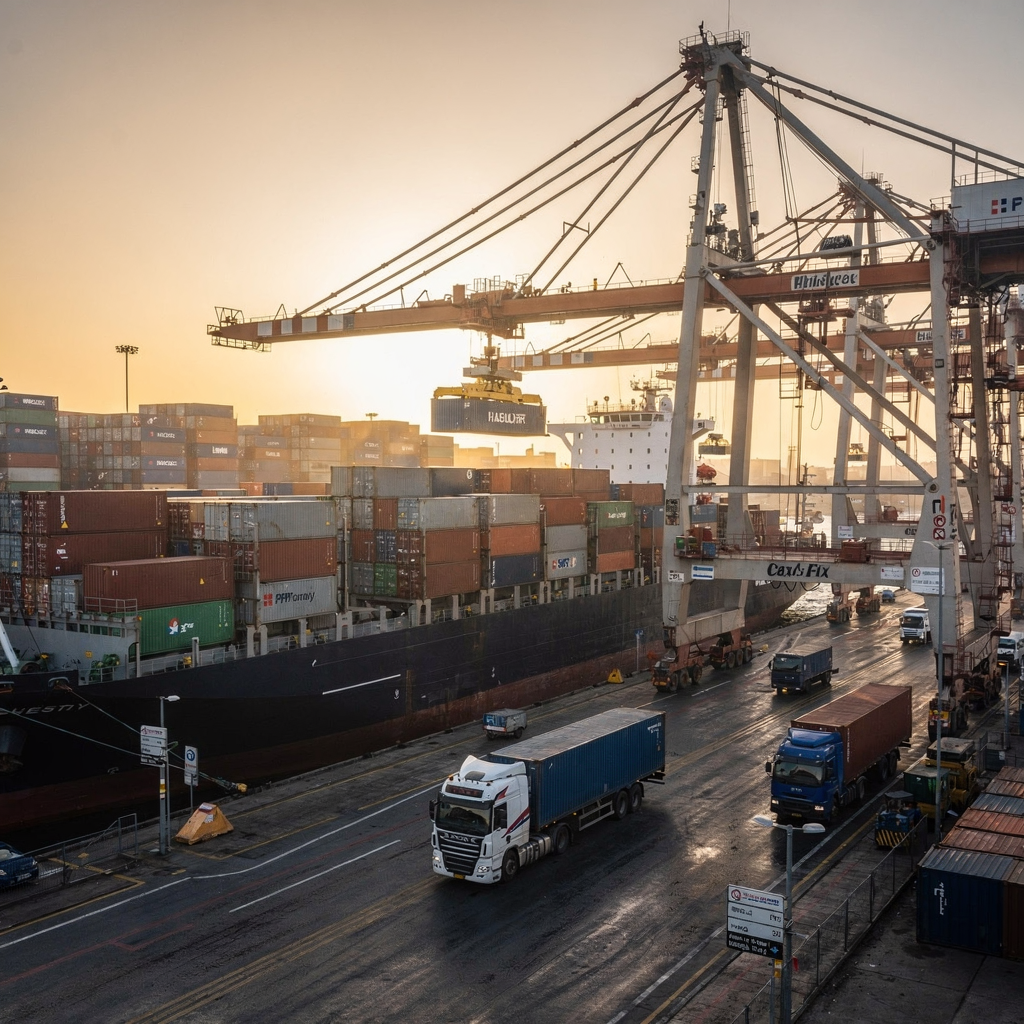
container terminal planning fundamentals
Container terminal planning sits at the crossroads of maritime logistics and the global supply chain. It covers the scheduling, resource allocation, and sequencing needed to move containers from ship to hinterland quickly. Good planning keeps vessels moving and trucks on schedule. It reduces waiting times and lowers cost per TEU.
One clear metric is vessel turnaround time. Major ports aim for fast turnarounds. For example, many large ports target a turnaround time of under 24 hours to support high throughput (source). Another key metric is berth productivity. Berth productivity measures how many moves happen per hour at the quay and how fast a berth can clear a container ship.
Container terminal planning must link vessel logistics, port/terminal logistics and inland transport. Without that link, the flow of containers stalls. A planner balances quay crane cycles, yard stacking, and gate moves. They also coordinate with haulage companies, rail operators, and freight forwarders. This coordination reduces bottleneck risk. It also improves export container flow and import delivery. The planner monitors the vessel schedule and adjusts the plan as new information arrives.
The role of technology is rising. Many terminals use digital models and AI. Loadmaster.ai builds RL agents that train on a terminal digital twin. These agents can propose balancing strategies that protect quay throughput while easing yard congestion. That approach helps when the vessel mix and yard state change fast. It also reduces the dependency on historical models that only repeat past patterns. Loadmaster.ai’s closed-loop optimization addresses the pain of firefighting instead of planning.
Finally, the planner must consider risks. Extreme weather conditions and equipment failures can force quick changes. A resilient plan keeps operations moving when disruption hits. Good operational planning lets terminals keep the vessel on time while protecting yard flow and crane uptime.
vessel planning and berth scheduling
Vessel planning focuses on arrival forecasting and ETA coordination. Accurate ETAs let a port terminal allocate space and staff. Planners use AIS feeds, carrier updates and historical patterns to refine arrival times. Predictive models also help; see research on predictive berth availability modeling for deepsea ports for more context (internal). By forecasting accurately, the planner avoids costly queuing outside the port.
Berth allocation depends on several criteria. Size and draft restrictions come first. Large container ships need deep water and long quay length. Priority cargo plays a role. Perishable or hazardous loads may get preferential berthing. This choice affects how the crane teams are assigned and how the yard prepares. The berth plan also considers the next port of call. If a vessel has tight sailing windows, the terminal may accelerate the plan to keep the schedule.
Good berth scheduling reduces delays and keeps the throughput high. It lowers waiting times for incoming ships and reduces fuel burn for vessels idling offshore. When berthing is tight, the planner may alter crane allocation to increase moves per hour. The vessel schedule then synchronizes with truck and rail slots to avoid creating a yard backlog. A single bad berth decision can create a bottleneck that cascades into discharging and loading problems across the facility.
Vessel operations and berth work need close coordination with port operations. Early communication with shipping lines avoids surprises. In many ports, integrated berth management systems link to terminal automation to better match quay cranes to ship bay plans. Where automation is partial, workforce planning and flexible crane gangs remain critical. If equipment failures occur, contingency plans prioritize critical exports and imports.
Drowning in a full terminal with replans, exceptions and last-minute changes?
Discover what AI-driven planning can do for your terminal
stowage plan and cargo stowage strategies
A stowage plan defines where each container sits on the vessel. It balances weight, space on board, and discharge sequence for every port of call. The correct arrangement of the containers on the ship is called the stowage plan (source). This arrangement affects stability, safety, and how quickly the crew and terminal can load and unload.
Stowage planners and planners work with planning software to create the bay plan and the detailed stow for each hatch and hold. Stowage planners consider trim and stress rules, stack weight limits, and the need to keep hazardous and reefer boxes accessible. They also sequence export containers so trucks can pick up without extra reshuffles. Planning for a container requires knowing whether it must go on top of other containers or down in a cell. That decision impacts rehandles and yard congestion.
Good stow strategies minimize rehandles and crane idle time. Planners simulate different stowage options to find the best trade-off between crane productivity and yard moves. For example, a plan that pushes too many export containers to the far side of the yard increases driving distance and RTG workload. Conversely, a plan that fits all containers tightly on board may force extra moves during discharging and loading at the next port.
Modern tools include automated bay plan checks and stowage planning modules that connect to terminal operating systems. Loadmaster.ai’s StowAI concept augments the vessel planner by QCing stow sequences to minimize shifters while keeping plans executable. This reduces the dependency on individual experience. It also keeps container terminal activities consistent across shifts. By linking stowage planning to yard strategy, terminals cut dwell time and protect berth productivity.
Finally, the stow must respect special cargo rules. Reefers need power access. Hazardous cargo needs segregation and accessible placement. The plan must also reflect the shipping lines’ constraints and the vessel’s operational limits. Good communication between the vessel planner, ship operation teams, and the terminal ensures safe and efficient loading and discharging.
port operations planning and cargo handling
Port operations tie together quay work, yard stacking, and gate throughput. Crane scheduling is central. Planners set crane split plans to match the stow and the expected discharge and loading volumes. A well-timed crane roster raises the moves per hour and lowers the time ships spend at berth. In practice, terminal staff and crane operators follow schedules that adapt as operations unfold.
Yard management affects how quickly containers move from the quay to the stack and then out the gate. Yard crane and truck cycles must sync to avoid piling. Automated stacking and optimized yard maps cut unnecessary travel. Operators may invest in container handling equipment and software to speed the flow. For further reading on automated stacking crane optimization, see our internal piece (internal).
Discharge and loading operations planning aims to reduce dwell time. Fast gate processing and accurate documentation speed exports. Terminals also manage terminal handling charges, which reflect the cost of cargo handling and storage. Understanding these charges helps shippers and exporters plan and budget. THC varies by port and terminal and impacts the total landed cost of goods.
Handling equipment uptime matters a great deal. Equipment failures can halt moves and create queues. Planners therefore keep contingency resources available and schedule preventive maintenance to avoid prolonged disruption. They also monitor waiting times at the quay and the gate so they can reroute moves or change the crane split. To reduce yard congestion and waiting times further, many terminals use AI-based dwell-time prediction tools to smooth the flow (internal).
Overall, port terminal planning depends on people, systems, and rules. A coordinated plan reduces the number of times a container must be rehandled. It lowers energy use and improves the terminal’s throughput. When terminals combine good operational planning with the right equipment and digital tools, they can reduce cost, speed delivery and adapt quickly to disruption.
Drowning in a full terminal with replans, exceptions and last-minute changes?
Discover what AI-driven planning can do for your terminal
automation and productivity in container terminals
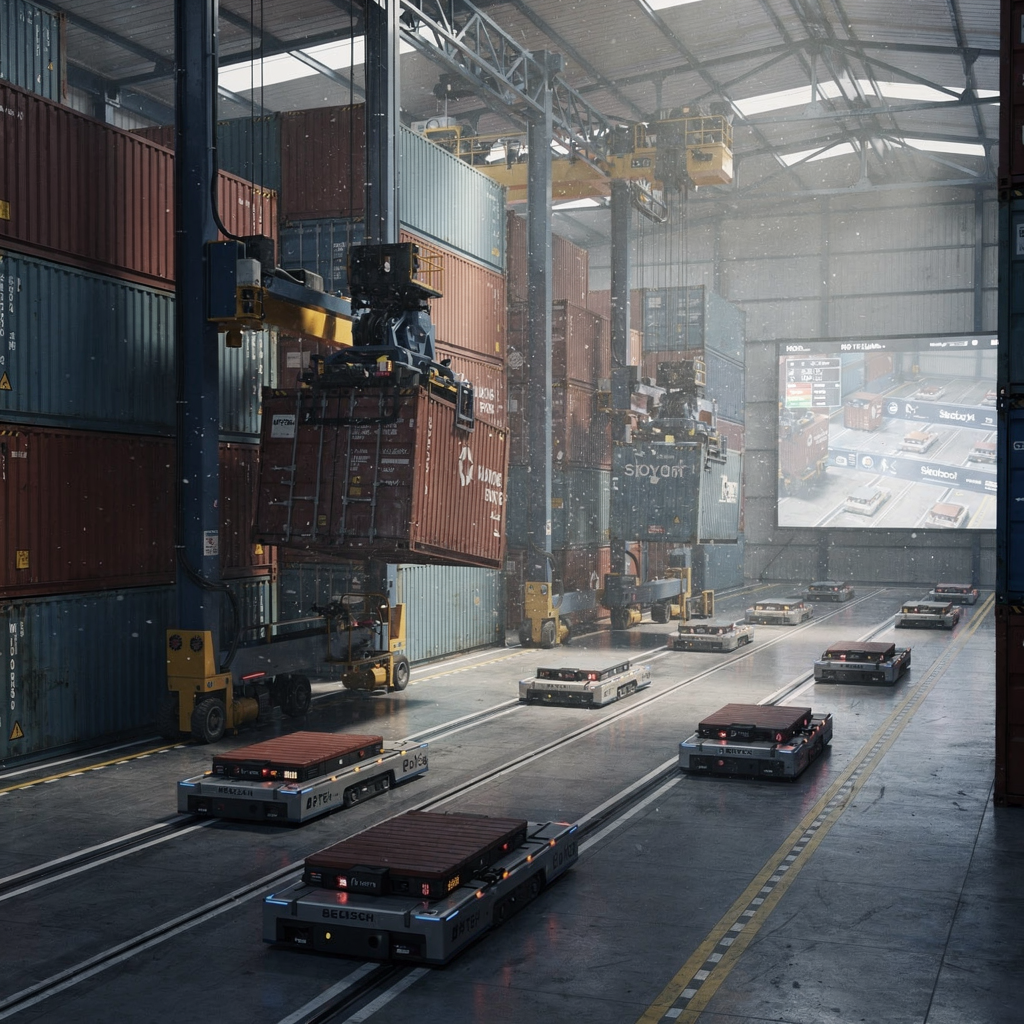
Automation shifts how terminals measure performance and plan moves. Automated quay cranes and automated container guided vehicles reduce manual handling. Many ports now test or run terminal automation to raise throughput. Terminal automation can lower labor variability and keep cranes running steadily. For a deeper look at how automation affects container terminal activities, see our analysis of ASC job scheduling (internal).
Digital tools and AI give real-time vessel planning updates. They ingest telemetry, gate data and vessel manifests. Then they propose new schedules, crane splits and yard placements. Automated decision tools can suggest moves that reduce driving distance and protect future plans. In practice, terminals combine human oversight with automation so decisions remain explainable and safe.
Productivity metrics include moves per hour, berth utilisation and equipment uptime. These numbers show whether a terminal meets its KPIs. Loadmaster.ai focuses on measurable gains such as fewer rehandles, higher crane utilisation and shorter driving distances. The agents run in simulation and then deploy with live feedback so terminals get results early without relying on large historical datasets.
Automation also changes workforce planning. Staff need new skills to manage the systems and to handle exceptions. Terminals must balance automated and manual flows. This hybrid approach avoids single points of failure and keeps operations flexible. When equipment failures or extreme weather conditions occur, the system falls back to human control and continuity is maintained.
Finally, the use of AI and automation reduces environmental impact. By optimizing equipment moves to save fuel and cutting idle time, terminals lower emissions and costs. For terminals seeking sustainability gains, automation combined with smart scheduling yields clear benefits (internal). As a result, ports can improve service while reducing footprint.
role of planner in discharge, stow and reefer cargo management
The planner sits at the center of discharge and stow coordination. They prioritise export flows and critical imports so ships can sail on time. A vessel planner decides which bays and stacks to use and sequences discharging and loading. They also coordinate the bay plan and check containers on board against the manifest to avoid surprises.
Discharge planning often gives priority to export containers that must clear the gate quickly. Planners also spot critical imports such as high-value machinery or time-sensitive goods. They work with freight forwarders, haulage companies and the ship operation team to ensure smooth pick-up windows. When next port of call constraints exist, the planner adjusts the stow to meet the schedule.
Coordinating stow sequencing with cargo handling teams reduces rehandles and keeps cranes busy. The planner liaises with yard crane operators and the quay dispatcher to align moves. They also enforce handling rules for hazardous goods and ensure reefer containers receive power and monitoring. Proper management of reefer cargo avoids spoilage and costly delays. Terminals must log and track reefer status during the entire transportation process.
Planners also handle exceptions like broken slot plans, damaged hatch cover access or last-minute manifest changes. They rework the bay plan and the placement of containers to preserve stability and safety. The planner makes trade-offs, for example between loading operations speed and yard congestion. They must think several steps ahead so the terminal does not have to restow or shift containers unnecessarily.
Tools like bay plan validators and stowage planners are essential. They give the planner confidence that the ship will be stable and that the load and unload sequence is executable. A good planner keeps clear logs and communicates changes to terminal staff, the quay team and the shipping lines. This communication helps to keep the vessel on time and prevents costly reshuffles that drive up terminal handling charges.
FAQ
What is container terminal planning?
Container terminal planning is the process of scheduling and coordinating the movement of containers through a port terminal. It covers vessel berthing, crane allocation, yard stacking and gate flows to move containers efficiently.
How does vessel planning reduce delays?
Vessel planning aligns ETAs, berth allocation and crane schedules to minimise waiting times. By forecasting arrivals and adjusting the vessel schedule, planners prevent queues and speed up turnaround.
What is a stowage plan and why does it matter?
A stowage plan arranges containers on the ship to balance weight and sequence discharging and loading. The correct arrangement of the containers on the ship is called the stowage plan (source). It reduces rehandles and supports safety.
What role do cranes play in terminal productivity?
Cranes drive moves per hour at the quay, so their scheduling impacts berth productivity directly. Effective crane splits and maintenance planning keep uptime high and lower vessel turnaround.
Can automation help reduce costs?
Yes. Automation, from quay cranes to automated stacking cranes, reduces manual errors and optimises moves to shorten driving distances. It also supports consistent performance and lowers energy use when combined with smart scheduling.
How are reefer containers managed at the terminal?
Reefer containers need continuous power and monitoring. Planners allocate slots with power access and track temperature status during yard dwell and loading, ensuring the cold chain stays intact.
What happens when a vessel is delayed by extreme weather?
Planners revise the vessel schedule and berth plan to adapt. They prioritise critical cargo and may reshuffle yard placements to protect the next port of call. Contingency plans reduce the risk of cascading disruption.
How do terminal handling charges affect shippers?
Terminal handling charges reflect the cost of moving and storing containers inside the terminal. These fees affect total logistics cost and influence routing and carrier choices for exporters and importers.
What tools improve berth allocation accuracy?
Predictive models and real-time AIS integration improve berth allocation by forecasting slot openings and vessel arrivals. For further reading, explore predictive berth availability modeling (internal).
How does a planner balance quay productivity with yard congestion?
Planners weigh crane utilisation against yard capacity and driving distance. Solutions include adjusted stowage sequencing, temporary staging areas, and AI-driven placement strategies. Loadmaster.ai’s approach uses RL agents to test policies in a digital twin and balance these trade-offs.
our products
 stowAI
 stackAI
 jobAI
jobAI
Innovates vessel planning. Faster rotation time of ships, increased flexibility towards shipping lines and customers.
Build the stack in the most efficient way. Increase moves per hour by reducing shifters and increase crane efficiency.
Get the most out of your equipment. Increase moves per hour by minimising waste and delays.
stowAI
Innovates vessel planning. Faster rotation time of ships, increased flexibility towards shipping lines and customers.
stackAI
Build the stack in the most efficient way. Increase moves per hour by reducing shifters and increase crane efficiency.
jobAI
Get the most out of your equipment. Increase moves per hour by minimising waste and delays.