
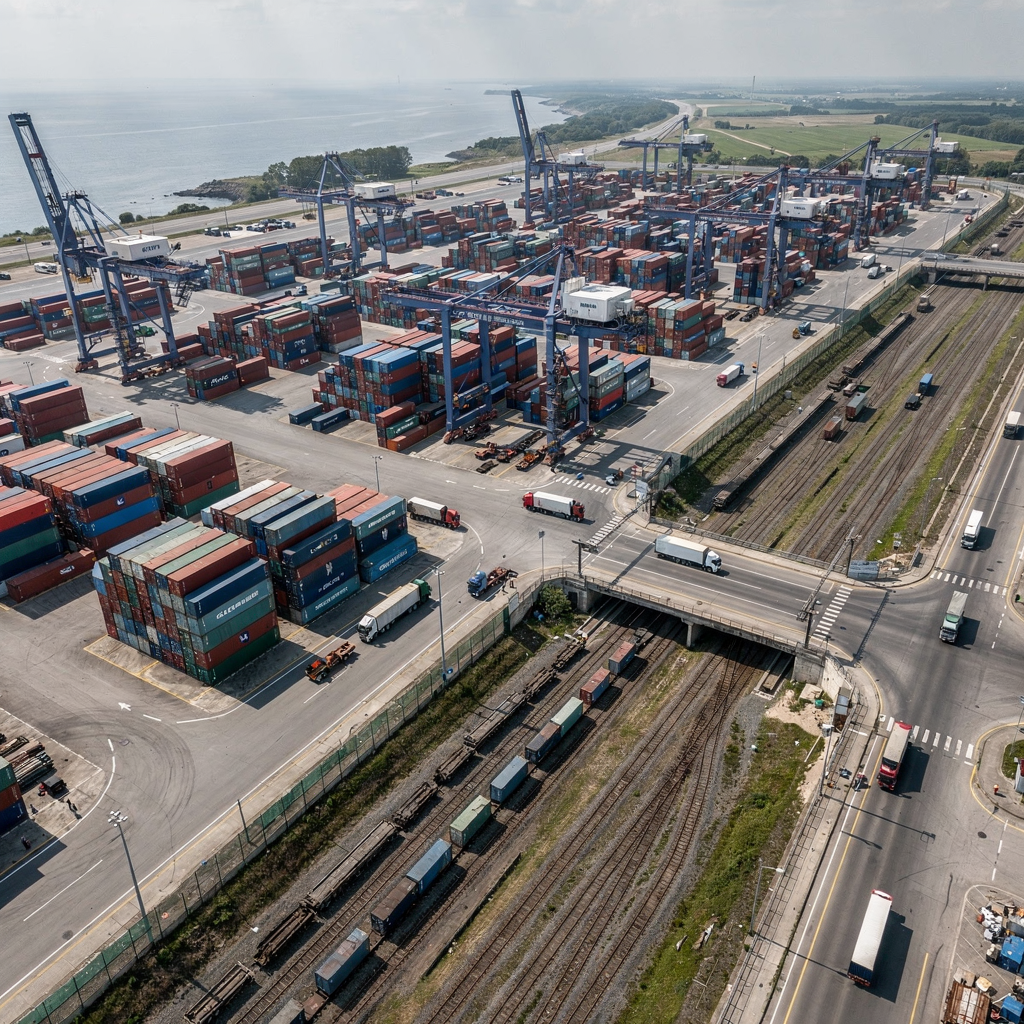
Assessing Risks in Global Terminal and Inland Container Terminals
Assessing risk begins with clear facts and simple questions. First, identify where integration has failed before. Studies show that attempts to implement new management systems in container hubs often stall, and in some cases projects suffer setbacks in nearly half of trials one study reports a majority of failures. Second, map how technical faults spread to operations and to people. Third, quantify the likely impact on cargo flow, safety, and compliance. This step reduces guesswork and clarifies priorities.
Technology risks include system incompatibility and data migration errors. Hardware and software mismatches break interfaces. For example, older crane controllers may not accept modern telemetry without adapters. Also, poor data cleansing causes container tracking errors. And then cyber vulnerabilities appear when systems expose ports to the internet. The IAPH guidance recommends defining mitigation measures with interval reviews to keep pace with evolving threats IAPH Cybersecurity Guidelines. Use that advice early in planning.
Organisational risks come from unclear roles and weak governance. Operators often have tribal knowledge that a new terminal operating system can overwrite. Without change management, staff resist the new workflow and slow adoption. Human factors also matter. Poorly designed user interfaces and rushed training increase error rates. Therefore, assess operator readiness and training capacity as part of the risk audit.
Key risk categories to prioritise are clear. They are system incompatibility, data migration errors, and cyber vulnerabilities. Each can cascade to cause delays or disruptions and to reduce throughput. Also include supply chain dependencies, such as rail interfaces or truck appointment systems, which magnify effects beyond the yard. Finally, tag external threats like extreme weather conditions that stress the same processes. Use structured scoring to rank risks by likelihood and impact. Then align mitigation efforts to highest-scoring items. For more on simulation-driven planning, see practical modelling for terminal planning simulations for terminal planning.
Planning Risk Management for Terminal Operation Integration
Good planning starts with a structured framework. First, establish scope and objectives. Next, run a formal risk assessment workshop with stakeholders. Use a risk register that lists each issue, its cause, likelihood, impact, owner, and mitigation steps. Then, schedule interval reviews to adapt controls. The IAPH guidance suggests recurring review cycles to respond to changing cyber and operational threats IAPH recommends interval revision. That advice helps maintain momentum and vigilance.
Map critical terminal operation processes. Start with yard operations, gate processing, and the rail interface. Then chart vessel planning, crane assignments, and truck arrival handling. Each map should expose failure points. For example, gate queues create cascading delays. Likewise, a misrouted container in the yard can block crane access. Also, poor EDI configurations break data flow with inland carriers. For hands-on modelling of these processes, consider discrete event simulation tools that mirror real flows JAAMSIM discrete event simulation.
Prioritise risks by impact. Rank issues that damage throughput first. Next, list those that threaten safety or regulatory compliance. Use simple scoring to make trade-offs transparent. For instance, a cyber breach that halts terminal work likely rates higher than a single-crane mechanical fault. However, repeated crane downtime erodes operational efficiency over time. Therefore, include predictive maintenance on the list to reduce cascading failures. Quantitative targets help. Aim to protect throughput, limit delays or disruptions, and uphold safety. Use the literature that shows measurable throughput improvements after proper digital rollout as a benchmark efficiency and productivity findings.
Finally, create escalation paths. Define who takes charge during incidents, how decisions are documented, and how external carriers learn about disruptions. Link incident response to contingency contracts. Then rehearse plans with tabletop exercises and with the vendor. Add a clause for software rollback and for data restoration. This reduces recovery time and limits cargo handling errors.
Drowning in a full terminal with replans, exceptions and last-minute changes?
Discover what AI-driven planning can do for your terminal
Applying Best Practices in Terminal Operating System (TOS) and Automation
Adopt a modular deployment to limit the blast radius of failures. Roll out gate modules first, then yard planning, and finally vessel interfaces. This approach lets teams validate integrations and then refine APIs. Use a sandbox to test equipment telemetry and to run scripts. Loadmaster.ai recommends digital-twin testing to ensure policies behave in live conditions; simulation lets RL agents train safely before go-live reinforcement learning deployment examples. That step reduces risk and speeds safe adoption.
Automation brings both benefits and hazards. Modern automation reduces manual errors and lifts productivity. Yet it also concentrates risk when a single software fault halts many machines. Therefore, include safeguards and fallback procedures. ENISA suggests continuous monitoring, segmented networks, employee training, and clear incident response playbooks to protect ports from cyber threats ENISA cyber risk guidance. Add automated health checks and circuit breakers that pause automation without stopping all terminal work.
Use a concise checklist for software configuration, testing, and cut-over. First, verify API compatibility and credential management. Second, validate real-time data feeds for accuracy and latency. Third, run end-to-end acceptance tests with live equipment under controlled load. Fourth, stage a phased cut-over with rollback points. Also, keep the operator in the loop. Human oversight prevents unsafe automation decisions. For design patterns that separate fleet control from core systems, review architectures that decouple fleet logic from the management system decoupling fleet control logic.
Finally, maintain clear documentation and “runbooks” for every automated system. Train staff on fallback modes and on manual overrides. That preserves container movement when software glitches appear and helps avoid long dwell times that can erode throughput and increase inefficiency.
Streamlining Supply Chain and Intermodal Transportation Workflows
Phased TOS integration improves intermodal coordination. First, align EDI formats between truck appointment systems and rail operators. Then set up test windows to validate hand-offs. Phasing reduces surprises and preserves cargo flow. Additionally, phased rollout lets teams tune gate rules and OCR readers without impacting vessel operations. This measured approach helps reduce dwell time by an achievable margin. Industry cases report dwell-time cuts up to 15% when yard and gate rules were optimized after go-live efficiency and productivity study. That gain matters to carriers and to shippers across the supply chain.
Streamline hand-offs between rail, road, and barge by formalising time windows and buffer rules. Use appointment systems and real-time visibility to smooth peaks. Real-time data and predictive analytics let planners sequence containers to match arrival patterns. For terminals that want simulation-driven coordination, see tools that model the entire movement of goods and gauge the impact of appointment rules arena simulation for port terminals.
Focus on metrics that show progress. Track dwell time, truck turn time, and the percentage of on-time rail transfers. Also monitor cargo handling accuracy and misrouted movements. Use those KPIs to tune policies. For example, reducing rehandles improves crane efficiency and shortens lane congestion. That directly lowers operating cost and reduces energy use. When planning intermodal interfaces, account for refrigerated containers and special cargo types that need different handling equipment and longer processing windows.
Finally, ensure contractual alignment across carriers. Set responsibilities for delays or disruptions and for shared data. Clear SLAs and data ownership rules reduce blame games during incidents. Then rehearse cross-carrier drills and update the playbooks. This practical coordination strengthens global terminal performance and supports more predictable global supply flows.
Drowning in a full terminal with replans, exceptions and last-minute changes?
Discover what AI-driven planning can do for your terminal
Engaging Stakeholder and Operator for Terminal Operators Change Management
Change fails when people are left behind. So, build a change-management plan that aligns operators, IT teams, and senior management. Start with stakeholder mapping. Identify who decides, who advises, and who executes. Then create a communication rhythm. Send short status reports, run weekly stand-ups, and hold periodic demos to show progress. Clear communication reduces uncertainty and builds buy-in.
Training matters. Use hands-on sessions, simulations, and scenario drills. Simulators or digital twins let operators practise without risk. Loadmaster.ai trains policies in a sandbox twin so teams can see results before go-live sandbox and simulation examples. That exposure converts sceptics into advocates. For operators, focus on new workflows, on exception handling, and on safety checks. Break training into short modules and test competence before cut-over.
Address resistance proactively. Listen to concerns and then act. Capture tribal knowledge and codify it into the new management system. Reward early adopters and create operator champions who mentor peers. Also, align incentives so that productivity gains reward both individual operators and the organisation. This helps cement new behaviours and reduces reversion to old routines.
Provide templates for stakeholder updates and for incident reports. Keep templates short and factual. Include impact, action, and owner in each update. For escalation, define an operator-led war room and an executive hotline for critical incidents. Then rehearse those channels so people know how to act when downtime threatens cargo handling or when crane operations risk safety. Finally, schedule post-implementation reviews to capture lessons and to sustain performance gains over time.
Optimising Container Terminal Operations and Cargo Handling with Decision Support
Decision Support Systems and digital twins improve foresight. Use them to simulate yard layouts, to test crane sequencing, and to model container movement under stress. Research shows that combining DSS with digital twinning can help maintain resilient port operations under variance decision support and digital twinning research. Simulations let teams test “what if” scenarios without risking real cargo terminals.
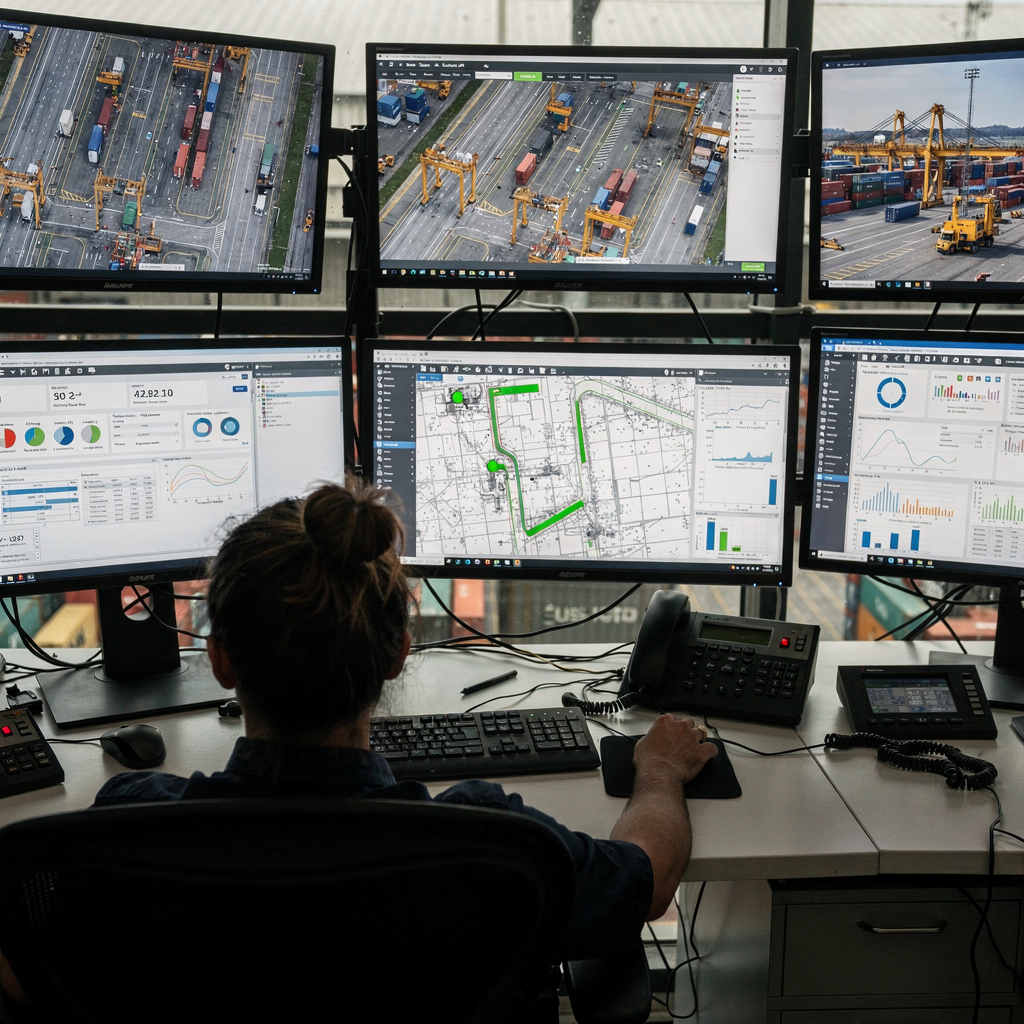
Real-time analytics provide actionable alerts and improve cargo handling accuracy. Feed monitoring systems and RTG telemetry into dashboards. Then set thresholds that trigger corrective actions. For example, if a yard block becomes congested, a planner can reassign moves to balance workload. This approach reduces bottleneck formation and lowers rehandles.
Advanced optimisation can also leverage reinforcement learning agents. These agents learn policies that improve crane operations and that reduce driving distances in the yard. Loadmaster.ai’s closed-loop agents train on digital twins and then deploy with operational guardrails. They show gains in crane utilisation and in consistent performance across shifts RL agent deployment. That reduces reliance on historical models and on single-person expertise.
Implement continuous risk-review cycles. Schedule periodic audits, update the risk register, and re-run simulations after major layout or operational changes. Use predictive maintenance to avoid sudden equipment failures and to plan crane downtime. Also, monitor electronic data interchange and container tracking feeds for anomalies. Finally, keep stakeholders engaged with concise performance reports and with clear next steps. This ongoing attention sustains gains and embeds robust risk management strategies into daily terminal life.
FAQ
What are the most common causes of TOS integration failure?
Failures usually stem from a mix of technology, data, and human factors. System incompatibility, poor data migration, and weak change management are the top causes.
How can terminals prioritise risks before implementation?
Use a risk register and score items by likelihood and impact. Focus first on issues that threaten throughput, safety, or regulatory compliance.
What is a safe way to deploy automation in a busy terminal?
Use phased rollouts and sandbox testing to validate automation controls. Implement circuit breakers and manual override procedures so work can continue if automation fails.
How do Decision Support Systems help cargo handling?
DSS tools simulate scenarios and recommend actions to avoid bottlenecks. They combine analytics, real-time data, and rules to improve crane scheduling and yard planning.
Can simulation reduce the risk of integration for inland terminals?
Yes. Digital twins let teams test changes without impacting live operations. Simulation also lets reinforcement learning agents train in a safe environment before deployment.
What role do operators play in successful integration?
Operators provide practical knowledge and validate new workflows. Training, involvement in testing, and clear communication channels are essential to secure their buy-in.
How should terminals handle cyber risks during TOS rollout?
Follow industry guidance on segmentation, monitoring, and incident response. Regular audits and employee training reduce the likelihood and impact of cyber incidents.
Which metrics should be tracked after go-live?
Track dwell time, truck turn time, crane utilisation, and mishandle rates. These KPIs reveal whether integration improves operational efficiency.
How can terminals coordinate with rail and barge carriers?
Standardise EDI messages and use appointment systems to smooth hand-offs. Shared SLAs and periodic joint drills help maintain reliable intermodal transfers.
What is the advantage of using reinforcement learning agents in terminal planning?
Reinforcement learning explores new policies and adapts to changing conditions, often outperforming models that only mimic historical data. It helps reduce rehandles and balance workloads across equipment.
our products
 stowAI
 stackAI
 jobAI
jobAI
Innovates vessel planning. Faster rotation time of ships, increased flexibility towards shipping lines and customers.
Build the stack in the most efficient way. Increase moves per hour by reducing shifters and increase crane efficiency.
Get the most out of your equipment. Increase moves per hour by minimising waste and delays.
stowAI
Innovates vessel planning. Faster rotation time of ships, increased flexibility towards shipping lines and customers.
stackAI
Build the stack in the most efficient way. Increase moves per hour by reducing shifters and increase crane efficiency.
jobAI
Get the most out of your equipment. Increase moves per hour by minimising waste and delays.