
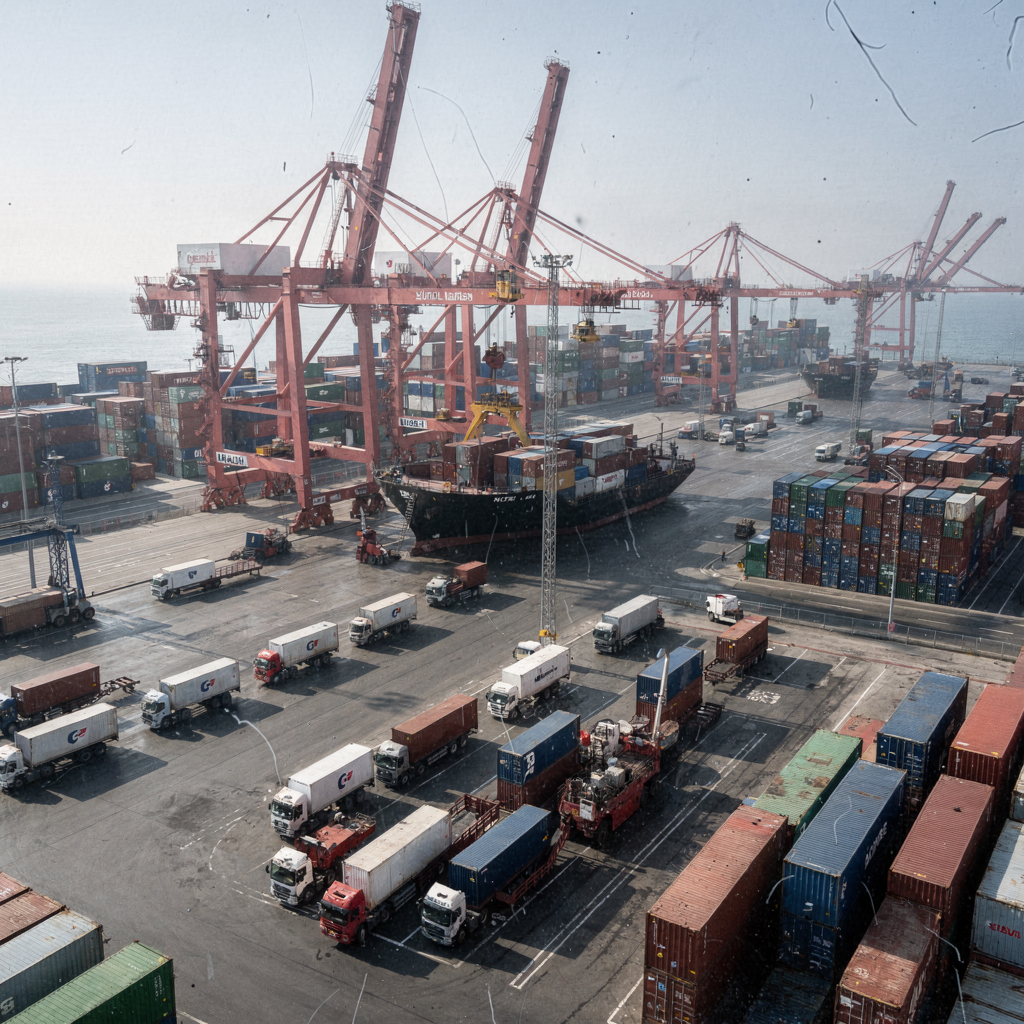
literature review of port equipment scheduling research
This literature review focuses on cross-equipment job prioritization in the container world, and it frames the scheduling problem that terminal planners face every day. Researchers have examined how to sequence moves across quay cranes, trucks, and yard handlers to reduce idle time and avoid queues. The review highlights that coordinated scheduling between quay crane teams and yard crews reduces friction at handover points and improves throughput. One major survey notes throughput gains in the order of 10–15% and vessel turnaround reductions of up to 12% when advanced prioritization is used (source). These figures matter for every container terminal that handles mixed vessel sizes.
Studies classify the main planning problems as interlinked: crane allocation, truck dispatch, and yard placement. The coordination of quay crane work with truck arrivals and yard moves forms a core scheduling problem of container operations. Researchers apply MILP models, heuristics, and metaheuristics to this integrated scheduling problem, and they test algorithms against simulated traffic. Simulation case work shows that simulated trials and sandbox testing help prove feasibility before field deployment; see our simulation case studies for container terminal operation for similar examples simulation case studies. The literature review also stresses that single-focus optimization, such as only maximizing quay crane moves per hour, often creates downstream inefficiencies in the yard and at gate interfaces. Balanced objectives yield better real results.
Quantitative research finds that equipment utilization can rise significantly when job sequencing spans multiple equipment types. For example, papers report that optimal cross-equipment scheduling can lift average equipment utilization from mid-60% ranges toward the mid-80% range (source). That level of improvement converts directly into fewer rehandles, shorter driving distances, and lower energy use. The literature also records practical constraints: variability in arrivals, the unpredictability of vessel stow, and heterogeneous equipment fleets. Practical deployments often pair scheduling optimization with a digital twin or simulation platform to validate policies before go-live. For readers who need scheduling simulation tools, our terminal equipment scheduling simulation solutions explain model choices and test environments terminal equipment simulation. This blended research and practice approach points to robust, repeatable improvements in container operations across many terminals.
container terminal bottleneck: identifying congestion sources in port operations
Bottleneck analysis in a container terminal begins at the interfaces where equipment meets. The most common bottleneck appears at the quay crane and truck handover. When quay crane cycles do not align with truck arrivals, queues form and crane productivity falls. The crane-truck interface creates a visible queue outside the quay area and a less visible queue inside the yard. A single container that waits at either handover consumes crane time and truck driver hours. Studies show port congestion can increase container dwell times by up to 30% and raise equipment idle times by 20–25% during peaks (source). Those numbers explain why terminals that fail to prioritize across equipment struggle with delays.
Map the conflict points and you see the pattern. First, quayside slots cluster around certain berths. When quay crane teams concentrate on a single bay, adjacent bays may starve. Second, truck queue areas at gates or marshalling yards grow when gate throughput drops or when vessel ETA shifts. Third, yard block inefficiencies appear when container placements force extra reshuffles. Each conflict point connects to others, and the system becomes fragile. The bottleneck at a single quay crane often cascades through the yard and to the gate, producing waves of delay. Thus, solving one siloed problem rarely fixes terminal congestion.
Field data and simulation show that gate congestion and internal truck waiting add to both quay and yard pressure. Terminals that adopt buffer management and truck appointment strategies reduce queue length. Good buffer policies ensure trucks do not arrive en masse, and they protect quay crane productivity. For applied modeling, terminals use scheduling models and digital twins to test trade-offs. Our review of port operations includes advice on testing buffer sizes and sequencing policies in simulations; readers can explore models and libraries for terminal simulation in our AnyLogic and Arena simulation resources AnyLogic library and Arena simulation. When planners coordinate across quay cranes, trucks, and yard cranes, they lower the probability of a single bottleneck turning into full terminal congestion.
Drowning in a full terminal with replans, exceptions and last-minute changes?
Discover what AI-driven planning can do for your terminal
scheduling problem in container handling systems: model and solution approaches
The scheduling problem in container handling systems takes many forms. Researchers model it as a mixed-integer linear program (MILP), as a set of heuristics, or as metaheuristic searches such as genetic algorithm variants. MILP formulations encode quay crane allocation, truck sequencing, and yard placement. They produce optimal plans for small to medium instances. Heuristics scale better, and metaheuristics find near-optimal policies for large yards. Academic papers provide examples of genetic algorithm use for container sequencing and for allocation and quay crane scheduling (source). Planners select a method by balancing solution quality and compute time.
Simulation plays a key role in validating any scheduling model. Researchers run discrete-event simulations under varying traffic scenarios to measure robustness. Simulation experiments test job prioritisation rules and show how different schedules perform under peak load, equipment failure, or delayed vessel arrivals. Many applied studies pair scheduling optimization with simulation to capture the non-linear effects of yard congestion on quay performance. If you need simulation-based testing, visit our simulations for terminal planning to see tool integrations and example scenarios simulations for terminal planning. That combined approach reduces the risk of unexpected delays during rollout.
Static scheduling locks a single plan before operations start. It works when arrivals remain predictable. Real-time scheduling updates priorities on the fly. It uses telemetry and live status to reassign tasks, and it handles variability and small disruptions. Real-time methods require robust data flow and fast decision logic. They often use heuristics or learned policies that act within operational guardrails. Reinforcement learning and other AI methods have entered the field, offering policy search without relying on historical data. For terminal operators aiming to test advanced policies safely, our article on reinforcement learning for deepsea container port operations explains how simulated training leads to deployable policies reinforcement learning for ports. Combining optimization models with real-time control yields measurable improvements in container handling performance and reduces the scheduling problem of container congestion.
container handling schedule optimisation: real-time prioritisation to reduce delay
Real-time schedule optimisation focuses on dynamic reprioritisation to reduce delay and to keep equipment busy. Modern systems ingest equipment telemetry, truck ETA feeds, and vessel schedule updates. They then adjust priorities for quay crane tasks, internal truck dispatch, and yard crane moves. Predictive analytics can forecast near-term congestion and trigger task swaps before queues form. A practical example shows that coordinated real-time policies can yield a 20 percentage-point gain in equipment utilization and cut vessel turnaround by over 10% in measured trials (source). Those gains translate to fewer rehandles and lower operating costs.
Key features of real-time systems include execution speed, safety constraints, and explainable decisions. The optimizer must propose changes quickly, and the dispatcher must apply them without violating operational rules. For safety and governance, the decision logic often includes hard constraints and audit trails. Reinforcement learning agents can learn to prioritize moves in a sandbox digital twin and then operate with guardrails in production. Loadmaster.ai uses a closed-loop architecture where agents learn in simulation and then act in live operations. StowAI, StackAI, and JobAI coordinate vessel planning, yard placement, and execution to reduce firefighting and to replace manual rule juggling. This multi-agent approach keeps quay crane teams working smoothly and prevents truck queues from stalling operations.
Predictive tools also forecast ETAs and yard density, so the system can pre-empt delays. Real container terminal pilots of these methods show notable drops in delay minutes per vessel and in the number of reshuffles. For teams that want a simulation-first rollout, our article about dynamic internal transport replanning during disruptions describes a safe path from simulation to production dynamic internal transport replanning. In practice, combining scheduling optimization with a digital twin helps terminals cut delays and stabilize performance across shifts.
Drowning in a full terminal with replans, exceptions and last-minute changes?
Discover what AI-driven planning can do for your terminal
truck coordination and port congestion: cross-equipment prioritisation strategies
Truck coordination forms the backbone of any cross-equipment prioritisation strategy. Synchronising truck arrivals with quay crane schedules smooths flow and prevents truck queues from creating secondary bottlenecks. Appointment systems, truck windows, and real-time dispatch reduce peaks at the gate. When trucks arrive at a steady rate, quay crane teams receive steady feeds of containers and maintain consistent cycles. That steadiness reduces quay crane idle time and shortens vessel stays. Field studies show that matching truck sequences to quay crane work reduces the risk that one container waits and creates cascading delays (source).
Buffer management inside the yard complements truck coordination. Soft buffers such as staging lanes and temporary stacks absorb short-term mismatches. Operational rules can prioritise moves that protect future workloads. For example, placing imports in blocks that minimise driving distance for the next shift preserves throughput. Job sequencing that accounts for multiple pieces of equipment prevents the yard crane from becoming the bottleneck. Coordinated scheduling of quay cranes, internal truck fleets, and yard cranes produces better end-to-end performance than separate optimizations. Terminal operator teams often test such strategies in sandbox simulations before adoption, and they track KPIs like moves per crane hour and average truck wait.
Practical results confirm measurable gains. Coordinated job sequencing has helped raise average equipment utilization from around 65% to above 85% in some implementations (source). Those gains matter because they reduce fuel and energy per container and because they shorten vessel stays. Our work with terminals pairs simulated policy learning with live deployment, which preserves planner control while driving better outcomes. For readers seeking tools to model these interactions, our pages on logistics simulation software for port operations and on time-critical job scheduling for vessel cut-off management describe methods and case studies logistics simulation software and time-critical job scheduling. These resources show how truck coordination and cross-equipment prioritisation minimize delay and protect throughput.
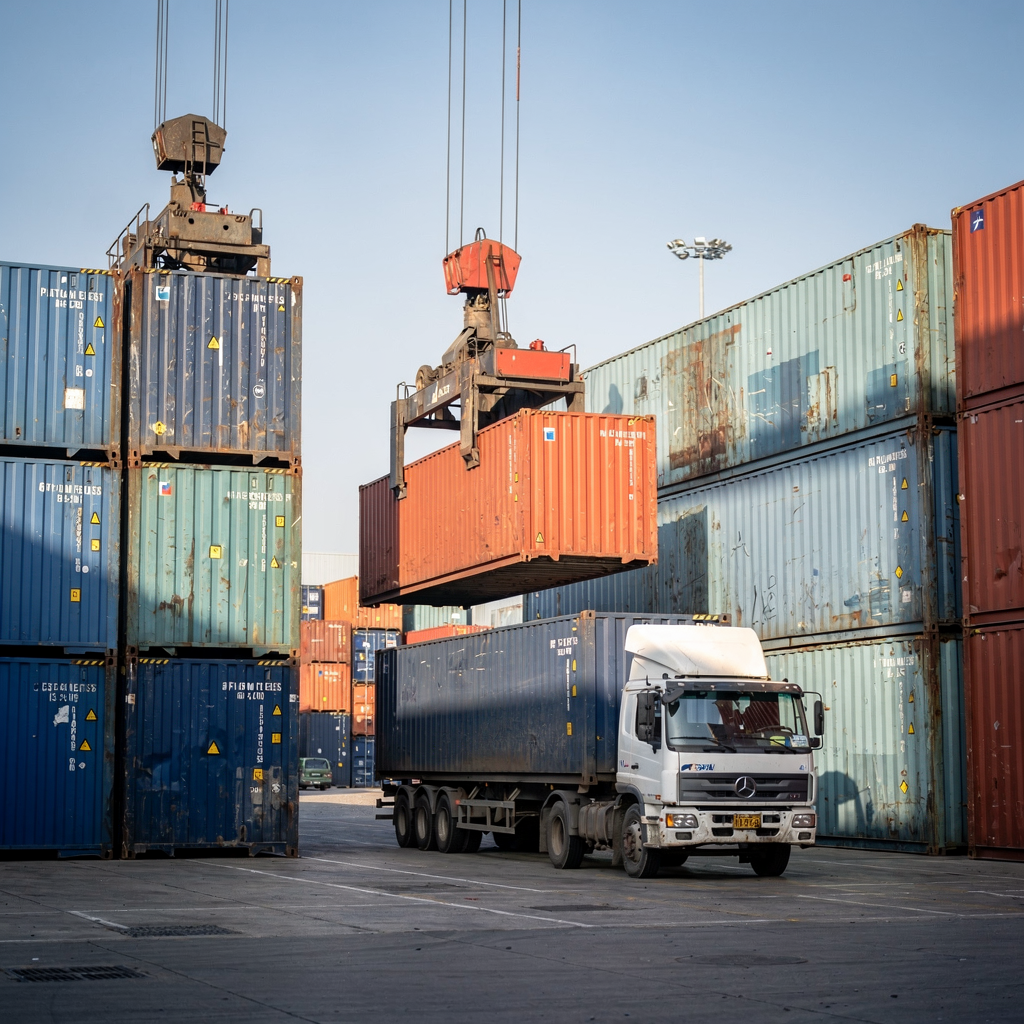
port congestion and container terminal schedule: boosting throughput and cutting delays
Integrated planning across terminal operators, shipping lines, and logistics providers helps balance supply and demand at the terminal level. Collaborative platforms and shared KPIs allow planners to align vessel windows, truck appointments, and yard stacking rules. When stakeholders share data, they reduce surprises and stabilize the container flow. Research confirms that integrated approaches that combine planning, scheduling optimization, and execution-level control reduce delays by at least 10% in practice (source). That improvement often comes from fewer reshuffles and from better balanced workloads across quay cranes and yard cranes.
Emerging technologies extend this benefit. IoT sensors on handling equipment, better telemetry from internal truck fleets, and AI that optimises across objectives allow faster reaction to disturbances. These tools do not replace operators. Instead, they augment planner decisions and reduce firefighting. For example, reinforcement learning agents trained in a terminal digital twin can propose schedules that respect hard constraints and that reduce rehandles. Our approach trains agents in simulation, then deploys them with operational guardrails so planners retain authority. This method produces stable performance across shifts and it avoids the need for large historical datasets.
Scaling integrated scheduling requires a flexible architecture. Terminals adopt TOS integration, API-based telemetry feeds, and modular optimization components. This architecture allows scheduling components to exchange priorities and to negotiate trade-offs. Integrated scheduling improves vessel turnaround, reduces container dwell, and increases the performance of a container terminal overall. For further practical guidance on connecting scheduling and equipment control, our pages on terminal operating system TOS integration and on gross crane rate improvement strategies provide detailed methods and case studies terminal operating system integration and gross crane rate strategies. Looking ahead, the combined use of AI-driven scheduling, IoT, and collaborative platforms will continue to cut delays and lift throughput for container terminals and seaport networks.
FAQ
What is cross-equipment job prioritization?
Cross-equipment job prioritization refers to sequencing moves across quay cranes, trucks, and yard cranes so the terminal runs smoothly. It ensures equipment works in harmony, which reduces queueing and fewer delays.
How does better scheduling reduce vessel turnaround?
Better scheduling allocates quay crane and truck tasks to avoid idle time and rehandles. This raises throughput and shortens the time a vessel spends at berth.
What role does simulation play in solving the scheduling problem?
Simulation tests scheduling methods under realistic traffic and disruption scenarios without risking live operations. It validates policies and measures KPIs like moves per hour and average truck wait.
Can real-time systems eliminate delays entirely?
No system can eliminate all delays, but real-time prioritisation can substantially reduce them. It adapts priorities to equipment status and vessel ETAs, cutting common causes of congestion.
What are common sources of bottleneck in a container terminal?
Common bottlenecks include the quay crane-truck interface, yard block inefficiencies, and gate congestion. These points create cascading delays when not managed.
How do appointment systems help truck coordination?
Appointment systems smooth truck arrivals and prevent large peaks at the gate. They reduce truck queuing and keep quay cranes supplied with containers.
Do reinforcement learning methods require historical data?
Some AI methods need history, but reinforcement learning agents can learn in a simulated environment. That allows deployment without large historical datasets.
What gains have studies reported from coordinated scheduling?
Studies report throughput improvements of 10–15% and vessel turnaround reductions up to 12% in tested cases. They also report increased equipment utilization by up to 20 percentage points (source).
How does yard buffer management reduce congestion?
Buffer management provides temporary staging that absorbs short-term mismatches between quay output and gate or truck demand. This prevents yard reshuffles and protects crane productivity.
Where can I learn more about terminal simulation and scheduling tools?
For practical resources, explore simulation case studies, terminal equipment scheduling solutions, and logistics simulation software resources provided by Loadmaster.ai. These pages show tool choices and case studies for testing scheduling methods simulation case studies, terminal equipment scheduling, logistics simulation software.
our products
 stowAI
 stackAI
 jobAI
jobAI
Innovates vessel planning. Faster rotation time of ships, increased flexibility towards shipping lines and customers.
Build the stack in the most efficient way. Increase moves per hour by reducing shifters and increase crane efficiency.
Get the most out of your equipment. Increase moves per hour by minimising waste and delays.
stowAI
Innovates vessel planning. Faster rotation time of ships, increased flexibility towards shipping lines and customers.
stackAI
Build the stack in the most efficient way. Increase moves per hour by reducing shifters and increase crane efficiency.
jobAI
Get the most out of your equipment. Increase moves per hour by minimising waste and delays.