
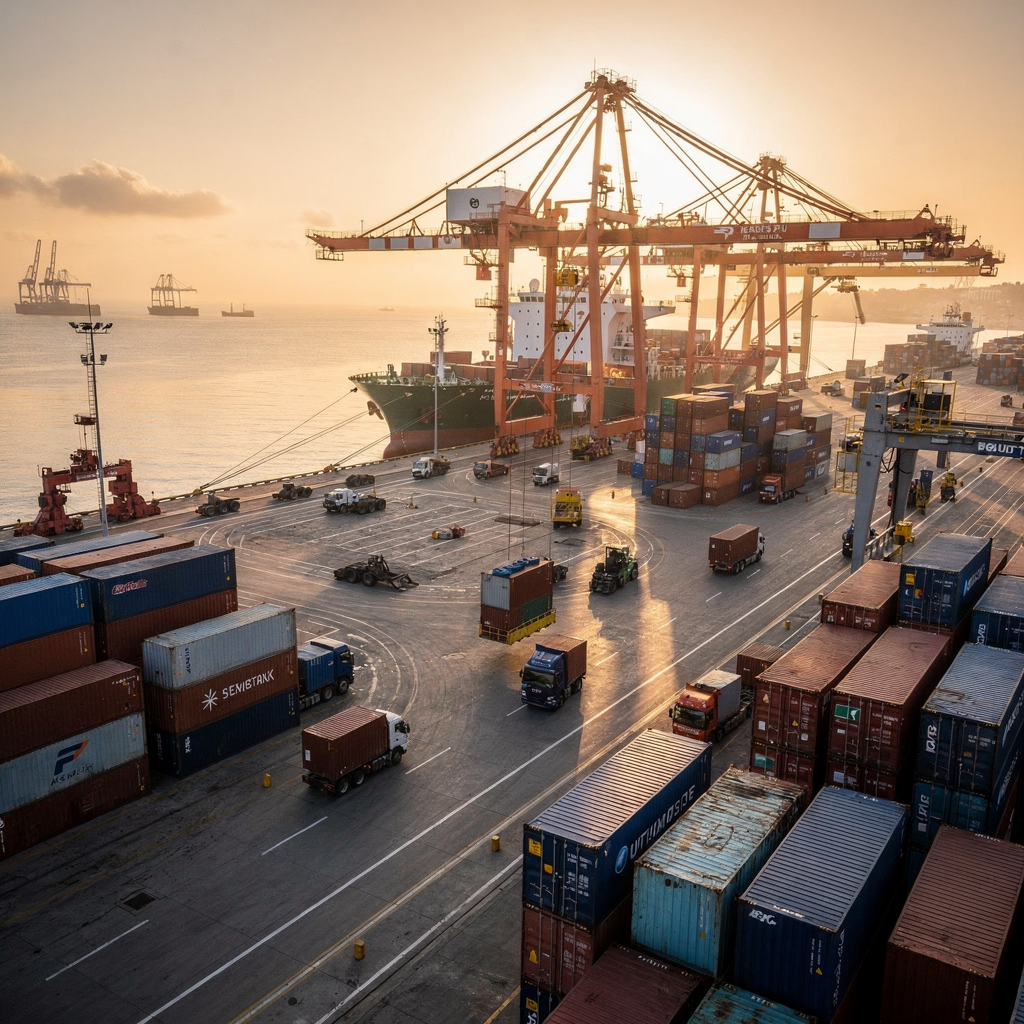
Understanding Predictive KPIs: Why KPIs Matter for Port Performance, Port Operations and Terminal Operations
First, KPIs clarify goals for any terminal. Also, KPIs focus teams on measurable outcomes that affect vessel schedules and customer delivery. Next, shortsea terminals face tight windows and frequent sailings, so the right KPIs matter for daily decisions and strategic planning. For example, operators who adopt predictive KPIs can shift from reacting to issues to preventing them. This shift reduces queueing and cuts wasted moves per hour, so it raises throughput and lowers shipping costs. Evidence shows simulation and analytics can lift operational efficiency by up to 15–20% when used for scheduling and resource management (Operational performance evaluation of a container terminal using data …). Therefore, KPIs must measure both immediate activity and leading signs of trouble.
Meanwhile, terminal leaders need a clear taxonomy of kpis. First, include throughput and berth measures. Second, add equipment and yard metrics. Third, add service reliability indicators for shipping companies and agents. Also, a single dashboard view helps teams see how a change at the quay affects yard congestion and the gate. For example, real-time productivity dashboards that combine predictive insights have reduced vessel waiting times by about 10–12% (KPIs for port operations: real-time productivity tracking). Thus, a mix of lagging and leading kpis gives terminal managers a balanced picture.
In addition, terminal operators should treat kpis as living controls rather than static reports. Loadmaster.ai trains agents inside a digital twin so the system learns trade-offs across quay and yard. Consequently, teams can test new kpis in simulation before applying them live. Also, when terminals align kpis with day-to-day operations, they get consistent performance and faster recovery from disruptions. Finally, clear KPIs improve communication with port terminals, port authorities, and stakeholders by providing a single source of truth for performance and priorities.
Defining Core KPIs: Key Performance Indicator Categories for Berth Utilization, Container Dwell Time and Cargo Flow
First, core kpis must cover berth utilization, container dwell time, and cargo flow. Also, berth utilization tracks how effectively quay space is used and flags congestion at the quay and quay-side equipment. Accurate berth predictions enable terminals to reduce queuing and speed up vessel turnaround time. A focused key performance indicator on berth occupancy supports scheduling and reduces unexpected waits for vessels.
Next, container dwell time is essential for yard planning. Predicting dwell time helps terminals free up stack space and avoid demurrage. For shortsea runs, where turnaround windows are narrow, shortening container dwell time yields larger gains than marginal crane improvements. In addition, container dwell time forecasting supports gate staffing and alerting for refrigerated container pickups. Thus, terminals cut stack pressure and reduce reshuffles by tracking this metric closely.
Then, cargo flow KPIs look at throughput by service, by lane, and by day. Also, these metrics include counts for load and unload sequences and the frequency of shifts that generate rehandles. Consequently, the terminal can balance workload and predict congestion on the gate, the yard, or the quay. For example, automation-focused kpis can raise container handling rates by roughly 25% in automated environments (Automation KPIs: The Metrics That Drive Efficient Container Terminals). Therefore, terminals must combine equipment, yard, and berth kpis to get a composite view of cargo flow.
Finally, terminals should align core kpis with strategic indicators such as the port performance index and economic kpis where relevant. Also, a kpi framework that links berth occupancy, dwell time, and cargo flow reduces conflicting goals. For deeper modelling of yard layouts and operations, teams can consult simulation-case studies or tools that show how changes translate to operational performance (simulation case studies) and how a terminal operating system can ingest predictive metrics (terminal operating system).
Drowning in a full terminal with replans, exceptions and last-minute changes?
Discover what AI-driven planning can do for your terminal
AI-driven Performance Metrics: Crane Productivity, Turnaround Time and Real-time Visibility
First, AI unlocks new performance metrics by learning patterns in equipment, vessel calls, and yard movement. Also, AI models can forecast crane productivity by considering vessel stow, tide, and shift patterns. Crane productivity forecasts let managers allocate cranes dynamically to where they improve moves per hour most. As a result, terminals avoid idle crane time and reduce average unloading and loading delays.
Next, vessel turnaround time predictions are a high-value metric. Predictive estimates for vessel turnaround time help shipping lines and terminal operators plan berth utilization and staffing. For instance, predictive analytics can lower vessel waiting times and thus cut fuel and emission costs while improving carrier performance (real-time productivity tracking). Also, Loadmaster.ai uses reinforcement learning agents to balance quay productivity and yard congestion. Therefore, operators benefit from AI policies that test trade-offs at scale in a digital twin before making live changes.
Then, AI improves real-time visibility. Real-time dashboards that show anticipated crane rates, predicted dwell time, and probability of equipment failure support faster corrective actions. For example, equipment failure probability can be surfaced as a leading metric so maintenance teams act before downtime occurs. In addition, predictive maintenance reduces unplanned outages and keeps crane fleets productive. Thus, combining AI with real-time data increases reliability across the terminal.
Finally, teams looking to simulate crane and berth interactions can use simulation tools and libraries to model scenarios and refine AI performance metrics (simulation tools for berth scheduling). Also, simulation-based training helps AI adapt to shortsea patterns where vessel mixes change frequently. Consequently, AI-driven metrics deliver both more accurate forecasts and more consistent execution across shifts.
Integrating Predictive Analytics with Real-time Dashboards and the Terminal Operating System
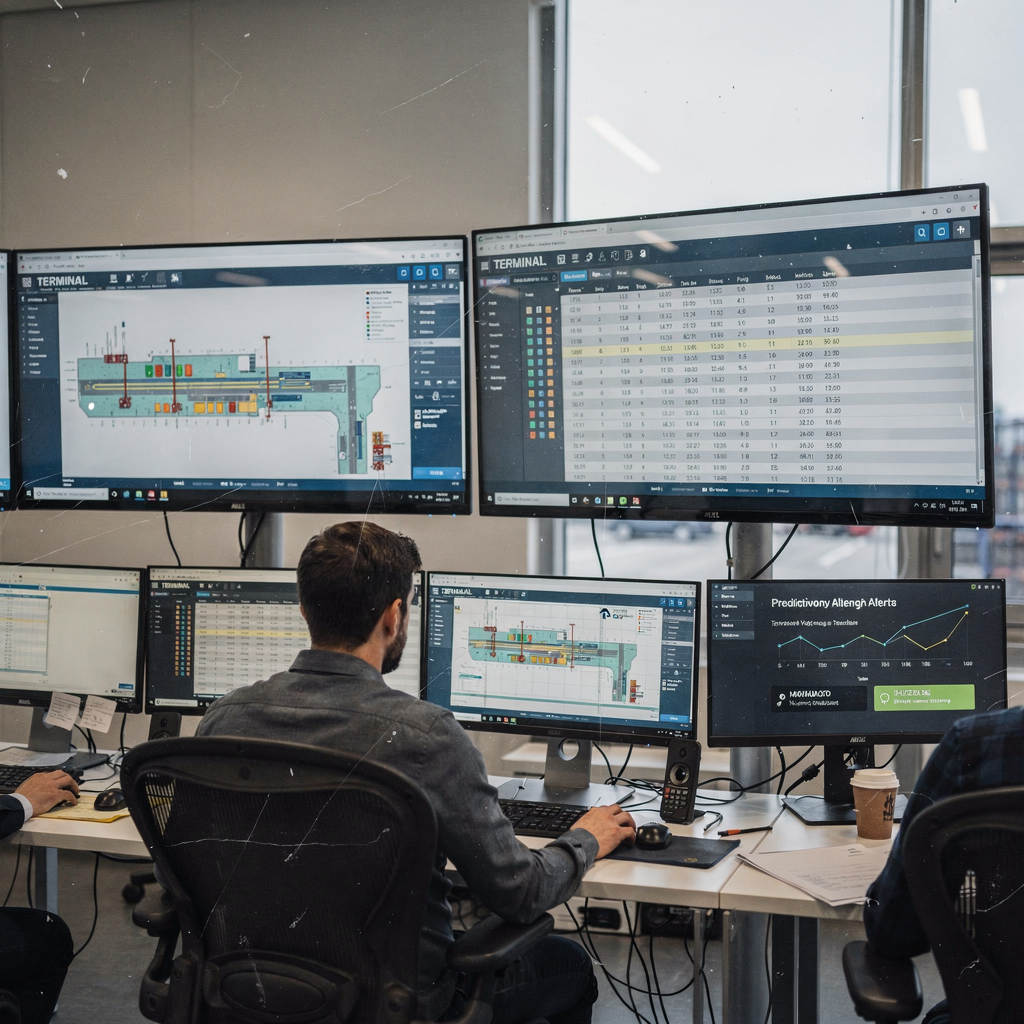
First, integration is practical and necessary. Also, a predictive dashboard only adds value when it ties into the terminal operating system and control room workflows. Therefore, terminals must plan APIs, data schemas, and governance so that predictive outputs feed dispatch, gate, and crane control. For example, a terminal that uses real-time dashboards and TOS integration can convert predicted berth occupancy into sequencing rules for the quay cranes.
Next, terminal data often spans siloed systems: equipment telemetry, yard scanners, and arrival schedules. Also, combining these data sources makes the predictive outputs reliable. Consequently, the terminal operating system must accept feeds for vessel ETAs, stack status, and equipment health. Loadmaster.ai designs RL agents that work with TOS inputs and return actionable job plans. In addition, that approach reduces firefighting by enabling the dispatcher to act on suggested moves rather than on raw alerts.
Then, a successful integration includes human-in-the-loop controls. Also, real-time dashboards should let operators override AI suggestions with clear audit trails. Therefore, the system remains safe and explainable for stakeholders such as port authorities and terminal managers. One valuable resource for model-driven decision support is the set of simulation and integration examples that show how to connect a digital twin to live terminal systems (TOS simulation integration examples).
Finally, implementers should test changes in a sandbox. Also, rolling predictive features out block-by-block helps avoid operational risk. For more on planning simulation for terminal changes, teams can review practical simulation guides and planning materials that mirror real terminal setups (simulations for terminal planning). Thus, integration becomes an iterative improvement rather than a one-off replacement.
Drowning in a full terminal with replans, exceptions and last-minute changes?
Discover what AI-driven planning can do for your terminal
KPI Framework for Operational Risk Management and Sustainability
First, a kpi framework must include operational risk management and sustainability measures. Also, kpis should flag events that threaten continuity, such as equipment failure probability or acute congestion at the quay. In addition, adding environmental kpis protects long-term goals. For shortsea terminals, environmental kpis can measure energy consumption, emission reductions, and carbon footprint per move. Therefore, teams can report improvements to stakeholders and align with regulatory expectations.
Next, risk management kpis pair with predictive maintenance and availability metrics. Also, tracking the probability of failures for handling equipment lets maintenance planners schedule interventions when they matter most. Consequently, unplanned downtime drops and operational resilience improves. Moreover, a unified framework makes trade-offs visible: for example, increasing crane shifts may lower turnaround time but raise energy consumption and costs.
Then, sustainability kpis must be comparable and auditable. Also, terminals can measure per unit energy and fuel and electricity use per move to quantify emission impacts. In addition, a performance index that combines port performance and environmental metrics helps terminals benchmark against peers (The Container Port Performance Index 2020 to 2024). Thus, decision-makers can weigh operational gains against carbon footprint and long-term profitability.
Finally, the KPI framework should be actionable. Also, each kpi must map to playbooks that operators follow when thresholds are crossed. For example, a high probability of crane failure triggers alternative routing, spare allocation, and dispatch replanning. In addition, the framework should link to economic kpis and risk management plans. Consequently, the terminal remains both efficient and sustainable while keeping stakeholder confidence high.
Leveraging Terminal Data to Boost Productivity for Shipping Lines, Carrier Performance and Customer Satisfaction
First, data is a strategic asset for terminals and shipping companies. Also, predictive kpis turn raw feeds into signals that improve vessel schedules, carrier performance, and customer satisfaction. For example, when a terminal shares predicted vessel turnaround time with a shipping line, the carrier can plan feeder connections and reduce wasted port call time. As a result, shipping costs fall and service reliability rises.
Next, terminals can use AI to coordinate quay and yard activity so that container handling rates rise while dwell time falls. Also, balanced workloads mean fewer rehandles and a steadier flow of moves per hour. For instance, automation and predictive kpis combined have demonstrated uplift in handling rates in modern terminals (automation KPIs). Therefore, using terminal data strategically benefits both the terminal operator and the shipping sector.
Then, customer satisfaction improves when terminals provide transparency. Also, real-time tracking and predictive alerts let consignees plan pickups and reduce gate congestion. Consequently, ports see fewer return trips and lower administrative friction. In addition, carrier performance metrics help shipping lines assess frequency of service and reliability, enabling better contracting decisions.
Finally, practical implementation often starts with targeted pilots. Also, Loadmaster.ai recommends training policies in a digital twin before going live so that planners and operators learn how AI affects outcomes without risking day-to-day operations. For teams who want to model yard operations and test scenarios, there are resources on modelling container yard operations and equipment scheduling that map directly to these goals (how to model container yard operations) and (equipment scheduling simulation solutions). Thus, terminals that leverage data with a clear KPI set win on consistency, cost, and service.
FAQ
What are predictive KPIs and why do they matter for shortsea terminals?
Predictive KPIs are forward-looking metrics that forecast performance outcomes such as berth occupancy, crane productivity, and container dwell time. They matter because shortsea terminals have tight schedules and frequent port calls, so anticipating issues reduces queueing and improves service reliability.
How can AI improve crane productivity forecasts?
AI can combine telemetry, vessel stow plans, and historical patterns to estimate likely moves per hour for each crane under different scenarios. This lets managers allocate cranes where they will yield the most improvement and minimizes idle time and rehandles.
What impact do predictive dashboards have on vessel waiting times?
Real-time dashboards with predictive analytics can reduce vessel waiting times by roughly 10–12%, which lowers fuel use and emissions and improves carrier performance (source). They do this by signalling likely berth congestion before it materializes.
Are predictive KPIs hard to integrate with existing TOS?
Integration requires planning but is feasible through APIs and data feeds. Also, teams should test predictive outputs in a sandbox and connect them to the terminal operating system so that dispatch and gate workflows accept the new signals without disrupting operations.
What role does simulation play in KPI validation?
Simulation lets teams test kpi changes against realistic scenarios without risking live operations. It helps validate that changes improve operational performance and supports safe rollout. See simulation case studies for applied examples (simulation case studies).
How do predictive KPIs support sustainability goals?
Predictive KPIs help reduce unnecessary idling, optimize crane shifts, and lower energy consumption per move, which reduces the carbon footprint. They also make environmental kpis auditable and comparable over time.
Can predictive KPIs help with equipment maintenance?
Yes. Predictive maintenance kpis estimate failure probability and schedule service before breakdowns occur. This reduces unplanned downtime and keeps handling equipment productive.
Do small shortsea terminals benefit from AI and predictive KPIs?
Yes. Even small terminals gain from better sequencing, fewer rehandles, and clearer scheduling. AI solutions that are cold-start ready can provide value without extensive historical data by using simulation and reinforcement learning.
How do predictive KPIs affect customer satisfaction?
When terminals share accurate predictions for turnaround time and container dwell time, customers and shipping lines can plan pickups and connections more reliably. This transparency reduces delays and improves satisfaction.
Where can I learn more about modelling yard operations and scheduling?
There are practical guides and simulation tools that cover yard modelling and berth scheduling. For hands-on resources, see how to model container yard operations and equipment scheduling simulation solutions provided by industry experts (how to model container yard operations) and (equipment scheduling simulation solutions).
our products
 stowAI
 stackAI
 jobAI
jobAI
Innovates vessel planning. Faster rotation time of ships, increased flexibility towards shipping lines and customers.
Build the stack in the most efficient way. Increase moves per hour by reducing shifters and increase crane efficiency.
Get the most out of your equipment. Increase moves per hour by minimising waste and delays.
stowAI
Innovates vessel planning. Faster rotation time of ships, increased flexibility towards shipping lines and customers.
stackAI
Build the stack in the most efficient way. Increase moves per hour by reducing shifters and increase crane efficiency.
jobAI
Get the most out of your equipment. Increase moves per hour by minimising waste and delays.