
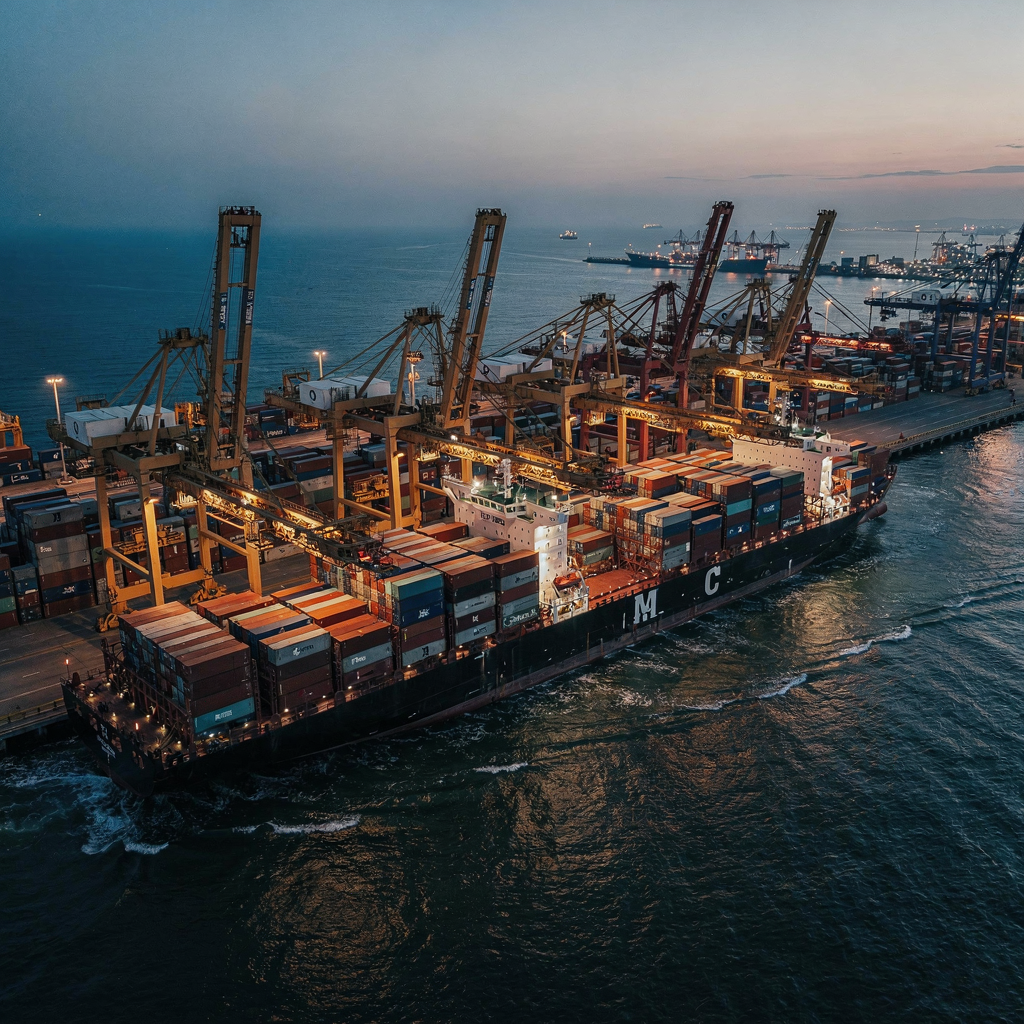
ai agents for port safety and schedule optimization in container terminal operations
AI agents for port safety and schedule optimization in container terminal operations bring a new layer of coordination to complex quay and yard activity. In practice, an AI agent works as a persistent decision-maker that observes constraints, tests choices in simulation, and issues executable plans for QUAY CRANE sequencing, berth allocation, and yard moves. Loadmaster.ai trains reinforcement learning agents so they learn policies in a digital twin, and then they operate with hard constraints and human-set KPIs. The approach avoids training on imperfect history and therefore allows the AI to exceed past practice while still respecting safety guardrails.
These agents combine short-horizon control with longer-horizon planning, and they balance throughput with operational risk. A schedule that staggers crane tasks reduces the chance of boom conflicts, lowers the probability of container collisions, and shortens idle time. Research finds that smart schedule optimization can cut crane-related incidents and increase moves per hour when aligned with safety margins; practitioners report a 20–35% reduction in safety incidents when AI and safety analytics are combined (smart container port development). The agents can also propose alternates if a vessel delays or if yard congestion spikes, so the plan remains executable and safe.
To integrate into live operations, AI connects to the terminal operating system and to equipment telemetry. The TOS receives optimized sequences and enforces execution windows while the AI receives status updates and real-time signals from SENSORS and IoT feeds. This two-way link keeps humans in the loop and preserves audit trails for governance and compliance. Terminal planners can approve or tune policies before full handover, and the AI records explainable reasons for selections so shifts stay consistent.
For readers who want to understand how simulation and TOS interface work in practice, see our primer on terminal operating system integration and examples of TOS simulation integration for berth and equipment sequencing (terminal operating system overview) and (TOS simulation integration examples). Finally, case studies show that when AI agents replace reactive firefighting with policy-driven control, terminals reduce rehandles, lower travel distances, and improve utilization while maintaining safe operations.
predictive maintenance in container terminals to streamline quay crane uptime
Predictive maintenance in container terminals shifts maintenance from reactive to proactive. Data from sensors, control logs, and historical faults feed AI models that forecast component wear and impending failure. These data-driven models detect abnormal vibration, lubricant degradation, motor current spikes, and control jitter. When models flag a part at risk, planners can schedule maintenance during slack periods and avoid an unscheduled halt that would otherwise disrupt several vessel calls. Studies show predictive maintenance can reduce downtime by up to 30% when implemented alongside good inspection regimes (comprehensive review).
Early fault detection improves safety and throughput. A QUIET, planned repair averts sudden QUAY CRANE stops which can leave suspended loads or create hazardous handovers. Predictive alerts also guide spare-parts stocking and the craft schedule, and they reduce idle time for cranes. The AI combines short-term anomaly signals with longer-term forecast patterns so a technician sees both urgency and context. That reduces false alarms and prevents unnecessary interventions.
Practical deployment uses a layered telemetry architecture. Edge devices preprocess raw signals and send aggregated diagnostics to the central analytics engine. That engine applies machine learning and physics-aware models to recommend actions and to estimate remaining useful life. Terminals using this approach report fewer emergency call-outs and steadier crane utilization, and they gain predictability that helps with berth planning and vessel turnaround. For foundations on how to model yard and equipment interactions that influence maintenance windows, review our simulation tools for berth scheduling and capacity decisions (berth scheduling optimisation) and terminal simulation software for capacity investment (terminal simulation software).
Drowning in a full terminal with replans, exceptions and last-minute changes?
Discover what AI-driven planning can do for your terminal
real-time anomaly detection and automation in port operation workflows
Real-time anomaly detection keeps cranes and teams safe while they work. A network of SENSORS mounted on cranes, on trucks, and at gates streams position, load, and motion data. AI systems analyze that real-time feed and compare it to expected patterns. When an anomaly appears, the system issues graded responses: an advisory alert, a temporary speed restriction, or an automated hold on a move. Situational awareness frameworks improve decision speed and reduce operator burden, and research on situational awareness supports this layered approach (situational awareness as imperative capability).
Automation reduces operator error and helps standardize safe actions. For example, AI can automate low-risk sequences so operators handle only exceptions, and that reduces human error by an estimated 25% in mixed human-AI workflows (review). The system logs each decision and the supporting evidence, and that audit trail supports post-event review and training. Alerts trigger well-defined workflows that include operator confirmation steps, and they also enable fallback strategies when communications degrade.
These safeguards extend beyond cranes. Automated guided vehicles and gate systems feed into the same operational view, and the AI assigns priorities that respect safety margins for crane swing and for stack access. Where human control remains primary, the AI suggests safe alternatives and highlights potential conflicts long before they escalate. If you want practical examples of how simulation supports the detection-to-response loop, see our case studies and modelling guides that explain sensor placement and real-time analytics (simulation case studies) and (how to model container yard operations). In short, the integrated approach prevents incidents, and it keeps operations predictable and safer for everyone on the apron.
integrate digital twin algorithms for optimal crane allocation and cargo throughput
Digital twin models replicate terminal layout, crane kinematics, truck flow, and stack capacity in a running simulation. A digital twin runs many scenarios in parallel, and it evaluates trade-offs between throughput, safety, and resource stress. When a digital twin predicts a surge in arrival patterns it advises reallocation of cranes, and it projects the safety margins that each reassignment maintains. AI-driven allocation algorithms then select sequences that minimize conflict probability and that maximize moves per berth.
Using simulated outcomes, algorithms can allocate cranes by predicted demand and by safety constraints. This approach reduces unnecessary repositioning and keeps crane booms separated in time and space. Research links algorithmic allocation to throughput improvements, with AI-backed strategies producing 15–20% gains in yard throughput while lowering incident risk when applied together with robust safety margins (AI-driven container relocation). The twin also computes utilization and idle time metrics so planners can see cost and safety implications per crane and per container.
Planners get interactive what-if tools that show possible futures, and they can set policy weights for productivity versus protective buffers. The digital twin helps forecast congestion hot spots and suggests preemptive moves to avoid pile-ups and long dwell. That reduces container dwell time and shortens vessel turnaround, and it helps shipping lines coordinate berths and service windows. For readers focused on simulation toolchains and equipment scheduling, our resources on terminal equipment scheduling and simulation libraries explain how to connect a twin to live telemetry and to a TOS (equipment scheduling simulation) and (AnyLogic terminal simulation library). In practice, the combined system balances throughput and safety so terminals can handle larger vessels with lower operational risk.
Drowning in a full terminal with replans, exceptions and last-minute changes?
Discover what AI-driven planning can do for your terminal
application of ai in container handling and smarter port logistics
The application of AI in container handling spans vision systems, sequence optimization, and route planning. Deep learning models such as YOLO-NAS can detect container damage with high accuracy, and recent work reports over 90% detection accuracy in practical settings (automating container damage detection with YOLO-NAS). That capability reduces cargo loss, removes unsafe containers from the flow, and prevents accidents during lifts. The vision outputs feed automated checklists and maintenance workflows, and they reduce manual inspection bottlenecks.
Route-planning AI also streamlines yard moves and limits unnecessary container relocations. Research shows AI-driven relocation strategies can improve yard efficiency by 15–20% while reducing rehandles and driver distance (research on AI-driven container relocation). The AI balances stack accessibility, container dwell, and crane workload. That leads to fewer collisions, shorter waits at the gate, and higher predictability for berth planning and vessel service windows. The system also factors in empty container flows and optimizes their placement to reduce future moves and turnaround delays.
To make these capabilities operational, terminals integrate AI with warehouse and gate systems, with the port community system, and with logistics partners so that container movements align with expected arrivals and shipping lines’ schedules. When terminals automate routine tasks, staff focus on exceptions and on higher-value safety checks. For a practical primer on modelling container yard operations and on how simulation supports logistics decisions, consult our guides on how to model container yard operations and our maritime terminal simulation tools for yard planning (how to model yard operations) and (maritime terminal simulation tools). Ultimately, smarter port logistics lead to fewer accidents, faster yard turns, and a more resilient supply chain.
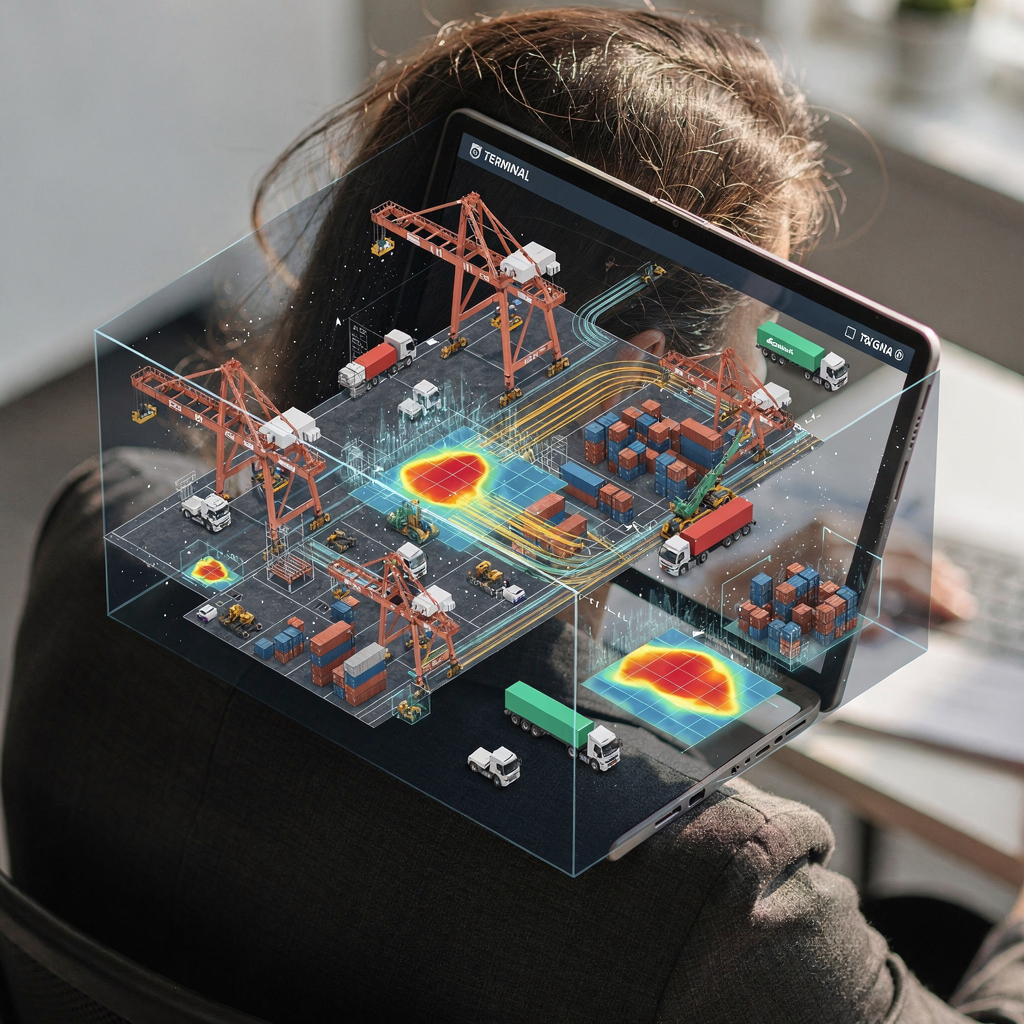
ai-driven terminal operating system deployment to automate maritime workflows
AI-driven deployment into a terminal operating system (TOS) brings end-to-end automation across berth planning, crane sequences, and stack management. The TOS becomes the execution layer that receives optimized plans, and the AI supplies dynamic re-optimization when conditions change. Integration is modular so terminals can retain manual control of sensitive tasks and let AI automate routine scheduling and dispatching tasks. That mix helps operators automate safe behaviors while preserving oversight.
Deployment follows a staged approach. First, teams build and validate a digital twin and train AI agents against explainable KPIs in simulation. Then the AI connects via APIs and EDI to the live TOS, and operators run the system in shadow mode while they compare outputs. This approach reduces risk and builds trust. Our company uses three closed-loop agents—StowAI, StackAI, and JobAI—to optimize vessel stow sequences, yard placement, and move execution. The agents learn from simulation so they are cold-start ready and they refine online using operational feedback and telemetry.
The TOS integration supports berth planning and container handling workflows, and it can automate gate and yard routing, and it can coordinate with the port community system for exchange of ETA and booking updates. The integration also maintains audit trails and compliance features that support EU AI Act readiness and governance. For teams interested in how to simulate TOS interactions and to compare TOS features, review our comparison of terminal operating systems and our TOS simulation integration examples (comparison of terminal operating systems) and (TOS simulation integration examples). In operational terms, AI deployment moves terminals from reactive, manual control to proactive, policy-driven management so vessel turnaround improves, safety incidents fall, and operational consistency rises.
FAQ
What are AI agents and how do they differ from traditional scheduling tools?
AI agents are decision systems that learn policies through simulation and reinforcement, whereas traditional tools often rely on fixed rules or historical pattern matching. Agents can test many strategies in a digital twin and then propose adaptive schedules that balance safety and throughput.
How does predictive maintenance reduce quay crane downtime?
Predictive maintenance uses sensor data and analytics to forecast component failures and to schedule repairs before a breakdown. This approach reduces emergency halts, shortens maintenance windows, and improves crane availability for vessel service.
Can real-time anomaly detection prevent accidents?
Yes. Real-time anomaly detection spots deviations from normal behavior and triggers graded responses, from alerts to automated holds on moves. When tied to operator workflows and automation rules, this system reduces risk exposure and supports faster, safer reactions.
What is a digital twin and why does it matter for crane allocation?
A digital twin is a live simulation of terminal layout, equipment, and flows. It matters because it lets planners test allocation strategies and safety buffers before they are applied, which reduces conflicts and improves throughput in the real world.
How accurate are AI vision models for container damage detection?
Modern deep learning models such as YOLO-NAS report high accuracy in controlled studies, often exceeding 90% for damage detection. This accuracy reduces the need for manual inspection and helps remove unsafe containers before lifts.
How does an AI-driven TOS integration handle safety governance?
The TOS integration preserves human oversight, enforces hard constraints, and creates explainable logs for every AI decision. That combination supports auditability and ensures that safety rules remain central during automation.
Will AI replace terminal staff?
No. AI automates routine work and suggests safer, more consistent plans, but human operators retain control over exceptions and critical safety decisions. Staff move from firefighting toward supervision and strategy.
How do AI systems interact with existing port systems like the port community system?
AI systems integrate via APIs and standard exchanges such as EDI, and they consume ETA and booking data from port community systems. This connection improves coordination with shipping lines and reduces surprises at the berth.
What data do AI models need to start working?
Many AI deployments benefit from telemetry, sensor feeds, and operational data, but reinforcement-trained agents can start from a digital twin and do not always require historical data. That cold-start approach reduces dependency on perfect past records.
How quickly can terminals expect benefits after deployment?
Terminals often realize measurable improvements in utilization and reduced rehandles within weeks of go-live, and they see improved consistency across shifts as AI policies stabilize performance. Pilots and sandbox testing help ensure safe, phased deployment.
our products
 stowAI
 stackAI
 jobAI
jobAI
Innovates vessel planning. Faster rotation time of ships, increased flexibility towards shipping lines and customers.
Build the stack in the most efficient way. Increase moves per hour by reducing shifters and increase crane efficiency.
Get the most out of your equipment. Increase moves per hour by minimising waste and delays.
stowAI
Innovates vessel planning. Faster rotation time of ships, increased flexibility towards shipping lines and customers.
stackAI
Build the stack in the most efficient way. Increase moves per hour by reducing shifters and increase crane efficiency.
jobAI
Get the most out of your equipment. Increase moves per hour by minimising waste and delays.